


Lighting a velodrome demands carefully tailored illumination levels that meet the unique demands of high-speed cycling events. Lux levels refer to the amount of light falling on a surface, and maintaining an even, sufficient level across the track ensures that riders, officials, and spectators can see clearly. The level of lighting needed varies depending on the type of event hosted, from training sessions to international competitions. Velodromes used for professional races typically require illumination levels ranging between 800 and 1,500 lux on the track surface. This range provides adequate brightness to capture fast motion without causing visual fatigue.
Areas surrounding the track, such as spectator stands and warm-up zones, often require less intense lighting, usually between 200 and 500 lux. The difference in lighting intensity between the track and adjacent zones helps direct attention to the primary action while maintaining visibility throughout the facility.
Maintaining consistent brightness across the entire track surface also plays a role in performance and safety. Sudden changes in illumination can cause distractions or momentary visibility issues for cyclists traveling at high speeds. Careful planning of lighting levels minimizes these variations, offering a smoother visual experience that supports rider focus and race fairness.
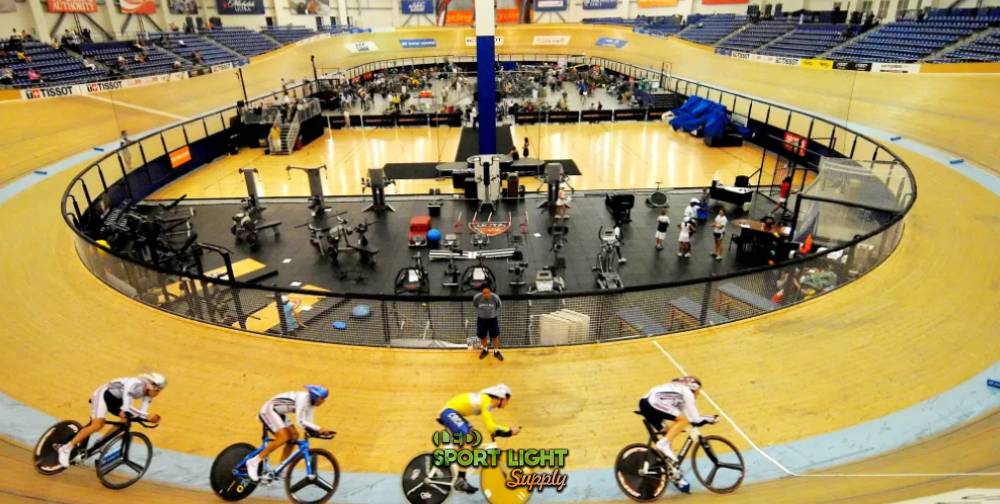
Installing lighting in a velodrome is a multifaceted process that demands close collaboration among lighting designers, electrical engineers, facility managers, and construction teams. The complexity of the installation arises not only from the need to achieve precise illumination goals but also from the structural and architectural constraints inherent to velodrome design. Each component, from pole height to fixture mounting locations, must be carefully planned to harmonize with the building’s physical layout, ensuring safety and maximizing lighting effectiveness.
The foundation of any successful lighting installation begins with detailed site assessments and thorough architectural reviews. Understanding the unique geometry of the velodrome, including the curvature and banking of the track, informs the placement of fixtures. Mounting points must be chosen to deliver optimal beam angles that cover every portion of the track uniformly. Often, poles and mounting structures require custom engineering solutions to navigate around spectator seating, overhead trusses, or other venue-specific obstacles.
Electrical considerations such as wiring routes are mapped out to minimize exposure to the elements while maintaining easy access for future maintenance or upgrades. During this phase, the electrical load capacity is analyzed, ensuring that the infrastructure can safely support the lighting system. Compliance with local electrical and building codes is verified, helping avoid costly retrofits or safety hazards later in the process.
Timing the installation is a key factor in maintaining smooth facility operations. Velodrome lighting installations are typically scheduled during off-season periods or between major events to avoid interfering with training sessions, competitions, and public access. This scheduling allows installation teams to operate without pressure, improving both efficiency and accuracy.
Coordination among logistics, materials delivery, equipment setup, and labor forces is essential to ensure the project timeline aligns with the venue’s calendar. Effective communication between all stakeholders prevents delays and optimizes resource allocation.
Once fixtures are on site, the focus shifts to careful mounting and precise alignment. Expert technicians position each light fixture to achieve exact beam angles that guarantee uniform coverage of the velodrome track. Avoiding overlap or dark spots is critical; improper alignment can create shadows that disrupt visual continuity for riders and spectators alike.
Advanced tools such as laser alignment systems and photometers are utilized during installation to fine-tune positioning in real time. This meticulous process ensures the lighting arrangement meets the design’s intended lux levels and uniformity ratios. Post-installation, comprehensive photometric testing is conducted to verify performance against these standards and to make any necessary adjustments before project completion.
Protecting lighting fixtures from environmental challenges significantly influences their longevity and consistent performance. Indoor velodromes often experience elevated humidity due to ventilation and temperature fluctuations, which can accelerate deterioration of lighting components. Dust accumulation further exacerbates these effects, potentially reducing light output over time.
Fixtures selected for installation typically feature high ingress protection (IP) ratings and are made from corrosion-resistant materials to withstand such conditions. Installation teams meticulously seal all joints, gaskets, and connectors to maintain enclosure integrity. These measures reduce the risk of water ingress, dust penetration, and corrosion, preserving fixture efficiency and reducing maintenance frequency.
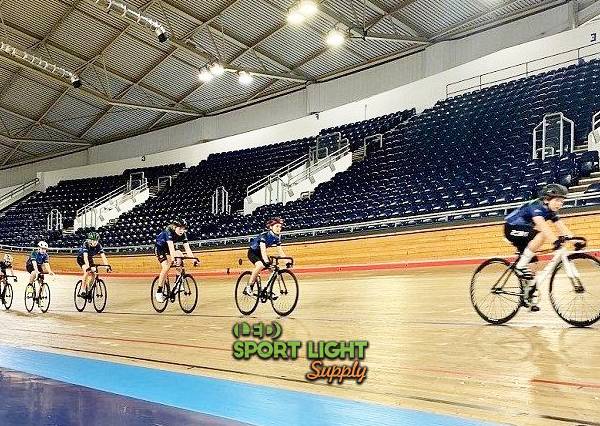
The final phase involves integrating the lighting system with the velodrome’s broader control infrastructure. Wiring fixtures to centralized control panels enables comprehensive management of dimming, zoning, and scheduling functions. Such control systems provide flexibility and energy savings by allowing adjustments tailored to different event types or ambient lighting conditions.
Commissioning includes rigorous testing of all control functionalities, from manual dimming to automated scene programming. Compatibility is verified with other facility systems such as audio-visual equipment, emergency lighting, and security, ensuring seamless operation within the overall venue environment.
Post-installation support often features training for facility personnel, empowering them to operate and troubleshoot the lighting system effectively. This support enhances operational reliability and helps maintain consistent lighting quality throughout the life of the installation.
| Lighting Type | Wattage per Fixture | Fixtures (Example) | Daily Consumption (8 hrs) | Monthly Consumption | Estimated Monthly Cost ($0.10/kWh) | Efficiency (lm/W) |
|---|---|---|---|---|---|---|
| Metal Halide (MH) | 1000 W | 60 | 480 kWh | 14,400 kWh | $1,440 | 80 – 100 |
| LED | 500 – 600 W | 60 | 240 – 288 kWh | 7,200 – 8,640 kWh | $720 – $864 | 140 – 160 |
Velodrome lighting requires a well-planned approach to power management due to the high-intensity and prolonged illumination needed for training sessions, competitive events, and broadcasts. The total power demand of a lighting system is influenced by the total wattage per fixture, the number of installed lights, the area to be illuminated, and the duration of daily operation. A full-sized indoor velodrome, typically around 250 meters in track length, may need between 40 to 80 fixtures, each consuming between 400 to 1000 watts, depending on the technology used.
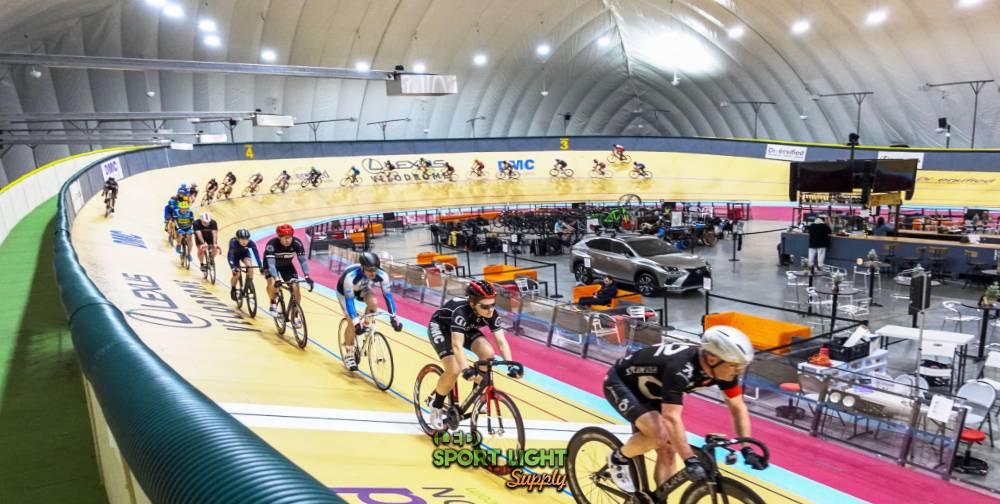
Lighting technologies used in velodromes vary in efficiency, power draw, and long-term cost implications. Historically, venues have relied on high-wattage discharge lamps like metal halide (MH) and high-pressure sodium (HPS) to meet lux requirements. However, as energy efficiency becomes a higher priority for operational and environmental reasons, many facilities are transitioning to LED systems that offer better control, longevity, and lower power demands.
Metal halide lamps, commonly used in older velodromes, typically operate at 1000 watts per fixture. If a facility installs 60 such fixtures and runs them for 8 hours per day, total daily energy consumption reaches 480 kWh (60 fixtures × 8 kWh each). Over the span of a 30-day month, this adds up to 14,400 kWh, not accounting for additional costs like re-strikes, warm-up time, or lumen depreciation that can demand even more power.
At an average utility rate of $0.10 per kWh, this equates to $1,440 monthly or over $17,000 annually just for lighting operations. Moreover, MH lamps degrade over time, often requiring re-lamping every 2 to 3 years. This frequent replacement adds to the cost of operation and maintenance, while also impacting energy efficiency as aged fixtures lose luminous output but continue to draw full power.
LED fixtures offer a dramatically different power profile. A high-output LED capable of replacing a 1000-watt MH lamp generally consumes between 500 to 600 watts. When used for the same 8-hour duration, a set of 60 LED fixtures would consume between 240 and 288 kWh daily, a substantial drop from the 480 kWh consumed by MH systems. Monthly, this reduces the power usage to a range of 7,200 to 8,640 kWh, which translates to potential savings of up to $720 per month.
In addition to reduced consumption, LEDs offer longer lifespans—often exceeding 50,000 hours of operation. This means that relamping can be delayed for years, significantly reducing labor and material costs. The use of advanced optics also allows LEDs to direct light precisely where it is needed, minimizing wasted output and increasing overall system efficacy.
Overall, the shift to LEDs not only lowers total energy usage by up to 40 to 50% but also enhances lighting quality and system reliability. For velodrome operators aiming to reduce environmental impact while managing operational budgets, LED technology presents a compelling alternative that delivers both performance and efficiency.
Beyond raw wattage, power usage can be optimized through strategic lighting design. LEDs allow for narrower beam angles, better optical control, and more targeted illumination, reducing wasted light that spills outside the intended areas. By increasing fixture efficacy—measured in lumens per watt (lm/W)—velodromes can achieve higher brightness with fewer lights and less energy. Many high-end LED fixtures now deliver efficacy ratings of 140 to 160 lm/W, compared to 80 to 100 lm/W for legacy lamps.
Power consumption in velodromes can be further reduced by adopting intelligent lighting control systems. These systems allow for fine-tuned management of lighting zones, automated dimming, and adaptive responses based on occupancy or ambient light conditions. For instance, lights can be dimmed to 30% output during cleaning or setup hours, while returning to full brightness only during active competition periods. Such adjustments may save between 20 to 35% in additional energy annually.
Incorporating scheduled lighting operation can help reduce peak load demand. Lighting schedules based on training hours, event calendars, and downtime can significantly lower daily operational costs. A velodrome that schedules lights to run at full intensity only during evening peak hours and reduces output during the day can achieve noticeable power savings over the course of a year.
For larger velodromes, particularly those hosting televised international competitions, managing power draw is also about balancing electrical loads across circuits to prevent overloading. Facilities often install dedicated power distribution panels for lighting, integrated with metering systems to monitor consumption in real time. These systems can flag inefficiencies or detect abnormalities before they cause performance issues or system failures.
Over a 10-year lifespan, LED systems can offer operational savings exceeding 60% compared to traditional lighting. While upfront costs may be higher, the reduced electricity usage, fewer replacements, and lower maintenance requirements contribute to a strong return on investment. Power management, combined with energy-efficient technology, supports both environmental goals and cost containment strategies for velodrome operators.
| Velodrome Area / Use | Recommended Lux Level | Description |
|---|---|---|
| Recreational Use / Training | 300 – 500 lux | Suitable for non-competitive cycling sessions with moderate visibility and reduced energy consumption. |
| Competitive Events (National / Regional) | 750 – 1000 lux | Supports athlete safety, performance accuracy, and live audience visibility. |
| Televised / International Events | 1000 – 1500 lux | Meets broadcast standards with high clarity and reduced motion blur for cameras. |
| Vertical Illuminance for Cameras | ≥ 750 lux | Ensures proper lighting on vertical planes for media coverage and face visibility. |
| Track Perimeter / Transition Zones | 300 – 400 lux | Ensures safe movement and visual comfort between active and support areas. |
| Color Rendering Index (CRI) | ≥ 80 | Provides accurate color distinction for uniforms, signage, and broadcast quality. |
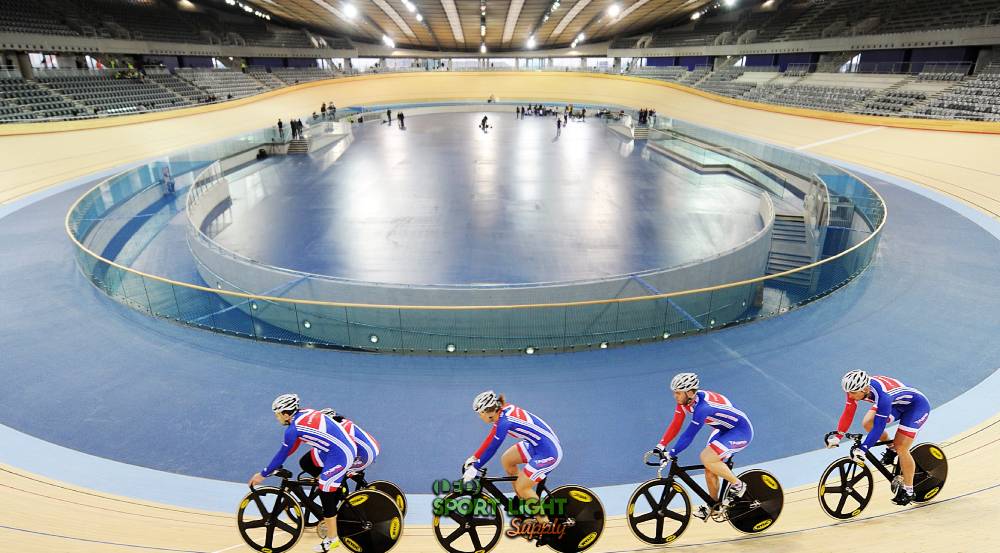
The level of illumination across a velodrome directly influences athlete visibility, safety, and the effectiveness of camera coverage. Given the high speeds at which cyclists travel and the dynamic nature of competitive events, proper lux levels are foundational to performance and viewer experience. Lux requirements depend largely on how the facility is used—ranging from casual community rides to professional racing under televised conditions. Achieving optimal lighting ensures that athletes maintain situational awareness, follow their trajectory accurately, and avoid misjudgments that could lead to collisions or reduced performance.
Lux standards are not universal across all types of velodrome usage. Recreational tracks and practice venues often operate effectively within the 300 to 500 lux range, which provides sufficient brightness without excessive energy demand. This range supports safe riding for non-competitive sessions, ensuring cyclists have clear visual cues while minimizing energy costs for the facility. Lighting at these levels is often implemented using fewer fixtures or lower-powered luminaires to balance safety with operational efficiency.
For competitive environments, particularly those hosting regional, national, or international events, lighting requirements increase substantially. Lux levels are typically elevated to between 750 and 1500 lux to accommodate the fast speeds of competitive cyclists and the detailed visual needs of officials and camera crews. Higher lux levels help eliminate motion blur, enhance facial and object recognition, and provide better clarity for spectators both in the arena and watching remotely. Venues preparing for HD broadcast often aim for a minimum of 1000 lux with high vertical and horizontal uniformity to comply with UCI broadcast specifications.
Lighting standards extend beyond the velodrome track itself. Areas such as warm-up lanes, athlete entry points, and transitional walkways also demand adequate illumination. Maintaining lux levels between 300 and 400 lux in these zones ensures that athletes can safely move between the infield, start lines, and rest areas without sudden changes in brightness. Transition zones illuminated evenly allow for smoother adjustment to brighter or dimmer environments and help prevent accidents due to visual disorientation.
When a velodrome is selected for televised events, its lighting must meet the technical specifications of professional broadcasting standards. This includes both horizontal illuminance—typically over 1000 lux—and vertical illuminance of at least 750 lux to ensure athletes and their movements are well-lit from all camera angles. Uniform brightness eliminates hard shadows and improves camera contrast, which is vital for capturing high-speed racing action in slow-motion replays, zoomed-in footage, and panoramic shots.
Alongside adequate lux levels, the Color Rendering Index (CRI) becomes an influential factor in professional velodrome lighting design. A CRI value above 80 is often required to ensure that colors appear vivid and accurate, which is particularly valuable during televised events. High CRI lighting ensures that team uniforms, sponsor logos, and track markings retain their true colors under artificial light. This fidelity helps officials distinguish riders, enhances visual engagement for spectators, and supports brand visibility for event partners. Poor CRI lighting can wash out colors or distort hues, undermining the viewing experience and potentially impacting judgment during races.
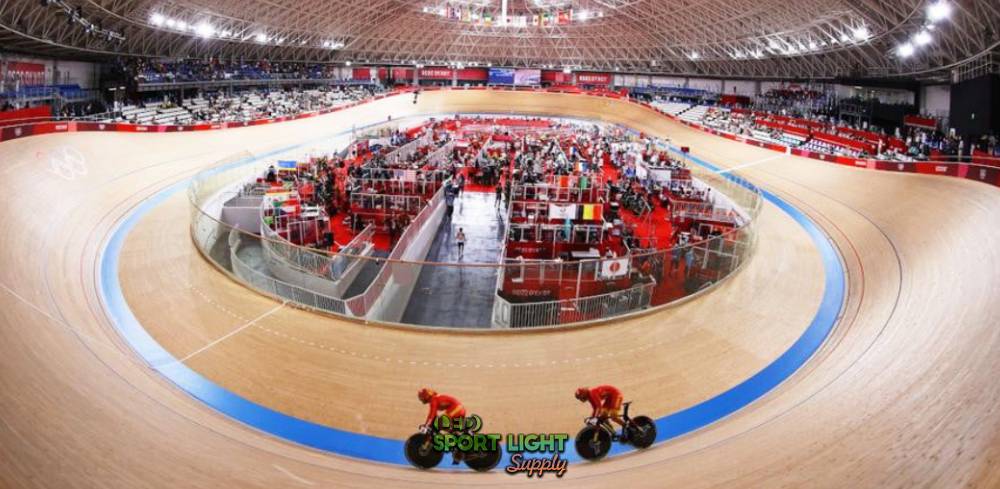
Reaching the right lux number is only half the challenge—the quality of light must be uniform to prevent performance inconsistencies. A well-designed lighting plan minimizes brightness variance across the racing oval, which is essential for sustaining a safe visual environment. Uneven lighting can cause disruptive shadows, hot spots, or dark patches that distract or impair the field of vision.
Uniformity is measured using the uniformity ratio (minimum illuminance divided by average illuminance). For competitive velodromes, this ratio should ideally be 0.6 or greater. Lighting engineers often employ asymmetric beam fixtures and advanced optics to control light spread, aligning beam patterns to track contours and minimizing overlap. Strategic placement and fixture angle also help avoid sharp contrasts at corners and steep curves where shadows can develop.
To maintain uniformity, designers often rely on lighting simulation software that maps beam projections across the entire track. The aim is to produce overlapping coverage that ensures even light intensity. For example, placing fixtures at staggered intervals along opposite sides of the track helps balance the light and avoids central bright spots. Beam angles typically range between 30 to 60 degrees, adjusted based on mounting height and throw distance.
The track surface, often made from Siberian pine or other polished materials, can reflect light in unpredictable ways. By selecting fixtures with low-glare diffusers and positioning them to minimize direct reflection, engineers can prevent blinding zones or optical disorientation. Glare-reducing lens optics and anti-reflective coatings on fixture covers are standard choices in advanced velodrome installations.
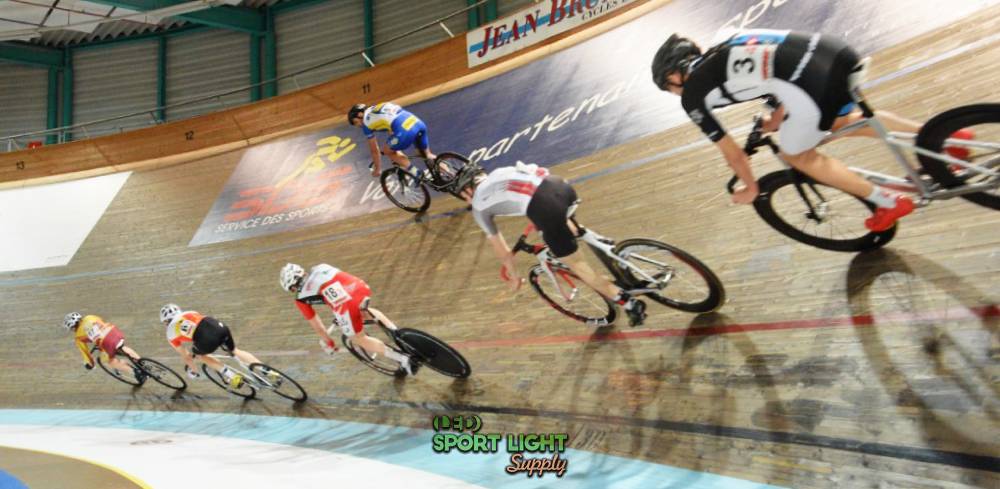
Modern velodromes are increasingly designed to support a variety of events beyond competitive cycling. These multi-use spaces often host basketball games, trade shows, concerts, community gatherings, and other indoor sports—all of which come with different lighting expectations. Because of this versatility, velodrome lighting systems must be highly adaptable, offering both precision and flexibility.
Unlike cycling-specific setups that require high lux levels with uniform distribution, events such as exhibitions or performances may benefit from a warmer ambiance, spotlighting, or reduced brightness. The lighting infrastructure must allow for selective dimming, zoning, and programmed lighting scenes tailored to each activity. This not only enhances the user experience but also helps reduce unnecessary energy use.
The infield of a velodrome is frequently repurposed for a wide range of activities, from athletic events like indoor soccer and gymnastics to large-scale expos and community functions. These events typically require lower lux levels—anywhere between 300 to 800 lux, depending on the visual demands of the activity. To accommodate this, lighting systems incorporate fixtures with independent controls targeting only the infield zone. This approach ensures that while the central area remains well-lit, the peripheral track lighting can remain off or dimmed, conserving power.
Lighting control technologies now allow facility operators to program scene-based presets aligned with different event formats. For example, activating a “cycling competition” preset could set all track and perimeter lighting to maximum brightness, while switching to a “public event” preset might lower illumination to comfort levels in the infield only. These scenes can be pre-configured and recalled with a single command, minimizing setup time and maximizing lighting precision. This system enhances venue turnaround efficiency between events and helps optimize long-term operational costs.
Beyond simple presets, advanced lighting systems can also be integrated with event management software or digital calendars. This allows lighting behavior to be synchronized automatically with scheduled events. For instance, lights may begin ramping up 30 minutes before a scheduled match, then gradually dim during intermissions or after the event concludes. Automated scheduling prevents human error, supports timely readiness, and contributes to overall facility efficiency. It also allows operators to plan and project energy use in advance, aiding in budget forecasting and sustainability tracking.
Correct lighting not only improves visibility but also supports rider and spectator safety. Inadequate or inconsistent lux levels can contribute to misjudgments during high-speed turns or overtaking maneuvers. Ensuring compliance with industry lighting standards helps prevent accidents and meets the expectations of athletes, coaches, broadcasters, and international cycling bodies.
Over time, fixture performance may decline due to dust accumulation, component aging, or misalignment. Regular lux level testing using photometric equipment helps track any deviation from the original design. Facilities often schedule biannual or annual lighting audits to verify uniformity and brightness consistency. If values fall below recommended thresholds, adjustments or fixture replacements are scheduled promptly.
Velodromes hosting sanctioned events must adhere to guidelines from governing organizations such as UCI (Union Cycliste Internationale). These standards include specific lux levels, uniformity ratios, and glare index limits. Documentation and certification of lighting performance are often required before the venue can host competitive races or qualify for television broadcast agreements.
Lighting uniformity is a foundational element in velodrome illumination, influencing not only visual clarity but also safety, performance, and the overall experience of both athletes and spectators. In the context of cycling, where riders move at high speeds on curved and steeply banked surfaces, any discrepancy in lighting levels can disrupt focus, increase reaction time, and heighten the risk of misjudging contours or distances.
Uniformity is typically expressed as a ratio—minimum lux divided by average lux—with ideal values falling between 0.6 and 0.8. For example, if the average lux level on the track is 1000 lux, the lowest point should not drop below 600 to 800 lux. Maintaining this range reduces the likelihood of visual strain and ensures that no part of the velodrome is underlit or overexposed. Sharp contrasts in lighting can cause disorientation, especially during high-speed sprints, overtaking maneuvers, or sudden turns.
Achieving consistent illumination on a velodrome is technically challenging due to its unique architecture. The combination of inclined banked curves, long straightaways, and infield zones requires a lighting approach that addresses both horizontal and vertical planes. Lights must be strategically placed at varying angles and elevations to cover all zones uniformly, particularly in corners where centrifugal motion and banking create difficult lighting angles.
The steep banking of corners—often up to 42 degrees—alters how light lands on the surface. Fixtures must be positioned at customized tilt angles to project light evenly without producing intense central beams or dim edges. This precision prevents blind spots and ensures a smooth transition of brightness as cyclists move through turns and straights.
Design simulations using lighting software (such as DIALux or AGi32) are indispensable in the early design phase. These tools allow engineers to create 3D models of the velodrome and simulate different lighting layouts. The software identifies problem zones—like underlit corners or shadow overlaps—and provides lux mapping that visualizes uniformity ratios throughout the facility. Iterative testing in the digital space minimizes costly trial-and-error during construction.
In pursuit of uniformity, overlapping beams can sometimes cause excessive brightness, or spill light into non-cycling areas. Well-designed optics and lens systems narrow the light’s spread where needed, preserving intensity on target surfaces while avoiding wasteful or uncomfortable over-illumination in secondary zones.
To deliver consistent brightness across the track, velodromes typically employ a combination of fixture types. High-output floodlights offer broad coverage, while narrow-beam LEDs with adjustable optics can fill in areas where precision is needed. Wall-mounted or ceiling-hung high-bay fixtures may be used to enhance vertical illumination, especially on banked walls and inner lanes. The coordinated use of these fixture types helps avoid dark patches and reduces the risk of over-lighting any one area, which can cause glare.
Wide-angle floodlights serve the purpose of covering long straight tracks and upper bleacher zones. However, narrow-beam LED fixtures are targeted toward more precise lighting, especially around corners or near entrances and exits. When coordinated correctly, these fixtures complement each other to balance light intensity across complex layouts.
The height at which fixtures are mounted greatly affects light distribution. Higher mounting points allow light to spread more evenly, but must be paired with sharper beam angles to prevent light dilution. Adjustable mounting brackets help refine this geometry, ensuring light reaches both horizontal and vertical planes of the track surface with uniform intensity.
The reflective properties of the velodrome surface—whether it’s wood, synthetic, or composite—also impact lighting uniformity. A track with a matte finish will diffuse light more evenly, minimizing glare and helping to maintain consistent light levels. In contrast, glossy surfaces or uneven coatings can produce bright reflections or “hotspots” that distort visual perception. Designers often conduct surface reflectance measurements and choose coatings that align with uniformity goals.
Different track materials—such as Siberian pine, polyurethane, or synthetic rubber—reflect light differently. High-gloss finishes can create disruptive hotspots, especially under strong LED beams. To mitigate this, surfaces should have a Light Reflectance Value (LRV) optimized between 30% and 60%, balancing reflection and absorption for visual comfort.
The color and texture of walls, infield flooring, and ceilings significantly influence light distribution. Matte, light-colored finishes on walls enhance indirect lighting by softly diffusing stray beams, while dark or glossy surfaces absorb light or produce unpredictable reflections. Strategic material selection extends uniform lighting benefits beyond the track itself.
Over months or years of operation, dirt, dust, and humidity can degrade fixture lenses and surface reflectance properties. Velodrome lighting systems should include a regular cleaning and maintenance schedule. Anti-dust coatings and corrosion-resistant materials help preserve long-term optical performance, contributing to consistent uniformity throughout the life of the system.
While the racing surface is the focal point, uniform lighting must also extend to the surrounding areas—such as warm-up lanes, staging zones, and spectator pathways. Transition zones that suddenly drop in brightness can be jarring to riders, especially when moving between practice and race areas. Maintaining a uniform level of at least 300 to 500 lux in these adjacent areas supports seamless movement and maintains comfort throughout the facility.
Riders often spend considerable time in warm-up or cooldown zones adjacent to the main track. These areas should mirror the uniformity standards of the track itself to avoid a stark difference in visual conditions. Smooth transitions between areas allow cyclists’ eyes to adapt without strain or confusion.
Spectator seating, stairwells, and operational control rooms must also be considered in uniformity plans. Though these areas do not require high lux levels, their lighting should be consistent and free of flicker to ensure visual ease for staff and attendees. Sudden brightness drops in corridors or stands may affect comfort and safety.
Uniformity is not just a technical measure but a perceptual one. Ensuring that all zones appear visually balanced—even if lux levels differ—supports the psychological comfort of everyone inside the velodrome. It enhances the spatial cohesion of the facility and upholds a professional standard for athletes, viewers, and broadcasters alike.
Glare poses a significant challenge in velodrome lighting design because it can impair a cyclist’s vision, delay reaction time, and cause visual discomfort. For athletes traveling at high speeds, even momentary visual disturbances can affect safety and performance. Spectators and race officials are also affected, as glare can reduce their ability to clearly see the action and accurately judge race conditions. Addressing glare is therefore a priority in creating a lighting system that supports optimal visual conditions for all users.
One primary approach involves using fixtures equipped with precise optical lenses and shielding components that direct light onto the intended areas while limiting stray or scattered light. These optics help focus the beam on the track surface and avoid spill light that would shine directly into riders’ or spectators’ eyes.
Careful consideration is given to the height and angle of each fixture. Mounting lights at elevations and tilt angles that place the source outside the direct line of sight for riders is critical. Angled placement ensures that cyclists are illuminated from the side or above rather than facing bright light sources head-on. This reduces discomfort and prevents temporary blindness from glare, particularly in banked corners where sight lines change rapidly.
Fixtures often include shields or louvers—thin slats or hoods that block or absorb light escaping beyond the target zone. These components help contain glare by absorbing or redirecting light that would otherwise cause visual distraction. By limiting upward or sideways spill, shielding contributes to a cleaner light environment.
Indirect lighting techniques play a valuable role in minimizing glare while maintaining adequate illumination levels. Instead of shining light directly onto the track, indirect lighting bounces light off surrounding surfaces such as ceilings or walls. This softer, diffused light reduces the intensity of direct beams that cause glare, creating a more comfortable environment.
Using matte or lightly textured finishes on ceilings and walls enhances the effectiveness of indirect lighting. These surfaces scatter light evenly and prevent harsh reflections or hotspots. When fixtures are aimed at these surfaces, the reflected light bathes the track and infield with a uniform glow that avoids sharp contrasts.
Most velodrome lighting systems use a hybrid approach, blending direct lighting for critical visibility with indirect light to fill in shadows and reduce harshness. This layered lighting strategy balances brightness with comfort, ensuring cyclists see clearly without facing intense beams while spectators enjoy a visually pleasing experience.
Indirect lighting can also contribute to energy savings by reducing the number of high-intensity fixtures required for direct illumination. By leveraging reflected light, facilities may use lower wattage lamps or fewer fixtures, which lowers operating costs and heat output. This is especially advantageous in large indoor arenas where HVAC loads can be impacted by lighting heat generation.
The materials used within the velodrome influence glare levels significantly. Matte or semi-matte paint finishes on walls and ceilings absorb excess light and minimize unwanted reflections that can create dazzling glare. Conversely, glossy or reflective surfaces can exacerbate glare by bouncing bright light unpredictably into riders’ eyes.
Advanced anti-glare coatings applied to the lenses or covers of lighting fixtures reduce light scattering and harshness. These coatings enhance visual comfort by softening light output and preventing stray beams from creating hotspots. Over time, such coatings also help maintain optical clarity despite exposure to dust, humidity, or cleaning chemicals.
Regular maintenance of fixtures, including cleaning lenses and shields, is essential to sustain glare control performance. Dirt and dust accumulation can scatter light unevenly, increasing glare and reducing uniformity. A well-maintained lighting system consistently provides comfortable illumination conditions for all users.
By integrating these glare mitigation strategies—including precise fixture optics, indirect lighting, surface treatments, and ongoing maintenance—a velodrome can offer a visually comfortable and safe environment. This careful balance between brightness and glare control supports athlete performance, enhances spectator experience, and meets the demands of broadcast-quality lighting.
Modern velodromes increasingly rely on sophisticated lighting control systems to achieve a high level of operational flexibility and enhance overall performance. These control systems allow facility managers to customize lighting scenarios based on the specific needs of different events, times of day, or user groups, resulting in improved energy efficiency, better user experience, and optimized maintenance.
Velodrome lighting requirements fluctuate significantly based on the type of activity taking place. A high-profile competitive race demands maximum visibility and visual clarity for athletes, officials, broadcasters, and spectators. In contrast, training sessions or community gatherings require less intense lighting, focusing more on energy efficiency and comfort. Modern lighting control systems facilitate the creation, programming, and recall of multiple lighting “scenes” or presets tailored specifically to these varying needs.
These scenes allow operators to instantly switch between predefined settings that optimize illumination levels, color temperature, and even fixture focus areas. For example, a “competition mode” may engage full brightness across the track and infield, ensuring compliance with broadcasting standards such as high-definition video requirements, uniform lux distribution, and high color rendering index (CRI) values to accurately represent colors on camera. Conversely, a “training mode” typically lowers overall brightness and focuses light primarily on the track, conserving energy and reducing glare for athletes during routine practice.
Additionally, other event modes such as “community use,” “maintenance,” or “off-hours” can be configured to suit specific operational goals, including reducing electricity costs and prolonging equipment lifespan. These presets can be refined over time based on feedback and changing usage patterns, making the lighting system highly adaptable and responsive to real-world demands.
Velodromes often consist of multiple distinct functional zones that require different lighting levels simultaneously. The racing track itself may require intense, uniform lighting, while warm-up areas or spectator seating may benefit from softer illumination to enhance comfort and reduce glare. Multipurpose infield spaces might host different types of activities such as basketball games, exhibitions, or community events, each with unique lighting needs.
Lighting control systems enable independent management of these zones by allowing operators to adjust brightness levels and color characteristics separately for each area. For example, during a race event, the track and official areas can be brightly lit while the spectator zones remain moderately illuminated to reduce eye strain and enhance viewing contrast. During non-race times, the track lighting can be dimmed substantially while infield or peripheral zones are adjusted according to scheduled activities.
This zoning capability supports energy savings by preventing over-illumination of unoccupied or less active areas and improves the overall user experience by tailoring lighting conditions to the specific function of each space.
Dimming is a fundamental feature of modern velodrome lighting control systems that contributes significantly to operational efficiency. Instead of operating at full power continuously, fixtures can reduce light output during off-peak periods, lower-demand activities, or transitional phases such as warm-ups and cooldowns.
Beyond energy conservation, dimming reduces the electrical load on the facility, which can translate to lower demand charges on utility bills and less strain on electrical infrastructure. It also decreases heat emission from lighting fixtures, which positively impacts the arena’s HVAC system by reducing cooling requirements and contributing to a more stable indoor climate.
From a maintenance perspective, dimming extends the useful life of LED fixtures by limiting thermal stress and reducing wear on electronic components. This results in fewer replacements and repairs, lowering long-term maintenance costs and minimizing event disruptions due to lighting failures.
Many systems allow smooth, flicker-free dimming down to very low percentages of full output, enabling gradual transitions that enhance user comfort and avoid sudden changes in brightness that could distract athletes or spectators. When combined with scheduling and occupancy sensors, dimming becomes a powerful tool to optimize both lighting quality and energy efficiency without compromising performance.
Automation plays a key role in streamlining facility management. Lighting control systems often include programmable scheduling options that automatically adjust lighting based on time of day, day of the week, or calendar events. This feature ensures that lighting is active only when needed and at the correct intensity, reducing human error and operational costs.
In some velodromes with access to natural light, ambient light sensors allow the system to respond dynamically to changing daylight conditions. When sufficient daylight is detected, artificial lighting can be dimmed or turned off, further conserving energy. As natural light diminishes, the system gradually increases illumination to maintain consistent visibility standards.
Advanced systems provide facility managers with the convenience of remote access via mobile apps or web-based platforms. This capability enables real-time adjustments and monitoring from anywhere, facilitating quick responses to unexpected needs or event changes without requiring personnel to be physically present at the venue.
Modern lighting control systems often integrate with broader building management platforms, connecting lighting with HVAC, security, and audio-visual controls. This integration enables holistic monitoring of the facility’s operational status and streamlines maintenance workflows.
Continuous monitoring of individual fixtures and circuits allows the system to detect faults such as lamp failures, wiring issues, or power surges immediately. Automated alerts notify maintenance teams to address problems quickly, minimizing downtime and ensuring consistent lighting quality for all events.
Historical data collected by the control system can inform predictive maintenance schedules, reducing unexpected failures and extending the lifespan of lighting equipment. Performance analytics also help optimize energy consumption by analyzing usage patterns and identifying opportunities for efficiency improvements.
By combining customizable scenes, automated scheduling, real-time monitoring, and seamless integration, lighting control systems provide velodromes with unmatched flexibility and reliability. These technologies contribute to a safer, more adaptable, and cost-effective lighting environment that can meet the evolving demands of athletes, spectators, and facility operators alike.
Color temperature, measured in Kelvins (K), significantly shapes how individuals perceive the environment inside a velodrome. It affects both the functional visibility needed by riders and officials and the overall atmosphere experienced by spectators and broadcasters. Selecting the right color temperature is therefore a critical decision that balances clarity, comfort, and ambiance.
Velodromes dedicated to high-level competition and professional use typically favor cooler lighting temperatures between 5,000K and 6,500K. This range emits a bright, crisp white light often described as “daylight” or “neutral white.” The cool light improves contrast and sharpness, making it easier to distinguish subtle features such as track markings, textures, and the contours of banked curves. Enhanced visibility supports cyclists in maintaining their racing lines, enables referees to make accurate decisions, and improves the fidelity of high-speed video recordings for broadcasting purposes.
In addition to better contrast, cooler light is associated with increased alertness and energy levels, which can positively impact athlete focus and audience engagement. The spectral characteristics of higher Kelvin temperatures reduce motion blur on camera, allowing for clearer capture of fast-moving athletes, a significant advantage in televised sports where clarity and color accuracy are essential.
Conversely, lighting with warmer color temperatures, typically below 4,000K, produces a softer, more inviting atmosphere. This warm light tends to reduce glare and can create a calming environment, which may be better suited for community events, recreational sessions, or multi-purpose venues where visual sharpness is less critical than comfort.
While warmer tones offer a more relaxed ambiance, they can reduce the vibrancy and contrast of colors, potentially making it harder for athletes to see fine details on the track and for cameras to accurately reproduce colors. Therefore, warmer color temperatures are generally less suited for competitive racing settings but may serve well during downtime or casual use.
Beyond color temperature, the Color Rendering Index (CRI) plays a vital role in determining the quality of light within a velodrome. CRI measures how accurately a light source reveals the true colors of objects compared to natural sunlight, with values ranging from 0 to 100.
A CRI above 80 is recommended for velodrome lighting to ensure colors appear natural and distinguishable. This level of color fidelity is essential for athletes to differentiate between lane markings, equipment, and competitor uniforms, all of which can influence performance and safety. Additionally, high CRI lighting benefits officials in making accurate calls and improves the quality of broadcast footage, where color accuracy enhances viewer experience.
Innovations in LED technology have introduced tunable white lighting systems, which allow for dynamic adjustment of color temperature throughout the day or during different event phases. These systems can transition from warmer tones during warm-up or cooldown periods to cooler, high-contrast light during races and broadcasts.
This adaptability provides several advantages: it maximizes energy efficiency by tailoring light intensity and temperature to actual needs, enhances athlete comfort and performance by aligning lighting with physiological and psychological demands, and offers broadcasters customizable lighting environments to optimize image quality.
By integrating tunable lighting controls, velodromes gain a versatile lighting system capable of supporting a wide range of activities and enhancing the facility’s appeal for varied user groups.
Investing in lighting for a velodrome involves multiple cost components that extend from initial acquisition to ongoing operation and maintenance. Understanding these expenses helps in creating a realistic budget and securing a lighting system that balances performance and affordability over time.
The largest portion of the initial budget for velodrome lighting typically stems from acquiring the lighting fixtures themselves. Selecting the right technology involves balancing upfront costs against long-term performance, energy consumption, maintenance needs, and light quality. Velodrome managers must weigh various options carefully, as the choice directly impacts operational expenses and the overall lighting experience for athletes, officials, and spectators.
Historically, many velodromes have relied on lighting technologies such as metal halide and high-pressure sodium (HPS) lamps. These systems were favored due to their relatively low purchase price and the widespread availability of fixtures. Metal halide lamps, for example, produce a bright, white light that can adequately illuminate large sports facilities, making them a common choice in the past.
However, despite the lower initial cost, these traditional lamps come with several disadvantages that affect long-term value. Both metal halide and HPS lamps tend to have shorter operational lifespans, typically ranging from 10,000 to 20,000 hours. This requires frequent replacements, which not only add to maintenance costs but can also lead to operational downtime during critical usage periods.
Energy consumption is another drawback. These lamps consume considerably more power than modern alternatives, resulting in higher electricity bills, particularly for velodromes that require extended hours of lighting during training sessions, competitions, and community events. Additionally, metal halide and HPS lamps often exhibit slower startup times and longer warm-up periods, limiting their flexibility in dynamic lighting control scenarios.
Light Emitting Diode (LED) technology has rapidly become the preferred choice for modern velodrome lighting due to its numerous performance and cost benefits. While the initial purchase price for LED fixtures is generally higher than that of traditional lamps, this investment tends to pay off through significant operational savings and improved lighting quality.
LEDs are known for their exceptional energy efficiency. They consume a fraction of the electricity required by metal halide or HPS lamps to deliver equal or greater illumination levels. This efficiency results in noticeably lower utility costs over the lifespan of the lighting system, making LEDs highly attractive for facilities seeking to manage ongoing expenses.
The longevity of LED fixtures is another major advantage. With operational lifespans often exceeding 50,000 hours, LEDs reduce the frequency and cost of replacements dramatically. This not only lowers maintenance labor and material costs but also minimizes disruptions to training and event schedules caused by fixture downtime.
In addition to durability and efficiency, LEDs offer superior light quality. They provide bright, crisp illumination with excellent color rendering, helping riders clearly see track details and enhancing the viewing experience for spectators. Furthermore, LEDs reach full brightness instantly, enabling flexible use of dimming and zoning controls without delays or flickering.
Advanced LED fixtures also support precise beam control and reduced glare, improving comfort and safety within the velodrome environment. Their compatibility with modern control systems allows facility managers to tailor lighting scenes and conserve energy dynamically, adapting to various activities and event types.
Overall, while the upfront costs for LED systems can be higher, their combination of energy savings, extended lifespan, and enhanced lighting performance often results in a lower total cost of ownership and a better environment for all users of the velodrome.
Lighting a velodrome combines technical precision with an understanding of athletic and visual demands. Achieving the right lux levels and uniformity supports rider safety and performance, while controlling glare enhances comfort for everyone present. Power consumption and cost considerations increasingly favor LED technologies, which also offer flexibility through advanced control systems.
The number and placement of fixtures require careful planning to balance brightness, coverage, and energy use. Selecting the appropriate color temperature and ensuring accurate installation practices further refine the lighting environment. Together, these factors create a dynamic atmosphere that supports competition, training, and spectator enjoyment.
Investing in thoughtfully designed lighting systems helps velodromes maintain a competitive edge, reduce operational costs, and deliver visually engaging experiences. As lighting technologies continue to evolve, velodrome operators can expect improved efficiency and enhanced performance capabilities for years to come.