

Lighting in sports domes does far more than illuminate the playing surface. It influences how athletes move, how spectators experience the game, and how broadcast teams capture the action. Sports domes are enclosed structures that typically serve a wide range of activities including football, tennis, track and field, and even recreational events. Within such multipurpose environments, uniform lighting and visual clarity must be carefully considered from design through to installation.
Unlike open-air venues, domes trap light. This makes fixture placement and distribution patterns a key factor in minimizing glare, avoiding dark zones, and preventing visual fatigue. The choice of fixtures, aiming angle, color temperature, and the type of playing surface all influence the final lighting effect.
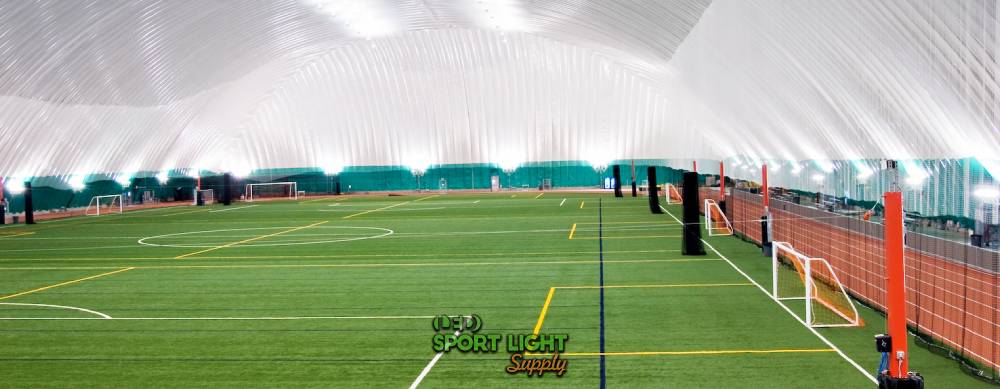
Mounting height and fixture arrangement are two factors that affect the overall lighting quality in a dome. High ceilings provide flexibility but also pose challenges. Light fixtures mounted too high may struggle to deliver concentrated brightness where needed, especially in sports requiring tight spatial focus. Lower-mounted systems offer greater focus but may cause shadows and player distractions when not positioned with care. Computer-aided lighting simulations are often used to test different mounting layouts before installation, ensuring that each fixture provides optimal coverage without overlapping glare or visual obstruction.
In larger domes with multiple uses, tiered mounting strategies may be applied. This involves arranging fixtures at various heights and angles to create layered lighting zones. Such an approach allows for selective control over areas of use without illuminating the entire space, preserving energy while supporting event-specific demands.
The dome’s internal surfaces, including the ceiling membrane, walls, and flooring, play a substantial role in how lighting behaves within the space. Bright and reflective materials, such as light-colored PVC membranes or artificial turf with higher reflectance values, can enhance brightness levels by scattering and redistributing emitted light. This helps reduce the number of fixtures required and enhances visibility in areas that would otherwise fall into shadow.
On the other hand, domes with darker interiors or materials that absorb rather than reflect light demand higher lumen output from each fixture. This not only increases the number of fixtures needed but also places more stress on the system’s energy demands. Coordinating lighting design with surface textures and materials ensures efficient illumination and better contrast, particularly for fast-paced sports where the ball or player movements must be tracked quickly.
Glare can severely interfere with athletic performance and audience enjoyment. In an enclosed dome, where walls and ceilings reflect light in unpredictable ways, unmitigated glare becomes a recurring issue. It can also create hot spots on playing surfaces and washed-out visual zones in spectator areas. To combat this, lighting designers often choose fixtures with anti-glare lenses or integrated reflectors that shape and soften the output.
Incorporating adjustable optics and directional shielding makes it possible to target light precisely where it’s needed while blocking it from angles that might produce unwanted reflections. Visual comfort becomes a shared experience for athletes, referees, and audiences alike. Uniform lighting distribution and consistent color temperature also contribute to comfort by reducing the visual strain that may result from overexposed or unevenly lit zones.
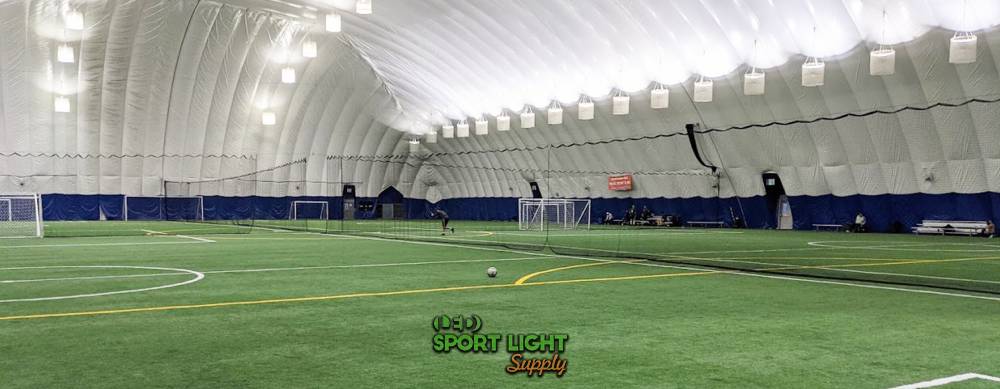
Different sports come with distinct lighting needs, especially when played indoors in a dome environment. While the overall goal is to provide uniform coverage, some activities require lighting that responds to specific viewing angles, ball tracking speeds, and athlete movement patterns. These needs should be addressed during the design phase to ensure that the lighting system supports each use case effectively. Below is a closer look at lighting considerations for tennis, football, and basketball within a dome.
Tennis in a dome requires lighting that minimizes shadows and glare across the court, as players rely heavily on visual clarity to track fast-moving balls. The compact size of the playing area means that even small inconsistencies in lighting can affect gameplay. Lighting fixtures are often arranged parallel to the sidelines or mounted in rows above the court, with diffused lenses that reduce harsh contrasts. The recommended horizontal illuminance for professional indoor tennis typically ranges from 500 to 1000 lux depending on the level of play.
Color rendering is also a key factor in tennis lighting. A high CRI rating helps distinguish the ball from the court surface and background. Dome designers may also use non-reflective court materials to support even visibility. In multi-court layouts, individual lighting zones are created so that one game’s illumination does not bleed into another.
Football inside a dome presents a different challenge due to the scale of the field and the speed of the game. Fixtures must be capable of projecting light over long distances while maintaining even brightness. Mounting height becomes particularly relevant, as the dome’s ceiling may exceed 60 feet or more. Narrow-beam fixtures with high lumen output are used to reach distant corners without compromising uniformity.
Since players and the ball move quickly and often at steep vertical angles, vertical illuminance must also be considered. Lights should enable spectators and cameras to follow action above the field, such as during headers or aerial passes. Flicker-free LEDs with consistent beam intensity are used for high-definition video capture and live broadcasting.
Basketball demands focused lighting that enhances contrast between the court and its surroundings. Due to the indoor setting and smaller scale of the playing area, fixtures are generally mounted closer to the floor than in football domes. However, the quick pace and frequent upward gaze of players and referees make glare control especially relevant.
Backboards and glass panels can create reflections if not properly lit, so directional lighting aimed from above the baseline and sideline helps eliminate these distractions. Basketball courts also benefit from consistent vertical lighting levels so players and spectators can follow the ball’s path clearly. Warm white lighting may be used for recreational play, while cooler white temperatures are preferred for professional environments.
| Sport / Use Case | Lux Range | Application Level |
|---|---|---|
| General Recreational Use | 200 – 500 lux | Basic activities, casual play, open practice |
| Competitive Multi-Sport Use | 750 – 1500 lux | Organized games, non-broadcast competitions |
| Broadcasted Events | 1500 – 2000 lux | High-definition video, live-streamed matches |
| Tennis (Practice to Professional) | 500 – 1000 lux | Emphasis on shadow reduction and ball visibility |
| Football (Amateur to Broadcast) | 1000 – 2000 lux | Large field coverage, vertical illuminance for aerial plays |
| Basketball (Club to Broadcast) | 750 – 1500 lux | Quick play visibility, glare control, high CRI |
Illuminance within indoor sports domes is quantified in lux, the measurement of luminous flux per unit area. One lux equals one lumen per square meter, and in a dome environment, this measurement plays a pivotal role in ensuring visibility, performance accuracy, and visual comfort for both players and spectators. Because domes vary widely in size, ceiling height, surface materials, and event types, there is no single lux standard suitable for all purposes.
For casual activities or open practice sessions, lighting levels between 200 and 500 lux are generally considered sufficient. This is adequate for slower-paced movement and informal play without creating glare or consuming excessive energy. When a dome hosts organized sports competitions, lux requirements increase to a range of 750 to 1500 lux. This step-up supports faster action, quick directional changes, and more demanding visual tasks like tracking balls or reading movement cues.
When events inside domes are televised or streamed live, higher lux thresholds are required. For high-definition broadcast, the lighting must provide strong vertical and horizontal illuminance, maintain consistent intensity throughout the field, and avoid flicker. A broadcast-level dome typically operates in the 1500 to 2000 lux range. Vertical lux becomes especially critical in sports where the ball or athlete frequently moves above shoulder level, such as volleyball or football.
In addition to lux strength, color rendering index (CRI) also becomes a determining factor. Professional-level play demands CRI ratings above 80, with elite-level events preferring 90 or higher. This helps differentiate colors more naturally on camera, improves audience experience, and assists officials in judgment calls. Such levels are necessary not only for enhancing the game atmosphere but also for enabling slow-motion replays and detailed video analysis.
Maintaining lux standards is not just a one-time setup issue. Over time, LED fixtures may degrade, reducing total light output and causing uneven distribution across the dome. Scheduled inspections, lumen maintenance plans, and fixture recalibration are all used to uphold lighting quality. Domes equipped with smart controls can dynamically adjust lux levels based on real-time requirements, conserving energy during practice sessions or setup periods and reserving maximum brightness for peak performance hours.
Multi-use domes that host different sports on rotation may require zoning systems to apply different lux levels to specific areas. In such designs, localized lighting modules are independently controlled and programmed. The use of lighting simulation software allows designers to model how much lux each area receives under various scenarios, preventing over-lighting, reducing costs, and minimizing glare.
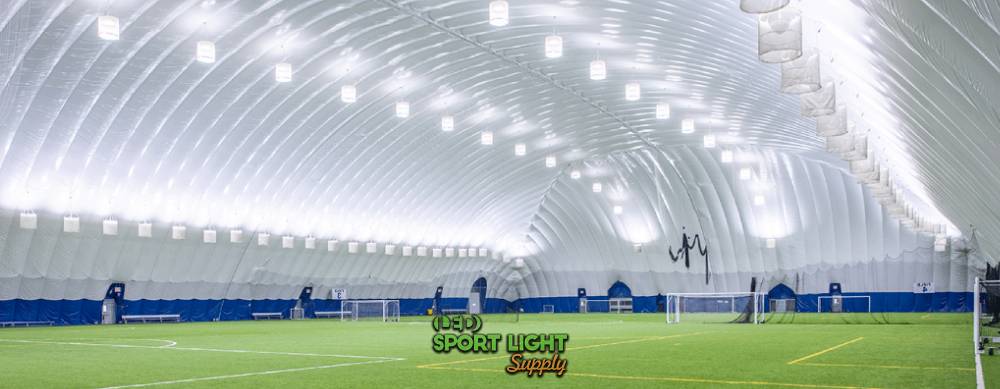
Tennis lighting in domes typically ranges from 500 to 1000 lux, depending on the level of play. The nature of the sport — fast serves, spin variations, and reliance on clear ball visibility — demands sharp contrast between the ball, court, and background. Lux uniformity is key, with a maximum-to-minimum ratio ideally kept below 1.5:1. That means no area of the court should be more than 1.5 times brighter than the darkest section.
Indoor tennis courts also require a CRI of at least 80 for clear color distinction between the ball and playing surface. Light fixtures are often positioned parallel to the sidelines and use diffused optics to eliminate glare. To prevent visual interference during lobs or high serves, the recommended vertical illuminance on the ball should be no less than 300 lux at a height of 6 meters. This ensures players can track the ball smoothly even during overhead shots.
Football fields enclosed within domes present lighting challenges due to their expansive dimensions. Typical lux levels for training sessions start around 500 lux, while league matches often require between 1000 and 1200 lux. For games broadcast in HD or 4K, that requirement rises to 1500 to 2000 lux, with an even higher emphasis on vertical light to support camera tracking of high passes, headers, and aerial plays.
The light must travel significant distances to evenly reach the playing surface, which may span over 90 meters in length. This necessitates high-lumen fixtures with narrow beam angles and careful positioning to minimize hot spots. Flicker-free performance is another must, as fast-moving objects must be captured by high-speed cameras without distortion. The use of beam uniformity ratios of 0.7 or higher ensures a seamless experience across all zones of the field.
Basketball in a dome environment involves lighting levels of approximately 750 lux for amateur or club play and 1200 to 1500 lux for competitive and televised games. The fast pace, small ball size, and regular overhead plays mean that both horizontal and vertical lux are crucial. The court surface must be evenly lit from baseline to baseline, with uniformity ratios of at least 0.8 to prevent player disorientation.
Lighting design must also account for glass backboards, which can reflect stray beams and create visual disturbances. Fixtures are often installed in symmetrical rows along the court perimeter and equipped with glare-reducing optics. CRI values for basketball venues usually sit above 85, providing color accuracy that helps differentiate the court, uniforms, and signage, all while supporting fan engagement and visual clarity in fast-paced exchanges.
Color temperature influences how athletes, spectators, and officials perceive their surroundings inside a sports dome. It affects contrast sensitivity, depth perception, and overall visual clarity—all of which shape how effectively people interact with the playing environment. Ranging from warm (around 3000K) to cool (up to 6500K), the choice of temperature impacts not only how objects appear but also how the human eye responds to motion and detail under artificial lighting.
In high-paced sports environments, cooler color temperatures tend to be more effective. Lights set at 5000K and above produce a crisp, bluish-white tone that increases sharpness and helps separate objects from their backgrounds. This proves useful in games where players must rapidly scan the court or field, track fast-moving balls, or distinguish small markers and lines. Warmer color temperatures, which emit a yellow or amber hue, may cause visual softening and reduce contrast, making them less favorable in high-intensity settings.
Visual consistency is another aspect influenced by color temperature. When the lighting throughout a dome maintains a uniform color tone, the eyes can adjust naturally, reducing fatigue and enhancing focus. Uneven color temperatures across different fixtures or sections of the dome can cause visual discomfort or hesitation during gameplay, especially in sports requiring split-second decisions.
Color temperature also interacts with how players and spectators perceive motion. Cooler light allows for sharper edges and less blur, which benefits sports like basketball or tennis where accuracy is tied to tracking movement. In spectator areas, consistent and appropriately cool lighting enhances enjoyment by ensuring clear visibility from various angles and seating positions.
Color temperature, measured in Kelvin (K), influences how colors appear and how clearly objects can be distinguished in a sports dome. Warmer light—typically in the 3000K to 4000K range—emits a yellow-orange hue that can soften shadows but may reduce contrast and sharpness. Cooler temperatures, from 5000K to 6500K, create a whiter or bluish light that enhances visibility and promotes better focus during fast-paced action.
Sports with fast object movement, such as tennis or basketball, benefit from cooler temperatures because they produce higher visual acuity, helping players react to ball motion and spatial shifts more quickly. Cooler light also aids in the identification of uniforms, court markings, and boundaries, especially under pressure or fatigue.
Cooler color temperatures tend to simulate natural daylight, which can increase energy levels and alertness. This is particularly useful in indoor environments where natural light is limited or nonexistent. Players in domes with lighting closer to 5500K or above often report feeling more engaged and less fatigued during extended gameplay.
On the other hand, warmer lighting is sometimes used in recreational or practice settings to create a more relaxed environment. However, in high-performance situations, cooler lighting tends to dominate due to its perceptual advantages and compatibility with modern broadcast equipment.
Color temperature plays a defining role in how each sport is experienced under dome lighting. While brightness levels (lux) determine how well an area is illuminated, color temperature affects the tone, clarity, and visual comfort of that illumination. Different sports demand varying visual tasks, from high-speed tracking to wide-angle field awareness, and the selected color temperature must align with those needs.
Cooler color temperatures, typically ranging from 5000K to 6500K, are widely used in dome sports facilities because they resemble natural daylight. This enhances spatial awareness and reduces eye fatigue during prolonged play. It also improves the visibility of fast-moving balls, the texture of surfaces, and the fine details of uniforms and lines. Warmer color temperatures, around 3000K to 4000K, are less common for competitive sports but may be used in lounges, warm-up areas, or recreational courts where intensity is reduced and comfort is prioritized.
Every sport comes with its own spatial layout and motion characteristics, which influence how lighting designers select and position fixtures. The right color temperature supports both athletic performance and spectator experience, especially when coupled with high Color Rendering Index (CRI) values. In sports domes that host multiple types of events, lighting systems may be designed with tunable white capabilities, allowing color temperature to be adjusted based on the sport being played or the type of event being hosted.
Indoor tennis lighting generally falls within the 5000K to 5700K range. This color temperature ensures accurate ball tracking and supports the visual demands of high-speed serves and rallies. Cool light helps differentiate the ball from the court surface, especially when using darker or neutral tones for flooring.
Tennis also requires consistent light color to prevent distractions. Sudden shifts in color temperature across the court can alter depth perception and create hesitation during split-second decisions. Uniformity in both brightness and temperature is therefore emphasized in dome lighting layouts.
Football domes often use lighting systems calibrated between 5200K and 6000K. The large field area and variety of movements—from ground passes to aerial plays—demand a broad daylight-like illumination. This range helps cameras and spectators follow the action without visual strain or color distortion.
Cool color temperatures also improve visibility during overlapping activities, such as warm-ups or multi-field training sessions. Spectators in large domes benefit from clearer views, while athletes gain more precise visual cues from their environment, which supports performance consistency.
Basketball courts indoors benefit from lighting temperatures around 5000K to 6500K, especially for televised games. Cool light enhances the perception of player movement and the ball’s trajectory. It also improves image capture by reducing visual noise and enhancing contrast on camera.
Because basketball involves rapid motion and frequent eye-level scanning, players need an environment that does not fatigue their vision. Using cooler temperatures maintains high color rendering and sharpness, particularly on darker uniforms or shaded court designs. For training or casual games, facilities may opt for a slightly warmer tone to promote comfort without sacrificing visibility.
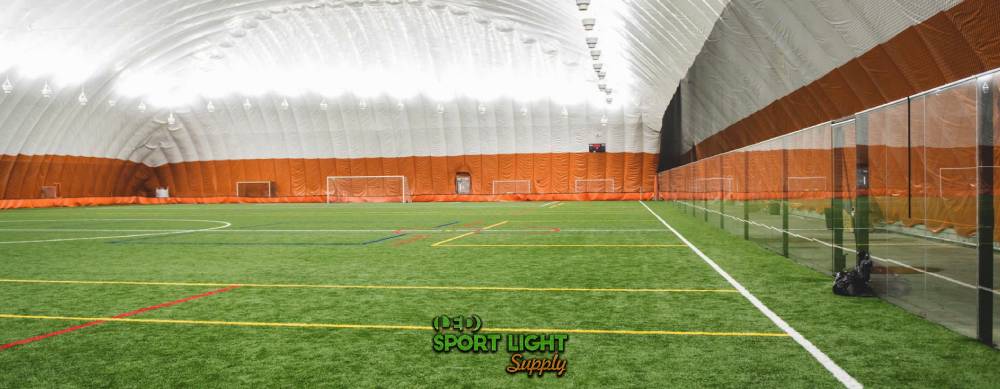
Indirect lighting refers to the method of illuminating a space by reflecting light off surfaces such as ceilings, walls, or architectural structures, rather than aiming it directly at the playing field. This technique minimizes harsh shadows and bright spots, creating a more visually balanced environment. In dome settings, where ceiling curvature and height vary, indirect lighting helps spread illumination uniformly without introducing visual discomfort or distraction.
By redirecting light, these systems reduce glare and contrast imbalances that may disrupt athlete focus or interfere with visual tracking. Indirect lighting also enhances spatial perception, particularly in large domes used for multiple sports, where wide-angle visibility is a priority. It complements direct lighting systems and is often combined in hybrid designs to achieve both intensity and comfort.
One of the most effective and widely used methods to achieve indirect lighting in a sports dome environment involves ceiling-mounted reflective surfaces. These systems typically employ a combination of angled reflectors, diffused panels, or secondary reflectors that capture the direct output of high-intensity light fixtures and redirect it downward onto the playing surface. By bouncing the light off the ceiling rather than aiming it directly, the illumination becomes softer and more evenly spread, minimizing harsh shadows and bright spots that could otherwise impair athlete performance or spectator experience.
The choice of ceiling materials plays a pivotal role in the efficiency and quality of this lighting technique. Many sports domes utilize a ceiling membrane finished with high-reflectance materials such as matte white PVC or specialized fabric coatings designed to reflect up to 85-95% of incident light. This high reflectivity ensures that a large portion of the emitted light is preserved and redistributed rather than absorbed, allowing fixtures to operate at lower power settings while still maintaining adequate brightness across the dome.
Additionally, diffused ceiling panels can be incorporated into the design to scatter light more uniformly. This reduces the formation of bright spots or “hot zones” and helps avoid visual discomfort caused by direct glare. The combination of angled reflectors and diffused surfaces creates a more natural and comfortable lighting environment that supports both fast-paced sports and casual recreational use.
Maintenance considerations are also important for ceiling-mounted reflective systems. Dust accumulation or discoloration of the reflective surfaces over time can degrade light quality and efficiency. Therefore, selecting durable, easy-to-clean materials and implementing regular inspection schedules is vital to preserving the system’s performance. Advanced designs may include modular or replaceable panels to simplify upkeep in large dome installations.
Incorporating indirect lighting into the architectural elements of a sports dome offers both functional and aesthetic benefits. Many modern dome designs feature structural components such as arches, trusses, beams, or air-supported columns that can be leveraged as mounting points or diffusing surfaces for indirect light sources. By embedding fixtures within or behind these architectural features, lighting designers create smooth, unobtrusive illumination that avoids direct line-of-sight exposure to bright light sources, thereby reducing glare for players and spectators alike.
Recessed lighting is a common approach within architectural integration. Fixtures are often installed behind translucent or frosted ceiling panels, vaulted archways, or within beam recesses, allowing light to filter through softly. This technique provides an elegant, diffuse glow that enhances the dome’s interior without overwhelming it with visible hardware or harsh brightness. Such concealed lighting also contributes to a clean, streamlined appearance that complements modern sports facility aesthetics.
For multi-purpose domes, architectural integration supports flexible lighting configurations. Systems can be designed with zoned controls, enabling selective activation of certain fixture groups based on the event type or activity taking place. For example, lower-intensity indirect lighting may be used during community recreational hours, while higher-intensity, more focused lighting can be engaged for competitive games or televised events. The architecture thus acts as both a physical and functional framework to optimize lighting performance and adaptability.
Moreover, integrating lighting into structural elements often improves energy efficiency by reducing light loss. Fixtures placed close to reflective or diffusing surfaces maximize the utilization of emitted light, minimizing the need for additional fixtures or excessive wattage. This can lead to long-term operational cost savings while maintaining high visual quality.
Finally, architectural integration allows designers to address acoustic and thermal considerations alongside lighting. Materials chosen for their reflectivity can also possess sound-absorbing or insulating properties, creating a more comfortable indoor environment. Lighting elements embedded in these structures can be tailored to work harmoniously with these additional performance goals, making architectural integration a holistic solution for dome facility design.
Glare occurs when excessive brightness or poorly directed light causes visual strain, distraction, or even temporary blindness. In indoor sports, glare can disrupt a player’s line of sight, distort depth cues, and reduce overall performance. Spectators may also experience discomfort if fixtures are positioned in their direct view, especially in domes with tiered seating or open viewing decks.
The unique structure of sports domes makes them particularly susceptible to glare. Rounded ceilings, high-gloss flooring, glass surfaces, and polished sports equipment can all reflect light in unpredictable ways. Addressing glare is not only about reducing fixture brightness but also about controlling light direction, angle, and spread.
Modern sports lighting fixtures are equipped with sophisticated optical systems specifically engineered to control light distribution with high precision. These optics include anti-glare lenses, reflectors, louvers, and cut-off shields, all designed to minimize stray light and reduce glare that could interfere with players’ vision or distract spectators. By carefully shaping and narrowing the beam angle, lighting designers can concentrate illumination exactly where it is needed on the playing surface, avoiding unnecessary light spill into areas such as seating zones, ceilings, or walls. This focused approach not only enhances visual comfort but also improves energy efficiency by reducing wasted light. Additionally, advanced optics help control light reflection off shiny surfaces like polished floors, glass backboards, or glossy equipment, preventing distracting reflections and hotspots that can degrade gameplay quality.
The effectiveness of an anti-glare lighting system depends heavily on how fixtures are positioned and aimed within the dome environment. Mounting lights at heights above the typical line of sight for players and spectators helps avoid direct glare. Moreover, placing fixtures away from high-reflectance architectural features and glossy surfaces reduces the chance of unintended light bouncing into eyes. Dome lighting designs often incorporate perimeter lighting grids, where fixtures are arranged around the dome’s edges, combined with cross-aimed or staggered patterns to provide overlapping, uniform coverage without creating intense hotspots. Precise photometric planning using computer simulations ensures that no single viewpoint within the dome experiences excessive brightness or glare, preserving both visual comfort and safety. These aiming techniques are especially critical in multi-use domes where different sports and events may require dynamic lighting adjustments to maintain optimal conditions.
The challenge in dome lighting is not only achieving the required lux level but doing so without sacrificing comfort. Over-lighting a space, especially with overly cool or intense LEDs, can lead to excessive glare even with shielding in place. Finding the correct balance between brightness and uniformity requires thoughtful integration of both direct and indirect sources.
Indirect lighting helps distribute ambient light, while glare control strategies focus the intensity where it’s most needed. Together, they provide a visually smooth experience that supports long-duration play and enhances both participant and audience engagement.
Many modern sports dome facilities serve a variety of purposes, accommodating different sports, recreational activities, and special events within the same enclosed space. Each activity brings its own specific lighting requirements, such as differing brightness levels, color temperatures, and beam angles. To meet these varying needs effectively, tunable lighting systems have become increasingly popular. These systems incorporate advanced controls that enable facility managers to dynamically adjust the lighting parameters in real time or according to preset scenes tailored to particular uses.
The ability to modify brightness levels helps balance energy consumption with visual performance. For example, during low-intensity practice sessions or community recreational hours, lighting can be dimmed to conserve power while still maintaining safe visibility. For competitive games or televised events, the system can be ramped up to deliver high-intensity, uniform illumination that meets professional standards. Alongside brightness control, tunable systems often allow adjustments to the color temperature, shifting from warmer tones for casual or social events to cooler, daylight-like temperatures that enhance clarity and focus during fast-paced sports.
Beam spread can also be modulated in some advanced systems, enabling the redirection or focusing of light to different parts of the dome depending on the activity in progress. This flexibility reduces unwanted light spill and glare that can distract players or spectators when switching between sports with different spatial requirements. For instance, a basketball game might benefit from tighter, more focused beams on the court, while a concert or community event might call for broader, softer lighting to cover larger audience areas.
Implementing tunable lighting involves integrating intelligent control platforms with user-friendly interfaces, often accessible via mobile devices or centralized control rooms. These systems can store multiple presets, simplifying transitions between events and ensuring consistent lighting quality without the need for manual fixture adjustments. Over time, tunable lighting also supports maintenance planning and energy management, as usage data can be analyzed to optimize operating schedules and reduce costs.
Overall, tunable lighting systems enhance the versatility and sustainability of multi-use sports domes by offering a customizable lighting environment that adapts seamlessly to the evolving demands of athletes, spectators, and event organizers alike.
Industry standards for indoor sports lighting often include criteria for glare index (UGR) and luminance uniformity. Dome lighting plans are evaluated against these benchmarks to ensure visual comfort is maintained without compromising playability. Keeping within acceptable glare ratings while meeting lux requirements is a hallmark of effective dome lighting design.
In sports dome environments, lighting fixtures face unique challenges due to their exposure to accidental impacts, mechanical stresses, and environmental factors. Ensuring that fixtures are adequately protected against crushing, collisions, and vibration is critical for maintaining uninterrupted operation, reducing maintenance costs, and safeguarding investment in high-quality lighting systems. Implementing comprehensive impact resistance and anti-crush strategies can significantly enhance fixture durability and overall system resilience.
One of the fundamental aspects of anti-crush protection involves the use of robust materials and structural reinforcements in fixture construction. High-grade die-cast aluminum is commonly used for housings due to its exceptional strength-to-weight ratio, corrosion resistance, and excellent thermal management properties. In addition, impact-resistant polycarbonate or tempered glass covers protect delicate optical components while maintaining high light transmission. These materials work together to create fixtures capable of withstanding substantial physical forces without deforming or losing performance efficiency.
To prevent direct impact from sports equipment, maintenance tools, or accidental contact, lighting fixtures can be outfitted with protective guards or cages. These shields are typically fabricated from stainless steel or reinforced polymers and are engineered to absorb and deflect impacts. The design of such guards ensures minimal interference with light output and beam quality while providing a physical barrier that reduces the risk of damage from stray balls, rackets, or other objects common in sports arenas.
In high-activity environments like sports domes, vibrations from crowd movement, machinery, or nearby events can transmit mechanical stress to lighting fixtures. To mitigate these effects, fixtures are often mounted using vibration-damping hardware, including shock-absorbing brackets, flexible mounts, or rubber isolators. These components reduce the transmission of vibrations to sensitive internal parts, preventing premature wear or failure of LED chips, drivers, and electrical connections. Incorporating these technologies is vital for maintaining fixture reliability over extended periods.
While robust protection is essential, it should not hinder maintenance and accessibility. Fixtures with integrated anti-crush features are designed to allow easy access for routine cleaning, lamp replacement, or repairs without removing protective elements entirely. Modular guards or hinged covers can facilitate quick servicing while preserving safety and durability. Planning for maintenance-friendly protective solutions minimizes downtime and ensures the lighting system remains operational with minimal disruption to facility activities.
Overall, impact resistance and anti-crush protection are critical components of a resilient sports dome lighting strategy. By combining durable materials, protective shielding, vibration absorption, and maintenance-friendly designs, facilities can safeguard their lighting investments, enhance safety, and deliver consistent, high-quality illumination in demanding sports environments.
| Cost Category | Typical Range / Figures | Notes |
|---|---|---|
| LED Fixture Unit Cost | $500 – $1,200 per fixture | High-quality sports lighting fixtures |
| Number of Fixtures per Dome | 50 – 150 fixtures | Depending on dome size and lighting requirements |
| Equipment Cost Range | $25,000 – $180,000 | Based on fixture quantity and unit cost |
| Installation Costs | +20% to 30% of equipment cost | Includes wiring, mounting, labor |
| Annual Maintenance Cost per Fixture | $1 – $3 | For LED fixtures |
| Maintenance Cost per Fixture (Old Tech) | $10+ | For metal halide or fluorescent fixtures |
| Energy Savings Switching to LED | 50% – 70% reduction | Compared to metal halide or fluorescent systems |
| Energy Use (Example) | 100 fixtures x 300W = 30 kW (LED) vs. 100 fixtures x 1,000W = 100 kW (Metal Halide) | Illustrative example of energy consumption |
| Energy Reduction via Controls | Additional 20% – 30% reduction | Using occupancy sensors, daylight harvesting, dimming |
| Utility Rebates / Incentives | Cover up to 30% – 50% of initial fixture cost | Helps reduce upfront investment |
| Payback Period with Incentives | 2 – 4 years | Reduced from typical 5 – 7 years |
| Total Cost of Ownership Reduction | 40% – 60% over 10-year lifecycle | Compared to traditional lighting systems |
Effective energy efficiency and cost management in sports dome lighting begin long before installation, starting with careful planning and system design. Initial investment decisions profoundly impact both upfront costs and long-term operational expenses. A well-planned lighting system balances fixture quality, layout optimization, and control strategies to minimize waste while delivering required performance.
The total installation cost of a sports dome lighting system depends on several critical factors, including fixture type, control technology, structural complexity, and site-specific conditions. Because domes often cover large open spaces with complex architectural features, each element influences the final budget substantially.
High-quality LED sports lighting fixtures designed for dome applications typically range in price from $500 to $1,200 per unit. The exact cost varies based on factors such as lumen output, color rendering index (CRI), beam angle, and durability specifications suited for indoor environments. Large domes may require anywhere from 50 to over 150 fixtures to achieve proper illumination levels, pushing the equipment costs into a range between $25,000 and $180,000 or more.
Selecting fixtures with higher efficacy (lumens per watt) and longer lifespans can lead to higher upfront costs but deliver significant savings over time in energy consumption and maintenance.
Incorporating advanced lighting control technologies such as dimming drivers, occupancy sensors, daylight harvesting systems, and networked smart controls adds to the initial capital expenditure but provides crucial energy-saving benefits. Control system components can add an additional 10-25% to the equipment costs, depending on complexity and automation level.
Smart lighting platforms also require integration with the dome’s electrical infrastructure and sometimes with broader building management systems, which can increase both hardware and software costs.
Structural considerations unique to sports domes, including mounting heights often exceeding 30 feet, curved surfaces, and the need for specialized brackets or rigging, impact installation complexity and costs. Labor costs for mounting, wiring, aiming, and testing can add 20-30% or more to the fixture equipment costs.
Additionally, site-specific factors such as ceiling materials, access difficulties, and required permits influence the installation budget. Electrical upgrades or reinforcement might be necessary to accommodate the new lighting load, further increasing costs.
Early incorporation of lighting simulation and modeling tools during the design phase can significantly improve cost efficiency. Photometric software enables designers to optimize fixture placement, beam angles, and aiming points to achieve uniform illumination with fewer fixtures. This strategic approach can reduce the total number of required luminaires by up to 15-20%, lowering both fixture and installation costs.
Simulation also helps identify and mitigate potential glare, hot spots, or shadows, ensuring compliance with lighting standards without over-designing the system.
Due to the complexity and scale of sports dome projects, it is prudent to allocate an additional 5-10% contingency budget to accommodate unforeseen challenges during installation, such as access issues or last-minute design adjustments.
Overall, detailed upfront planning and leveraging technology-driven design optimizations provide the best path toward controlling installation costs while delivering high-quality, efficient dome lighting systems.
Energy consumption is typically the largest component of ongoing expenses for sports dome lighting, often representing 60-70% of total lifecycle costs. Given the large scale and high intensity of lighting required for domes, implementing effective strategies to reduce power usage is essential for sustainable operation and financial efficiency.
One of the most impactful ways to reduce energy costs is by replacing traditional lighting technologies—such as metal halide, high-pressure sodium, or fluorescent lamps—with modern LED fixtures. LEDs offer significantly higher energy efficiency, often cutting power consumption by 50-70% compared to conventional sources. For example, a typical 100-fixture metal halide system consuming 1,000 watts per fixture would draw about 100 kW at full load, whereas a comparable LED system rated at 300 watts per fixture only consumes approximately 30 kW, translating to substantial electricity savings.
Beyond wattage reductions, LEDs also provide benefits such as instant-on capability, better dimming response, and longer lifespans, which help reduce maintenance costs and downtime.
In addition to upgrading fixtures, integrating intelligent lighting control systems is critical to maximizing energy savings. Controls such as occupancy sensors can detect when parts of the dome are unoccupied and automatically reduce lighting levels or switch off fixtures to avoid waste. Daylight harvesting systems measure natural light infiltration and adjust artificial lighting accordingly, maintaining consistent illuminance while minimizing power use.
Advanced dimming technologies enable precise brightness control, allowing operators to tailor lighting levels to the specific needs of different activities or times of day. For instance, lighting during low-traffic periods or training sessions can be set to lower intensities, while full illumination is reserved for competitive events or televised games.
Together, these control strategies can reduce energy consumption by an additional 20-30% beyond the savings achieved by fixture replacement alone, contributing to a combined reduction of up to 80% compared to legacy systems.
Implementing zoning in lighting design allows independent control over different sections of the dome. This means that lighting can be selectively activated only in the areas currently in use, avoiding the energy waste of illuminating the entire facility when only a portion is occupied. Scheduling systems can automate lighting based on known usage patterns, further improving efficiency by ensuring lights are only on when needed.
Maintaining lighting systems at optimal performance through routine cleaning, lamp replacements, and calibration also plays a role in energy efficiency. Dust buildup on fixtures and aging components can reduce light output, prompting operators to increase brightness unnecessarily. Scheduled audits and performance monitoring help identify opportunities for adjustments or upgrades, ensuring that systems continue to operate efficiently over time.
Some sports dome operators explore renewable energy options such as solar photovoltaic panels or wind turbines to offset electricity consumption. While the initial investment is higher, incorporating renewables can dramatically reduce net energy costs and environmental impact over the facility’s lifecycle, especially when combined with energy-efficient lighting and controls.
In conclusion, adopting a holistic approach that combines high-efficiency LED technology, intelligent controls, zoning strategies, maintenance, and potentially renewable energy sources offers the most effective pathway to reducing energy and operating costs in sports dome lighting. These measures not only contribute to lower utility bills but also support sustainability goals and improve the overall user experience.
Maintenance expenses are a significant, yet often underestimated, component of the total cost of ownership for sports dome lighting systems. Unlike initial installation or energy consumption costs, maintenance impacts budgets consistently throughout the facility’s operational lifespan. Proper planning around fixture longevity and upkeep can lead to substantial savings and more reliable performance.
Modern LED fixtures stand out in this regard due to their exceptionally long operational lifespans, typically ranging between 50,000 and 100,000 hours. This is a dramatic improvement compared to traditional lighting technologies like metal halide or fluorescent lamps, which often require replacement every 10,000 to 20,000 hours. The extended lifespan of LEDs means that over a typical 10-year period, facility managers can expect to perform 75-90% fewer fixture replacements, reducing both direct costs for new parts and indirect costs related to labor and facility downtime.
Reducing the frequency of lamp changes is especially important in sports domes, where fixture access can be challenging due to height and structural complexity. Each replacement event may require specialized equipment, such as lifts or scaffolding, and can interrupt facility availability. Minimizing these disruptions enhances operational efficiency and supports continuous usage.
In addition to longevity, LEDs generally demand less frequent cleaning and recalibration to maintain optimal output. This advantage is further amplified when combined with thoughtfully designed ceiling-mounted reflective systems and indirect lighting strategies that reduce dust accumulation and exposure to environmental contaminants on the fixture lenses and optics. Cleaner fixtures preserve light quality and prevent unnecessary increases in power consumption that arise when dirt obscures output.
Typical annual maintenance costs for LED sports lighting systems are estimated at approximately $1 to $3 per fixture. This figure includes routine inspections, cleaning, minor adjustments, and occasional component replacements. In contrast, older lighting technologies can incur maintenance expenses of $10 or more per fixture each year, driven by more frequent lamp changes, ballast replacements, and the need for regular cleaning due to heat and dust buildup.
Furthermore, the consistent lumen output of LED fixtures over their lifespan reduces the need for frequent photometric recalibrations or lighting upgrades to compensate for fading light levels. This stability supports a more predictable maintenance schedule and extends the period before major refurbishments are required.
Finally, some advanced LED systems incorporate smart diagnostics and remote monitoring capabilities. These features alert facility operators to fixture performance issues before failures occur, enabling proactive maintenance that avoids costly emergency repairs and further enhances system longevity.
Overall, the improved durability, reduced maintenance frequency, and lower associated costs make LED lighting a highly attractive choice for sports dome environments. Facility owners and operators can realize significant total cost of ownership benefits while ensuring a consistently well-lit, safe, and visually comfortable environment for athletes and spectators alike.
Many government agencies, utility providers, and environmental organizations actively promote the adoption of energy-efficient lighting technologies through a variety of financial incentives. These programs commonly include rebates, grants, tax credits, and low-interest financing options that can cover anywhere from 30% to 50% of the initial costs associated with purchasing and installing high-efficiency LED fixtures and associated control systems. Such incentives play a critical role in offsetting upfront capital expenditures, making the transition to advanced lighting solutions more accessible for sports dome facility operators.
The availability and scope of these financial incentives vary by region and utility provider, so it is essential for facility managers and project planners to conduct thorough research and engage early with incentive programs to maximize benefits. In some cases, bundled packages are offered that combine lighting upgrades with broader energy efficiency improvements, amplifying the overall cost savings.
By leveraging these incentives, facilities can significantly reduce their initial investment burden, which in turn shortens the typical payback period for LED lighting upgrades. Whereas a standard LED retrofit without incentives might realize payback within 5 to 7 years, strategic use of rebates and grants can compress this timeframe to as little as 2 to 4 years. This accelerated return on investment improves cash flow and frees up capital for other operational needs or facility enhancements.
In addition to immediate financial relief, the long-term economic benefits of LED sports dome lighting are compelling. Reduced energy consumption typically results in annual utility cost savings ranging from 50% to 70% compared to older metal halide or fluorescent systems. Coupled with lower maintenance costs—thanks to longer fixture lifespans and fewer replacements—the cumulative effect can translate into a total cost of ownership reduction of approximately 40% to 60% over a standard 10-year lifecycle.
Moreover, the enhanced lighting quality provided by LED systems can increase facility usability and attractiveness for premium events, potentially generating additional revenue streams through rentals, tournaments, and broadcast opportunities. This indirect financial benefit further contributes to the overall return on investment and underscores the strategic value of investing in modern lighting technology.
Project planners should incorporate detailed lifecycle cost analyses during the design phase, accounting for all variables including energy costs, maintenance schedules, incentive timelines, and expected lighting performance. Utilizing financial modeling tools and consulting with energy service companies or lighting specialists can provide more precise ROI projections tailored to the specific dome facility and local utility conditions.
Maintaining lighting systems within sports domes presents unique challenges due to their often considerable height and complex structural design. Fixtures are typically installed at significant elevations, making routine access for repairs or replacements difficult, time-consuming, and potentially hazardous. To address this, facility planners and lighting designers prioritize the selection of lighting solutions that offer extended operational lifespans, thereby reducing the frequency and logistical burden of maintenance activities.
LED lighting technology is particularly advantageous in this regard, with many fixtures rated to operate continuously for 50,000 hours or more. This longevity far surpasses that of traditional lighting sources such as metal halide or fluorescent lamps, which often require replacement every 10,000 to 20,000 hours. The reduced maintenance cycle not only cuts labor costs but also minimizes downtime, which is critical in busy sports facilities where scheduling disruptions can impact events and revenue.
In addition to choosing long-lasting fixtures, some dome facilities incorporate architectural and mechanical features designed to facilitate safe and efficient access. Catwalks, suspended platforms, and lift-accessible grids enable maintenance personnel to reach fixtures without relying solely on cumbersome scaffolding or aerial lifts. These features enhance worker safety and help streamline routine inspections and servicing.
Furthermore, lighting fixtures in dome environments are often exposed to dust, humidity, and other environmental factors that can degrade performance over time. To combat this, many LED fixtures are designed with dust-sealed and moisture-resistant housings, which help maintain optimal functionality in indoor conditions where airborne particulates or moisture accumulation might otherwise shorten equipment life. This protection also contributes to consistent light output and color quality throughout the fixture’s lifespan.
While the primary focus of dome lighting is to provide high-quality, uniform illumination to support athletic performance and spectator experience, ensuring safety during unexpected power outages is equally vital. Dome facilities must be equipped with reliable emergency lighting systems that guarantee visibility in critical areas such as exit routes, stairwells, locker rooms, and control centers.
Modern emergency lighting solutions frequently incorporate battery-backed LED panels or integrated power supplies that can seamlessly switch on within seconds of a power failure. This immediate activation helps prevent accidents and confusion, enabling safe evacuation or continued operation of essential functions during an outage. In larger facilities, emergency power is often supported by standby generators that provide extended backup capacity, ensuring stable lighting for longer interruptions.
Designing effective emergency lighting plans also involves strategic placement and zoning to cover all necessary egress points without excessive energy use during normal operation. Emergency systems are tested regularly to comply with safety regulations and to confirm their readiness under real conditions. Control systems may include automatic self-diagnostic features that notify maintenance teams of any faults or battery degradation, allowing proactive management.
Overall, integrating robust emergency lighting and power continuity solutions into the dome’s lighting infrastructure not only fulfills regulatory requirements but also reinforces the safety and security of athletes, staff, and spectators, enhancing the facility’s operational resilience.
Lighting in sports domes serves a purpose beyond illumination. It supports athletic performance, enhances spectator experience, enables flexible use, and contributes to long-term operational goals. By selecting advanced LED systems, dome operators gain access to superior efficiency, longer service life, and greater control. Every component—from the angle of a fixture to the texture of the playing surface—works in unison to shape the final lighting effect.
As multipurpose venues continue to evolve, so too must the systems that light them. Intelligent controls, precision optics, and efficient output all play roles in adapting to new demands. Whether hosting a high-stakes match or a local practice, dome lighting must perform consistently and reliably. With thoughtful design, careful installation, and regular oversight, sports domes can maintain lighting systems that support both athletes and audiences in ways that go far beyond the visible glow.