
Lighting in a sports dome affects how well athletes perform, how spectators enjoy the game, and even how smoothly referees can do their jobs. Different sports, different competition levels, and even whether the match is broadcast on TV all play a part in deciding how much light is needed. So, what are the recommended lux levels for a sports dome, and how can they be achieved? Let’s break it down.
Why Does the Right Lux Level Matter in a Sports Dome?
Imagine watching a soccer match where you can barely track the ball, or playing tennis when the lighting creates odd shadows. That’s exactly what happens when a sports dome doesn’t keep the right lux level. Lux basically measures how much light actually falls on a surface, and in sports, that surface is the playing field or court.
Too little light means players struggle with reaction time, which can easily affect performance and even increase the risk of injury. On the other hand, lighting that’s overly intense or uneven creates glare and shadows, which makes it hard for both players and spectators to follow the action. The balance here is key: athletes need consistent, clear lighting that helps them track fast-moving objects, and fans want a good viewing experience without straining their eyes.
There’s also the factor of broadcasting. With the rise of HD and even 4K live sports, cameras demand very specific lighting conditions to capture sharp, clear footage. That means professional-level competitions often need far brighter and more uniform lighting compared to local community matches.
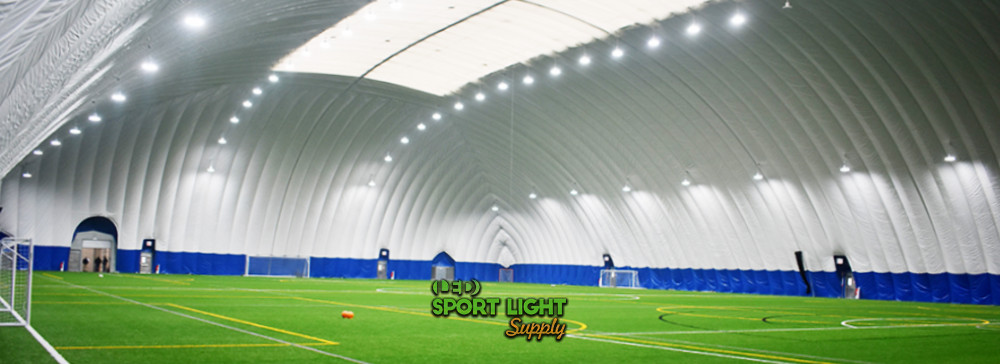
Suggested Lux Levels for Sports Domes
So, how much light are we really talking about inside a sports dome? The answer depends on the type of sport being played, whether it’s a local training session or an international tournament, and even whether TV cameras are filming the action. Different sports federations publish slightly different standards, but there’s a general consensus that indoor arenas and sports domes need to stay within certain lux ranges to keep the games playable, enjoyable, and safe.
| Type of Use / Event | Typical Lux Range | Examples in Sports Domes |
|---|---|---|
| Recreational & Training Sessions | 200 – 300 lux | Casual basketball, volleyball, or futsal training; community fitness domes |
| Local Tournaments & Amateur Competitions | 300 – 500 lux | School leagues, community volleyball tournaments, regional futsal matches |
| Professional-Level Competitions (Non-broadcast) | 500 – 750 lux | Pro futsal, tennis, or basketball played in domes without TV coverage |
| Professional Competitions with TV Coverage | 1,200 – 1,500 lux | FIFA-standard futsal dome matches, national-level basketball or tennis events |
| Broadcast-Ready International Events | 1,500 – 2,000 lux | NBA-level basketball in domes, badminton world championships, HD/4K televised matches |
| Sport-Specific Adjustments | Varies (400 – 1,500+ lux) | Badminton (750–1,500 lux), tennis (400–1,200+ lux), futsal (300–1,500 lux depending on level) |
Recreational and Training Sessions
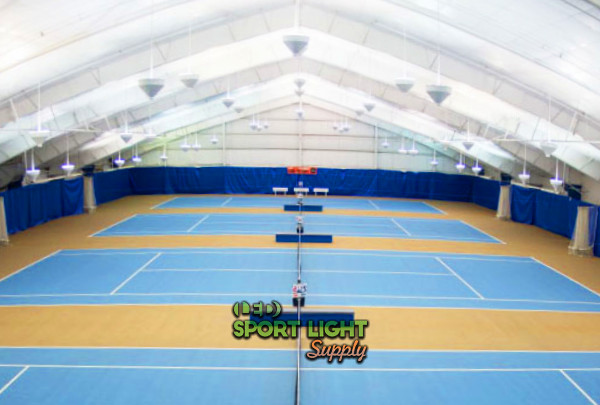 When a dome is mainly used for casual play, youth practice, or community fitness activities, the lighting doesn’t need to be too intense. Around 200 to 300 lux is usually more than enough. At this brightness, players can see clearly, track the ball without strain, and move comfortably across the court.
Take a futsal training dome as an example. A surface of 40 by 20 meters (800 m²) with an average of 250 lux means you’re looking at a total of 200,000 lumens being distributed evenly across the pitch. That’s plenty for recreational play but not nearly enough for televised events. Basketball and volleyball domes at this level often use more basic LED fixtures that focus on efficiency and cost-saving rather than broadcasting standards. The lighting feels “friendly” and welcoming, perfect for training atmospheres where intensity isn’t the main concern.
Local Tournaments and Amateur Competitions
Step things up a notch to school leagues, community tournaments, or amateur club matches, and the lux levels usually rise to around 300 to 500 lux. At this level, players notice the difference immediately—the ball is easier to track in fast exchanges, movement feels sharper, and the overall quality of play improves.
In a sports dome hosting a regional volleyball tournament, for example, a 500 lux setup ensures that spectators in the stands can follow the ball without squinting. Imagine a dome with seating for 1,000 people: players get the clarity they need for competitive play, while fans experience the match with better depth and visibility. This is often the sweet spot where dome operators balance performance lighting with energy consumption, since maintaining 500 lux consistently over a 1,200 m² indoor court could require 80 to 100 well-placed LED fixtures.
Professional-Level Competitions
When a sports dome becomes a venue for professional competitions, the lux requirements climb significantly. For football or futsal domes used in pro-level tournaments, 500 to 750 lux is the base level. But if those matches are also being broadcast live, lighting demands can jump to 1,200 to 1,500 lux.
To give some perspective: a futsal dome with a 40 by 20 meter pitch illuminated at 1,200 lux would need nearly 1 million lumens in total. That’s a huge jump from recreational setups, and it explains why professional domes often have advanced lighting grids suspended from the roof structure, with precision reflectors to reduce glare and maximize uniformity. For sports like indoor tennis or badminton, the difference is even more noticeable, since the ball or shuttlecock is much smaller and faster than a soccer ball. At this level, lighting design is treated almost like a science—it’s not just about brightness, but also color rendering, uniformity, and glare control.
Broadcast-Ready and High-Profile Events
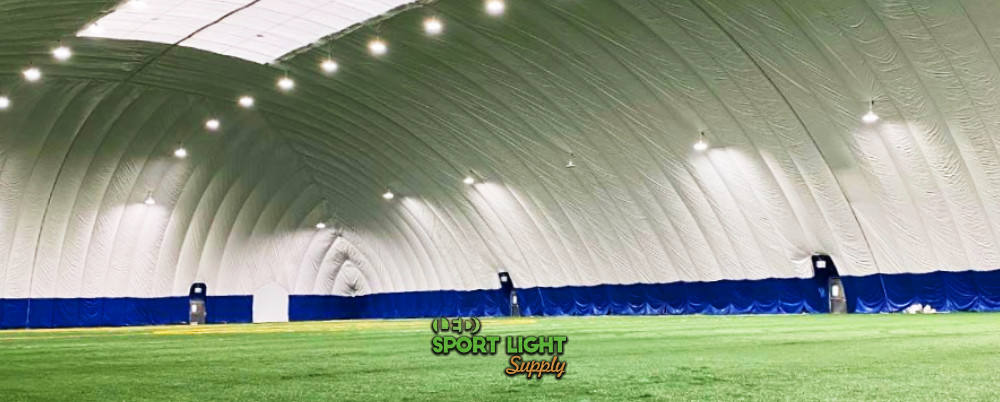
When the stakes are highest, such as for international tournaments or televised games in HD or 4K, sports domes need to hit a whole new standard. For broadcast-ready conditions, lighting levels are often designed to reach 1,500 to 2,000 lux consistently across the entire playing area.
Why so much light? High-definition cameras need very strong illumination to capture every detail without distortion. A badminton dome hosting a world championship, for instance, might use 1,800 lux on the court to make sure even the fastest shuttle smashes are perfectly visible on slow-motion replays. Similarly, a basketball dome designed for NBA-level broadcasting would aim for around 2,000 lux, which eliminates shadows and guarantees crystal-clear footage for audiences watching worldwide.
The difference for spectators inside the dome is obvious too. The playing surface looks vibrant, colors are sharper, and the overall atmosphere feels more like an arena show than just a game. It’s one of the reasons why modern domes are investing heavily in LED sports lighting systems with dimmable features—so they can adjust from 300 lux for weekday training to 2,000 lux for a Saturday night broadcast without swapping equipment.
Different Sports, Different Lighting Needs
It’s also worth pointing out that not all sports domes need the same lux levels, even at similar competition tiers. Sports with smaller, faster objects—like squash, table tennis, or badminton—demand higher brightness because tracking the ball or shuttle is more visually demanding. A badminton dome might need 750 lux for local play, while an international event could require up to 1,500 lux. By contrast, a dome built for recreational futsal or handball could be perfectly functional with just 300 lux.
Another example is tennis. For community-level play, around 400 lux may be fine, but professional matches—especially those televised—often target 1,200 lux or more. Basketball domes follow a similar pattern, starting at 300 lux for training and climbing to 2,000 lux for international broadcasts.
The key takeaway here is that lux levels in sports domes aren’t one-size-fits-all. They depend not only on the sport but also on the purpose of the event. Recreational play, local tournaments, pro-level matches, and global broadcasts all come with their own requirements, and dome operators need to design flexible systems that can adapt to these scenarios.
How Can Sports Domes Reach the Recommended Lux Levels?
The layout of the fixtures, the height of the dome roof, the type of lamps used, and even how often the system is maintained all play a part in making sure athletes, referees, and spectators get the best possible experience.
Smart Lighting Design and Fixture Placement
The first step is always the design. A sports dome might look like one giant open space, but when it comes to lighting, every angle matters. Engineers usually aim for consistent coverage across the entire playing surface, whether that’s a 40×20 meter futsal pitch, a 28×15 basketball court, or a 23.77×10.97 tennis court.
Uniform coverage means avoiding two extremes: overly bright “hot spots” in the middle of the dome and dim, shadowy corners along the sidelines. Both can mess with depth perception and make the game feel uneven. For example, if a volleyball player serves from a corner that’s only 60% as bright as the center court, their vision will constantly adjust, and that tiny difference can affect accuracy.
That’s why lights in domes are often mounted high—sometimes 12 to 20 meters above the surface—and angled carefully to minimize glare. Many modern dome designs also use a mix of direct and indirect lighting. Direct fixtures shine straight onto the field and deliver high brightness efficiently, but they can cause glare if not positioned right. Indirect fixtures bounce light off ceilings or reflectors, creating softer, more even coverage. A hybrid approach blends the two, giving players clear visibility without blinding reflections.
Balancing Brightness with Uniformity Ratios
 It’s not just about the raw lux numbers; it’s also about how evenly that light is spread. Lighting guidelines often talk about uniformity ratios, which compare the brightest and dimmest areas of the playing field.
For professional-level play in sports domes, a ratio of 0.7 or higher is usually recommended. In practice, that means if the brightest spot on a basketball court is 1,000 lux, the darkest corner should be at least 700 lux. Anything less creates harsh contrasts that strain the eyes. High-end domes even push for 0.8 or more, especially when games are televised, because cameras are more sensitive to inconsistent lighting than the human eye.
This is why dome operators sometimes invest in advanced lighting simulation software during the design phase. These tools map out lux levels across the surface before a single fixture is installed, making it easier to avoid uneven patches.
Choosing Between LEDs and Traditional Fixtures
The conversation about dome lighting almost always comes back to technology. For years, sports domes relied on metal halide lamps, which deliver strong light but come with downsides like long warm-up times, high energy consumption, and uneven color rendering.
Today, LED systems are taking over. Not only do LEDs reduce energy costs by up to 60% compared to metal halide systems, but they also give operators much more control. A dome can easily switch between 300 lux for an afternoon practice session and 1,500 lux for a primetime broadcast without changing fixtures. LEDs also offer better color rendering index (CRI), which makes colors appear more natural—a big deal when you’re broadcasting a basketball game where jersey colors need to pop on screen.
Another perk is lifespan. A high-quality LED can last 50,000 to 100,000 hours, compared to 6,000–15,000 for traditional lamps. For domes that operate almost daily, that’s a massive saving on maintenance and replacement.
Keeping the System in Top Shape
Even the most advanced sports dome lighting system isn’t set-and-forget. Over time, dust, dirt, and aging components reduce light output. A fixture that once delivered 1,200 lux might slowly drop to 800 lux after a few years if it’s not cleaned and checked regularly.
That’s why many dome operators schedule lux level inspections every 6 to 12 months, often using handheld lux meters or automated monitoring systems. Regular cleaning of reflectors and lenses, replacing worn-out fixtures, and recalibrating angles keeps the lighting uniform and reliable. Skipping this step can turn a dome designed for professional play into one that no longer meets even amateur competition standards.
Some modern LED systems even come with smart controls that report real-time lux levels, alerting managers when light intensity starts to dip below target values. For a large multi-sport dome with multiple courts running simultaneously, this kind of monitoring can make the difference between a smooth tournament and a frustrating experience for players and fans alike.
Pulling It All Together
Lighting might not be the first thing fans think about when stepping into a sports dome, but it quietly shapes the whole experience. From a recreational pick-up game under 300 lux to a fully televised international event demanding 2,000 lux, the right setup keeps everything running smoothly. Uniformity, placement, and adaptability matter just as much as brightness, and modern LED systems are making it easier than ever to fine-tune conditions for different uses.
Sports domes aren’t just places to play—they’re stages for competition, training grounds for athletes, and sometimes, global platforms broadcast to millions. Getting the lux levels right ensures that every pass, every serve, and every moment of action is seen clearly by everyone, whether they’re courtside or watching from halfway across the world.