
Swimming pools are already tricky places to manage, and when you add lighting into the mix, things can get even more complicated. A natatorium—basically an indoor swimming facility—needs just the right amount of light for swimmers, spectators, and lifeguards to feel comfortable and safe. Too dim, and the pool starts to feel gloomy and unsafe. Too bright, and you get blinding reflections off the water. So, how many lux and footcandles are enough to light a natatorium without going overboard?
Let’s break it down in a way that feels less like a lighting handbook and more like real talk about what works in the pool environment.
Why Do We Need to Consider the Lux and Footcandles in a Natatorium
Lighting isn’t just about making sure people can see. In a natatorium, light plays into safety, visibility, atmosphere, and even energy costs. Lux (a measure of light on a surface) and footcandles (basically the same idea, just in imperial units) help designers and facility managers figure out whether a space has enough lighting or not.
Imagine a lifeguard scanning a dimly lit pool. Shadows, glare, and uneven brightness can make it tough to see someone underwater in trouble. Now flip it around—if the lights are blasting at high intensity, swimmers might be squinting against the glare bouncing off the water, making the space feel uncomfortable. That balance is why numbers like lux and footcandles matter so much.
On top of that, natatoriums aren’t just about swimming laps. They host competitions, water aerobics, lessons, and sometimes even community events. Each of those activities requires a slightly different lighting level. What works for recreational swimming may not work at all for a high-level swim meet where cameras and judges need clear views.
Different Lux Levels for Natatorium Lighting
Recreational Swimming Pools
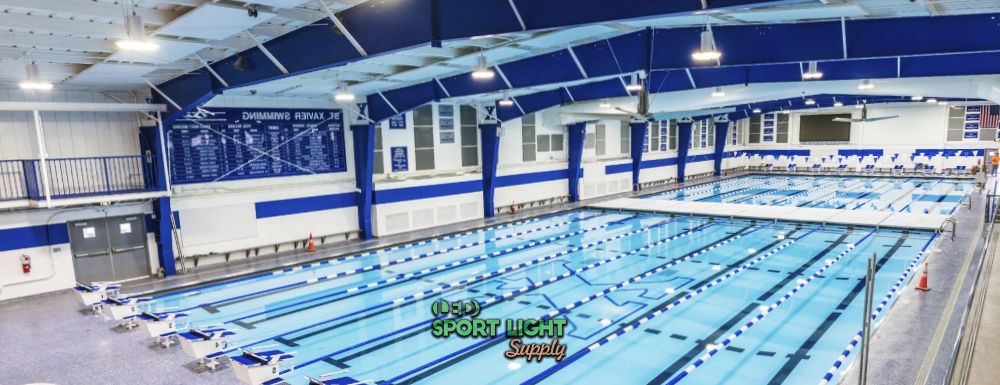
When it comes to pools designed mainly for casual use—like a high school natatorium, a YMCA facility, or a neighborhood recreation center—the lighting doesn’t have to be extreme. Most guidelines suggest 200 to 300 lux, which translates to about 20–30 footcandles measured at the water surface. That level is usually enough for people swimming laps, taking lessons, or hanging out during open swim.
Think about it: you don’t need the pool lit up like a football field for a water aerobics class at 8 a.m. What you do need is enough brightness so swimmers can see the pool floor clearly, lifeguards can scan the entire water surface without squinting, and instructors can monitor students safely. Around 250 lux has become a sweet spot for many recreation centers, as it strikes a balance between visibility and energy savings.
Another thing that matters here is uniformity ratio—basically, how evenly the light spreads across the pool. A recreational pool with one side noticeably darker than the other not only looks strange but can also create pockets where visibility drops. Ideally, the ratio of average to minimum lux levels should stay below 2:1, which means no glaring bright zones and no shadowy corners.
Competition Pools
Move into the world of competition, and the standards change dramatically. Competitive swimmers rely on sight lines to stay in their lanes, and judges or referees need clear visibility to make accurate calls. Even more, televised or live-streamed events demand crisp images with minimal shadows. That’s why many guidelines recommend 500 to 750 lux (about 50–70 footcandles) as a baseline for competition pools.
Some facilities go even further. For example, the FINA (International Swimming Federation) guidelines often push lighting up to 1000 lux for international meets, especially when broadcast cameras are in play. That higher level ensures the water surface looks sharp on screen, and underwater cameras can capture athletes without distortion.
It’s not just about raw brightness, though. Competition pools benefit from vertical illumination as well—meaning enough light hitting swimmers from the side so that faces, bodies, and lane markings are all visible. Without that, even a bright pool can end up looking uneven when seen from the stands or on a screen.
Larger Facilities and Spectator Areas
In bigger natatoriums, lighting design has to account for more than just the pool. Spectators need enough light to comfortably watch races, read programs, and move safely through the stands. Most design guides call for 150–200 lux in spectator zones, which is softer than the pool lighting but still sufficient for visual comfort.
This is where layered lighting comes into play. Instead of flooding the whole arena with one intensity, designers often use different circuits and beam angles to create zones: bright illumination directly over the competition lanes, moderate levels over the warm-up pool, and softer, ambient lighting for the stands. By blending these levels, the space feels balanced, and the audience doesn’t get blasted with glare every time they glance at the water.
The size of the facility makes a difference, too. A natatorium with 1,500–2,000 seats has very different lighting demands compared to a small high school pool with just a set of bleachers. Larger arenas sometimes push total lighting power into the range of 50,000–100,000 lumens just to achieve consistent levels across all zones.
Specialty Pools (Diving, Therapy, or Training)
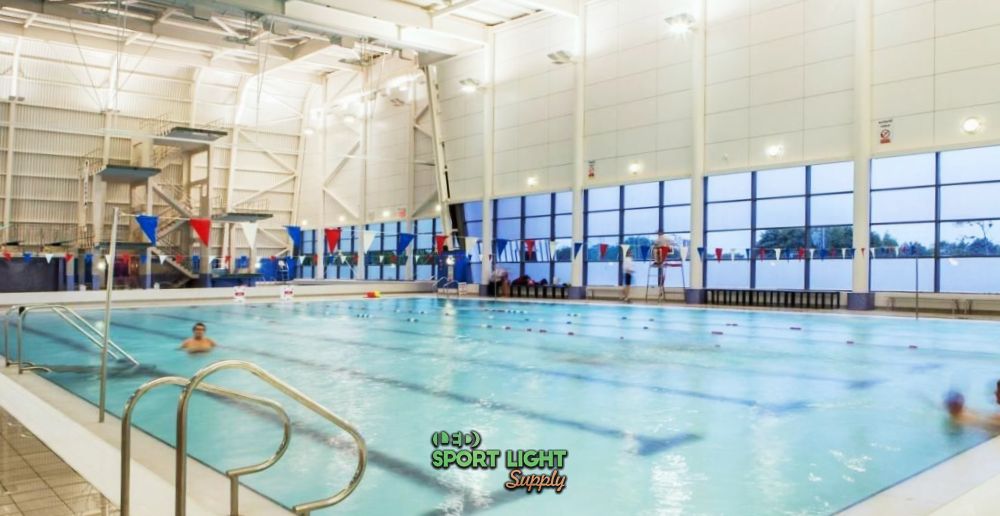
Special-purpose pools also have their own quirks. Diving pools, for example, are much deeper—often 5 meters (16 feet) or more—and that depth makes underwater visibility harder to maintain. Because of that, lighting recommendations usually sit closer to 500 lux to ensure divers, lifeguards, and judges can clearly see all the way to the bottom. Reflections off the water surface can be a real headache in diving pools, so fixtures are often angled carefully to minimize glare.
Therapy pools, on the other hand, have a completely different atmosphere. Since comfort and relaxation matter more than competition, 150–200 lux usually does the job. That’s bright enough for staff supervision and safety but soft enough to keep the environment calm for patients or older swimmers. Training pools often sit somewhere between therapy and recreational levels, around 200–250 lux, since coaches need to watch technique closely without making the space feel overly harsh.
Some facilities even install adjustable LED systems in specialty pools so they can dim the lights for therapy sessions and crank them up during team practices. Flexibility makes sense in spaces where the purpose shifts throughout the day.
| Pool Type | Lux Range | Footcandles (fc) |
|---|---|---|
| Recreational Swimming Pools | 200–300 lux | 20–30 fc |
| Competition Pools | 500–750 lux | 50–70 fc |
| International Competitions (FINA) | Up to 1000 lux | Up to 100 fc |
| Spectator Areas | 150–200 lux | 15–20 fc |
| Diving Pools | Around 500 lux | ~50 fc |
| Therapy Pools | 150–200 lux | 15–20 fc |
| Training Pools | 200–250 lux | 20–25 fc |
How to Ensure the Right Lighting Level
Getting lighting right in a natatorium takes more than just hanging a few bright fixtures and calling it a day. Pools are tricky environments because water doesn’t just sit there passively—it reflects, refracts, and even magnifies light in ways that can create unexpected bright spots and shadows. Anyone who’s ever been momentarily blinded by sunlight bouncing off the pool knows exactly what that feels like. Indoors, the same thing can happen with artificial lights if they’re not planned carefully.
Planning with Simulations and Layouts
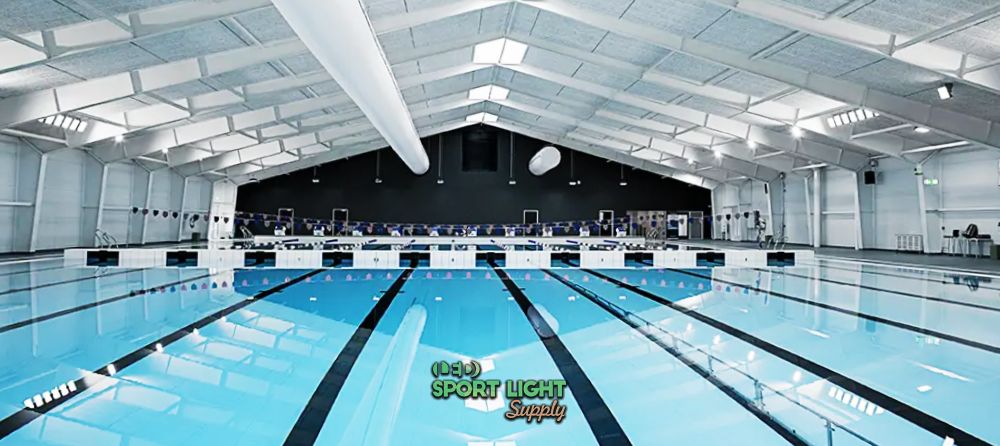
This is why most modern pool projects start with computer-based lighting simulations. These programs take into account the pool size, ceiling height, wall colors, and fixture placement to show how light will actually behave across the water surface and the deck. A pool that’s 25 meters long with white tile walls, for example, will reflect light very differently compared to a 50-meter competition pool with darker finishes. By running a simulation first, designers can spot where glare or uneven brightness might occur before anything gets installed.
Measuring with Light Meters
Of course, simulations are just the starting point. Once the fixtures are in place, the real test comes with on-site measurements. Using a light meter, you can check lux or footcandle levels across multiple spots: the shallow end, the deep end, the pool deck, and even the spectator area. A well-lit natatorium shouldn’t just meet the average recommendation; it should have an even spread. Ideally, the uniformity ratio (average illuminance divided by minimum illuminance) should stay below 2:1. That means if one area of the pool surface measures 500 lux, another area shouldn’t dip down below about 250 lux. Uneven lighting not only looks unprofessional but can actually compromise visibility and safety.
Fine-Tuning with LEDs
One of the biggest upgrades in the past decade has been LED lighting systems. They’re not only energy-efficient, often cutting power use by 40–60% compared to older metal halide lamps, but they also offer flexibility that older systems just couldn’t match. Many LED fixtures can be dimmed or zoned, which lets facility managers adjust brightness depending on what’s happening in the pool. For example, during a recreational swim session, you might run lights at 250 lux, but for a high school swim meet you can easily bump them up to 600 lux with the push of a button.
LEDs also hold their brightness longer over time. Traditional fixtures often lose 20–30% of their output after just a few years, while many high-quality LEDs maintain 70–80% of their initial brightness after 50,000 hours of use. That’s a huge deal in a natatorium, where replacing fixtures usually means scaffolding or lifts—never a cheap or easy task.
Dealing with Glare and Reflection
Even if the numbers are right, glare can still ruin the experience. Proper aiming of fixtures makes a big difference here. Lights angled too steeply toward the water can create mirror-like reflections that distract swimmers and spectators. Many designers aim for angles of 30–60 degrees from vertical to minimize direct reflections while still delivering solid coverage. Adding anti-glare optics or louvers on fixtures can also cut down on the “shiny water” effect.
Keeping It Consistent Over Time
Lighting isn’t a set-it-and-forget-it thing. Dust, humidity, and even chlorine vapors can affect fixtures in a natatorium, slowly reducing output. A good practice is to schedule annual light level checks with a meter to make sure the pool is still meeting standards. If lux levels have dropped significantly, adjustments or replacements may be needed to bring things back up to spec.
At the end of the day, ensuring the right lighting level is really about a mix of planning, measuring, and adjusting. Technology like LED dimming and simulations can make the process smoother, but it still comes down to balancing safety, comfort, and efficiency so that everyone—from swimmers to lifeguards to spectators—gets the best possible experience.
Problems of Too Bright or Too Dim Lights
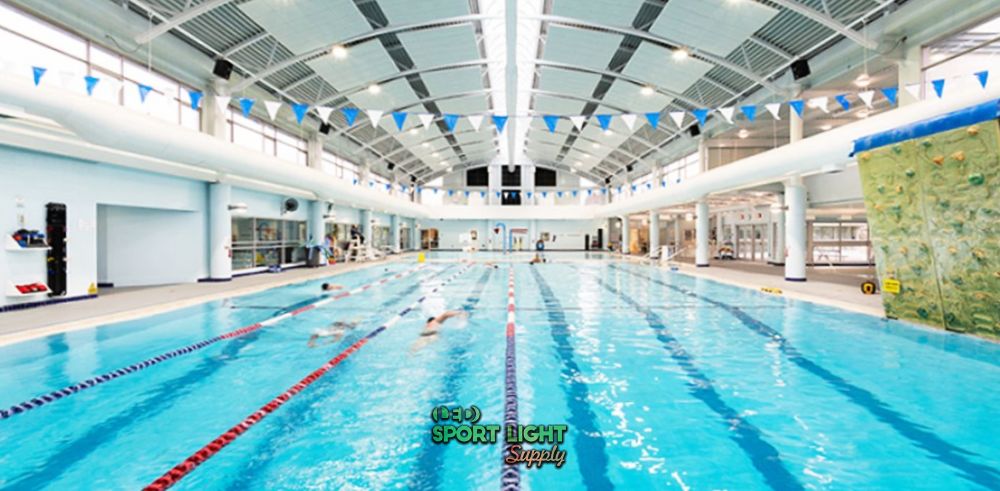
Lighting a pool isn’t just about hitting a certain lux or footcandle number. It’s also about how the space actually feels and functions for the people using it. Get the balance wrong, and the whole environment shifts from welcoming to uncomfortable—or even unsafe.
When the Lighting Is Too Dim
A dimly lit pool creates more issues than most people realize. Lifeguards, for example, rely on quick scanning to catch any signs of distress in the water. If the water surface and bottom aren’t clearly visible, reaction times slow down. In a deep pool—say 3 to 5 meters—shadows can hide a swimmer underwater, turning what should be a safe space into a risky one.
Swimmers themselves feel the difference, too. Dim lighting makes it harder to judge depth, see lane markings, or track walls when turning. That’s not just inconvenient—it can be disorienting, especially for younger or less confident swimmers. Recreational users might even avoid the pool altogether if it feels dark and uninviting. Think of walking into a restaurant with poor lighting; it doesn’t matter how good the food is, the atmosphere doesn’t feel right. The same happens with a pool.
From a competitive standpoint, low lighting simply doesn’t meet the needs of athletes or officials. A swim meet under dim lights looks dull and unfocused, and judges might struggle to track details like proper turns, false starts, or touches at the wall.
When the Lighting Is Too Bright
On the other side of the spectrum, overly bright lights create a whole different set of problems. Anyone who’s sat poolside at noon on a sunny day knows how harsh reflections off the water can feel. Indoors, strong artificial lights can mimic that same effect, producing glare that makes it difficult for swimmers and spectators to focus.
For lifeguards, glare isn’t just irritating—it’s dangerous. A strong reflection bouncing off the water can mask what’s happening beneath the surface. Even a few seconds of lost visibility can matter in an emergency. Competitors also deal with this issue; a sudden burst of glare mid-race can distract or throw off timing, especially during starts and turns.
Beyond safety, there’s the issue of comfort. Pools lit at unnecessarily high levels—say above 1000 lux in a recreational setting—can feel sterile and overwhelming. Spending time in that kind of brightness can lead to eye strain, headaches, and a general sense of discomfort for swimmers and spectators alike. A space meant for exercise and enjoyment shouldn’t feel like a surgical suite.
Finding the Balance
Both extremes—too dark or too bright—show why lighting design in a natatorium can’t be treated as an afterthought. The goal is to hit that sweet spot where the pool feels inviting, safe, and functional. That usually means sticking close to the recommended ranges: 200–300 lux for recreation, 500–750 lux for competition, and around 150–200 lux for spectator areas.
Beyond raw numbers, it’s about creating uniformity and minimizing glare while still providing enough brightness for visibility. When that balance is achieved, the lighting becomes something most people don’t even think about—which is actually the best sign that it’s working perfectly.
Closing Thoughts
Finding the right lighting for a natatorium is all about balance. Too little, and safety suffers. Too much, and glare becomes a problem. Lux and footcandles give us a way to measure that balance and fine-tune it depending on whether the pool is used for casual swims, international competitions, or specialized activities.
A good rule of thumb? Recreational pools sit around 200–300 lux, competition pools jump to 500 lux and up, and spectator zones usually land between 150–200 lux. Add in some flexibility with modern LED systems, and you can adjust depending on the event.
In the end, the goal is simple: create a space where swimmers, spectators, and staff all feel comfortable, safe, and able to focus on the water rather than the lighting. When the balance is right, most people won’t even notice the lights at all—and that’s usually the best sign that a natatorium is doing it right.