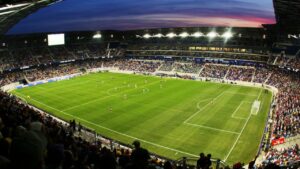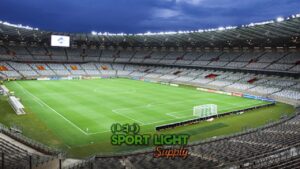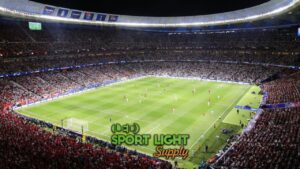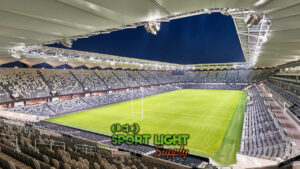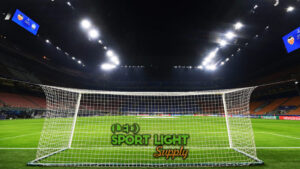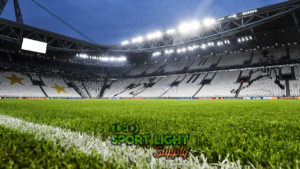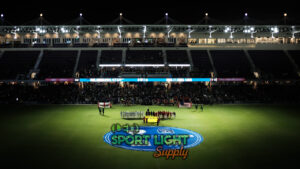

Walk into any modern stadium at night and everything looks effortless. The field is evenly lit, players are clearly visible, cameras capture every move, and fans barely notice the lighting at all. Behind that smooth experience sits a detailed set of stadium lighting standards and requirements. These rules exist to keep games fair, broadcasts clear, and spectators comfortable, whether the venue hosts a local match or a global tournament.
Stadium lighting is not just about “making it bright.” It’s about how bright, how even, how stable, and how accurate the light looks. Different sports, levels of competition, and broadcasting needs all influence the final lighting design.
Stadium lighting refers to the entire lighting ecosystem that makes a sports venue usable after dark or under low natural light. It covers training sessions, official competitions, and large-scale broadcasts, all of which place very different demands on light quality and control. It’s not just about turning lights on; it’s about delivering the right light, in the right place, at the right time.
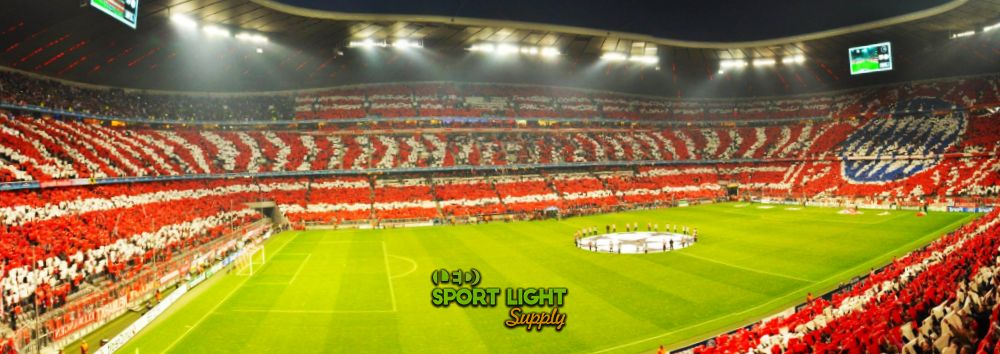
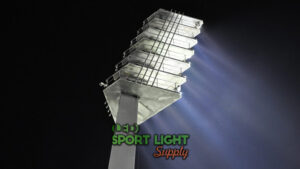
At the heart of any stadium lighting system are the lighting fixtures themselves. These are the luminaires responsible for producing and directing light onto the playing surface and surrounding areas. Today, most professional stadiums rely on high-power LED sports lights, typically ranging from 500 W to over 1,500 W per fixture. Compared with older metal halide systems, LEDs offer higher luminous efficacy, often exceeding 140–160 lumens per watt, along with more stable color output over time.
Equally important is the optical system inside each fixture. Precision lenses and reflectors shape the beam to reach specific zones on the field, helping designers achieve target illuminance levels while minimizing spill light and glare. Beam angles, cut-off angles, and asymmetric optics all play a role in meeting lighting standards for professional sports.
Lighting brackets may look simple, but they matter more than most people realize. These mounting components allow fixtures to be tilted, rotated, and locked into precise aiming positions. In a large stadium, even a 1–2 degree aiming error can create uneven brightness or unwanted glare.
Good bracket design also ensures long-term stability. Stadium lights are exposed to wind loads, vibration, and temperature changes. A poorly secured fixture can slowly shift over time, reducing uniformity and pushing the system out of compliance with lighting standards.
Lighting poles or roof-mounted trusses support fixtures at significant heights, usually between 20 and 30 meters for community fields and 40 to 65 meters for professional stadiums. The mounting height directly affects glare control, shadow length, and lighting uniformity.
Higher poles allow light to spread more evenly across the field, but they also require stronger structural design and more accurate aiming. Engineers must consider wind pressure, corrosion resistance, and long-term maintenance access when designing these structures.
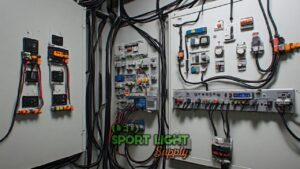
Behind the scenes, wiring and power systems keep everything running safely and consistently. Stadium lighting systems often draw hundreds of kilowatts, and major venues hosting international events can exceed 1 megawatt when all lights operate at full output.
Power distribution panels, cable sizing, grounding systems, and surge protection devices are all designed to handle high electrical loads. Backup power solutions, such as generators or uninterruptible power supplies, are commonly included to prevent sudden blackouts during matches or broadcasts.
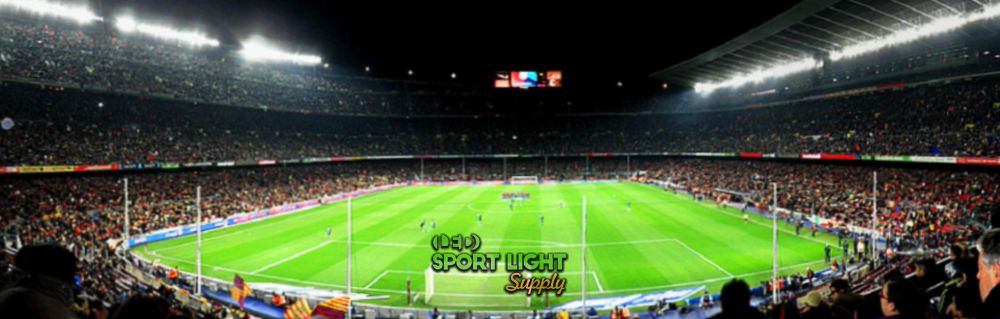
Modern stadium lighting relies heavily on intelligent control systems. These systems allow operators to adjust brightness levels, activate different lighting scenes, and respond quickly to changing needs. For example, training mode may operate at 30–50% output, while match mode runs close to 100%.
DMX and DALI control protocols are widely used, enabling precise dimming, instant switching, and synchronization with broadcasting requirements or entertainment effects. Smart controls also help reduce energy consumption and extend fixture lifespan by avoiding unnecessary full-power operation.
Outdoor stadium lighting must survive harsh conditions year after year. Rain, dust, humidity, heat, and cold all put stress on fixtures and electrical components. Most professional stadium lights are rated IP65 or higher, meaning they are sealed against dust ingress and protected from water jets coming from any direction.
In colder regions, fixtures must also handle snow loads and sub-zero temperatures, while hot climates demand effective thermal management to prevent overheating. Proper sealing and material selection keep lighting performance stable over time.
Stadium lighting standards exist to create consistent and predictable visual conditions across different venues and competitions. Players need to see the ball clearly, referees must make split-second decisions, and spectators expect a smooth viewing experience whether they’re sitting in the front row or the upper tier.
Without defined standards, lighting quality would vary wildly from one stadium to another, leading to unfair playing conditions and inconsistent broadcast results.
From a sporting perspective, lighting standards help level the playing field. A footballer tracking a high ball or a goalkeeper reacting to a fast shot relies heavily on accurate depth perception and contrast. Poor lighting can distort shadows, wash out colors, or make fast-moving objects harder to judge.
By setting minimum values for illuminance and uniformity, standards reduce these visual disadvantages and support fair competition at all levels.
Lighting quality also affects safety. Insufficient or uneven lighting can increase the risk of misjudged steps, late tackles, or collisions. Studies in sports ergonomics suggest that improving lighting uniformity can reduce visual fatigue and reaction delays, especially during long evening matches.
Well-designed lighting helps athletes maintain focus and reduces strain on their eyes, which becomes increasingly noticeable in high-speed sports like hockey, basketball, or tennis.
Broadcasting has become one of the strongest forces shaping stadium lighting standards. High-definition, 4K, and even 8K cameras demand far more light than older television systems. A camera may require two to three times more vertical illuminance than the human eye to capture clean images without noise.
Standards addressing color rendering, flicker control, and vertical illumination ensure that televised matches look natural and consistent across different camera angles, slow-motion replays, and close-ups.
Lighting standards are not just about performance; they also influence efficiency. Rather than encouraging designers to simply add more lights, modern standards focus on using light intelligently. Better optics, higher uniformity ratios, and controlled beam distribution mean fewer wasted lumens.
As a result, many stadiums have reduced energy consumption by 30% to 60% after upgrading to compliant LED systems, while also cutting down on light pollution and spill into nearby residential areas.
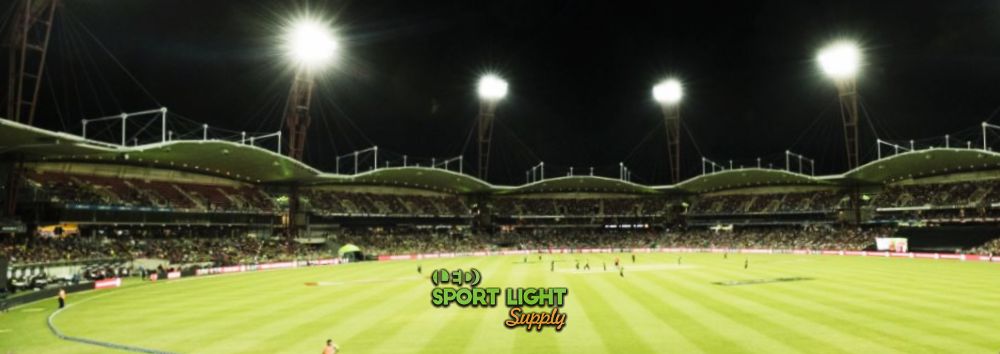
Illuminance is the most talked-about metric in stadium lighting, mainly because it’s the easiest one to measure and compare. It tells us how much light actually reaches a surface, and it’s measured in lux. In sports venues, designers don’t just look at one number; they look at where that light lands and how it behaves from different angles.
Horizontal illuminance refers to the light falling on the playing surface itself, like the pitch, court, or track. This directly affects how clearly players can see the ball, lines, and each other. Vertical illuminance, on the other hand, measures light hitting vertical surfaces, mainly players’ faces and bodies. This has become increasingly relevant with modern broadcasting, since cameras need enough light from the front to capture clear facial expressions and fast movements.
For everyday training sessions, lighting levels around 200 to 300 lux are often enough to keep things safe and functional. Once you move into semi-professional or professional matches, horizontal illuminance usually jumps to 1,000 to 2,000 lux. At the very top level, especially for international tournaments and live TV coverage, horizontal values can exceed 2,500 lux, while vertical illuminance toward main camera positions often reaches 1,500 lux or more. These higher numbers help avoid flat images and grainy footage on screen.
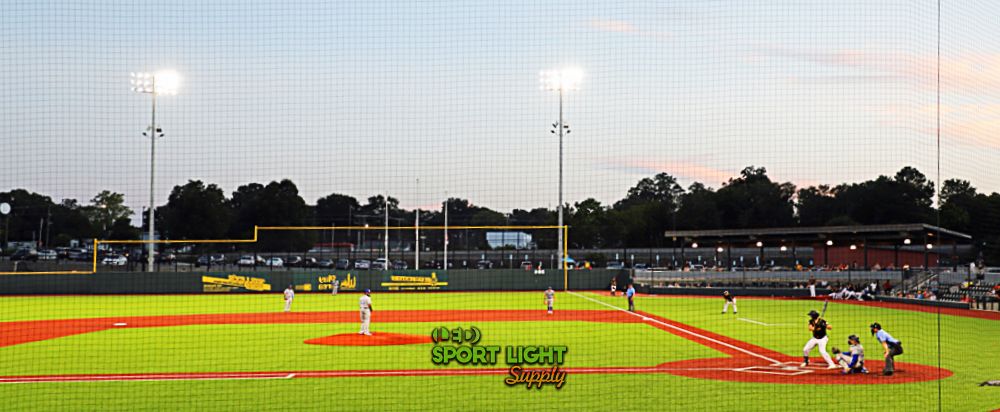
Brightness alone doesn’t guarantee good lighting. Uniformity looks at how evenly that light is spread, which makes a big difference to visual comfort. It’s typically expressed as a ratio between the minimum illuminance and the average illuminance across the playing area.
A uniformity ratio of 0.7 means the darkest spot on the field still receives 70% of the average light level. That’s generally the minimum target for professional competitions. High-level events often aim for 0.75 to 0.8, especially in sports with fast ball movement. Better uniformity reduces eye fatigue, helps players judge distance more accurately, and prevents cameras from constantly adjusting exposure when panning across the field.
Glare is one of those issues people notice immediately when it’s done wrong. It happens when bright light sources enter the field of view and cause discomfort or reduce contrast. In stadiums, glare can seriously affect goalkeepers, outfield players tracking high balls, or spectators sitting close to lighting towers.
Lighting standards deal with glare by setting limits on fixture aiming angles, mounting heights, and beam cut-off. Designers often refer to Unified Glare Rating (UGR) or Glare Rating (GR) values, where lower numbers mean better visual comfort. While exact limits vary by sport and venue type, the goal is always the same: keep light on the field, not in people’s eyes. Good glare control also improves TV images by reducing lens flare and washed-out highlights.
Color quality affects how real and natural the game appears, both in person and on screen. If the lighting distorts colors, players’ kits can look similar, the ball may blend into the background, and the playing surface can lose contrast.
Most modern stadiums aim for neutral white light, typically between 4,000K and 5,700K. Lower color temperatures can feel too warm and dull, while higher values may appear harsh or bluish. This range strikes a balance between visual comfort, alertness, and camera performance, especially under LED lighting.
Color Rendering Index, or CRI, measures how accurately a light source shows colors compared to natural daylight. A CRI of 100 represents perfect color accuracy, which is hard to achieve in artificial lighting but serves as a reference point.
In professional sports venues, a CRI of at least 80 is commonly required. For international competitions and high-definition broadcasting, standards often push that number to 90 or higher. Higher CRI helps cameras capture realistic skin tones, jersey colors, and sponsor branding, while also making it easier for referees and players to distinguish details at a glance.
Flicker is a subtle but serious issue in stadium lighting. It refers to rapid fluctuations in light output that may not be noticeable to the human eye but become obvious on camera, especially during slow-motion replays or high-speed action shots.
Modern lighting standards call for flicker-free performance, often defined as a flicker percentage below 1% or compliance with recognized guidelines such as IEEE 1789. Achieving this depends largely on the quality of LED drivers and power supplies. Well-designed systems deliver steady light output even when dimmed, which keeps broadcasts smooth and avoids distracting visual artifacts during key moments of the game.
| Lighting Metric | Typical Range / Requirement |
|---|---|
| Training illuminance | 200–300 lux |
| Professional match illuminance (horizontal) | 1,000–2,000 lux |
| International / broadcast matches (horizontal) | ≥ 2,500 lux |
| Vertical illuminance for broadcast | ≥ 1,500 lux |
| Uniformity (min / avg) | 0.7–0.8 |
| Correlated color temperature (CCT) | 4,000–5,700 K |
| Color Rendering Index (CRI) | ≥ 80 (≥ 90 for top events) |
| Flicker level | < 1% |
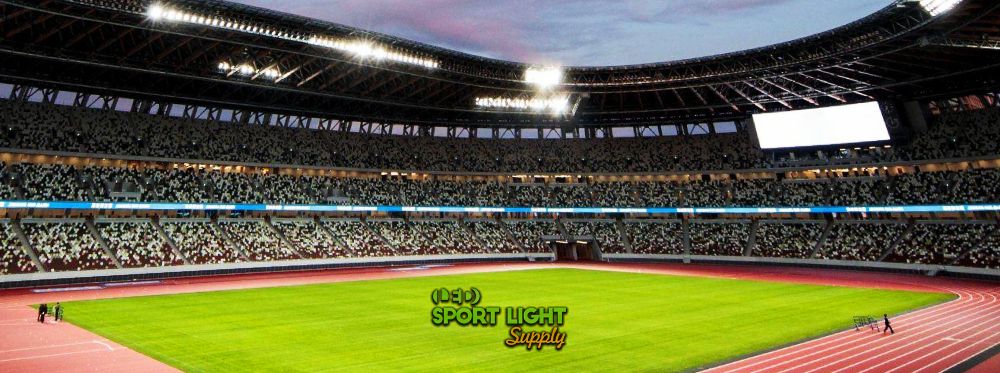
Football probably has the most demanding lighting standards of any sport, largely because it’s played everywhere and watched by millions on screens. Between live broadcasts, slow-motion replays, and multiple camera angles, lighting has to perform well far beyond what the human eye alone needs.
FIFA lighting guidelines divide stadiums into different classes based on competition level and broadcast needs. For top-tier international matches, horizontal illuminance usually falls between 2,000 and 2,500 lux, ensuring the pitch stays evenly bright across its full length and width. At the same time, vertical illuminance toward main camera positions often reaches 1,500 to 2,000 lux, which helps cameras capture players’ faces, jersey details, and fast movements without losing clarity.
Uniformity is another big focus. FIFA typically requires a minimum uniformity ratio of 0.7, meaning darker areas can’t fall too far behind the average brightness. On the color side, FIFA places strong emphasis on broadcast quality, so CRI values of 90 or above are commonly specified, along with strict flicker control to support ultra-slow-motion replays.
UEFA standards for competitions like the Champions League closely mirror FIFA’s approach, but they often go a step further when it comes to vertical illuminance and glare control. UEFA matches are heavily broadcast-driven, so lighting designs are carefully optimized for camera angles along the sidelines and behind the goals. Glare limits are tightly controlled to protect both players and spectators, especially in stadiums with steep seating bowls.
For Olympic football under the IOC framework, lighting requirements tend to be even more demanding. Olympic venues are designed to meet global broadcast expectations, so color quality, flicker-free performance, and lighting redundancy are all given extra attention. In practice, Olympic football lighting often exceeds domestic league standards, even for top professional venues.
Track and field presents a different kind of lighting challenge. Events are spread across a large area, and athletes move in very different ways depending on whether they’re sprinting, jumping, or throwing. Lighting has to support all of this without creating distracting shadows or uneven brightness.
For international competitions sanctioned by World Athletics, horizontal illuminance on the track typically ranges from 1,000 to 1,500 lux. Certain zones, such as finish lines, high jump areas, or pole vault runways, may require higher levels to support judging and broadcasting.
Vertical illuminance also plays a role, especially for televised events. Athletes’ faces and upper bodies need enough light for cameras positioned around the stadium, so vertical values of around 1,000 lux toward key camera directions are common.
Uniformity targets usually sit around 0.7, which helps maintain visual comfort over long competitions that can last several hours. In terms of color, World Athletics generally requires CRI values of 80 or above, with higher CRI preferred for world championships and events with extensive TV coverage.
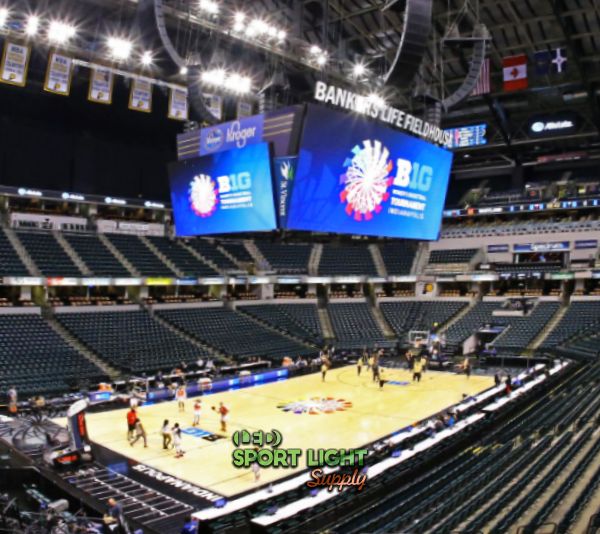 Basketball lighting is usually installed indoors, which gives designers more control but also raises expectations. The smaller court size and fast pace of the game mean that any lighting issue becomes obvious very quickly.
For top-level competitions under FIBA, horizontal illuminance on the court typically falls between 1,500 and 2,000 lux. That level ensures players can track the ball easily during fast passes and quick transitions. Vertical illuminance toward main broadcast cameras often reaches around 1,500 lux, helping capture clear images during close-ups and replays.
Uniformity is especially strict in basketball venues. Because the playing area is compact and surrounded by spectators, FIBA standards often require uniformity ratios of 0.8 or higher. This keeps the entire court visually consistent and avoids hotspots under the baskets.
Color rendering is also closely monitored. A CRI of at least 80 is usually mandatory, while CRI values of 90 or above are strongly recommended for international tournaments and televised games. Combined with flicker-free drivers, this helps broadcasts look clean and natural, even during slow-motion sequences.
Tennis lighting has to deal with one unique challenge: players spend a lot of time looking upward, especially during serves and high lobs. That makes glare control just as important as raw brightness.
According to ITF guidelines, professional tennis matches generally require horizontal illuminance between 1,000 and 2,000 lux, depending on the level of competition and whether the event is televised. For major tournaments with broadcast coverage, lighting levels tend to sit toward the higher end of that range.
Vertical illuminance becomes more relevant when cameras are involved. For televised matches, vertical levels often exceed 1,000 lux, helping cameras follow the ball and capture players’ reactions without losing detail.
Uniformity ratios around 0.7 are common, ensuring the court looks consistent from baseline to net. Because of frequent upward glances, lighting designers pay close attention to fixture placement and aiming to keep glare under control. In terms of color performance, the ITF typically requires CRI values of 80 or higher, supporting clear visibility of the ball, court lines, and player apparel.
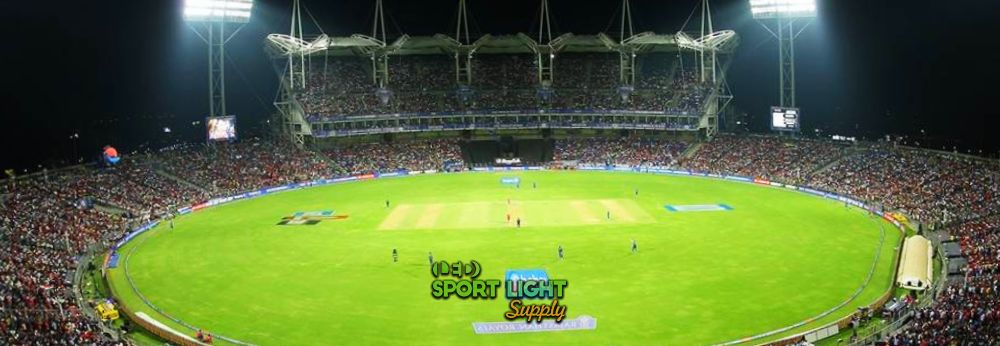
Cricket brings a unique mix of challenges when it comes to lighting. Stadiums are often very large, boundaries can stretch well beyond 70 meters, and matches may run for several hours, including long night sessions. All of this means lighting has to stay comfortable, consistent, and visually reliable for extended periods.
Under ICC guidelines, international televised matches typically require horizontal illuminance of 2,000 lux or more across the playing area. This level helps fielders track the ball over long distances and gives batsmen enough contrast when facing fast deliveries under lights. For broadcasting, vertical illuminance toward key camera positions can reach around 1,500 lux, ensuring players’ movements and expressions are clearly captured.
Uniformity plays a big role in cricket lighting. A ratio of 0.7 or higher is commonly required so that no part of the field feels noticeably darker, especially near the boundary. Color rendering expectations usually fall between CRI 80 and 90, depending on whether the match is a standard international fixture or a major televised event. Glare control is especially closely watched, since batsmen often track high balls against the night sky, and even small glare issues can affect performance.
Rugby lighting standards don’t differ wildly between governing bodies, but international competitions tend to follow a consistent set of expectations. The sport involves continuous movement, frequent high kicks, and physical contact, all of which benefit from clear and even lighting.
For elite-level rugby matches, horizontal illuminance typically ranges from 1,000 to 1,500 lux, providing enough brightness for players to react quickly during open play and set pieces. When matches are broadcast, vertical illuminance of around 1,000 lux toward main camera angles is usually specified to support clear images during tackles and scrums.
Uniformity is generally set at 0.7 or higher, helping maintain visual consistency across the pitch, even during fast transitions from one end to the other. In terms of color performance, CRI values of at least 80 are standard, ensuring jerseys, pitch markings, and the ball remain easy to distinguish under artificial lighting.
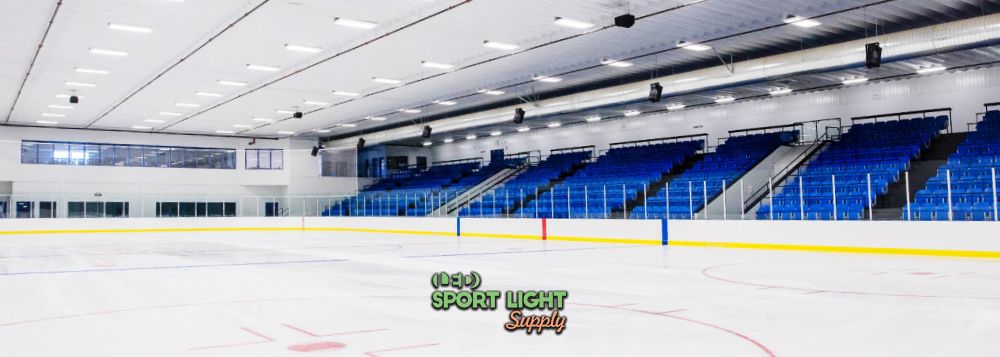
Ice hockey is one of the more demanding sports for lighting designers. The ice surface reflects a large amount of light, which can increase glare and reduce contrast if not handled carefully. Add in the speed of the game and frequent camera zooms, and lighting quality becomes even more noticeable.
According to IIHF guidelines for top-level competitions, horizontal illuminance often falls between 1,500 and 2,000 lux. This helps keep the puck visible against the bright ice surface, even during rapid direction changes. Vertical illuminance is strongly emphasized, supporting clear views of players’ faces and body movement for both officials and broadcasters.
Uniformity targets are relatively high, commonly around 0.8, to avoid bright hotspots and dark zones that would stand out on the ice. Glare control is carefully managed through fixture placement and beam shaping to limit reflections off the ice and surrounding boards. Color rendering requirements usually sit at CRI 80 or higher, with CRI 90 recommended for major international tournaments with extensive TV coverage.
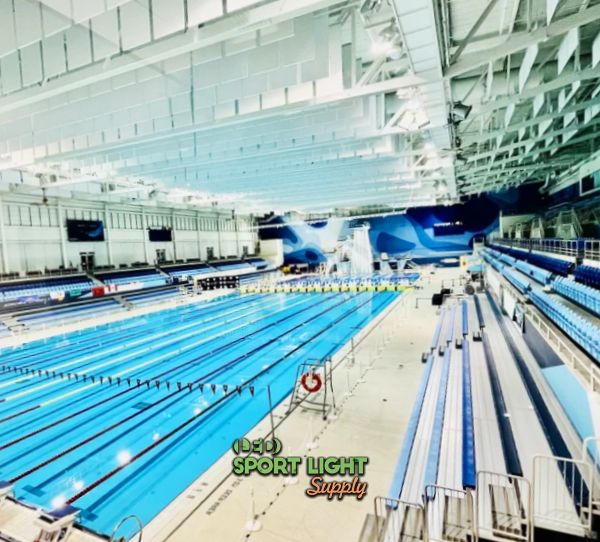 Lighting aquatic venues comes with its own set of challenges. Water surfaces reflect light easily, and glare can affect swimmers, divers, judges, and spectators if the system isn’t properly designed. Consistency and control matter just as much as brightness.
For FINA-sanctioned international competitions, horizontal illuminance over the pool surface typically ranges from 1,000 to 1,500 lux. This level supports clear visibility of lanes, turns, and finishes during races. In diving events, vertical illuminance around 1,000 lux is especially relevant, helping judges assess body position and entry into the water.
Uniformity usually reaches 0.7, ensuring the pool area feels evenly lit from end to end. CRI values of 80 or higher are commonly required so that athletes’ skin tones, lane markings, and timing indicators appear natural. Careful glare control and thoughtful fixture aiming help keep reflections off the water to a manageable level, creating a more comfortable visual environment for everyone involved.
| Sport | Horizontal Illuminance (lux) | Vertical Illuminance (lux) | Uniformity | CRI | GR Rating |
|---|---|---|---|---|---|
| Football / Soccer (FIFA / UEFA / IOC) | 2,000–2,500 | 1,500–2,000 | ≥ 0.7 | ≥ 90 | ≤ 22 |
| Track & Field (World Athletics) | 1,000–1,500 | ~1,000 | ≥ 0.7 | ≥ 80 | ≤ 25 |
| Basketball (FIBA) | 1,500–2,000 | ~1,500 | ≥ 0.8 | ≥ 80 (≥ 90 preferred) | ≤ 19 |
| Tennis (ITF) | 1,000–2,000 | ≥ 1,000 | ≥ 0.7 | ≥ 80 | ≤ 22 |
| Cricket (ICC) | ≥ 2,000 | ~1,500 | ≥ 0.7 | 80–90 | ≤ 22 |
| Rugby | 1,000–1,500 | ~1,000 | ≥ 0.7 | ≥ 80 | ≤ 24 |
| Ice Hockey (IIHF) | 1,500–2,000 | Emphasized | ≥ 0.8 | ≥ 80 (≥ 90 recommended) | ≤ 20 |
| Aquatic Sports (FINA) | 1,000–1,500 | ~1,000 | ≥ 0.7 | ≥ 80 | ≤ 23 |
No, and the gap between the two can be quite large. Training sessions are mainly about safety and basic visibility, so lighting levels are usually much lower. Depending on the sport and level, training lighting can range from 200 to 500 lux, which is enough for players to move comfortably and see the ball clearly.
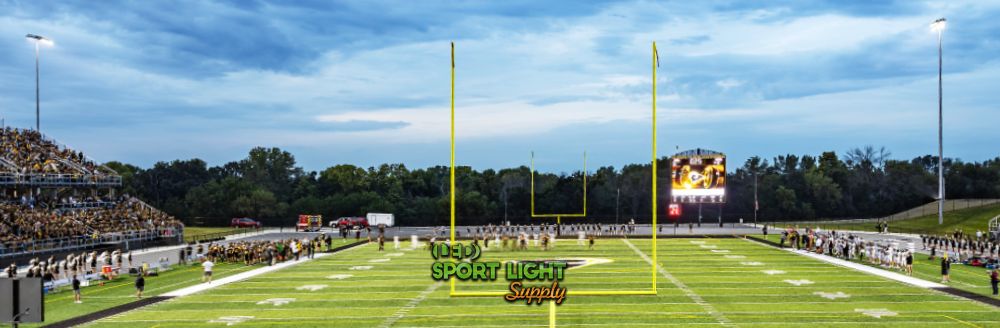
Competition lighting is a different story. Once official matches and spectators are involved, brightness, uniformity, and color quality all step up. Professional competitions often require 1,000 lux or more, and televised events can push far beyond that. Uniformity ratios are also tighter during matches, helping create a consistent visual environment across the entire field or court.