
When the sun dips below the trees and the scoreboard is still lit, that’s when lacrosse really shows its personality. Night practices, weekday games, community tournaments, even casual pickup sessions all depend on one thing working quietly in the background: field lighting. The cost of lacrosse field lighting is often treated like a simple budget line, but in reality, it’s a layered decision that blends engineering, community planning, long-term operating strategy, and a bit of human psychology.
What follows is a deeper, more grounded look at what really shapes lacrosse field lighting costs, beyond the usual price-per-pole conversations.
Lacrosse has always lived comfortably in the late afternoon and evening hours. School schedules, work commitments, and shared field usage push most play into the time when natural light starts to fade. Without proper lighting, a field may only be usable four to five hours a day during parts of the year. With lighting, that window often doubles.
Many facilities report that once lighting is installed, field usage increases by 60 to 100 percent, especially during fall and spring seasons. That alone reshapes how administrators view cost. A lit field is no longer a daytime-only asset; it becomes a multi-shift facility.
There’s also an emotional side that doesn’t show up in spreadsheets. Night games draw larger crowds, feel more event-like, and tend to boost team morale. Players track the ball better, referees make cleaner calls, and spectators stay engaged longer. Darkness quietly drains all of that away.
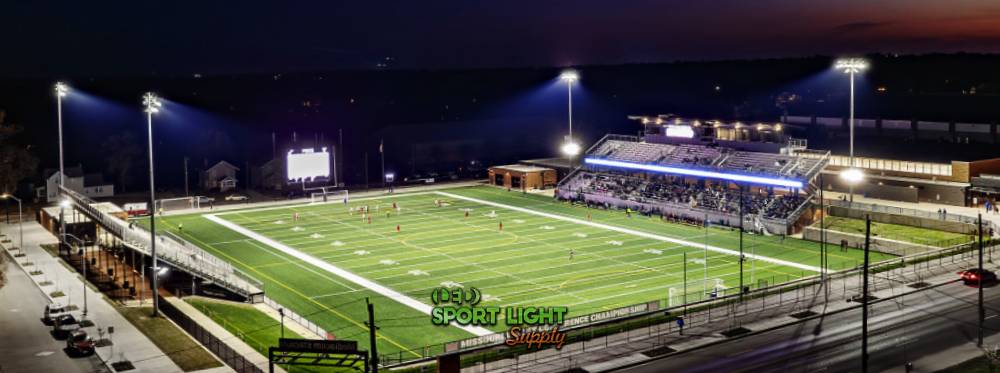
One of the most common misunderstandings around lacrosse field lighting cost is stopping at the quote number. The invoice you see at the beginning feels concrete, easy to compare, and final. In reality, it’s just the opening scene of a much longer story. The real cost of field lighting unfolds over 20 to 30 years, which is the typical lifespan of a well-designed system.
For most full-size lacrosse fields, a new lighting installation usually lands somewhere between USD 180,000 and USD 400,000. That range shifts based on pole height, number of fixtures, aiming requirements, electrical distance, and site conditions. A multi-use field or tournament-level facility can easily move beyond that range if higher illumination levels or stricter glare controls are required.
What often gets missed is that two systems with the same upfront price can behave very differently over time. One might quietly do its job for decades, while the other racks up hidden costs through higher power bills, frequent service calls, or inconsistent light levels that limit usable hours.
| Cost / Metric | Typical Range |
|---|---|
| Initial installation cost | USD 180,000 – 400,000 |
| System lifespan | 20 – 30 years |
| Power demand (full field) | 25 – 40 kW per hour |
| Weekly energy use | 500 – 800 kWh |
| Annual energy cost | USD 4,000 – 12,000 |
| Annual maintenance budget | 1 – 2% of project cost |
| Rental value per hour | USD 75 – 150 |
| Potential usage increase | 60 – 100% |
Once the lights are on, the meter starts running. A typical LED lacrosse lighting system may draw 25 to 40 kilowatts per hour at full output. If a field runs four hours a night, five nights a week, that adds up to roughly 500 to 800 kilowatt-hours per week. Over a year, energy cost alone can range from USD 4,000 to USD 12,000, depending on local utility rates and usage patterns.
Maintenance also plays a role, even in the LED era. While modern fixtures last far longer than older systems, components like drivers, control modules, and surge protection don’t last forever. Budgeting 1 to 2 percent of initial project cost per year for long-term maintenance is common among experienced facility operators.
Then there’s downtime. When lighting underperforms or fails unexpectedly, games get rescheduled, practices are canceled, and rental revenue disappears. Those losses rarely show up in proposals, but field managers feel them immediately.
Not all lighting systems deliver the same quality of light, even if they meet minimum specifications on paper. Poor uniformity, excessive glare, or uneven brightness can quietly reduce how a field is used. Coaches may avoid evening drills, referees may hesitate to schedule matches, and tournament organizers may look elsewhere.
A field that’s technically “lit” but uncomfortable to play on is often used less than expected. Over a 10-year period, even losing one or two usable nights per week can translate into hundreds of lost hours. When you attach a rental value of USD 75 to USD 150 per hour, the numbers climb quickly.
This is where lighting design quality becomes a financial factor, not just a visual one. Good optics and thoughtful pole placement protect long-term value by keeping the field attractive to players and organizers.
There’s also a cost that never appears in budgets: the cost of not installing lighting at all. Fields without lighting typically shut down by late afternoon during large parts of the year. That means unused turf, idle infrastructure, and missed opportunities.
Many facilities see evening demand increase almost immediately after lighting is installed. Some report usage jumps of 60 to 100 percent, especially during fall and spring seasons when daylight fades early. That additional time supports youth leagues, adult recreation, camps, and tournaments, all without expanding the physical footprint of the facility.
From a planning perspective, lighting acts like a time multiplier. Instead of building new fields to meet demand, organizations stretch the value of what they already have.
It helps to stop thinking about lacrosse field lighting as equipment and start viewing it as infrastructure. Just like drainage systems or field surfacing, lighting shapes how the facility functions for decades. A well-planned system protects scheduling flexibility, revenue potential, and user satisfaction long after the initial check is written.
At first glance, a lacrosse lighting system looks pretty straightforward. You see tall poles, bright fixtures, and a control cabinet tucked somewhere near the field, and it’s easy to assume that’s the whole picture. In reality, every one of those pieces carries weight in terms of upfront cost, long-term performance, and how well the system ages over time. When projects run over budget or don’t perform as expected, it’s usually because one of these elements was underestimated early on.
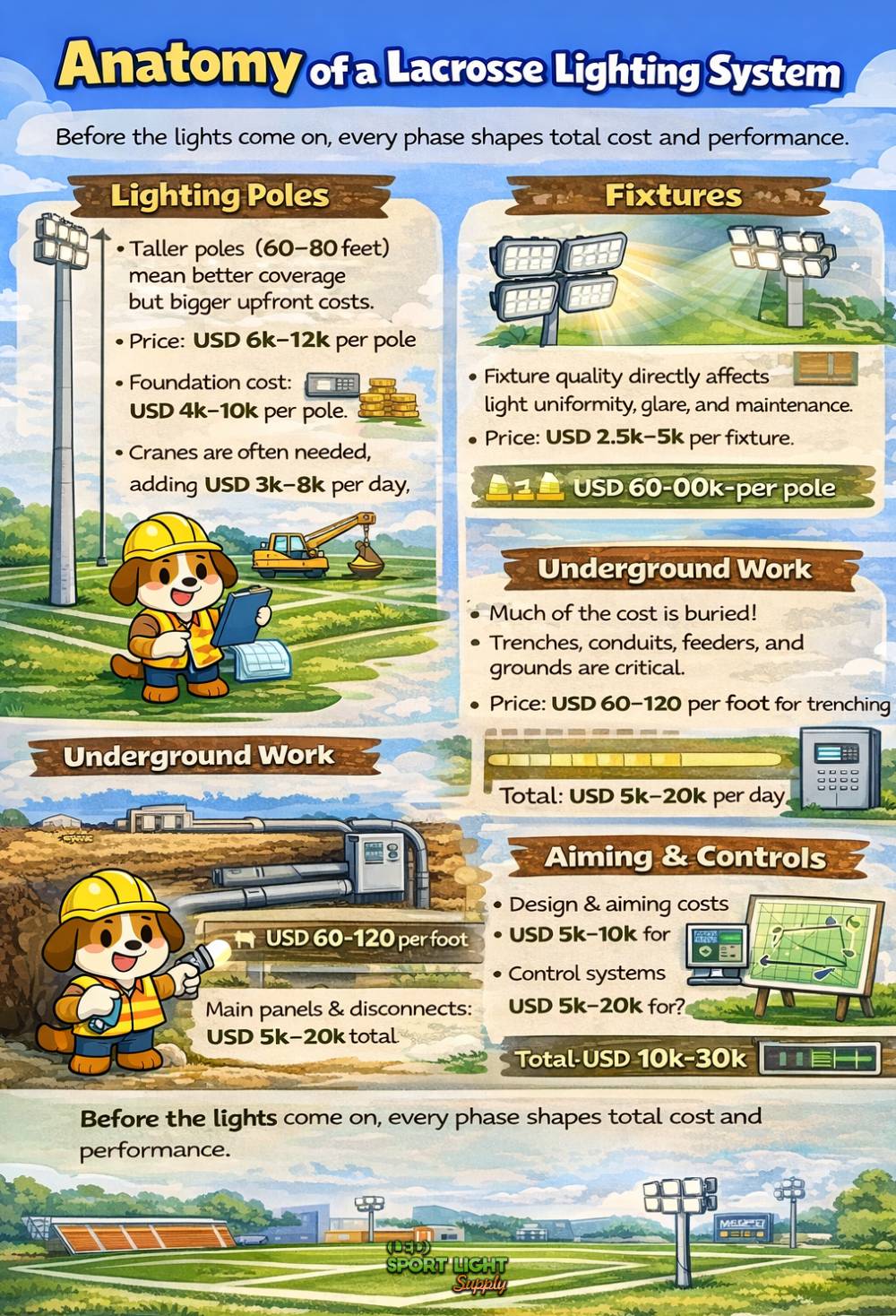
Lighting poles are one of the most visible parts of the system and often one of the largest cost drivers. For lacrosse fields, pole heights typically range from 60 to 80 feet, with full-size competition fields leaning toward the higher end for better coverage and uniformity.
A standard steel lighting pole can cost anywhere from USD 6,000 to USD 12,000 per pole, depending on height, wall thickness, and finish. Taller poles allow light to spread more evenly, which can reduce the total number of fixtures needed, but they introduce additional structural requirements.
Foundations for these poles are rarely simple. Concrete foundations often extend 8 to 12 feet below grade, and in some cases even deeper when soil or wind conditions demand it. Foundation work alone can cost USD 4,000 to USD 10,000 per pole, and that number climbs quickly in rocky soil or areas with high groundwater.
Installation adds another layer. Taller poles usually require larger cranes and longer setup times, with crane and rigging costs ranging from USD 3,000 to USD 8,000 per day, depending on site access and region. When you multiply that across multiple poles, height becomes a meaningful budget consideration.
Fixtures are where lighting quality becomes obvious the moment play begins. Not all LED sports fixtures perform the same way, even if their wattage numbers look similar on a spec sheet. Optical design, beam spread, and glare control determine how well players can track a fast-moving ball under night conditions.
For lacrosse, uniformity usually matters more than raw brightness. A high-quality LED sports fixture can cost USD 2,500 to USD 5,000 per unit, depending on output level and optical features. A typical lacrosse field may require anywhere from 24 to 48 fixtures, meaning fixture costs alone can range from USD 60,000 to over USD 200,000.
Poor fixture selection often leads to over-lighting some zones and under-lighting others. That wastes energy and still leaves players dealing with shadows and glare. Higher-quality fixtures tend to deliver better light distribution, more stable color rendering, and longer useful life, often rated for 50,000 to 100,000 operating hours. Over time, that translates into fewer replacements and lower maintenance expense.
Even the best fixtures can perform badly if they’re aimed incorrectly. Proper layout and aiming take time and experience, and they directly affect how the field feels at night. Aiming errors of just a few degrees at 70 or 80 feet in the air can create glare hot spots or dark patches that players notice immediately.
Photometric design, layout planning, and on-site aiming during commissioning typically add USD 5,000 to USD 15,000 to a project, depending on complexity. While this portion of the budget often gets questioned, skipping or minimizing it can lead to costly re-aiming later, which may require lifts, labor, and field downtime.
Good lighting isn’t just installed; it’s tuned, and that tuning protects both performance and budget over the long run.
Some of the most expensive components of a lacrosse lighting system are the ones you never see once the field is finished. Underground conduits, electrical feeders, junction boxes, grounding systems, and concrete foundations all sit below grade, quietly supporting the system for decades.
On many projects, underground infrastructure accounts for 15 to 25 percent of total project cost, and in difficult conditions it can climb even higher. Trenching and conduit installation typically range from USD 60 to USD 120 per linear foot, depending on soil type and local labor rates.
Electrical runs across large athletic complexes increase copper usage and labor time, especially when power sources are far from the field. Main electrical panels and disconnects can add USD 5,000 to USD 20,000, depending on system size and control requirements.
Control systems play a larger role than many people expect. Basic on-off controls are relatively inexpensive, but modern systems that allow scheduling, partial-field operation, dimming, and energy monitoring usually add USD 5,000 to USD 25,000 to a project.
While that might feel like an optional upgrade, these controls often reduce operating costs by limiting unnecessary run time. Facilities using scheduled or zoned lighting commonly report energy savings of 20 to 40 percent compared to manual systems.
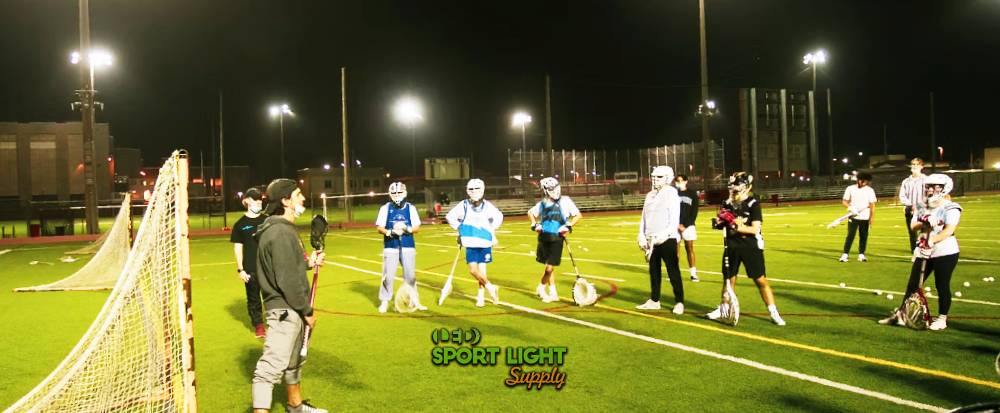
Two lacrosse fields can look identical on paper and still end up with very different lighting budgets once location comes into play. Geography, regulations, and local conditions directly shape cost, sometimes shifting a project by tens of thousands of dollars in either direction.
| Cost Driver | Typical Range |
|---|---|
| Higher-spec urban fixtures | +10% – 25% |
| Design, aiming & compliance | USD 8,000 – 20,000 |
| Trenching & electrical runs | USD 60 – 120 per foot |
| Pole foundation cost | USD 4,000 – 15,000 per pole |
| Regional labor rates | USD 75 – 150 per hour |
| Total location impact | USD 50,000 – 100,000 |
Urban and suburban fields usually face tighter rules around light spill, glare, and operating hours. To stay compliant, projects often require higher-performance fixtures with tighter beam angles and added glare control. These fixtures typically cost 10 to 25 percent more per unit compared to standard models.
Design and aiming work also increase. More detailed photometric studies, additional site visits, and on-site verification can add USD 8,000 to USD 20,000 to a project, depending on field size and regulatory complexity. In some cities, advanced control systems are required to enforce curfews or partial-field operation, which can add another USD 5,000 to USD 15,000 upfront.
All of this helps reduce complaints and keep permits intact, but it’s a clear example of how location pushes cost upward in ways that aren’t obvious at first glance.
Rural fields often avoid strict light spill regulations, but electrical infrastructure becomes a major cost factor. When the nearest power source is far from the field, trenching and wiring costs climb fast. As a rough guide, underground electrical work can range from USD 60 to USD 120 per linear foot, depending on soil conditions and conduit requirements.
If a field needs 500 additional feet of trenching, that alone can add USD 30,000 to USD 60,000 to the project. In larger complexes, where distances exceed 1,000 feet, electrical work can rival the cost of poles or fixtures.
Foundation work is another area where location shows up in pricing. Standard pole foundations in favorable soil might cost USD 4,000 to USD 7,000 per pole. In rocky terrain or areas with high groundwater, that number can jump to USD 9,000 to USD 15,000 per pole, especially if drilling or dewatering is required.
For a typical lacrosse field with six to eight poles, poor soil conditions alone can increase total project cost by USD 30,000 to USD 50,000 compared to initial estimates based on ideal conditions.
Fields in open or coastal areas face higher wind loads, which affects pole design and installation. Heavier-duty poles and deeper foundations may add USD 2,000 to USD 5,000 per pole, depending on engineering requirements.
Crane time can also increase. Larger cranes and longer setup times can add USD 3,000 to USD 10,000 in equipment and labor costs, particularly when access is limited or the site is remote.
Labor costs vary widely by region. In some areas, electrical labor rates may average USD 75 to USD 90 per hour, while in high-cost urban markets, rates of USD 120 to USD 150 per hour are not uncommon. Over the course of a multi-week installation, that difference alone can shift total labor cost by USD 20,000 or more.
Permitting timelines also affect budgets. Projects that move quickly incur minimal soft costs, while extended reviews, public hearings, or environmental studies can add USD 5,000 to USD 25,000 in design revisions and project management fees before construction even begins.
When all these factors are added together, it’s easy to see how location can swing a lacrosse field lighting project by USD 50,000 to USD 100,000, even when the field layout stays the same. That’s why early, site-specific planning matters. Understanding local conditions upfront helps set realistic budgets and avoids surprises that show up only after construction starts.
Lighting a lacrosse field is rarely a solo decision or a single check written by one party. Most projects sit at the intersection of schools, local governments, clubs, and private operators, each bringing something to the table and each expecting something in return. When the structure is thought through early, shared funding often makes lighting projects easier to approve and easier to sustain over the long run.
Public schools and municipalities commonly fund lighting through capital improvement programs or long-term infrastructure budgets. For a full-size lacrosse field, that public portion may cover 50 to 70 percent of the total project cost. Clubs and user groups often step in to bridge the gap through fundraising, booster programs, or long-term usage agreements.
In practical terms, that might look like a municipality contributing USD 180,000, while local clubs raise USD 60,000 to USD 120,000 through sponsorships and donations. In return, clubs secure guaranteed evening time slots, priority scheduling, or reduced hourly rental rates over a set number of years.
Usage fees also play a role. Fields with lighting typically charge USD 75 to USD 150 per hour, depending on location and demand. Over a season, even modest evening use can generate USD 20,000 to USD 40,000 in additional revenue, which helps cover energy and maintenance costs without increasing public subsidies.
Some communities get creative with funding. Sponsorships tied to lighting assets are becoming more common, especially in club-heavy lacrosse regions. Light poles, control systems, or night game series may carry sponsor recognition in exchange for upfront contributions.
A single sponsor might contribute USD 10,000 to USD 25,000, while larger naming rights packages tied to tournaments or evening leagues can reach USD 50,000 or more over multiple seasons. These arrangements don’t just reduce upfront cost; they also strengthen relationships between facilities and local businesses.
The benefits of lighting go well beyond dollars. Once a field is lit, it often becomes a focal point for the community. Youth practices, adult leagues, clinics, and regional tournaments all find space in the evening hours that were previously unavailable.
Municipalities frequently report that after lighting upgrades, complaints about underused fields drop sharply. A space that once went dark at 6 pm suddenly hosts activity until 9 or 10 pm. That visible use changes how residents perceive public investment, making lighting projects easier to justify politically and socially.
No matter how polished the drawings look, installation is where real-world conditions test every assumption. Trenching exposes surprises, weather disrupts schedules, and coordinating electricians, crane operators, and inspectors becomes a daily balancing act. This is the phase where even well-planned projects can feel a little tense.
Trenching is one of the most unpredictable parts of a lighting project. Encountering rock, unexpected utilities, or unstable soil can slow progress and add cost quickly. Trenching delays of just a few days can add USD 5,000 to USD 15,000 in labor and equipment costs, especially when crews and cranes are already mobilized and waiting.
Weather adds another layer of uncertainty. Rain can pause foundation pours, while high winds delay pole erection for safety reasons. Each weather-related delay increases overhead and pushes commissioning further down the calendar, sometimes straight into peak playing seasons when field access becomes harder to manage.
Experienced sports lighting installers usually come at a premium, with bids that may run 10 to 15 percent higher than less specialized contractors. That difference often raises eyebrows early on, but it reflects hard-earned experience with aiming tolerances, vibration control, and sequencing work to keep everything moving smoothly.
More importantly, seasoned crews tend to spot problems before they turn expensive. That foresight can save tens of thousands of dollars by avoiding rework, damaged fixtures, or misaligned poles. When lighting goes in wrong, fixing it later almost always means lifts, extra labor, and lost field time, all of which compound quickly.
Installation isn’t just about putting poles in the ground. It’s about timing electricians, crane operators, concrete crews, and inspectors so work flows without bottlenecks. Poor coordination stretches schedules and drives up indirect costs, even if the hardware itself stays on budget.
Projects with strong site management tend to move faster and experience fewer change orders. That efficiency doesn’t always show up as a line item, but it shows up clearly in the final project total.
Commissioning is one of the most overlooked parts of the budget and one of the most noticeable when it’s skipped. Proper commissioning includes on-site aiming, light-level testing, uniformity checks, and system calibration to meet play standards.
This phase typically costs USD 5,000 to USD 12,000, depending on field size and system complexity. Skipping it might save money upfront, but it almost always leads to complaints from players and officials. Fixing uneven lighting after the fact often costs significantly more than getting it right the first time, both financially and reputationally.
When people talk about the cost of lacrosse field lighting, energy and maintenance often get pushed into a vague “we’ll deal with it later” category. In reality, these two factors shape how the system feels to operate year after year. They don’t usually break budgets overnight, but they quietly decide whether lighting feels manageable or frustrating over time.
Energy use is one of the easiest numbers to calculate and one of the hardest to explain in a way that feels real. A full-size lacrosse field typically draws 25 to 40 kilowatts per hour when all fixtures are running at full output. The exact number depends on fixture wattage, pole layout, and lighting levels required.
If a field runs lights four hours a night, five nights a week, that’s roughly 500 to 800 kilowatt-hours per week. Over a 30-week season, total consumption often lands between 15,000 and 24,000 kilowatt-hours. At utility rates of USD 0.12 to USD 0.18 per kWh, annual energy cost usually falls in the USD 1,800 to USD 4,300 range.
Smart controls make a noticeable difference here. Facilities using scheduling, dimming, or partial-field lighting often reduce energy use by 20 to 40 percent, especially during practices that don’t require full competition-level brightness.
Modern LED systems have changed maintenance expectations, but they haven’t eliminated maintenance altogether. Fixtures may last 50,000 to 100,000 hours, yet supporting components still need attention. Drivers fail, control systems require firmware updates, and physical damage from balls or weather occasionally happens.
Many facilities budget 1 to 2 percent of initial project cost per year for long-term maintenance. For a USD 300,000 lighting system, that’s roughly USD 3,000 to USD 6,000 annually, spread across inspections, minor repairs, and occasional part replacement.
The real shift is predictability. Instead of frequent lamp changes and emergency outages, maintenance becomes more planned and less disruptive. That stability makes scheduling easier and reduces last-minute cancellations.
Well-designed systems don’t just perform better, they’re easier to live with. Clear access for service, standardized components, and thoughtful layout all reduce maintenance time and cost over the years. These details are rarely flashy, but they shape how the system behaves season after season.
Facilities that plan for maintenance during design tend to avoid rushed decisions later, when fields are booked and downtime is expensive.
Warranties don’t always get the attention they deserve during procurement, but they have a direct impact on lifetime cost. A strong fixture warranty, often 10 years or more, covers drivers, LEDs, and sometimes labor. That coverage can prevent unexpected repair bills that run USD 2,000 to USD 5,000 per incident when lifts and labor are involved.
Facilities that prioritize warranty terms often save tens of thousands of dollars over the system’s life. It’s less about reassurance and more about keeping long-term costs predictable.
Conversations around lacrosse field lighting often focus on equipment and construction, while grants and funding opportunities get treated as an afterthought. In reality, the right funding strategy can shape both the size of the project and how comfortably it fits into a long-term budget.
Public agencies, utilities, and sports development programs increasingly view field lighting as community infrastructure. When projects are framed that way from the start, they often qualify for financial support that isn’t obvious at first glance.
Projects that think about funding at the design stage tend to have more flexibility and fewer compromises later. When efficiency, durability, and community use are built into the concept early, funding applications become clearer and easier to support.
Early planning also allows teams to align timelines with grant cycles, rather than rushing designs to meet construction windows and missing funding opportunities altogether.
Funding programs rarely support lighting just because it’s bright. They support projects that demonstrate efficiency, durability, and long-term public value. Systems that achieve target light levels with fewer fixtures, smarter optics, and modern controls are often easier to justify in grant applications.
Longer system life also matters. Lighting designed to operate reliably for 20 to 30 years aligns well with how grant providers think about public investment. Fewer replacements, fewer service interruptions, and predictable operating costs strengthen the case for funding approval.
Grant reviewers rarely fund projects based on technical specifications alone. They look for clear stories about impact. Lighting that extends usable hours, supports youth programs, or enables tournaments and community events after dark tends to stand out more than projects framed purely as infrastructure upgrades.
Facilities that can show how lighting increases participation, improves safety, or reduces scheduling pressure often present a stronger case. Even simple outcomes, like adding evening practice slots or hosting regional games, help funders see real value.
In many regions, utilities offer incentives tied to energy-efficient sports lighting upgrades. These programs can reduce upfront project cost by USD 10,000 to USD 50,000, depending on system size and projected energy savings.
Beyond utilities, municipalities and school districts may access state or regional grants focused on recreation, youth sports, or community wellness. These funds often support lighting projects that increase public access and extend field availability beyond daylight hours.
Timing matters here. Funding cycles and approval processes can stretch several months. Projects that account for these timelines early tend to move forward more smoothly than those trying to add funding late in the process.
Not every project relies on the same funding mix. Some facilities lean heavily on utility rebates, while others combine grants with sponsorships, capital budgets, or user contributions. The most successful projects align system design with the requirements of available funding, rather than forcing funding to fit a fixed design.
That alignment often influences decisions around controls, fixture efficiency, and documentation. While it may add some upfront planning time, it can significantly reduce the amount of capital a facility needs to contribute directly.
Photometric studies, energy models, lifecycle cost estimates, and usage projections are often required to support funding applications. These items may add a few thousand dollars upfront, but they frequently unlock funding amounts far greater than their cost.
Projects that budget for proper documentation tend to avoid delays and resubmissions. More importantly, they signal readiness and professionalism, which funding agencies tend to reward.
Real projects tend to explain lighting costs better than any estimate ever could. Once systems are installed and used week after week, patterns start to emerge around revenue, scheduling, and long-term value.

A small-town high school initially justified lighting to support fall lacrosse practices, where early sunsets were cutting sessions short by nearly an hour each day. The project came in at around USD 210,000, covering six poles, LED fixtures, and basic controls.
Within the first year, something unexpected happened. The field began attracting weekend tournaments and regional league play. Rental rates of USD 90 to USD 120 per hour quickly added up. By the end of the second season, tournament rentals alone were generating USD 18,000 to USD 25,000 annually, covering a large portion of the field’s yearly energy and maintenance costs.
What started as a scheduling fix turned into a steady revenue stream, simply because the field became usable after dark.
A municipal sports complex upgraded an aging metal-halide system that was costly to run and inconsistent in performance. The new LED system cost roughly USD 360,000, about 8 percent higher than the original budget due to foundation adjustments and upgraded controls.
The payoff came quickly. Evening bookings doubled within months as leagues that had previously avoided night play returned. Hourly usage increased by nearly 1,200 hours per year, translating into USD 70,000 to USD 90,000 in additional annual revenue across multiple fields.
Even with higher upfront cost, the project effectively caught up to its budget within three seasons, while also reducing energy consumption by more than 50 percent compared to the old system.
Another facility planned carefully around equipment but underestimated site conditions. Trenching revealed unexpected rock and utility conflicts, delaying installation by several weeks and adding nearly USD 30,000 in unplanned excavation and labor costs.
The takeaway wasn’t that lighting was a bad idea. It was that early site investigation matters. After completion, the field still saw strong evening demand, but the project highlighted how much pre-construction planning influences final cost and schedule.
Once a lacrosse field is properly lit, it changes how the space is used, how people gather, and how programs grow. The cost is real, but so is the return, measured in hours, participation, and community energy after sunset.
For organizations considering a new installation or an upgrade, having the right guidance early can make all the difference. If you’re exploring lacrosse field lighting options and want advice grounded in real projects, real numbers, and real-world constraints, we’re always happy to talk. Reach out to us for consultation and let’s figure out what makes sense for your field, your budget, and your long-term goals.