
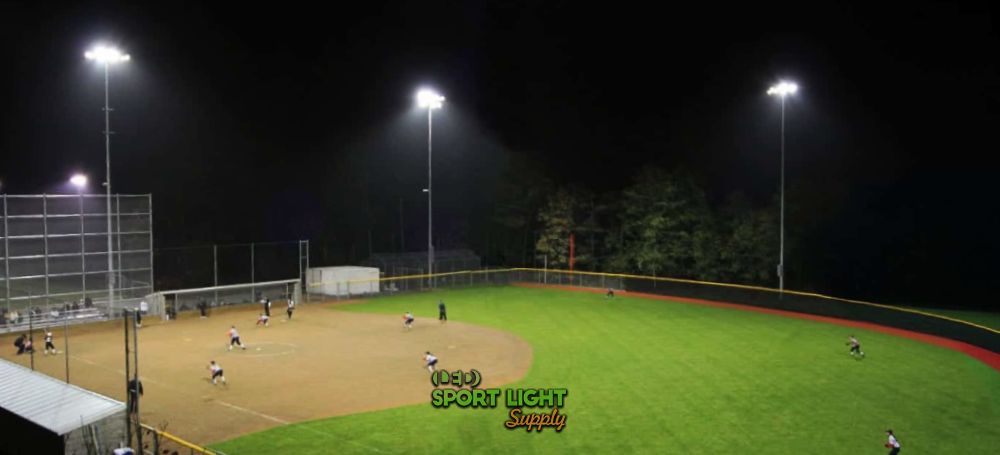
While players, coaches, and spectators often focus on the playing surface, the placement of poles around the field can have a significant impact on safety, visibility, game-day operations, and the overall experience for everyone using the facility. Whether the poles are intended for lighting, protective netting, cameras, speakers, scoreboards, or other infrastructure, their locations should be carefully planned to support the function of the field without creating unnecessary obstacles or distractions.
Many baseball facilities are expected to serve multiple purposes throughout the year. Youth leagues, school competitions, community events, and even regional tournaments may all take place within the same venue. As a result, pole placement is not simply a matter of finding available space. It requires an understanding of player movement, spectator sightlines, maintenance needs, future upgrades, and the unique characteristics of the site itself.
Understanding the Role of Poles Around a Baseball Field
Before determining where poles should be installed, it helps to understand what they are expected to support. Different types of poles serve different functions, and each function comes with its own set of location requirements.
Lighting poles are typically among the tallest structures surrounding a baseball field. Their position influences light distribution, player visibility, and energy efficiency. Netting support poles are designed to protect spectators and nearby properties from foul balls. Camera poles help capture games for live streaming, training analysis, or broadcasting. Speaker poles contribute to announcements and event management, while utility poles may support communication systems or other operational infrastructure.
Because each type of pole serves a different purpose, a successful design approach often considers all systems together rather than treating them as separate projects. This helps reduce visual clutter, improve coordination, and create a more organized facility layout.
Recommended Locations for Lighting Poles
Positioning Lighting Poles Behind the Infield
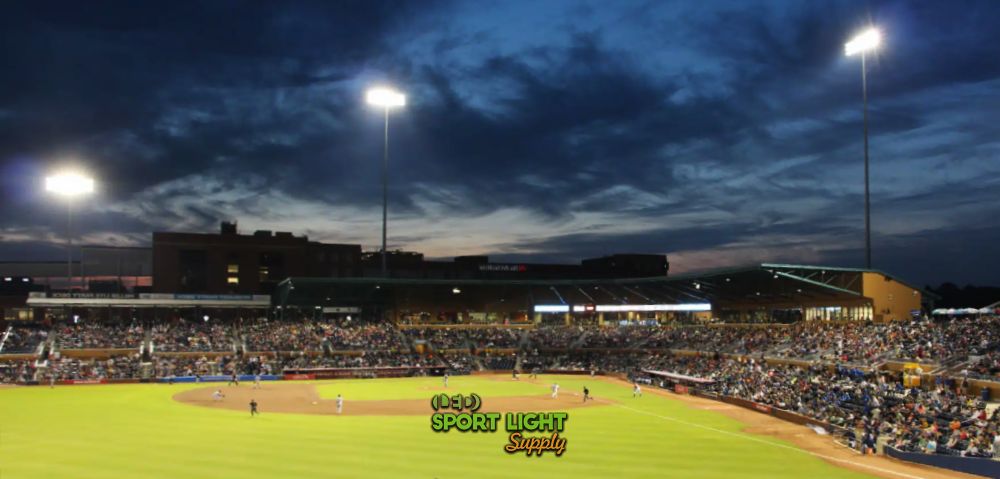
When planning a baseball field lighting system, one of the first considerations is where the lighting poles should be placed in relation to the playing area. In most professionally designed baseball facilities, lighting poles are positioned behind the infield and along the first-base and third-base foul lines rather than directly behind home plate. This layout helps create more consistent illumination across the field while reducing glare that could affect players during gameplay.
Baseball is a sport that relies heavily on visual tracking. A batter has only a fraction of a second to react to a pitch travelling at speeds that can exceed 90 mph at higher levels of competition. At the same time, infielders and outfielders must follow fly balls, line drives, and pop-ups against the night sky. If a light fixture is positioned directly within a player’s line of sight, even a high-performance lighting system can become a distraction rather than an advantage.
By locating lighting poles behind the infield corners, designers can direct light toward the field at carefully calculated angles. This helps provide better visibility without creating excessive glare, allowing players to maintain focus throughout the game. Many sports lighting consultants aim to achieve uniform lighting ratios that minimize dark spots while ensuring that no single area becomes excessively bright compared to another.
Creating Balanced Infield Illumination
The infield is where much of the action takes place. Pitching, batting, base running, and many defensive plays occur within this relatively compact area. Because of this, lighting levels around the infield are typically higher than those in the outfield.
For youth baseball fields, average infield lighting levels may range from 30 to 50 foot-candles, while high school and collegiate facilities often target 50 to 100 foot-candles. Professional venues can exceed 150 foot-candles depending on broadcasting requirements.
Proper pole placement plays a major role in achieving these lighting standards. When poles are strategically positioned behind the infield, light can overlap from multiple directions. This overlapping effect helps reduce shadows around bases, pitching mounds, and player positions.
The result is a more comfortable environment for players, coaches, umpires, and spectators alike. It also contributes to smoother game operations during evening practices, tournaments, and televised events.
Aligning with Foul Lines for Improved Coverage
Another common approach involves locating lighting poles near the foul lines. These areas provide enough distance from the field of play while allowing fixtures to project light across both the infield and outfield.
From a design perspective, foul-line pole placement often creates a more efficient distribution pattern. Rather than concentrating all lighting equipment in one location, the system can spread illumination more evenly throughout the facility.
For example, a medium-sized baseball field may utilize four primary poles positioned near the corners of the playing area. Larger facilities may employ six or eight poles to achieve higher lighting levels and improved uniformity. The exact number depends on factors such as field dimensions, competition standards, and lighting performance targets.
Installing Lighting Poles Along the Outfield Perimeter
While the infield receives considerable attention, the outfield should never be overlooked. Deep fly balls can travel hundreds of feet, and outfielders need clear visibility to track them accurately.
To support these requirements, additional lighting poles are often installed beyond the outfield fence. These poles help illuminate areas that might otherwise receive less light due to their distance from the primary lighting structures.
A typical high school baseball field may have outfield fences located between 300 and 350 feet from home plate, while collegiate and professional fields can extend beyond 400 feet in center field. Covering these distances effectively requires thoughtful lighting design and carefully positioned fixtures.
Outfield lighting poles help eliminate dark zones that could interfere with player performance. They also contribute to a more balanced appearance when viewing the field from spectator seating areas or broadcast cameras.
Supporting Tournament and Broadcast Standards
As baseball facilities continue to evolve, many venues are expected to host regional tournaments, championship events, and live-streamed games. These activities often require higher lighting performance than standard recreational use.
Organizations and governing bodies frequently establish minimum lighting requirements for competitive play. In some cases, average illumination levels may need to exceed 100 foot-candles for televised events. Meeting these standards often requires additional pole locations beyond what would normally be installed for community-level fields.
Strategically placed outfield poles allow lighting designers to achieve the brightness and consistency necessary for high-definition video recording. This can significantly improve viewing quality for online audiences while enhancing the experience for players on the field.
Using Modern LED Sports Lighting Systems
The introduction of LED sports lighting has transformed the way baseball facilities are designed. Compared to older metal halide systems, modern LED fixtures provide higher energy efficiency, improved control, and more precise light distribution.
Many LED systems consume 30% to 70% less energy while delivering comparable or superior performance. Because the fixtures can direct light more accurately, some facilities are able to achieve their lighting goals with fewer poles than would have been required in previous decades.
This not only reduces installation costs but can also improve the overall appearance of the venue. Fewer poles often mean fewer visual obstructions and a cleaner, more organized layout.
Even with these technological advancements, proper pole placement remains one of the biggest factors influencing lighting quality. The most advanced fixtures in the world cannot compensate for poorly positioned infrastructure.
Determining the Ideal Pole Height
Pole height is another factor that directly affects lighting performance. While many people focus on the number of poles being installed, the height of each structure can be just as influential.
Most baseball field lighting poles range between 60 and 100 feet tall. Smaller recreational facilities may utilize poles closer to the lower end of this range, while larger competitive venues often require taller structures.
A higher mounting position allows light to spread over a wider area. This improves uniformity and reduces harsh shadows on the field. Players generally benefit from a smoother lighting environment because the ball remains visible throughout its flight path.
At the same time, excessively tall poles may not always be practical. Local planning regulations, nearby residential areas, and aviation guidelines can all influence maximum allowable heights.
The most effective solution is usually one that balances lighting performance with site-specific considerations. Professional photometric analysis can help determine the optimal combination of pole height, fixture selection, and pole location.
Positioning Netting Support Poles
Protecting High-Risk Areas Around Home Plate
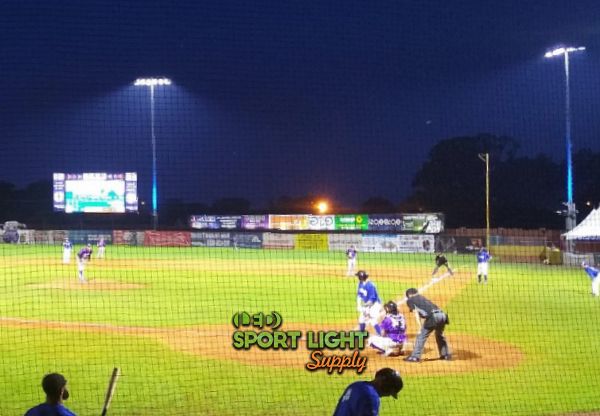 Protective netting has become increasingly common at baseball facilities of all sizes. As awareness of spectator safety has grown, many venue owners have expanded netting coverage beyond traditional installation areas.
The highest concentration of foul balls generally occurs around home plate. A sharply hit foul ball can leave the bat at speeds exceeding 100 mph and reach nearby seating areas within only a few seconds. Because reaction times are limited, many facilities prioritize protection in these sections.
Support poles for protective netting are typically positioned behind home plate and extend toward both dugouts. This arrangement helps create a protective barrier between the field and spectator seating areas while maintaining clear views of the action.
Balancing Protection and Visibility
One of the challenges associated with netting systems is preserving the spectator experience. Fans want protection, but they also want an unobstructed view of the game.
Modern cable-supported netting systems have helped address this challenge. By utilizing high-strength cables and advanced materials, designers can often reduce the number of visible support poles while maintaining structural stability.
This creates a cleaner appearance and helps prevent visual distractions during games. Spectators can enjoy greater peace of mind without feeling disconnected from the action on the field.
Many newer facilities now integrate netting systems into their overall stadium design from the beginning rather than adding them as an afterthought. This approach typically produces better aesthetic and functional results.
Extending Protection Along the Foul Lines
Over the past decade, there has been a noticeable trend toward extending protective netting farther down both foul lines. Professional leagues, collegiate programs, and community organizations have increasingly adopted expanded protection zones.
For families seated close to the field, these extended systems can provide an additional layer of reassurance. Young children, older spectators, and individuals unfamiliar with the pace of baseball may have less time to react to incoming foul balls.
Support pole placement becomes particularly important when netting extends beyond traditional areas. Poles must be located in positions that provide adequate structural support while minimizing impacts on sightlines and circulation pathways.
A well-planned system can significantly improve spectator safety while maintaining the open atmosphere that many baseball fans appreciate.
Camera and Broadcast Pole Locations
Supporting Modern Baseball Technology
Technology has become part of nearly every aspect of modern baseball. From player development and performance analysis to live streaming and social media content, video systems now play a larger role than ever before.
As a result, camera pole placement deserves careful consideration during the planning process. Installing cameras in the right locations helps maximize image quality while providing viewers with engaging perspectives of the game.
Many facilities now record practices and games regularly. Coaches use footage to review player mechanics, analyze defensive positioning, and identify opportunities for improvement. Recruiters and scouts often rely on video content when evaluating athletes from different regions.
Because of these growing demands, camera infrastructure should be considered alongside lighting and netting systems rather than being treated as a separate component.
Locating Cameras Behind Home Plate
The most recognizable camera position in baseball is directly behind home plate. This angle provides a comprehensive view of the field and closely resembles the perspective used during professional broadcasts.
Elevated camera poles in this location allow viewers to see pitch movement, defensive alignments, baserunning decisions, and overall game flow. For live streaming applications, this angle often serves as the primary broadcast feed.
Many facilities position these cameras between 20 and 40 feet above ground level, depending on seating arrangements and structural constraints. The elevated viewpoint helps reduce obstructions while creating a more professional viewing experience.
Adding Additional Angles Around the Field
While the home plate camera remains the primary viewing position, additional cameras can greatly enhance video coverage.
Camera poles located along the foul lines can capture close-up views of infield action, while outfield camera positions provide unique perspectives on fly balls and defensive plays. Some facilities also install cameras near dugouts, bullpens, or scoreboards to support expanded production capabilities.
For larger venues, multiple camera angles can create a broadcast experience that feels far more engaging than a single-camera setup. This is particularly valuable for tournaments, school competitions, and community events that attract online audiences.
Planning for Future Upgrades
Technology rarely stands still for long. A baseball facility that meets today’s requirements may need additional equipment within just a few years.
Many newer venues now incorporate infrastructure for player tracking systems, radar technology, automated cameras, and artificial intelligence-based video analysis. These systems often require dedicated mounting locations, power supplies, and communication pathways.
Planning ahead can help avoid costly modifications later on. Leaving room for additional cameras, sensors, and network equipment allows facilities to adapt as technology continues to evolve.
A flexible infrastructure strategy often delivers better long-term value, especially for organizations that expect their facility to grow over time. By considering future needs during the initial planning phase, baseball venues can remain functional, competitive, and technologically capable for many years to come.
| Factor | Typical Figure | Why It Matters |
|---|---|---|
| Infield Lighting Level (Youth Fields) | 30-50 foot-candles | Provides sufficient visibility for practices and recreational games. |
| Infield Lighting Level (High School & College) | 50-100 foot-candles | Supports faster gameplay, better player visibility, and competitive events. |
| Infield Lighting Level (Professional Fields) | 150+ foot-candles | Delivers the brightness needed for advanced competition and broadcasting. |
| Lighting Pole Height | 60-100 ft | Higher poles improve light distribution, reduce shadows, and create more uniform coverage across the field. |
| Typical Number of Lighting Poles | 4-8 poles | The exact number depends on field dimensions, lighting requirements, and competition standards. |
| Outfield Fence Distance | 300-350 ft (High School)400+ ft (College/Professional Center Field) | Larger fields require additional lighting coverage, particularly around deep outfield areas. |
| LED Energy Savings | 30%-70% less energy | Modern LED sports lighting can lower operating costs while maintaining strong illumination levels. |
| Foul Ball Speed Near Home Plate | 100+ mph | Highlights the need for protective netting and properly positioned netting support poles. |
| Camera Pole Height | 20-40 ft | Elevated camera positions provide wider field views and a more professional broadcast angle. |
| Wind Resistance Design | 100+ mph | Sports lighting and netting poles are often engineered to withstand challenging weather conditions for long-term durability. |
Tips for Baseball Field Pole Placement
Keep Poles Away from Active Playing Areas
One of the first things to consider when planning pole locations around a baseball field is player safety. Baseball is a fast-paced sport where athletes often sprint at full speed while chasing fly balls, fielding grounders, or attempting difficult catches near the foul territory. Structures that are positioned too close to the field can create unnecessary hazards and increase the risk of collisions.
For this reason, lighting poles, netting support poles, camera poles, and other field infrastructure are typically installed outside the active playing area and beyond recommended safety setbacks. Additional clearance is often provided in sections where outfielders may pursue foul balls or where players have limited time to react during gameplay.
Creating sufficient space between the field of play and surrounding structures helps support a safer environment for athletes at every level, from youth leagues to competitive tournaments. A well-planned setback distance can significantly reduce potential safety concerns while maintaining full functionality of the facility.
Prioritize Spectator Protection
Modern baseball facilities place a stronger focus on spectator safety than ever before. Foul balls can travel at speeds exceeding 90 to 100 mph, leaving fans with very little time to react, particularly when seated close to home plate or along the foul lines.
As a result, protective netting systems have become increasingly common across community, school, collegiate, and professional baseball venues. Many facilities now extend netting beyond the dugouts and farther down the baselines compared to traditional layouts.
When determining support pole locations for these systems, the goal is to provide effective protection without creating unnecessary visual barriers. Properly positioned poles help maintain structural stability while preserving clear views of the game. This balance allows spectators to feel more comfortable without sacrificing their overall experience at the ballpark.
At the same time, planners should consider maintenance crews, groundskeeping teams, and event staff who regularly move equipment around the facility. Access routes for lifts, service vehicles, and maintenance equipment should remain open and unobstructed throughout the year.
Maintain Clear Spectator Sightlines
Even the most advanced baseball facility can lose some of its appeal if spectators struggle to see the action on the field. Visibility should always be a major consideration when selecting pole locations.
Lighting poles, netting support structures, camera poles, and communication equipment should be positioned in a way that minimizes interference with viewing angles from seating areas, bleachers, and standing-room sections. Designers often conduct sightline studies to evaluate how various structures will appear from different parts of the venue before finalizing the layout.
Interestingly, relatively small adjustments can have a noticeable impact. Moving a pole just a few feet to one side may improve visibility for hundreds of spectators throughout an entire season. These seemingly minor decisions can make a big difference in overall fan satisfaction.
Facilities that regularly host tournaments, championship games, or large community events often place extra emphasis on maintaining unobstructed views since audience experience can directly influence attendance and venue reputation.
Balance Functionality with Visual Appeal
A baseball field is often one of the most visible recreational assets within a community. Beyond serving athletes and spectators, the venue may also host school events, ceremonies, fundraising activities, and local gatherings. Because of this, appearance matters almost as much as functionality.
A thoughtfully designed pole layout can help create a cleaner and more professional-looking facility. Coordinating pole finishes, reducing unnecessary structures, and combining multiple systems onto shared poles where practical can contribute to a more organized appearance.
For example, some facilities integrate lighting fixtures, security cameras, speakers, and wireless communication equipment onto the same pole structure. This approach reduces visual clutter while maximizing the use of available space.
The end result is a venue that feels modern, welcoming, and well-maintained. Good pole placement isn’t just about performance. It also contributes to the overall character and presentation of the baseball field.
Plan Ahead for Maintenance Access
Every pole installed around a baseball field will eventually require inspection, servicing, or upgrades. Lighting fixtures may need replacement, netting systems may require repairs, and camera equipment often evolves as technology advances.
Unfortunately, maintenance access is sometimes overlooked during the early planning stages. When this happens, facility operators may face higher service costs or unnecessary disruptions later on.
To avoid these issues, designers should ensure that maintenance vehicles and lifting equipment can safely reach each pole location. Access routes should remain practical even after landscaping, fencing, seating areas, and other facility improvements are completed.
Planning for maintenance from the beginning can help reduce downtime and make future upgrades significantly easier to manage. This becomes particularly valuable for facilities that host frequent events and have limited opportunities for maintenance closures.
Consider Long-Term Durability and Environmental Conditions
Pole placement decisions should also account for the environmental conditions the facility is likely to experience over time. Weather can place considerable stress on sports field infrastructure, particularly in areas exposed to strong winds, heavy rainfall, snow accumulation, or large temperature fluctuations.
In many regions, sports lighting poles are engineered to withstand wind speeds exceeding 100 mph. However, local building codes, soil conditions, and environmental regulations can all influence structural design requirements.
Foundation design is equally important. A properly engineered foundation helps support pole stability while reducing the likelihood of long-term settlement or structural movement. Choosing durable materials and corrosion-resistant finishes can also extend service life and lower maintenance requirements.
Facilities that invest in long-term durability often benefit from fewer repairs, lower operating costs, and greater reliability over the years. When viewed over a 20- to 30-year lifecycle, thoughtful planning during the design stage can produce substantial savings while helping the field remain functional and attractive for future generations.
Moving Forward with Professional Planning
Thoughtful pole placement can make a noticeable difference in how a baseball field functions for years to come. From improving visibility during evening games to enhancing spectator protection and supporting modern technology, every pole location contributes to the overall success of the facility. A well-planned layout helps reduce operational challenges, improves user experience, and creates a venue that can adapt to changing needs over time.
If you are planning a new baseball field, upgrading an existing facility, or evaluating infrastructure improvements, our team would be happy to assist. We can provide professional guidance on pole placement strategies, lighting layouts, netting systems, and overall sports facility planning to help ensure your project achieves the best possible results. Feel free to reach out to us for a consultation and discuss the most suitable solution for your specific site and objectives.