
Cricket is no longer just a daytime sport. From international stadium matches to evening academy training sessions, lighting has become a huge part of how modern cricket grounds operate. Whether it’s a professional venue hosting televised tournaments or a local club trying to extend practice hours after sunset, choosing the right lighting setup can make a massive difference to player visibility, audience experience, operating costs, and even long-term maintenance.
One question ground owners and facility managers often ask is whether they should invest in temporary light towers or install permanent lighting poles. The answer usually depends on the type of cricket ground, how often the facility is used, budget planning, and future expansion goals.
Some grounds only need lighting during seasonal tournaments, while others operate nearly every night of the week. A practice net used by a school team has very different lighting requirements compared to a 25,000-seat cricket stadium hosting televised matches. That’s why it helps to look at the bigger picture before deciding.
Different Types of Cricket Grounds and Their Lighting Needs
Not every cricket ground operates the same way, so lighting requirements can vary quite a lot from one venue to another. A full-sized international cricket stadium hosting televised night matches obviously needs a very different lighting setup compared to a school practice net or a small community cricket field.
Things like ground size, player level, training frequency, spectator capacity, broadcasting requirements, and even local weather conditions all play a role when choosing between temporary light towers and permanent lighting poles. Some facilities need ultra-high illumination with precise beam angles, while others simply want enough brightness for evening coaching sessions.
That’s why cricket lighting projects are usually planned based on the actual usage of the venue rather than applying one standard solution to every ground.
| Cricket Facility Type | Key Lighting Specs | Recommended Setup |
|---|---|---|
| Professional Cricket Stadiums | 1,500 to 2,500+ lux | Permanent high-mast LED poles |
| Stadium Pole Height | 30 to 60 metres | Fixed sports floodlighting |
| Community Cricket Fields | 4,000 to 8,000 m² coverage | Temporary LED light towers |
| Practice Nets & Training Areas | 100,000+ lumens | Portable LED lighting |
| LED Floodlight Lifespan | 50,000 to 100,000 hours | Long-life LED systems |
| LED Energy Savings | 40% to 70% lower power use | Energy-efficient LED upgrades |
Cricket Stadiums
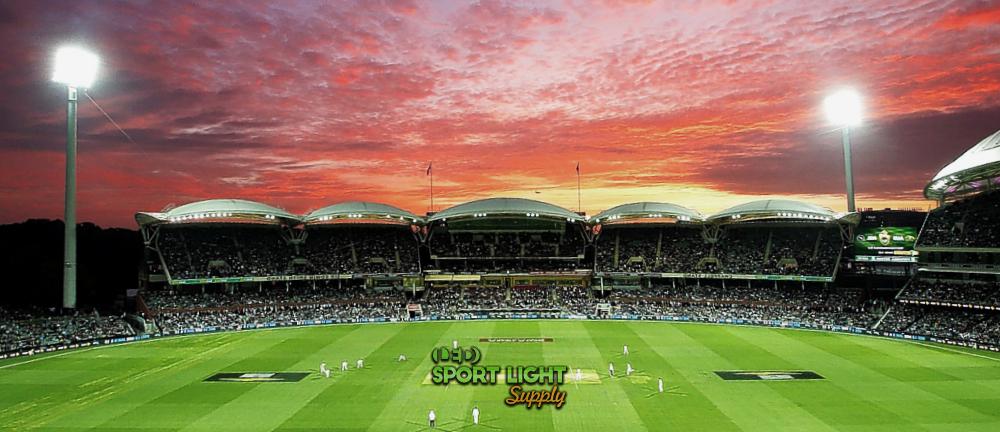
Professional cricket stadiums are built for large-scale matches, live broadcasting, packed spectator seating, and year-round events. These venues often host domestic leagues, international tournaments, T20 matches, corporate events, and even concerts, so the lighting system has to perform consistently under different conditions.
In modern stadium design, permanent high-mast lighting poles are usually the standard choice. Most stadium floodlight poles range between 30 to 60 metres in height, allowing the LED sports floodlights to spread illumination evenly across the entire outfield, wicket area, boundary line, and spectator zones.
For professional cricket, lighting quality goes far beyond simply “making the field bright.” The system needs to minimise glare, reduce shadow formation, and provide uniform lux levels across the playing surface. Fast bowlers, fielders tracking high catches, and batters facing deliveries above 140 km/h all rely heavily on clear visibility.
Broadcasting standards also push lighting requirements much higher. International cricket venues often require lighting levels between 1,500 lux and 2,500 lux, especially for HD and 4K television production. Some premium stadiums even exceed those levels during ICC tournaments or franchise leagues.
The reason is simple. High-speed cameras, slow-motion replays, Hawk-Eye tracking systems, and drone footage all require stable and evenly distributed illumination. If lighting is inconsistent, shadows can appear on camera, making the viewing experience less professional.
Another thing many people overlook is spectator comfort. In a stadium holding 20,000 to 80,000 people, lighting cannot be overly harsh or blinding. Proper sports lighting design carefully controls beam angles and colour temperature to create a cleaner viewing experience both on-site and on television.
Because stadiums usually operate multiple times every month, permanent LED lighting systems often make more financial sense over time despite the higher upfront investment. Modern LED sports floodlights can reduce electricity consumption by 40% to 70% compared to older metal halide systems, which helps stadium operators lower long-term operating costs.
Community Cricket Fields
Community cricket grounds and local club fields have very different priorities compared to international stadiums. Budget tends to be tighter, and the facilities are usually designed around practical day-to-day usage instead of broadcast-level performance.
Some local grounds may only host matches during weekends, while others organise evening training sessions three or four nights a week. Because usage patterns vary so much, flexibility becomes a bigger factor in lighting decisions.
For many community cricket clubs, installing permanent 40-metre floodlight poles may simply not be realistic financially. Civil engineering works, underground cabling, electrical infrastructure, and council approvals can increase project costs very quickly.
This is where temporary light towers or portable LED lighting systems become attractive alternatives.
Modern mobile light towers are much more advanced than many people expect. Some high-output LED towers can illuminate between 4,000 and 8,000 square metres, making them suitable for club-level cricket matches, junior leagues, and training sessions.
Portable towers are also useful for seasonal tournaments. A local cricket association may only require additional lighting during certain months of the year, especially during T20 competitions or school holiday events. Instead of committing to a full permanent installation, temporary lighting allows clubs to scale usage based on actual demand.
Fuel-efficient hybrid lighting towers are becoming more common too. Some newer models combine battery storage, LED floodlights, and solar charging systems, helping clubs reduce diesel consumption and noise levels during evening matches.
Another advantage is mobility. Grounds with uneven layouts or shared facilities can reposition the towers depending on where matches or training sessions are taking place.
For grassroots cricket, this flexibility can be surprisingly practical.
Cricket academies and coaching centres usually have heavier training schedules compared to regular community grounds. Many operate almost daily, especially during tournament seasons or school holidays.
Training often starts in the late afternoon and continues into the evening because students and working adults usually attend after school or office hours. In countries where daytime temperatures exceed 30°C regularly, night training sessions are also more comfortable for players.
Because of this, academy lighting systems need to balance performance, energy efficiency, and operating cost.
Some larger academies invest directly in permanent LED floodlight poles to support intensive training schedules. Fixed lighting provides stable illumination for batting drills, bowling practice, catching sessions, and fitness training.
However, not every academy starts at that level.
A lot of developing cricket centres use a phased installation approach. They may begin with temporary mobile light towers or semi-permanent lighting systems before upgrading to full high-mast floodlights later.
This approach helps reduce initial capital spending while still allowing evening coaching programs to run smoothly.
For example, an academy with two turf wickets and three practice lanes may initially install several portable 6-metre to 9-metre LED lighting towers. As student enrollment increases, the facility can later expand into permanent sports lighting infrastructure.
Another factor academies consider is maintenance. Since training sessions happen frequently, operators usually prefer energy-efficient LED fixtures with longer operating lifespans. Many commercial sports LEDs now offer 50,000 to 100,000 operating hours, reducing replacement frequency and maintenance downtime.
Good lighting also affects player development more than people realise. Consistent visibility allows batters to track deliveries better and helps coaches analyse player technique more accurately during night sessions.
Practice Nets and Training Areas
Practice nets have much smaller coverage requirements compared to full cricket ovals, so the lighting setup is usually more compact and targeted.
In many training facilities, the main goal is to provide focused illumination around batting cages, bowling lanes, and wicket areas rather than lighting the entire field.
Because of this, portable LED light towers are often a very efficient solution for cricket net practice.
Many temporary sports lighting systems can be adjusted easily depending on the training activity. Coaches may reposition lights closer to fast bowling lanes, spin practice areas, or fielding drills based on the session plan.
This flexibility becomes especially useful for schools, universities, and amateur cricket clubs where training layouts change regularly.
Another reason temporary lighting works well for practice nets is cost efficiency. Installing permanent poles around every net lane can become expensive very quickly, especially when underground electrical works are involved.
Portable lighting allows facilities to achieve strong brightness levels without large infrastructure spending.
Even smaller LED towers today can produce impressive output. Some units generate over 100,000 lumens, which is more than sufficient for most cricket training environments.
Glare control also matters in practice areas. If the floodlights are positioned poorly, batters may struggle to track high catches or fast deliveries. Modern sports lighting optics help direct illumination more precisely while reducing uncomfortable brightness in the player’s line of sight.
For cricket academies operating multiple practice zones, combining portable towers with fixed perimeter lighting is becoming a popular hybrid approach.
Multi-Purpose Sports Grounds
Not every sports venue is built exclusively for cricket. Many schools, universities, municipal parks, and community sports complexes use the same ground for football, rugby, athletics, and public events throughout the year.
In these cases, lighting design becomes a little more complicated.
Different sports use different field dimensions and activity zones. Cricket requires strong visibility around the pitch, inner circle, and boundary rope, while football and rugby prioritise wider horizontal field coverage.
Because layouts change frequently, flexibility becomes a major advantage.
Temporary light towers are often used in multi-purpose sports venues because operators can reposition them depending on the event setup. A ground hosting cricket one weekend and football the next may not want a fixed lighting arrangement that only suits one sport.
Portable lighting systems also help during concerts, festivals, outdoor movie nights, and temporary sporting events.
That said, some larger multi-purpose venues still choose permanent lighting poles combined with adjustable floodlight aiming systems. These setups allow operators to customise beam directions depending on the sport being played.
Planning becomes more technical in these environments because lighting engineers need to calculate lux uniformity, pole placement, glare control, spill light management, and spectator visibility across multiple event formats.
In many newer sports complexes, operators are now integrating smart lighting control systems as well. These systems allow venue managers to adjust brightness levels remotely, reduce energy consumption during low-usage periods, and customise lighting scenes for different sports or events.
For facilities trying to maximise venue usage and rental income, flexible sports lighting can make a very noticeable difference in operational efficiency and long-term value.
Understanding Temporary Light Towers
Temporary light towers are portable lighting systems mounted on trailers or movable bases. Most modern units use LED floodlights powered by diesel generators, battery systems, or hybrid solar technology.
They are commonly used in construction sites, outdoor events, mining operations, and sports tournaments.
In cricket, temporary towers are often seen during short-term competitions, academy training sessions, or facilities that don’t yet have permanent infrastructure installed.
Why Many Cricket Grounds Choose Temporary Towers
One big reason is flexibility. Ground operators can position the towers where lighting is needed most and relocate them whenever necessary.
For example, a cricket academy may only need lighting near practice nets during weekdays but require full-field coverage during weekend matches. Portable towers make that possible without redesigning the entire system.
Another advantage is faster deployment. Permanent pole installation can take several weeks or even months because of civil works, underground cabling, permits, and structural engineering. Temporary towers can usually be operational within a few hours.
That speed becomes useful during emergency situations too. If permanent lights fail before a tournament, mobile towers can act as backup lighting.
Cost Considerations for Temporary Towers
The upfront investment is usually lower than permanent systems. Depending on tower height, LED wattage, and generator capacity, a temporary lighting tower may cost between USD 8,000 and USD 40,000 per unit.
For smaller clubs or schools, this can feel much more manageable financially.
However, long-term operational costs can increase over time due to fuel consumption, generator servicing, and transportation. Diesel-powered towers may consume around 1 to 2 litres of fuel per hour depending on usage.
If the lights are used 5 to 6 nights per week throughout the year, those running costs add up quite quickly.
Limitations of Temporary Light Towers
Portable systems are practical, but they are not always the best fit for professional-level cricket.
One common challenge is lighting uniformity. Stadium-grade lighting systems are carefully engineered to eliminate dark spots and glare. Temporary towers may struggle to provide the same consistency across large playing surfaces.
Tower height can also become a limitation. Permanent cricket floodlight poles often exceed 30 metres in height, while mobile towers are generally much shorter. Lower mounting height can create more shadows and uneven distribution.
For televised matches, that becomes a noticeable issue.
Understanding Permanent Lighting Poles
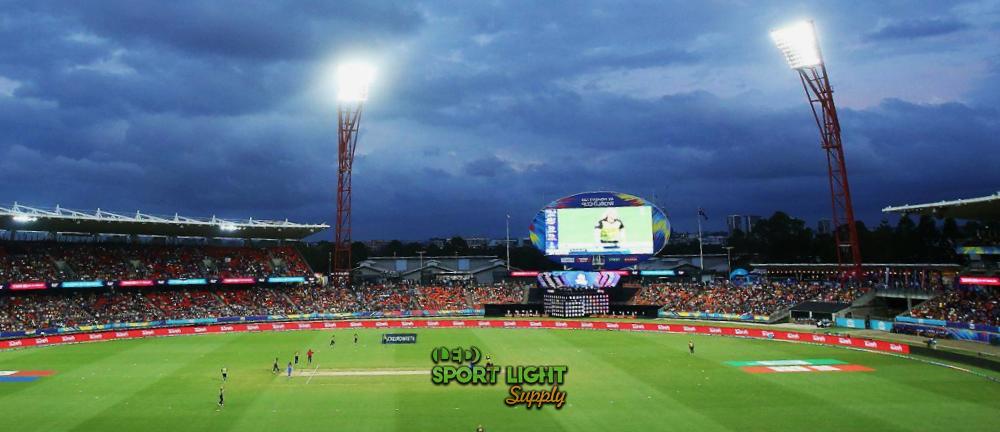
Permanent lighting systems are fixed installations designed for long-term operation. These setups typically use high-mast steel poles equipped with LED floodlights engineered specifically for sports venues.
Professional cricket grounds across countries like Australia, India, England, and the UAE mostly rely on permanent lighting infrastructure.
Why Permanent Lighting Works Well for Stadiums
The biggest advantage is consistency. Permanent systems are designed using detailed lighting simulations to ensure even illumination across the field.
This matters a lot in cricket because players track fast-moving balls over long distances. A slight shadow near the boundary rope or pitch area can affect visibility.
Modern LED sports floodlights also deliver stronger brightness while using less electricity compared to older metal halide systems. Some stadiums have reported energy savings of 40% to 60% after switching to LED technology.
Another benefit is lifespan. High-quality LED floodlights can operate for 50,000 to 100,000 hours depending on the manufacturer and operating conditions. That reduces maintenance frequency significantly.
Installation and Infrastructure Requirements
Permanent lighting systems require more planning and construction work. Foundations must support extremely tall poles, especially in regions exposed to strong winds or storms.
Electrical infrastructure also needs careful design. Underground cabling, distribution boards, surge protection, and control systems all play a role.
Because of this, installation costs can be substantial. For mid-sized cricket stadiums, permanent lighting projects can range from USD 200,000 to well over USD 1 million depending on lighting standards and ground size.
Still, many operators see it as a long-term investment rather than a short-term expense.
Better Experience for Players and Spectators
Permanent lighting generally creates a cleaner and more professional atmosphere. The lighting spread is smoother, glare is reduced, and spectators can enjoy better visibility throughout the venue.
This also helps content creators and broadcasters. Cricket boards and sponsors increasingly care about broadcast quality because streaming revenue continues to grow globally.
A well-lit stadium often looks more appealing on television and social media highlights.
Comparing Temporary and Permanent Lighting for Different Cricket Facilities
When people ask whether temporary light towers or permanent lighting poles are “better” for cricket grounds, the honest answer is that it really depends on how the facility is used day to day. A professional cricket stadium hosting televised matches has completely different lighting expectations compared to a rural cricket field that only operates during weekend tournaments.
That’s why most sports lighting consultants don’t look at lighting as a one-size-fits-all solution anymore. Instead, they usually evaluate factors like match frequency, training schedules, operating hours, spectator capacity, maintenance budget, power availability, and future expansion plans before recommending a setup.
In some situations, portable lighting towers are more practical and cost-efficient. In others, permanent LED floodlight poles deliver much better long-term value.
For International and Professional Cricket Stadiums
For professional cricket stadiums, permanent sports lighting systems are almost always the preferred choice.
International venues are expected to meet strict broadcasting standards, player visibility requirements, and spectator experience expectations. Lighting quality becomes even more demanding during night matches, especially for T20 leagues, televised tournaments, and international fixtures.
Professional stadium floodlighting is carefully engineered to provide highly uniform illumination across the entire playing area. This includes the cricket pitch, outfield, boundary rope, sight screens, player zones, and spectator seating sections.
In many ICC-level venues, average illumination requirements can range from 1,500 lux to more than 2,500 lux, depending on broadcast standards and camera technology. Ultra slow-motion cameras, drone filming, Hawk-Eye tracking systems, and 4K broadcasting all require very stable lighting conditions.
Temporary light towers usually struggle to meet those performance levels consistently.
One major reason is mounting height. Permanent cricket floodlight poles are often installed at heights between 35 and 60 metres, allowing the LED sports floodlights to distribute light evenly over large areas. Portable lighting towers are generally much shorter, which can create more shadows and uneven brightness across the field.
Another factor is glare control. Professional players tracking high catches or fast deliveries rely heavily on clean visibility. Poorly positioned portable lighting can sometimes create distracting glare, especially near boundary regions or high-ball trajectories.
Stadium operators also care about operational efficiency. Although permanent sports lighting systems involve higher installation costs upfront, they often become more economical over time because modern LED floodlights consume less electricity and require less maintenance.
Some stadiums that upgraded from older metal halide floodlights to LED sports lighting have reported energy savings of 40% to 65% annually, which can translate into substantial cost reductions over several seasons.
Temporary towers can still play a useful role in professional venues though. Many stadiums use them as backup lighting systems during maintenance work, temporary expansions, or emergency situations when fixed infrastructure is unavailable.
For Cricket Academies and Training Centres
Cricket academies sit somewhere between professional stadiums and grassroots facilities, which makes lighting decisions a little more flexible.
Training centres often operate heavily during evenings because students, club players, and working adults usually attend after school or office hours. During tournament preparation periods, some academies run coaching sessions almost every night of the week.
Because usage levels are relatively high, many established cricket academies eventually move toward permanent LED sports lighting systems.
Fixed floodlight poles provide more stable illumination for batting practice, bowling drills, fielding exercises, fitness sessions, and match simulations. Coaches also benefit from better visibility when analysing player techniques and movement patterns during night training.
At the same time, not every academy wants to commit to a large lighting investment immediately.
That’s why temporary LED light towers have become quite popular among newer training centres and developing cricket facilities. Portable towers allow academies to begin operating evening sessions without spending heavily on permanent infrastructure from the start.
This phased approach gives operators more financial breathing room.
For example, an academy with two practice wickets and several net lanes may initially install portable 6-metre or 9-metre mobile lighting towers powered by energy-efficient LED floodlights. As student enrollment grows and evening training demand increases, the academy can gradually transition toward permanent high-mast systems later.
Another reason portable towers work well for academies is flexibility. Coaches can reposition lighting depending on training activities. Some sessions focus on batting drills, while others may require stronger illumination around bowling lanes or catching zones.
Modern mobile sports lighting systems are also becoming quieter and more fuel-efficient compared to older diesel tower models. Hybrid battery-powered LED towers are especially attractive for academies located near residential areas where noise restrictions matter.
For academies operating almost daily throughout the year though, permanent systems usually become more cost-effective over the long term because fuel expenses and generator servicing costs from temporary towers can add up surprisingly fast.
For Practice Nets and Grassroots Cricket Programs
Practice nets are one of the areas where temporary lighting towers often make the most sense.
Unlike full-sized cricket fields, practice lanes only require focused illumination around compact training areas. Operators don’t need to light massive outfields or spectator seating zones, which makes portable lighting solutions much more practical financially.
For schools, universities, local cricket clubs, and junior development programs, installing permanent high-mast lighting poles around practice nets may simply be unnecessary.
Portable LED towers can usually provide more than enough brightness for batting and bowling sessions. Some mobile lighting units today can generate over 100,000 to 200,000 lumens, which is sufficient for most grassroots cricket training environments.
Another advantage is adjustability.
Coaches can reposition the lighting towers based on the training activity. Fast bowling practice, spin bowling drills, wicketkeeping sessions, and catching exercises may all require slightly different lighting angles and coverage zones.
This flexibility becomes especially useful in shared training environments where multiple groups rotate through different practice stations.
Temporary lighting systems also reduce infrastructure complexity. Permanent floodlight installations usually involve underground cabling, concrete foundations, electrical panels, and engineering approvals. Portable towers avoid much of that process, making them easier to deploy quickly.
For schools and amateur clubs operating with limited budgets, this can be a very practical option.
In some grassroots cricket programs, operators even rent temporary light towers during tournament seasons instead of purchasing permanent systems outright. This helps reduce capital spending while still allowing evening competitions to take place.
For Seasonal, Rural, and Remote Cricket Grounds
Temporary lighting towers become particularly valuable for seasonal or rural cricket facilities.
Many regional cricket grounds only host matches during certain parts of the year. Some venues are mainly active during local tournaments, school competitions, or community sports festivals. Outside those periods, the grounds may remain unused for weeks or even months.
In situations like these, investing heavily in permanent floodlight infrastructure may not always make financial sense.
Portable lighting towers offer much more flexibility for grounds with occasional usage patterns.
For example, rural cricket tournaments often require temporary night match setups for just a few weeks each season. Mobile LED towers can be transported to the venue, positioned around the playing area, and removed once the event ends.
This approach avoids major civil construction costs while still providing adequate visibility for players and spectators.
Power availability is another factor in remote locations. Some rural cricket grounds may not have strong electrical infrastructure capable of supporting permanent high-load sports lighting systems.
Generator-powered or hybrid battery-powered light towers help solve that issue because they can operate independently without requiring major grid upgrades.
Weather conditions can also influence lighting choices in rural environments. Portable towers allow operators to relocate equipment during storms, flooding, or off-season periods, reducing exposure to harsh outdoor conditions.
For smaller community tournaments, temporary sports lighting often delivers a better balance between performance, flexibility, and operating cost.
The Growing Shift Toward LED Lighting in Cricket
Over the past decade, LED technology has completely changed the way cricket grounds approach sports lighting.
Older metal halide floodlights were widely used for years, but they came with several drawbacks. They consumed large amounts of electricity, generated significant heat, required longer warm-up times, and needed more frequent lamp replacements.
LED sports lighting solves many of those problems while delivering much stronger overall performance.
One of the biggest advantages is energy efficiency. Modern LED floodlights can reduce electricity consumption by 50% to 70% compared to traditional metal halide systems while still producing brighter and more focused illumination.
For stadium operators running multiple evening matches every week, those energy savings can become very noticeable financially over time.
LED systems also respond much faster. Traditional floodlights sometimes needed 10 to 20 minutes to reach full brightness after startup or power interruptions. LEDs can usually achieve full illumination almost instantly.
That becomes very useful during weather delays, unexpected power outages, or tournament scheduling changes.
Another major improvement is lighting quality itself.
LED sports floodlights provide better colour rendering and more precise beam control, which improves visibility for players, umpires, broadcasters, photographers, and spectators. Cricket balls become easier to track under high catches, while cameras capture clearer slow-motion footage during televised matches.
Glare reduction technology has improved significantly too. Modern LED optics help minimise uncomfortable brightness in players’ direct line of sight, especially near high-ball trajectories and boundary regions.
Durability is another reason cricket venues are moving toward LED systems. Many commercial-grade sports LEDs are rated for 50,000 to 100,000 operating hours, reducing maintenance requirements and replacement frequency.
Some cricket facilities are now combining LED floodlights with solar-assisted hybrid systems as well. These setups use battery storage and renewable energy integration to lower diesel usage and reduce overall operating costs.
As electricity prices continue rising globally, energy-efficient sports lighting becomes increasingly attractive not only from a sustainability perspective, but also from a long-term financial standpoint.
Choosing the Right Lighting Setup for Long-Term Performance
There’s no universal answer when it comes to cricket ground lighting. A lighting solution that works beautifully for a professional stadium may be completely unnecessary for a school practice net.
Temporary light towers bring flexibility, faster deployment, and lower starting costs. Permanent lighting poles deliver stronger performance, better uniformity, and lower operating costs over the long run.
The best choice usually comes down to usage frequency, facility size, budget planning, and future development goals.
If you’re planning a new cricket ground, upgrading an academy, or exploring lighting options for a stadium or practice facility, our team can help you evaluate the most suitable setup based on your project requirements and budget. Feel free to reach out for professional consultation, lighting recommendations, and customised solutions tailored to your cricket facility.