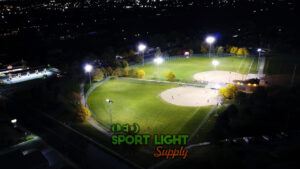

A well-lit softball field gives players more time to practice, allows teams to schedule evening games, and makes a sports facility more useful throughout the year. For schools, sports clubs, municipalities, and private facility owners, adding or upgrading field lighting can be a worthwhile investment. Still, the price tag can be quite different from one project to another. A small community field may need a relatively straightforward lighting setup, while a high school or tournament facility may require more powerful LED fixtures, taller poles, upgraded electrical infrastructure, and a carefully planned lighting layout.
So, how much should you budget? In the United States, a new LED softball field lighting installation can cost approximately US$135,000 to US$350,000, depending on the project scope and specifications. A retrofit that reuses suitable poles and existing infrastructure may cost considerably less, with some projects falling in the range of US$55,000 to US$165,000. Larger or more demanding facilities can exceed these figures, especially when substantial civil or electrical work is involved.
The good news is that the initial installation price is only one part of the financial picture. LED technology can reduce electricity consumption and maintenance requirements, while grants, local government programs, sponsorships, and energy incentives may help make an upgrade more affordable. Understanding each expense before requesting a quotation can help facility owners make a better purchasing decision and avoid unpleasant surprises during construction.
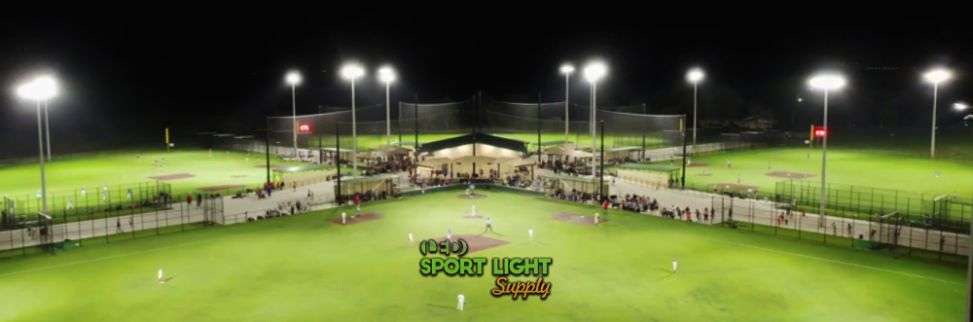
The cost of softball field lighting depends on what the facility needs rather than simply how large the field looks. Two fields with similar dimensions may require very different systems because one is used for recreational games and the other hosts competitive high school or college events. The required illumination level, number of fixtures, pole arrangement, electrical capacity, and local construction conditions all affect the final budget.
For a typical U.S. project in 2026, a reasonable starting point for a new LED softball field lighting system is around US$135,000 to US$350,000. This planning range includes the lighting equipment and several major installation activities, although individual quotations may include or exclude certain items. A site with existing foundations, suitable poles, and adequate electrical infrastructure may have a much lower project cost than a field being developed from scratch.
It is also worth remembering that a supplier’s equipment-only quotation is not the same as a complete installed price. A package advertised at US$70,000, for example, may cover fixtures, controls, and selected accessories but exclude pole foundations, electrical trenching, cranes, engineering, permits, and commissioning. Comparing quotations only by their headline prices can therefore lead to the wrong decision.
For a new installation, the budget usually covers LED floodlights, poles, mounting equipment, foundations, wiring, control systems, engineering, installation labor, and final testing. The exact combination depends on whether the facility is a community field, a school sports ground, or a larger tournament venue.
The following figures provide a broad planning guide for different facility types. They are indicative budget ranges, not guaranteed market prices or standardized industry tariffs.
| Softball facility type | Indicative new installation budget |
|---|---|
| Small community or recreational field | US$100,000–US$180,000 |
| Standard youth or school field | US$135,000–US$250,000 |
| High school competition field | US$180,000–US$300,000 |
| College or advanced competition facility | US$250,000–US$400,000+ |
| Multi-field softball complex | US$400,000–US$1,000,000+ |
These ranges are useful for early budgeting, but the actual design should determine the final price. A school may already have a suitable electrical supply and clear access for installation equipment, while another school may need a new transformer, underground cabling, and substantial ground preparation. Even when both facilities have similar playing areas, their construction costs can be quite different.
For a more detailed 2026 cost reference, some U.S. project estimates place a new LED softball lighting installation between US$135,000 and US$350,000. One published breakdown allocates approximately US$94,500–US$245,000 to the LED system, poles, and controls, with separate amounts for pole installation, fixture installation, wiring, and structural engineering.
A complete new lighting installation is usually more expensive because the project may require new poles, concrete foundations, underground electrical infrastructure, and additional site work. A retrofit can avoid some of these expenses when the existing structures are still suitable.
For example, a facility that already has four or six well-positioned poles may be able to replace older metal halide fixtures with modern LED floodlights without rebuilding the entire system. However, reusing existing infrastructure should never be assumed. Pole condition, structural loading, foundation strength, mounting arrangements, electrical capacity, and fixture positioning all need to be checked first.
| Project type | Indicative cost range |
|---|---|
| Complete new LED installation | US$135,000–US$350,000 |
| LED retrofit using suitable existing infrastructure | US$55,000–US$165,000 |
| Partial fixture replacement | US$15,000–US$60,000 |
| Electrical infrastructure upgrade | US$10,000–US$50,000+ |
The retrofit range is particularly sensitive to what can be reused. Replacing fixtures on existing poles may be relatively straightforward, whereas adding new circuits, upgrading switchgear, or reinforcing poles can push the price toward the higher end.
A good approach is to request two separate proposals – one for a full replacement and another for an LED retrofit. This makes it easier to compare the immediate savings against the expected maintenance and operating costs over the next 10 to 20 years.
For a facility with several softball fields, the cost per field may decrease when certain project expenses can be shared. Engineering, site preparation, electrical distribution, equipment mobilization, and contractor supervision may cover multiple fields rather than being repeated for every installation.
However, the savings are not always proportional to the number of fields. Each playing area still needs its own lighting layout, sufficient fixtures, and appropriate pole positions. A complex with four fields may also require larger electrical distribution equipment and more extensive controls than four completely separate sites.
For example, suppose a sports complex plans to install LED lighting on three softball fields. If each field costs US$170,000 when developed separately, the total would be US$510,000. A combined project might reduce shared design and mobilization costs, but the final savings would depend on the layout, infrastructure, and construction schedule. It would be sensible to request a project-wide quotation rather than simply multiplying a single-field estimate.
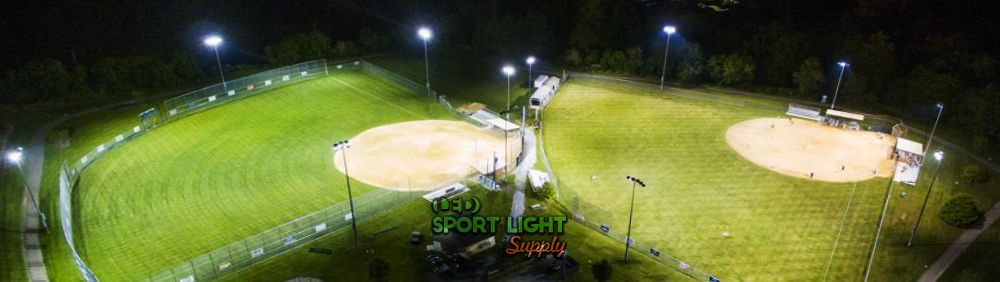
Knowing the total project price is useful, but understanding where the money goes is even better. A lighting contractor should provide a quotation that separates the major equipment and construction expenses. This allows the owner to see whether the budget is being spent on fixtures, poles, electrical work, or other site requirements.
The following sections explain the main cost components and the factors that can make each one more expensive.
LED floodlights are generally one of the largest equipment expenses in a softball lighting project. Their price depends on power output, optical design, efficiency, thermal management, environmental protection, control compatibility, and warranty coverage.
A basic fixture designed for a smaller recreational field will not necessarily be suitable for a competitive venue. Higher-level facilities may need more precise optical distributions, stronger glare control, and additional light output to meet the required performance targets.
For early budgeting, a commercial sports LED fixture may cost approximately US$1,000–US$3,500 per unit, although premium products and specialized configurations can fall outside this range. A field requiring 24 fixtures could therefore have an equipment budget of US$24,000–US$84,000 before mounting hardware, controls, poles, and installation are included.
The fixture count should come from a photometric lighting design rather than a simple estimate based on field size. Buying more lights does not automatically produce a better result. Incorrect beam angles or poorly positioned fixtures can create glare, uneven illumination, and unnecessary energy consumption.
Lighting poles support the floodlights and position them at the correct height and angle. Their design needs to account for fixture weight, wind loading, local weather conditions, and the structural requirements of the site.
Depending on height, material, and structural specifications, commercial sports lighting poles may cost approximately US$5,000–US$15,000 or more per pole. A project using six poles could therefore require US$30,000–US$90,000 for the pole structures alone. Installation, foundations, transportation, and lifting equipment may be charged separately.
Pole height is not something that should be selected purely to reduce the initial budget. Lower poles can increase glare and make it harder to distribute light evenly across the playing area. Taller poles may improve the available aiming angles, although they can also increase foundation and structural engineering costs.
For a typical softball field, the final number and height of poles depend on the photometric model, site boundaries, surrounding buildings, and the required illumination level. A four-pole design may work for some layouts, while other facilities may need six or more poles to achieve the required coverage and glare control.
A lighting pole needs a properly designed foundation that can support its weight and resist wind forces. Foundation costs vary with soil conditions, groundwater levels, pole height, and local engineering requirements.
A preliminary allowance of US$3,000–US$8,000 per pole foundation may be useful for early budgeting, but difficult sites can cost considerably more. Rock excavation, poor soil conditions, restricted equipment access, or unusually high structural loads may increase the price.
Site preparation can also involve grading, excavation, trenching, concrete work, and restoration of disturbed areas. A contractor should inspect the site before providing a firm price because drawings alone may not reveal underground utilities, drainage problems, or unexpected soil conditions.
The electrical system supplies power to every lighting pole and connects the fixtures to the main distribution equipment. Depending on the site, this may involve underground conduit, power cables, junction boxes, disconnect switches, circuit protection, and distribution panels.
A preliminary budget of US$6,000–US$20,000 may be suitable for some straightforward wiring packages. Larger projects with long cable runs or substantial electrical upgrades can exceed this range.
The distance between the electrical room and the lighting poles is one of the factors that affects the cost. A field with poles located close to the power source may require less cabling than a facility with a large perimeter or complicated underground routes.
Existing electrical infrastructure also needs to be checked. Older facilities may not have sufficient capacity to support the new system, even if the existing lights are still operating. In such cases, the project may need additional distribution equipment or a transformer upgrade.
Modern LED sports lighting can use automated controls to manage individual fields, lighting zones, and operating schedules. This allows facility managers to turn on only the areas required for a particular activity instead of operating the entire lighting system at full output.
A basic control package may cost around US$2,000–US$8,000, while more advanced systems with remote access, dimming, scheduling, and multi-field management can cost US$8,000–US$20,000 or more.
For example, a sports complex with three softball fields may want separate controls for each field. A practice session could use one field at a reduced lighting level, while a tournament game could use another field at its full programmed setting. This type of zoning helps avoid wasting electricity on areas that are not being used.
The controls should be compatible with the selected LED fixtures and designed around the facility’s actual operating schedule. It is also worth checking whether remote monitoring or software subscriptions involve recurring fees.
Installation labor includes mounting fixtures, assembling poles, connecting cables, setting up controls, and completing the required electrical work. The project may also require crane operators, electricians, civil contractors, and specialist lighting technicians.
For a new installation, labor and equipment costs can represent a substantial part of the total project budget. A preliminary allowance of US$15,000–US$40,000 may be reasonable for some projects, although complicated installations can cost more.
The quotation should explain which activities are included. For example, does the contractor include pole erection, fixture aiming, electrical testing, commissioning, and cleanup? Are crane rental and traffic management included? If these items are missing, they may appear later as additional charges.
Softball field lighting projects may require electrical permits, structural drawings, planning approval, environmental reviews, and inspections. Requirements vary by state and municipality, so owners should confirm the local process before setting a construction date.
Engineering and documentation fees may range from US$3,000 to US$12,000 for a relatively straightforward project. More complex facilities may require additional services, such as soil testing, structural calculations, detailed photometric reports, or environmental assessments.
Lighting calculations are especially useful because they show how the proposed fixtures are expected to perform across the playing surface. A proper report should include average illumination, minimum illumination, maximum-to-minimum uniformity, and relevant glare or spill-light considerations.
Large poles and commercial LED fixtures may need specialized transportation. Installation equipment such as cranes, lifting platforms, excavators, and cable-pulling machines may also be required.
A preliminary allowance of US$3,000–US$12,000 may cover transportation and selected equipment rental for some projects. However, the price can rise if the site has restricted access or requires several days of specialized lifting equipment.
A remote sports facility may have higher delivery costs than a project located close to the supplier or contractor. It is therefore worth checking whether transportation and equipment rental are included in the installation proposal.
The following table illustrates how a hypothetical softball field project with a total budget of US$220,000 might be allocated. It is an example for planning purposes rather than a supplier quotation.
| Cost component | Example budget |
|---|---|
| LED fixtures and lighting controls | US$95,000 |
| Lighting poles | US$42,000 |
| Foundations and civil work | US$24,000 |
| Electrical wiring and distribution | US$18,000 |
| Installation labor and lifting equipment | US$23,000 |
| Engineering and permits | US$8,000 |
| Transportation and miscellaneous expenses | US$4,000 |
| Contingency allowance | US$6,000 |
| Estimated total | US$220,000 |
A contingency allowance is worth including because construction projects do not always go exactly according to plan. Unexpected underground obstacles, additional electrical requirements, and changes to the installation schedule can all affect the final bill.
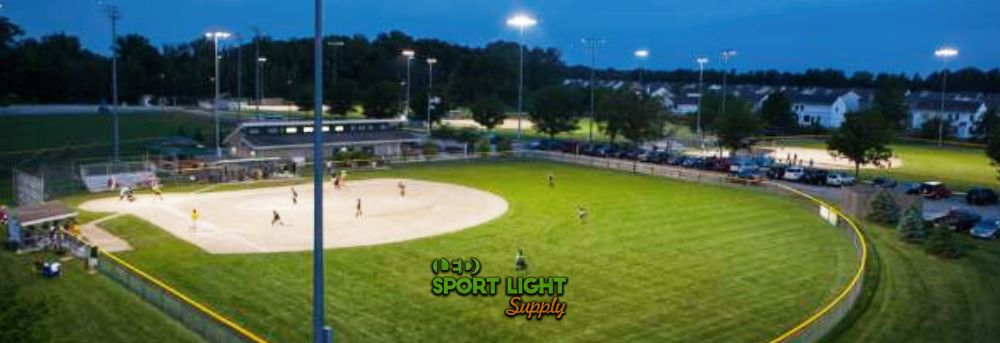
Even with a detailed equipment list, there are several project-specific factors that can change the total cost. Understanding them helps owners decide where they can save money and where spending a little more may provide better long-term value.
The dimensions of the playing area influence the number of fixtures and their distribution. A larger outfield generally requires more light coverage, while the infield may need a different illumination level because it contains the main areas of player activity.
For example, a youth softball field with an outfield fence around 200 feet may need a different layout from a larger facility with a 250-foot outfield. The total playable area, foul territory, dugouts, and surrounding access areas may also influence the design.
It is worth noting that softball field dimensions are not identical at every level. Fastpitch and slowpitch facilities, youth leagues, high schools, and colleges may use different layouts and playing requirements. The lighting designer should work from the actual site plan rather than relying on a generic field template.
The level of play has a direct effect on the lighting specification. Recreational games and practice sessions generally require less illumination than competitive events, while facilities intended for broadcasting may need more advanced lighting performance.
Illuminance is commonly measured in foot-candles (fc) or lux. One foot-candle is approximately 10.76 lux. It measures how much light reaches a surface rather than the total amount of light produced by a fixture.
The following figures are useful examples of planning targets for different levels of play. Final requirements should be confirmed against the applicable ANSI/IES RP-6 edition, governing-body rules, and the facility’s intended use.
| Level of play | Example infield target | Example outfield target |
|---|---|---|
| Community recreation | 30 fc | 20 fc |
| High school competition | 50 fc | 30 fc |
| Advanced or collegiate competition | 70–100 fc | 50–70 fc |
| Broadcast-level facilities | Project-specific | Project-specific |
These figures are not a universal specification for every softball venue. Some facilities use different lighting classes, and the relevant standard may distinguish between maintained and initial illumination, horizontal and vertical illuminance, and different viewing conditions.
A project designed for recreational use may cost considerably less than one intended for televised competition. Increasing the target illumination generally means more fixture output, a different optical arrangement, and potentially more demanding electrical and structural requirements.
Pole height and positioning influence how effectively light reaches the infield and outfield. Poor placement can create dark patches, excessive glare, or uneven illumination, even when the fixtures themselves are powerful.
A lighting designer may consider a four-pole, six-pole, or other arrangement depending on the field geometry and site constraints. The best option is the one that achieves the required performance with an appropriate balance of fixture quantity, aiming angles, glare control, and construction cost.
For example, installing six poles instead of four may increase the initial structural budget, but it could allow a more balanced distribution of fixtures. Conversely, using fewer poles with many fixtures mounted at each location may create difficult aiming angles and more complicated maintenance access.
The correct layout should be supported by a photometric simulation before equipment is ordered.
Two LED fixtures with the same wattage do not necessarily produce the same lighting result. Their luminous efficacy, beam distribution, optical control, thermal design, and lumen maintenance can differ significantly.
For example, a 1,000-watt LED floodlight operating at 150 lumens per watt produces approximately 150,000 lumens. A 1,000-watt fixture operating at 170 lumens per watt produces approximately 170,000 lumens. That is a difference of around 13.3% in initial light output for the same electrical power.
However, lumen output alone should not determine the purchase. A fixture that produces more lumens may still be unsuitable if its beam distribution sends too much light beyond the playing surface or creates uncomfortable glare for players.
A well-designed optical system directs light where it is needed, helping reduce unnecessary energy use and improving visibility.
Existing electrical infrastructure can make a large difference to the installation budget. If the facility already has sufficient electrical capacity, suitable distribution equipment, and accessible cable routes, the project may avoid some expensive upgrades.
On the other hand, older facilities may require a new transformer, distribution panel, protective devices, or underground wiring. These additions can increase the project cost by thousands or even tens of thousands of dollars.
Before approving the lighting design, arrange an electrical assessment. It is much better to identify capacity issues during planning than to discover them after the fixtures and poles have already been ordered.
Outdoor lighting equipment needs to withstand rain, humidity, dust, temperature changes, and wind. Coastal locations may also experience salt exposure, which can affect metal components and protective coatings.
Fixtures with suitable ingress protection ratings and corrosion-resistant materials may have a higher purchase price, but they can be a better fit for demanding environments. The pole finish, mounting hardware, cable connections, and control enclosures should also be selected with local conditions in mind.
A facility in a hot and humid region may need to pay particular attention to thermal management and moisture protection. Choosing equipment based only on the lowest initial price can lead to higher maintenance expenses later.
Softball field lighting should illuminate the playing area without unnecessarily affecting nearby homes, roads, or public spaces. Poorly controlled light can create complaints from residents and may lead to additional planning requirements.
Shielded fixtures, suitable beam angles, accurate aiming, and automated operating schedules can help control spill light. Some projects may also require lighting impact studies or additional shielding measures.
These requirements can affect both equipment and design costs. It is better to address them before installation rather than making expensive adjustments after the field starts operating.
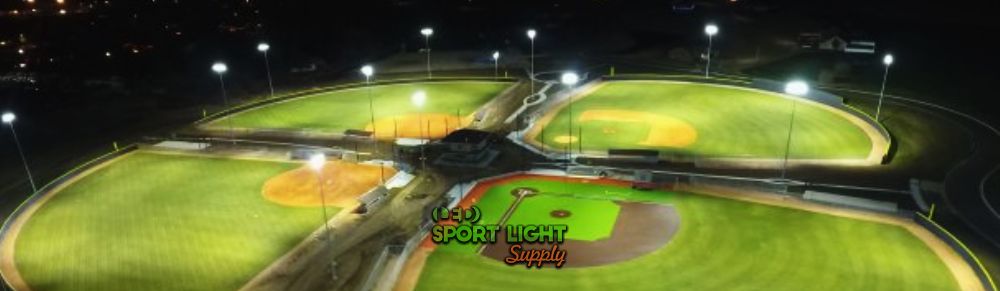
Choosing the right lighting system is not simply a matter of comparing wattage and price. The equipment needs to suit the field dimensions, competition level, operating schedule, electrical infrastructure, and local environmental conditions.
A good purchasing decision starts with a clear performance specification. Once the requirements are established, facility owners can compare products based on light output, efficiency, optical design, durability, warranty, and long-term operating costs.
Metal halide lighting has been used in sports facilities for many years. It can provide substantial light output, but it also has several drawbacks compared with modern LED systems.
Metal halide fixtures generally require more time to warm up, consume more electricity for a comparable lighting result, and may need more frequent lamp or component replacement. Their light output can also decline over time.
LED fixtures switch on quickly, can work with dimming and scheduling systems, and generally require less routine maintenance. These advantages make them an attractive option for schools, parks, and sports complexes that operate several evenings each week.
| Comparison | LED lighting | Metal halide lighting |
|---|---|---|
| Start-up | Near-instant | Warm-up period |
| Dimming | Commonly supported | Limited or more complicated |
| Energy efficiency | Generally higher | Generally lower |
| Routine maintenance | Usually lower | Usually higher |
| Lamp replacement | No conventional lamp replacement | Periodic lamp replacement |
| Controls | Flexible scheduling and zoning | More limited options |
| Initial equipment cost | Often higher | May be lower for older systems |
The initial price of an LED system may be higher, but the operating cost can be lower over its service life. For facilities that use their lights frequently, the savings may justify the additional upfront investment.
LED wattage indicates electrical power consumption, not the amount of light that reaches the playing surface. A high-wattage fixture does not automatically produce a better lighting result.
For example, a 1,000-watt fixture with an efficiency of 160 lumens per watt produces around 160,000 lumens. A 1,200-watt fixture with an efficiency of 140 lumens per watt produces approximately 168,000 lumens. Although the second fixture consumes 20% more power, its initial light output is only 5% higher.
The optical distribution also matters. A fixture with the right beam angle may illuminate a particular area more effectively than a higher-output product with an unsuitable distribution.
Rather than selecting fixtures based on wattage alone, ask the supplier for a complete photometric design showing the predicted light levels, uniformity, and fixture aiming positions.
A commercial softball lighting system should be designed for long operating hours and outdoor conditions. The fixture housing, heat sink, lens, driver, electrical protection, and mounting hardware all contribute to its performance.
Pay attention to luminous efficacy, color rendering, color temperature, ingress protection, surge protection, thermal management, and expected lumen maintenance. These specifications help indicate whether the equipment is suitable for the local environment and intended operating schedule.
Warranty terms deserve a closer look as well. A product advertised with a 10-year warranty may have different coverage for the LED module, driver, controls, and labor. Ask what happens if a component fails and whether replacement parts will remain available.
Standard LED packages can be attractive because they simplify product selection and may offer a lower initial price. They can work well for straightforward facilities with common field dimensions and limited site restrictions.
Custom lighting packages are generally more suitable when the field has unusual dimensions, surrounding buildings, strict light-spill limits, or higher competition requirements. They allow the designer to select fixture quantities, beam patterns, pole positions, and controls based on the actual site.
The best option depends on the project. A standard package is worth considering if it comes with a photometric report that matches the facility’s specifications. If it does not, a custom design may be the safer purchasing decision.
When comparing manufacturers, look beyond the product brochure. Ask for photometric files, warranty documents, efficiency data, technical support arrangements, and examples of completed sports lighting projects.
A manufacturer with experience in softball and baseball facilities may understand the particular visibility challenges involved in tracking a fast-moving ball. The supplier should also be able to explain how the proposed fixtures control glare and distribute light across both the infield and outfield.
It is also worth checking whether the manufacturer offers ongoing support. Replacement drivers, compatible controls, and technical assistance can make a difference when the facility needs maintenance several years after installation.
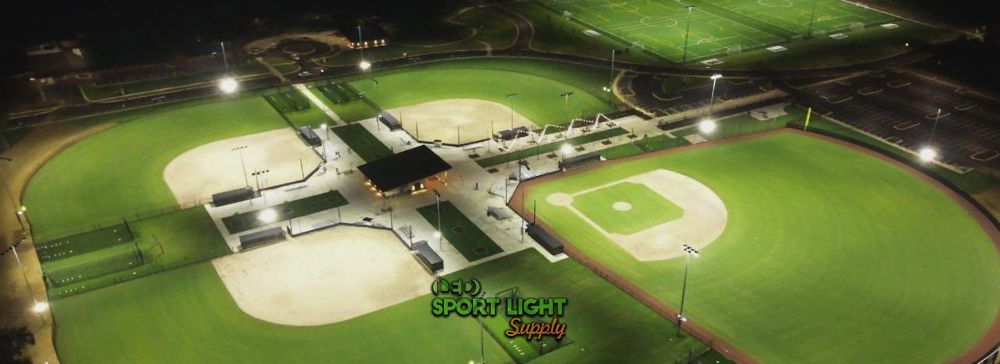
Installation is only part of the financial commitment. Once the field is operating, the owner needs to account for electricity, maintenance, inspections, occasional repairs, and future equipment replacement.
LED lighting can reduce these expenses, but the actual savings depend on fixture power, operating hours, electricity rates, and how effectively the controls are used.
Electricity costs can be estimated using the total connected lighting load, operating hours, and local electricity price.
The calculation is straightforward:
Annual energy consumption in kWh = Total system power in kW × Annual operating hours.
Annual electricity cost = Annual energy consumption × Electricity price per kWh.
For example, imagine a softball field using 24 LED fixtures rated at 1,000 watts each. The total connected load is 24 kW. If the lights operate for 1,000 hours per year, annual consumption is 24,000 kWh.
At an electricity rate of US$0.15 per kWh, the annual electricity cost would be US$3,600.
| Example operating condition | Result |
|---|---|
| Number of fixtures | 24 |
| Power per fixture | 1,000 W |
| Total connected load | 24 kW |
| Annual operating hours | 1,000 hours |
| Annual electricity consumption | 24,000 kWh |
| Electricity rate | US$0.15/kWh |
| Estimated annual electricity cost | US$3,600 |
This calculation does not include demand charges, taxes, fixed utility fees, or other charges that may appear on a commercial electricity bill. The actual rate should be taken from the facility’s utility agreement.
LED systems can use less electricity than older metal halide installations when both are designed to provide comparable lighting performance.
For a simplified comparison, assume an older system has a total connected load of 40 kW and a new LED system uses 24 kW. Both operate for 1,000 hours annually, and the electricity rate is US$0.15 per kWh.
The metal halide system would consume 40,000 kWh annually, costing US$6,000. The LED system would consume 24,000 kWh, costing US$3,600.
That produces annual energy savings of US$2,400, or 40%.
| Measurement | Metal halide example | LED example |
|---|---|---|
| Connected load | 40 kW | 24 kW |
| Annual operating hours | 1,000 | 1,000 |
| Annual consumption | 40,000 kWh | 24,000 kWh |
| Annual electricity cost | US$6,000 | US$3,600 |
| Annual savings | US$2,400 |
This is an illustrative calculation, not a guaranteed savings percentage. A real comparison should use the measured power consumption and photometric performance of the existing system and the proposed replacement.
Outdoor LED fixtures still need regular inspection. Dust, dirt, insects, moisture, and weather exposure can affect the equipment over time.
Maintenance may include checking fixture housings, inspecting cables and connections, cleaning lenses, reviewing control settings, and checking pole structures for corrosion or damage.
A facility might budget approximately US$1,000–US$3,000 annually for routine inspections and basic maintenance, depending on system size and service arrangements. This is a planning allowance rather than a fixed maintenance rate.
A scheduled maintenance program can also identify problems before they interrupt a game. For example, a loose electrical connection or damaged control component may be easier to address during a routine inspection than during a tournament weekend.
LED fixtures generally have long operating lives, but their drivers, surge protection components, and other electrical parts can still fail.
A replacement fixture may cost around US$1,000–US$3,500 or more, depending on its specifications and manufacturer. Labor, access equipment, and transportation may be charged separately.
When comparing products, check the warranty coverage for the complete fixture rather than focusing only on the LED chips. Ask whether the manufacturer covers the driver, housing, and electrical components, and whether labor is included.
Many commercial LED fixtures are specified for approximately 50,000–100,000 operating hours, depending on their design and the conditions under which they operate. These figures are generally associated with lumen maintenance expectations rather than a guarantee that every component will operate without repair for that entire period.
For a field operating 1,000 hours per year, 50,000 operating hours would represent 50 years of use in simple mathematical terms. However, that does not mean the complete lighting system should be expected to last 50 years without maintenance. Drivers, controls, surge protection, wiring, poles, and other components have different service lives.
For budgeting, it is sensible to consider a 10- to 20-year ownership period and include electricity, maintenance, repairs, and possible equipment replacement.
A new lighting system can put pressure on a school, local government, or community sports organization’s budget. Fortunately, there may be funding opportunities that help reduce the upfront investment.
The availability of grants depends on the applicant’s location, organization type, project purpose, and application timing. Some programs support youth sports participation, others fund public recreation facilities, and some focus on energy efficiency or community infrastructure.
One point worth remembering is that not every sports grant directly pays for lighting equipment. Some programs support facility development, while others focus on activities, access, or youth participation. Applicants should read the eligibility requirements carefully before preparing a proposal.
Local and state governments are often among the first places to investigate. Public recreation departments, parks agencies, state sports commissions, and community development offices may offer funding for athletic facility improvements.
Some programs allow applicants to include lighting as part of a broader field renovation. For example, a project might combine LED upgrades with improvements to accessibility, drainage, spectator facilities, or youth sports programming.
The strongest applications usually explain how the project will benefit the wider community. A lighting upgrade that allows a public field to host more evening games, youth training sessions, and inclusive recreational programs may be easier to justify than a proposal focused only on replacing old fixtures.
Federal funding opportunities may be available through recreation, community development, rural development, or energy-related programs. However, eligibility and funding rules can change between application cycles.
Public entities should check whether their proposed work fits the purpose of the funding program. Some grants support outdoor recreation development, while others prioritize low-income communities, rural areas, public access, or broader infrastructure improvements.
A lighting project may be eligible as part of a larger facility improvement, but applicants should not assume that a federal program will directly pay for standalone softball field lights.
The National Recreation and Park Association (NRPA) is one organization worth monitoring for youth sports funding opportunities.
Its 2027 Youth Sports Mini Pitch/Lighting Activation Grant, supported by Musco Lighting, offers selected park and recreation agencies an in-kind infrastructure donation valued at US$50,000–US$100,000. The donation may support lighting infrastructure or a mini-pitch installation. Selected agencies also receive a US$20,000 cash grant to help activate the space through programs, partnerships, and activities that expand youth sports participation.
This is a particularly interesting opportunity for public recreation agencies looking to improve access to sports facilities. However, it should not be treated as an automatic grant for any softball field. Applicants need to check the current eligibility rules, project requirements, application deadlines, and whether their proposed facility fits the program’s objectives.
The NRPA grant portal is worth checking regularly because its available opportunities change over time.
State-level recreation and sports infrastructure programs can be a useful funding route for public softball fields.
For example, Washington State’s Recreation and Conservation Office operates a Youth Athletic Facilities program supporting the purchase, development, and renovation of outdoor athletic facilities serving young people. Its listed funding allocation for the 2026 cycle is US$19.8 million, with a grant limit of US$1.5 million and a 50% match requirement.
The program identifies adding lights to a field to allow evening games as an example of a potential project. It also supports the development and renovation of outdoor athletic facilities such as ball fields and courts.
This provides a useful example of how lighting may fit within a wider athletic facility grant. However, the published 2026 application deadline was April 30, 2026, so organizations planning a future application should monitor the next funding cycle rather than assume that the previous round remains open.
Other states and municipalities may have similar programs, although award limits, match requirements, eligible applicants, and deadlines will vary.
Schools and universities may have several ways to finance lighting upgrades. Public school districts can investigate capital improvement budgets, school facility funds, municipal partnerships, and state education infrastructure programs.
Private schools and universities may use campus development funds, athletic department budgets, alumni donations, or fundraising campaigns.
For schools with limited capital budgets, a phased upgrade may be more manageable. For example, the institution could begin with an electrical assessment and lighting design, then secure funding for the equipment and installation in a later budget cycle.
However, the system should be designed as a complete project from the beginning. Installing only a few fixtures without a coordinated layout can result in uneven illumination and additional costs when the remaining work is completed.
LED lighting upgrades may qualify for utility rebates or energy-efficiency incentives in some areas. These programs are generally intended to encourage customers to replace inefficient equipment with more energy-efficient alternatives.
The availability of incentives depends on the utility provider, state regulations, customer category, equipment specifications, and project approval process.
A facility should contact its electricity provider before purchasing the lighting system. Some rebate programs require pre-approval, an energy assessment, or specific product certifications. Buying the equipment first and applying afterward may make the project ineligible.
For example, if a utility offers a rebate of US$0.10 per watt saved, and a project reduces the connected load by 16,000 watts, the theoretical incentive would be US$1,600. Actual rebate calculations may use different methods, caps, and verification requirements, so the facility should confirm the program rules directly.
Local businesses may be willing to support a softball lighting project, especially when the facility provides regular opportunities for community participation.
A local company might sponsor a field, contribute toward equipment costs, or fund a particular part of the installation. In exchange, the organization could offer appropriate recognition through signage, event sponsorship, or community communications, subject to local rules.
For a US$200,000 lighting project, the funding structure might include US$80,000 from a municipal capital budget, US$50,000 from a grant, US$40,000 from corporate sponsors, and US$30,000 from community fundraising.
The figures are only an example, but they show how a project can be financed through several sources instead of relying on one large grant.
Youth sports organizations and local nonprofits may be able to work with parks departments, schools, or charitable foundations to raise money for field improvements.
Community fundraising can include donation campaigns, local sporting events, alumni contributions, business partnerships, and naming sponsorships. It may not cover the entire installation, but it can provide the matching funds required by some grant programs.
A well-prepared fundraising proposal should explain the current condition of the lighting system, the expected improvement, the number of players who may benefit, and how the field will be used after the upgrade.
A grant application should explain the problem, the proposed solution, the project cost, and the expected community benefits. A simple request for money to replace old floodlights may not provide enough information for a competitive application.
Start by documenting the existing lighting conditions. Include photographs, maintenance records, electricity bills, details of the current equipment, and any known performance issues. A lighting assessment can help demonstrate why the upgrade is needed.
The project proposal should then describe the new system. Include the photometric design, fixture specifications, pole layout, installation scope, energy estimates, and contractor quotations.
A detailed budget should separate equipment, electrical work, foundations, installation, engineering, permits, and contingency costs. If the grant requires matching funds, explain where the remaining money will come from.
Finally, describe the expected community benefits. For example, the upgraded field may allow additional youth training sessions, more evening games, greater public access, and improved scheduling flexibility.
In some cases, yes. A project may combine a local government contribution, a state recreation grant, a utility rebate, private sponsorship, and community donations.
However, each funding source has its own rules. Some programs prohibit using one grant as the match for another, while others restrict the same project expense from being reimbursed twice.
A funding plan should therefore identify which source will pay for each part of the project. For example, one grant may support field infrastructure, while a utility incentive helps cover eligible LED equipment costs.
Keep records of quotations, invoices, payment dates, approvals, and project changes. Good documentation makes it easier to manage multiple funding sources and complete any required reporting.
There are several ways to manage the project budget without ending up with a poorly designed lighting system. The goal should be to reduce unnecessary costs while maintaining the performance and reliability the field needs.
One of the easiest ways to overspend is to install a system designed for a higher level of competition than the facility actually hosts.
A community field that mainly accommodates recreational games may not need the same illumination as a collegiate tournament venue. Paying for unnecessary light output can increase fixture, electrical, and operating costs.
Start by identifying the actual use of the field. Consider the age group, competition level, operating hours, spectator requirements, and any plans for future upgrades.
A photometric design can help identify the right fixture quantity and beam distribution. This reduces the risk of purchasing too many fixtures or selecting products that send light into areas where it is not needed.
For example, if a designer can achieve the required illumination using 24 correctly aimed fixtures instead of 30 poorly distributed units, the facility may save on equipment, electrical capacity, installation, and future maintenance.
The aim is not to use the fewest fixtures at any cost. It is to achieve the specified performance with an efficient design.
Existing poles, foundations, cable routes, and electrical equipment may be reusable if they are in suitable condition.
A structural inspection can establish whether the poles can support the new fixtures, while an electrical assessment can determine whether the wiring and distribution equipment are adequate.
Reusing infrastructure may reduce construction costs significantly, but the decision should be based on technical assessments rather than assumptions.
Requesting quotations from at least three qualified sports lighting contractors can provide a useful view of the market.
Make sure every supplier receives the same project information. This should include field dimensions, required lighting levels, operating conditions, existing infrastructure details, and any restrictions on light spill.
Ask each contractor to provide a complete breakdown. Compare fixture specifications, pole quantities, electrical work, installation costs, warranty coverage, and commissioning services.
A cheaper proposal may exclude work that another contractor has already included. Looking at the total installed price helps avoid this problem.
Smart controls can reduce unnecessary operating hours and allow the facility to use different lighting settings for practices and competitive games.
For example, a field might use a reduced lighting level during training and a higher setting for official games. Separate controls can also prevent unused fields from remaining illuminated when another field is active.
If a facility operates multiple softball fields, automated scheduling may help staff manage the entire site more efficiently.
Scheduling construction during the off-season can reduce disruption to games and training sessions. It may also make it easier for contractors to access the field without coordinating around a busy competition schedule.
However, the planning process should begin well before the intended installation date. Engineering, permitting, equipment procurement, and grant approvals can take several months.
A typical project may require around three to six months from planning through installation and commissioning, although larger projects or complicated approval processes can take longer.
Every field has different requirements, so a single average cost cannot represent every project. Looking at sample budgets can nevertheless help owners understand how installation expenses may change across different facility types.
The following examples are illustrative U.S. project budgets. They are not contractor quotations, and the actual cost should be confirmed through a site assessment and detailed lighting design.
A community field used for recreational games and youth practice may need a relatively straightforward LED system.
Assume the project requires 20 commercial LED floodlights, four poles, new foundations, basic electrical work, and a simple lighting control system. If the existing electrical supply is suitable and the site is easy to access, the budget might be around US$150,000.
| Expense | Example cost |
|---|---|
| LED fixtures and controls | US$65,000 |
| Lighting poles | US$28,000 |
| Foundations and civil work | US$16,000 |
| Electrical installation | US$14,000 |
| Labor and equipment | US$17,000 |
| Engineering and permits | US$5,000 |
| Contingency | US$5,000 |
| Total | US$150,000 |
The actual fixture quantity and pole arrangement should still be determined by the required lighting performance. The example simply illustrates how a smaller project budget may be allocated.
A high school competition field may need stronger illumination, more precise beam control, and a higher level of uniformity.
Assume a project with 28 LED fixtures, six poles, automated controls, and new electrical distribution equipment. A preliminary budget of US$220,000 may be suitable for planning.
| Expense | Example cost |
|---|---|
| LED fixtures and controls | US$95,000 |
| Lighting poles | US$42,000 |
| Foundations and site work | US$24,000 |
| Electrical infrastructure | US$18,000 |
| Installation labor | US$23,000 |
| Engineering and permits | US$8,000 |
| Transportation and contingency | US$10,000 |
| Total | US$220,000 |
The school should also account for long-term electricity costs and maintenance when preparing its capital budget.
A college facility may host more competitive games and larger events. It may therefore require higher lighting levels, more advanced controls, and additional attention to glare and spectator visibility.
A project with specialized LED fixtures, six or more poles, upgraded electrical infrastructure, and detailed commissioning may require US$250,000–US$400,000 or more.
If the facility plans to host televised events, the lighting specification may need additional vertical illumination and more demanding performance requirements. These requirements can increase equipment and engineering costs.
A sports complex with three or four softball fields needs a broader project plan. Shared infrastructure may reduce some costs, but each field still needs its own lighting design and suitable equipment.
For example, a three-field complex with an average project budget of US$180,000 per field would have a basic installation budget of US$540,000. Additional shared electrical infrastructure, access improvements, and site work could increase the total.
A combined project should be planned as one coordinated installation so that pole positions, cable routes, control systems, and maintenance access work together.
Softball field lighting is a sizeable investment, but a well-planned LED system can make a facility more flexible, efficient, and enjoyable to use. The best approach is to look beyond the initial equipment price and consider the complete project, including poles, foundations, electrical work, controls, installation, maintenance, and future operating expenses.
Before committing to a purchase, compare new installation and retrofit options, review the photometric design, and investigate grants or utility incentives that may reduce the upfront cost. A clear project specification and a detailed quotation can also make it easier to compare suppliers and keep the installation budget under control.
If you are planning a new softball field lighting installation, upgrading an older metal halide system, or exploring funding options for an LED project, feel free to approach our team for a consultation. We can help review your field requirements, discuss suitable LED lighting configurations, and provide guidance on the design and budgeting considerations involved in your project. With the right planning and equipment, you can create a lighting system that serves your players and facility for years to come.