
When examining the financial framework of a large indoor sports dome, lighting consistently stands out as one of the most dominant ongoing costs. Unlike typical gymnasiums or local recreation centers, which often feature relatively modest spaces and lighting demands, sports domes are vast by design. Many cover areas exceeding 100,000 square feet and soar to heights of 70 or even 100 feet at their peaks. This scale alone dictates that lighting systems must be robust, delivering uniform illumination across expansive playing surfaces to meet the standards of both athletes and governing bodies.
What often surprises newcomers to facility management is how much of the annual budget gets absorbed by simply keeping these lights running. From the daily draw of electricity to the demands placed on maintenance crews who must service fixtures perched stories above the ground, the financial impact of illumination is woven deeply into the fabric of a dome’s operating expenses. Lighting is not merely a support feature; it is a primary system whose power requirements and upkeep ripple through nearly every line item tied to utilities and facility care.
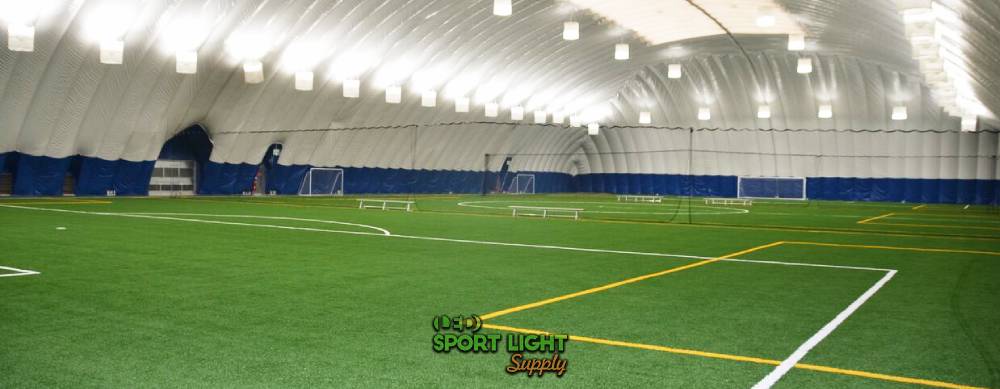
The Direct Electricity Costs for Lighting Systems
| Facility Type | Approx. Fixture Load | Daily Hours | Monthly kWh for Lighting | Monthly Lighting Cost | Annual Lighting Cost |
|---|---|---|---|---|---|
| Mid-Sized Dome | ~120 fixtures (120 kW) | 10 hours | 36,000 kWh | $3,600 – $5,400 | $43,000 – $65,000 |
| Large Dome (Tournament Facility) | ~250 fixtures (250 kW) | 12–14 hours | 90,000 – 108,000 kWh | $10,800 – $13,000 | $130,000 – $160,000 |
| Large Dome (Extended Operation) | ~250 fixtures (250 kW) | 16 hours | 120,000 kWh | $14,400 – $18,000 | $175,000 – $215,000 |
When dissecting the energy expenses of a large sports dome, it becomes immediately clear that lighting carries a remarkable share of the financial load. These facilities depend on powerful, high-mounted fixtures to create the bright, uniform conditions demanded by competitive play. The systems are expansive not by choice but by necessity; without a dense network of luminaires, shadows and dark zones would compromise both performance and safety. The result is that simply providing adequate illumination becomes one of the largest and most visible items on the utility ledger.
For many dome operators, lighting alone draws between 25 to 40 percent of the total electricity budget throughout the year. This steady outflow is driven by three intertwined realities: the vast number of fixtures required to cover large interior spans, the sheer wattage each light consumes to deliver proper lux levels from 70 or 80 feet overhead, and the extensive hours that domes typically remain open. Together, these factors turn lighting from a background support system into one of the facility’s most financially demanding necessities.
How Much Power Sports Domes Use for Lighting
To illustrate the scale, consider a mid-sized dome that uses around 120 high-intensity fixtures, each drawing approximately 1,000 watts. When these lights run an average of ten hours a day — a modest estimate for most multi-use domes — the system consumes nearly 1,200 kilowatt-hours (kWh) daily. Over a typical month, this usage totals roughly 36,000 kWh. At standard commercial rates ranging from $0.10 to $0.15 per kWh, this translates to monthly direct lighting costs of $3,600 to $5,400. Annually, these figures stack up to a commitment of between $43,000 and $65,000 dedicated solely to keeping the lights on.
Lighting Bills in Larger Domes and Tournament Facilities
The story becomes even more striking when looking at larger domes that stretch across the equivalent of several football fields under a single soaring ceiling. Many of these complexes install lighting systems totaling 200 to 300 kilowatts or more to achieve uniform coverage and meet higher lux standards required for advanced play or televised events. During peak seasons, it’s common for these lights to operate 12 to 14 hours daily, especially when hosting multi-day tournaments that keep courts or fields active from early morning until late at night.
This level of use drives consumption to staggering heights. A 250-kilowatt system running 12 hours a day uses approximately 3,000 kWh every day. Over a 30-day period, that’s around 90,000 kWh just for lighting. At a rate of $0.12 per kWh, the monthly bill comes to nearly $10,800, or more than $130,000 each year tied directly to illumination. In regions with higher utility prices, such as parts of California or New England where commercial rates can exceed $0.18 per kWh, the same dome would see annual lighting expenses pushing past $160,000.
Why Longer Hours Dramatically Raise Costs
The extensive hours typical of dome operations amplify these costs significantly. Many facilities open at 6 AM to accommodate early practices and don’t close until 11 PM when adult leagues finish. During summer camps or holiday tournaments, lights might burn for 16 hours or more each day. For a facility with a 250-kilowatt lighting load, those additional hours push daily consumption from 2,500 kWh at 10 hours up to 4,000 kWh at 16 hours. Across a month, this difference equals an extra 45,000 kWh — translating to roughly $5,400 more every month or over $65,000 added per year purely from extended lighting use.
The Share of Lighting on Total Energy Bills
When placed alongside heating, ventilation, and smaller operational electric loads, these figures show precisely why lighting dominates the dome’s utility expenses. In many facilities, it is the single largest consumer of electrical power, outstripping HVAC fans, pumps, and all miscellaneous equipment combined. This reality makes lighting’s financial footprint a focus for nearly every dome operator seeking to stabilize budgets or redirect funds toward programming and facility upgrades. Each kilowatt-hour trimmed from lighting demands has a tangible impact, offering one of the most immediate ways to influence the overall cost of keeping a sports dome running day after day.
The Impact of Demand Charges Tied to Lighting Loads
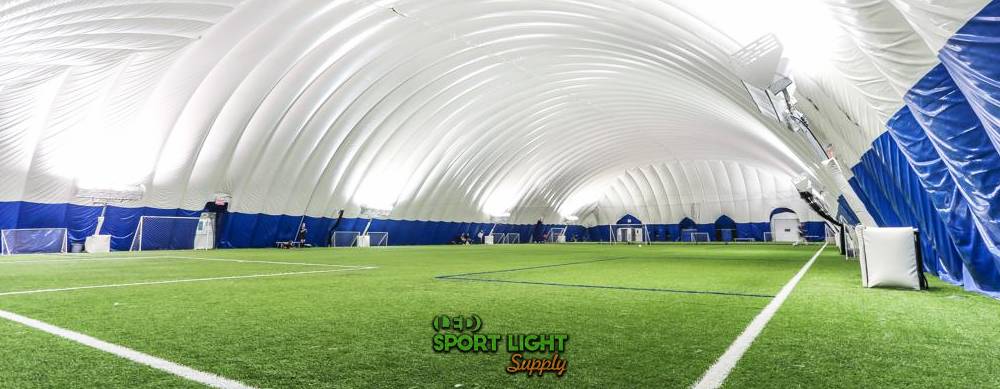
Why Demand Matters in the Total Cost
When reviewing the cost structure of lighting in a sports dome, most operators first focus on the simple metric of energy consumption measured in kilowatt-hours (kWh). However, an equally impactful and sometimes overlooked component of the electric bill is the utility demand charge. Unlike consumption charges, which bill for the total energy used over the billing period, demand charges are based on the highest level of electrical power drawn over a short, specified interval — often a 15-minute window — during the month. This charge is applied to the peak demand level recorded, regardless of how long it lasts, and can substantially inflate the overall cost of operating the lighting system.
Sports domes present a unique challenge for managing demand charges because of their operational patterns. Typically, lighting systems are switched on en masse just before practices, games, or events start, flooding the entire facility with illumination. This simultaneous startup creates a surge in power consumption, which often sets the peak demand that utilities use to calculate charges. Unlike facilities where loads can be staggered or distributed gradually, the nature of dome lighting — aiming to achieve full and immediate brightness across large fields — means these peaks are both high and frequent.
For example, if a sports dome’s lighting system pulls a maximum of 300 kilowatts when first turned on, the utility company bases demand charges on this peak, even if the system’s typical power use during most hours is significantly lower. This means that a short interval of elevated load drives a substantial portion of the monthly bill. In many domes, these demand charges make up anywhere from 20 to 40 percent of the total electric cost. This percentage reflects how impactful the peak load is relative to overall energy use, underscoring that managing demand is just as important as reducing total consumption.
Furthermore, the demand charge can sometimes dwarf the energy consumption cost itself, especially for facilities with short but intense power spikes. The lighting startup scenario — turning on hundreds of high-wattage fixtures simultaneously — creates a load spike that utilities penalize, as it demands a high level of power infrastructure and readiness. This demand fee is, in essence, a fee for the utility to be prepared to supply that peak power, whether the facility draws it constantly or not.
Strategies to Ease Demand Spikes
Recognizing the financial weight that demand charges impose, many sports dome operators seek methods to reduce or smooth out these peak loads. One common approach is to stagger the startup sequence of lighting fixtures. Instead of switching on all the lights at once, groups of luminaires are energized in timed intervals — for example, powering half the fixtures initially and the remainder a few minutes later. This staged activation can significantly lower the maximum instantaneous power demand, thereby reducing the peak load recorded by the utility meter.
Another advanced technique involves the use of lighting control systems with soft-start or ramp-up capabilities. Rather than an immediate jump to full power, these systems gradually increase the light output over several minutes. This smooth ramping helps to avoid the sharp spikes in current draw that cause high demand charges. Modern LED drivers and digital control platforms make such sophisticated dimming and ramping possible, giving operators finer control over energy profiles.
The financial benefits of even modest demand reductions are substantial. Lowering the peak demand by just a few dozen kilowatts can translate into savings of thousands of dollars annually, depending on the utility’s rate structure. Over time, these savings accumulate, making investments in control technology or operational changes worthwhile.
Ultimately, this aspect of lighting costs highlights a vital distinction: lighting expenses in sports domes are not only about the total energy consumed but also about how and when that energy is used. Demand charges shape the monthly bill structure, making peak power management a strategic priority for facilities seeking to optimize their lighting budgets without compromising the quality and consistency of illumination.
Maintenance and Replacement Expenses: Still a Lighting Burden
The Height and Complexity of Dome Lighting Maintenance
While electricity consumption forms the largest and most visible portion of lighting expenses in sports domes, the costs associated with maintaining and replacing lighting components add a substantial and often underestimated financial burden. Unlike typical indoor facilities where fixtures are mounted at accessible heights, sports dome lighting is suspended at elevations ranging from 60 to 80 feet above the playing surface. This significant height introduces complex logistical challenges every time a lamp burns out or a driver malfunctions.
To service these lights, operators typically must rent specialized equipment such as boom lifts or aerial work platforms capable of safely reaching these heights. Renting this machinery alone can cost between $300 and $600 per day, depending on location and equipment type. Furthermore, working at such elevations requires skilled electricians or maintenance technicians who command premium hourly labor rates — often ranging from $75 to $120 per hour. The combination of equipment rental, labor costs, and the time-consuming nature of these jobs means that each fixture replacement or repair can quickly reach several hundred dollars.
Adding to the challenge is the sheer number of fixtures involved. Many domes have upwards of 100 to 300 luminaires distributed across their ceilings, which means maintenance visits often require servicing dozens of lights in a single session. This scale drives costs even higher, particularly when the lighting system includes older technologies with shorter lamp lifespans.
Even with the advent of modern LED technology boasting rated lifespans of 50,000 hours or more, real-world environmental factors such as dust accumulation, humidity, temperature fluctuations, and occasional voltage spikes can accelerate component degradation. This results in lumen depreciation or outright failure occurring years earlier than manufacturers’ projections suggest. As a result, dome managers budget for partial fixture replacements or repairs every few years to maintain consistent light output and safety standards.
The Ongoing Cost of Keeping Lights Safe and Effective
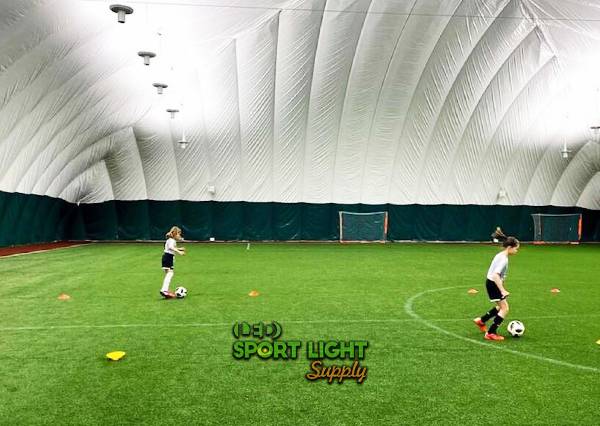 Maintenance and replacement costs form a continuous financial commitment for sports dome operators. In many facilities, the annual expenditure for boom lift rentals, electrician labor, replacement lamps, drivers, and other parts ranges from $10,000 to $20,000. This figure can climb considerably in older domes that rely on traditional metal halide or high-pressure sodium systems, where lamps may need replacement every two to three years due to rapid lumen depreciation and reduced efficiency.
For example, a dome using metal halide lamps rated at approximately 15,000 hours of life may need to re-lamp its entire facility every two years or less to ensure uniform brightness and avoid safety hazards caused by uneven or dim lighting. Considering the costs of lamps — which can be as high as $50 to $100 per bulb for high-wattage types — plus the labor and equipment rentals, a single re-lamping cycle can exceed $30,000 in some facilities.
By contrast, LED retrofits, though initially more expensive, typically reduce maintenance costs over time because of their longer lifespans and lower failure rates. Even so, LEDs still require routine inspections, cleaning, and occasional driver replacements to maintain optimal performance. These ongoing maintenance efforts often keep lighting maintenance budgets steady, rather than eliminated entirely.
Ultimately, these maintenance and replacement expenses — while often overshadowed by monthly electric bills — represent a significant, recurring share of a dome’s operating budget. When combined with energy costs and demand charges, the total financial weight of lighting becomes clear. Many operators find that lighting maintenance and upkeep consumes between 5 and 10 percent of the total lighting budget annually, underscoring the multifaceted nature of the expense beyond just powering the fixtures.
How Lighting Compares to Other Major Operating Costs
In the complex financial ecosystem of a sports dome, the operating budget encompasses a wide range of expenses beyond just utilities. These include personnel costs such as payroll for coaches, custodians, administrative staff, and event coordinators. Facilities must also manage heating, ventilation, and air conditioning (HVAC) systems, which vary seasonally and can represent a substantial portion of the energy budget. Insurance premiums, marketing campaigns to attract teams and events, routine cleaning and maintenance, and debt servicing or lease payments tied to the facility’s construction all factor heavily into annual expenditures.
A typical large multi-sport dome may operate on an annual budget ranging from $700,000 to over $2 million, depending on size, location, and usage intensity. Within this broad spectrum of costs, lighting power emerges as a major, and often underappreciated, line item.
Lighting as a Significant Portion of Utility Expenses
When examining the utility bills alone, lighting frequently constitutes between 25 and 40 percent of the total electricity costs. This percentage is driven by the high wattage and extended operational hours needed to maintain bright, consistent illumination across large playing surfaces. For example, a dome with an annual electricity bill of $150,000 may spend upwards of $45,000 to $60,000 just on lighting power. Adding demand charges—fees charged based on peak electrical use—and maintenance costs related to lighting further increases this burden.
Facility managers report that when all lighting-related expenses, including electricity, demand charges, and maintenance, are combined, the total can consume between 10 and 15 percent of the entire operating budget. This means that in a dome with a $1.5 million annual budget, lighting-related costs alone could reach $150,000 to $225,000. In older domes where LED retrofits have not been completed, these costs can be even higher due to inefficiencies and more frequent maintenance requirements.
Comparing Lighting to HVAC and Staffing Costs
While lighting is a major energy consumer, HVAC systems often represent the largest portion of a dome’s utility budget, especially in regions with extreme seasonal temperatures. Heating and cooling can sometimes account for 40 to 50 percent of total energy consumption. However, lighting maintains a steady, year-round load because it must operate consistently regardless of weather, making it a dependable and recurring cost. In contrast, HVAC energy use may fluctuate substantially with seasonal changes.
Personnel costs, including salaries and benefits for coaches, trainers, custodians, and administrative staff, typically account for between 30 and 50 percent of total operating expenses. This category often exceeds lighting costs but is less flexible to reduce without impacting operations. Because lighting costs are directly tied to energy consumption and maintenance, they present clearer opportunities for cost-saving initiatives without sacrificing service quality.
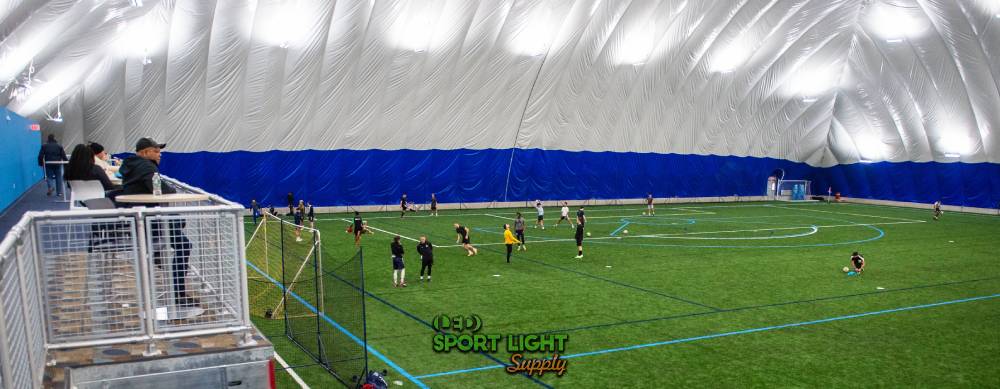
Specific Example: A Regional Sports Dome Budget Breakdown
To illustrate how lighting fits within a typical sports dome’s operating expenses, consider a regional facility with an annual budget of approximately $1.2 million. This dome supports multiple sports activities, regularly hosts community events, and maintains extended evening hours, particularly during peak seasons when demand is highest. Within this budget, staff salaries and benefits consume the largest share, totaling around $500,000, which represents roughly 42 percent of the entire operating budget. This category includes payments for coaches, trainers, custodians, administrative personnel, and other essential employees who keep the facility running smoothly.
Following staffing costs, heating, ventilation, air conditioning, and other facility utilities represent the next largest expense, accounting for nearly $350,000 annually or about 29 percent of the budget. These systems operate year-round to maintain a comfortable environment, and their energy consumption can fluctuate based on seasonal temperature swings.
Lighting-related expenses, which encompass power consumption, utility demand charges, and ongoing maintenance costs, add up to roughly $150,000 per year. This amount equals approximately 12.5 percent of the total operating budget, making lighting the third-largest expenditure for this facility. Despite being a single line item, lighting commands significant financial resources because of the high wattage fixtures required and the extended hours of operation.
Insurance and permit costs follow, totaling around $75,000 annually, or 6 percent of the budget. These expenses are necessary to protect the facility from liability and comply with local regulations. Marketing and event promotion efforts receive a smaller but still vital allocation, with about $50,000, or 4 percent of the budget, dedicated to attracting teams, leagues, and community events. Lastly, general maintenance and cleaning services require approximately $75,000, matching insurance costs at 6 percent of the overall budget, to ensure the facility remains safe, clean, and operational.
In this example, lighting clearly emerges as a major financial factor, ranking just behind staffing and HVAC in terms of cost magnitude. Its steady presence in the dome’s daily operations means that lighting expenses form a reliable and consistent “anchor” within the budget. Managing these costs carefully is essential for facility administrators striving to balance quality, safety, and financial sustainability.
Why Lighting’s Share May Be Even Larger in Some Facilities
In domes that have not transitioned to energy-efficient LED lighting, or that operate particularly large or multiple-field setups, lighting costs can swell to consume even greater portions of the budget. Legacy metal halide systems often draw 2 to 3 times the power of modern LED fixtures and require more frequent maintenance, increasing both energy and upkeep expenses. Some older facilities report lighting-related expenses surpassing 20 percent of their total operating costs, a level that places immense pressure on overall financial health.
The combination of high wattage, extended operational hours, and maintenance needs ensures lighting remains a major, recurring financial commitment. As such, investing in energy-efficient technologies, advanced controls, and proactive maintenance programs can significantly reduce the strain on operating budgets.
Why Lighting’s Share is So Large: Size, Height, and Hours
The Vast Scale of Playing Areas
At the heart of lighting’s substantial share of sports dome operating budgets lies the sheer magnitude of the spaces these facilities enclose. Sports domes exist to provide expansive, all-weather indoor environments that accommodate a variety of athletic pursuits — from full-size soccer pitches measuring over 100 yards in length to multiple basketball or volleyball courts arranged side by side. Unlike smaller gymnasiums or recreational centers, these large-scale arenas demand lighting systems capable of delivering uniform brightness across every square foot of playing surface.
The size of these playing areas directly influences the number and power of luminaires required. To avoid dark spots or uneven illumination that could compromise player safety or game quality, lighting designers install dense grids of high-output fixtures. This comprehensive coverage ensures that every corner of the field or court receives adequate light, but it also means that energy consumption rises dramatically. A single full-sized soccer field might require more than 100 fixtures, each rated at 1,000 watts or more, simply to meet recommended illuminance standards. Multiplying this by multiple fields or configurations inside one dome quickly expands the total wattage, placing heavy demands on the facility’s electrical infrastructure.
The Demands of Mounting Height
Another key factor driving lighting energy consumption is the height at which fixtures are installed. In most sports domes, lighting systems are mounted on ceilings or rigging structures that soar between 60 and 80 feet above the playing surface. This elevation is necessary to prevent glare, ensure even light distribution, and keep fixtures safely out of the way of player activity and ball trajectories.
However, increased mounting height significantly escalates the wattage requirements for each luminaire. Light intensity diminishes with distance according to the inverse square law, meaning fixtures positioned higher must emit much stronger beams to achieve target illuminance levels on the floor. For competitive sports settings, the recommended illumination typically ranges between 300 and 500 lux depending on the sport and level of play. Meeting these standards from 80 feet overhead often requires fixtures that draw between 800 and 1,200 watts of power per unit when using modern LED technology, with older metal halide or HID systems demanding even more energy.
In addition to overcoming physical distance, lighting must contend with atmospheric factors inside the dome such as dust accumulation and potential humidity. These environmental elements can absorb or scatter light, further reducing efficiency and requiring increased power to compensate. The angles at which light beams strike the playing surface also affect how effectively illumination is delivered, so fixture placement and optics must be carefully engineered, sometimes at the cost of higher wattage usage.
Extensive Operating Hours
Lighting energy consumption does not simply result from high wattage fixtures installed at height—it is compounded by the lengthy operational hours that sports domes routinely maintain. Unlike many other indoor facilities that operate primarily during daylight or limited evening hours, sports domes are hubs of activity throughout the day and into the night.
These facilities host early morning youth training sessions often starting before sunrise, adult recreational leagues playing well into late evenings, weekend tournaments that span entire days from dawn to dusk, and seasonal summer camps where activities extend into the twilight hours. Consequently, many domes run their lighting systems for an average of 12 to 16 hours daily during peak usage seasons.
When hundreds of fixtures each drawing between 800 and 1,200 watts operate for these extended durations, lighting quickly shifts from a secondary operational cost to one of the largest ongoing energy consumers in the entire facility. The long hours multiplied by high power draw create monthly electricity bills that can easily reach tens of thousands of dollars. This extensive use pattern also amplifies maintenance needs, as prolonged operation accelerates fixture aging and lumen depreciation.
In summary, the combination of expansive field size, the necessity of high mounting heights, and prolonged operating schedules creates a perfect storm that drives lighting costs to such a large proportion of a sports dome’s total operating expenses. These factors underline why lighting demands focused attention when seeking ways to optimize facility budgets and improve energy efficiency.
Strategies to Control Lighting’s Share of the Budget
The Role of LED Retrofits
Given the substantial portion of operating budgets consumed by lighting expenses, many sports dome owners and facility managers have turned to technological upgrades as an effective way to reduce costs. One of the most impactful measures is the conversion from older lighting technologies, such as metal halide or high-pressure sodium lamps, to modern LED fixtures. LEDs provide equivalent or even superior illumination levels while typically drawing 40 to 60 percent less power than their traditional counterparts. This translates to immediate and substantial reductions in monthly electricity bills.
For example, a dome with a 250-kilowatt metal halide lighting system consuming roughly 90,000 kWh monthly could see its consumption fall to between 36,000 and 54,000 kWh after an LED retrofit, depending on fixture efficiency and lighting design. With commercial electricity rates averaging around $0.12 per kWh, this improvement alone could save the facility between $4,300 and $6,500 each month, or approximately $50,000 to $80,000 annually. Such savings quickly offset the upfront investment in new fixtures and installation costs.
Additionally, LED fixtures offer operational advantages that further reduce costs. Unlike metal halide lamps, which require lengthy warm-up periods and gradual ramp-up times, LEDs achieve full brightness instantly. This feature allows facilities to implement more agile lighting schedules, turning lights on only when needed and shutting them off without delay. The ability to minimize “idle” burn hours can reduce energy use by an estimated 10 to 20 percent, further lowering bills and extending fixture lifespans.
Advanced Control Systems and Smart Scheduling
Beyond fixture upgrades, the integration of advanced lighting control systems plays a pivotal role in managing energy use and demand charges. Modern control platforms enable dimming, zoning, and scheduling tailored to the facility’s real-time needs. In large multi-zone sports domes, these systems allow operators to illuminate only occupied areas while dimming or turning off lighting in unoccupied zones, effectively preventing energy waste.
Controls that respond to natural daylight input help reduce artificial lighting during daytime hours. For instance, daylight harvesting sensors can dim lights in response to incoming sunlight, yielding energy savings often in the range of 15 to 25 percent. Motion or occupancy sensors can automatically lower light levels during periods of inactivity, which may account for up to 10 percent additional savings in facilities with irregular or varied usage patterns.
Smart scheduling software further enables lighting to align closely with programmed activities, reducing unnecessary operation hours. Facilities implementing these control measures report reducing their lighting energy consumption by as much as 30 to 40 percent compared to baseline use without controls. On a practical level, such reductions could translate into tens of thousands of dollars in annual savings for larger domes. For example, a dome spending $150,000 annually on lighting power and maintenance could save between $45,000 and $60,000 by combining LED upgrades with effective controls.
Operational Discipline and Maintenance Savings
In addition to technological investments, operational discipline also contributes to controlling lighting costs. Training staff to promptly switch off lighting zones when not in use ensures energy is not wasted during downtime. This simple practice can cut energy consumption by several percentage points, which over time equates to thousands of dollars in savings.
Routine maintenance also plays a fundamental role in keeping lighting systems efficient. Cleaning lenses and reflectors regularly prevents light loss caused by dust or grime buildup. Well-maintained optics focus illumination properly, allowing domes to meet required lux levels without resorting to higher wattage or additional fixtures. Neglecting maintenance can result in lumen depreciation that forces higher power consumption to compensate, increasing energy and operational costs.
A facility investing in consistent maintenance programs might reduce lighting-related expenses by 5 to 10 percent annually. For a dome with an annual lighting budget of $150,000, this means saving up to $15,000 per year without any capital expenditures. When combined with LED retrofits and controls, operational discipline and maintenance savings complete a comprehensive strategy to reduce lighting’s share of the overall operating budget.
Conclusion
Lighting power is not an incidental or background figure in the financial operations of a sports dome. It consistently ranks among the largest line items, routinely consuming 10 to 15 percent of the total annual operating budget once direct electricity, demand charges, and ongoing maintenance are combined. The scale of these facilities, the height at which lighting must function, and the long hours typical of competitive and recreational scheduling all converge to drive lighting into a realm of cost that few other individual systems match.
However, this same prominence means that improvements in lighting technology and management practices offer one of the most reliable ways to rein in expenses. Upgrading to efficient LED systems, adopting smart controls that tailor lighting to actual use, and maintaining fixtures diligently so they perform at their best all help keep lighting from consuming more than its share of resources. In doing so, sports dome owners can channel saved dollars into enhancing player experiences, maintaining superior facilities, and ultimately securing the long-term success of their operations. Lighting may always be a major expense, but it is also one of the most direct paths toward achieving a more balanced and sustainable budget.