
Walk into any older sports dome and you can usually tell one thing straight away: the lighting has seen better days. Maybe it flickers a bit, feels uneven across the field, or just looks a little tired compared to modern arenas. The truth is, lighting upgrades can completely change how a facility feels and performs, but the cost often slows things down.
The good news is that funding options for these upgrades have expanded quite a bit in recent years. Between government programs, utility rebates, sponsorships, and energy-focused financing models, there are more ways to make the numbers work than most facility owners realize. The challenge isn’t just “finding money,” but knowing how to position a project so it actually gets supported.
Understanding the Costs of Sports Dome Lighting Upgrades
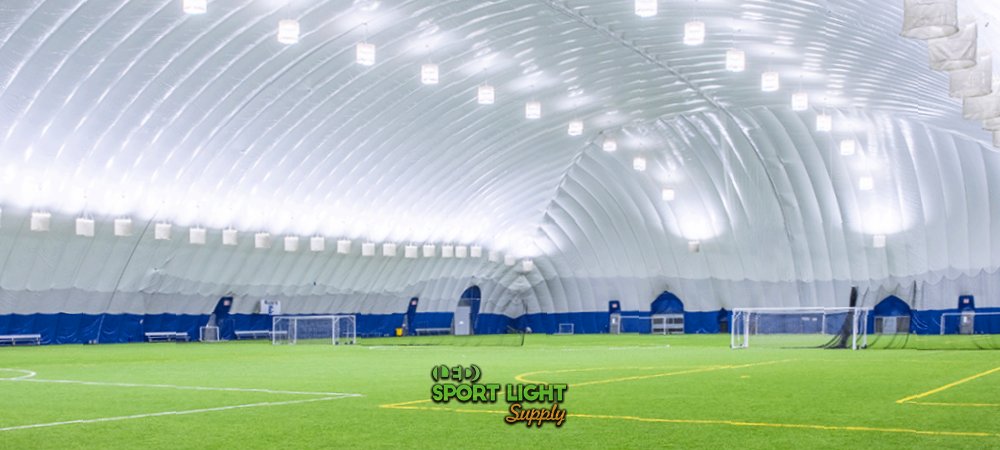
Sports dome lighting isn’t just about swapping bulbs anymore. Most modern upgrades involve shifting from older systems like metal halide to LED-based setups, often paired with smart controls for dimming and scheduling.
On paper, LED retrofits can reduce energy use by around 50% to 75%, depending on how inefficient the original system was. That’s a big range, but it explains why so many facilities are making the switch. A mid-sized dome might spend anywhere from $40,000 to $250,000 on a full lighting upgrade, depending on height, coverage area, and structural complexity.
There are also the quieter costs that don’t always get talked about upfront. Installation might require temporary closure of parts of the facility, rewiring older electrical systems, or reinforcing mounting structures. Over time though, the maintenance side becomes lighter, since LED systems often last 50,000 to 100,000 hours compared to roughly 10,000 to 20,000 hours for older technologies.
What often surprises operators is how quickly the savings show up. In many cases, energy bills drop enough that the system starts paying itself back in roughly 3 to 6 years, depending on usage.
How to Qualify for Funding
Start with a Professional Energy Assessment
Most funding organizations want to see measurable data rather than rough estimates. That’s why an energy audit is usually the first step before applying for grants, rebates, or financing programs.
A professional lighting assessment evaluates the dome’s current electrical consumption, fixture efficiency, illumination levels, and operating schedule. It also measures whether the existing lighting meets recommended standards for the sports being played. For example, a dome used for recreational soccer may require different lighting levels than one hosting competitive tennis tournaments or televised sporting events.
The audit typically compares the current system with a proposed LED solution, estimating annual electricity savings, maintenance reductions, and projected carbon emission cuts. Providing real numbers instead of assumptions gives funding applications much stronger credibility.
Demonstrating How the Facility Is Used
Facility usage data often carries more weight than people expect.
Funding providers usually want to understand how frequently the sports dome operates and how many people benefit from the upgrade. Information such as weekly operating hours, annual visitor numbers, sports programs, tournaments, school partnerships, and community events helps paint a much clearer picture of the facility’s value.
For example, a sports dome operating 14 hours per day, seven days a week, accumulates more than 5,000 operating hours each year. A venue welcoming 80,000 to 150,000 visitors annually demonstrates that energy savings will have a broad community impact while improving playing conditions for thousands of athletes.
Facilities that host youth leagues, adaptive sports, local clubs, and community recreation programs may also qualify for additional funding streams focused on public health and community development.
Showing Measurable Environmental Benefits
Environmental performance has become a major consideration for many funding programs, particularly those linked to sustainability initiatives.
Rather than simply stating that LED lighting is “greener,” successful applications usually calculate expected reductions in electricity consumption and greenhouse gas emissions. Depending on the local electricity grid and the size of the facility, a medium-sized sports dome converting to LED lighting can reduce carbon emissions by approximately 20 to 60 metric tons every year.
Some larger multi-purpose sports facilities report annual electricity savings exceeding 150,000 to 300,000 kilowatt-hours, which represents a substantial reduction in operating costs while supporting broader environmental goals.
When these figures are supported by engineering calculations or energy audit reports, they become much more persuasive to grant reviewers.
Meeting Building and Safety Requirements
Funding providers also want reassurance that the project complies with local regulations and industry standards.
Sports domes have unique structural characteristics compared to conventional buildings. Fixtures are often suspended from cables, steel frames, or the dome membrane itself, meaning installation methods must account for weight distribution, vibration, and long-term stability. Electrical systems also need to comply with current building and electrical codes before funding can be approved.
If the facility plans to improve emergency lighting, install backup power integration, upgrade control systems, or modernize electrical panels at the same time, those improvements can sometimes strengthen the overall proposal because they increase the dome’s operational reliability and safety.
By combining accurate energy data, realistic financial projections, documented facility usage, and full regulatory compliance, sports dome owners place themselves in a much stronger position when competing for available funding opportunities. Grant reviewers are generally looking for projects that are well planned, financially sound, and capable of delivering measurable results over many years.
Step-by-Step Application Process
Applying for funding for a sports dome lighting upgrade doesn’t have to be overwhelming. While every funding program has its own requirements, most follow a fairly similar process. The smoother and more organized your application is, the easier it becomes for reviewers to understand your project and see its value. Taking the time to prepare the right information from the beginning can also reduce delays and improve your chances of receiving funding.
Begin with a Professional Lighting Assessment
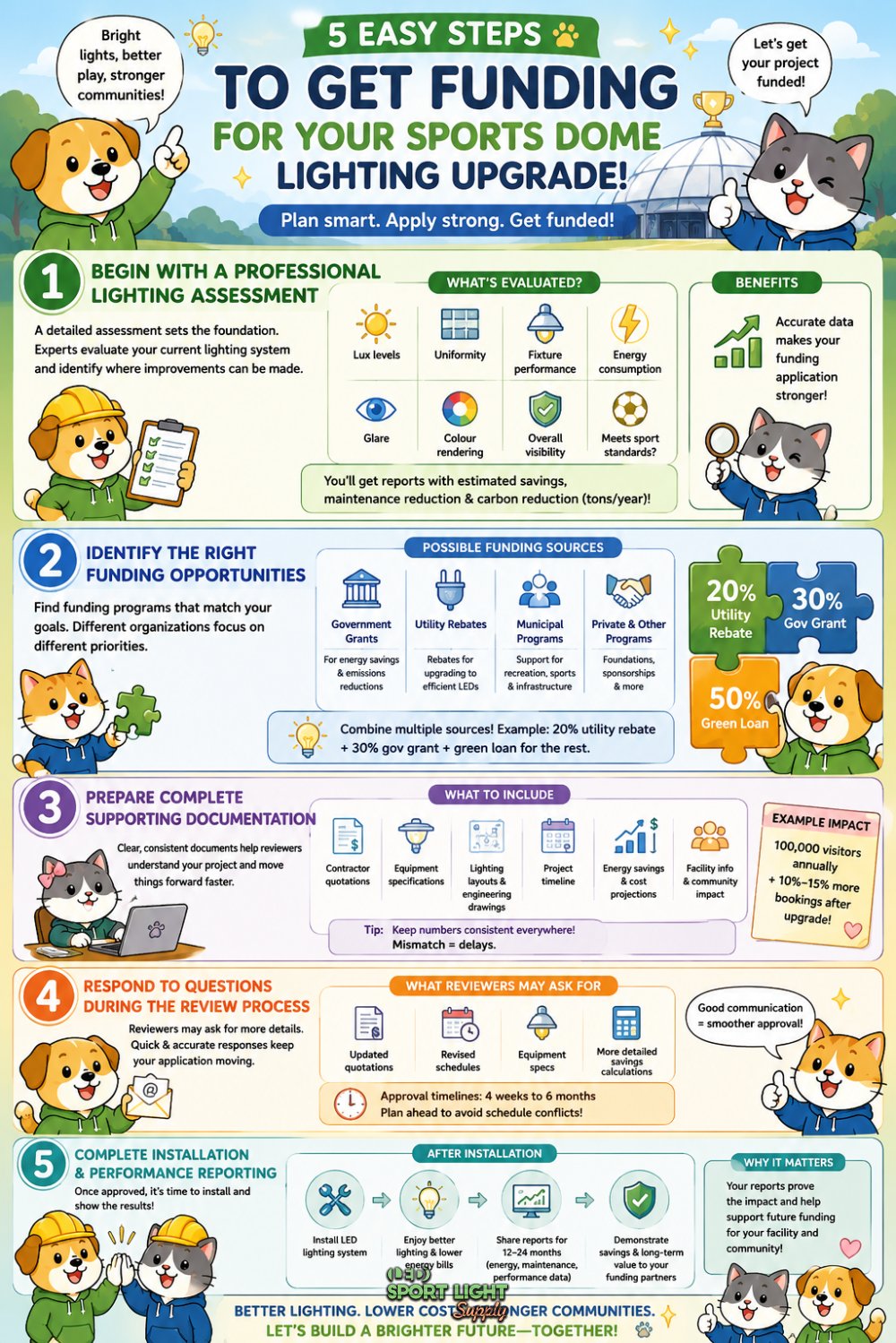
The first step is usually a comprehensive lighting assessment carried out by experienced lighting designers, electrical engineers, or energy consultants. This assessment establishes a baseline of how the existing lighting system performs and identifies areas where improvements can be made.
During the assessment, professionals typically measure lux levels, lighting uniformity, fixture performance, energy consumption, glare, colour rendering, and overall visibility throughout the sports dome. They also evaluate whether the current lighting meets the recommended standards for different sports. For example, an indoor soccer dome, baseball training facility, tennis dome, or multi-purpose fieldhouse may each require different illumination levels depending on the level of competition being hosted.
The assessment usually includes an estimate of annual electricity consumption and compares it with projected energy use after upgrading to LED sports lighting. Many reports also calculate expected maintenance savings and carbon emission reductions, giving facility owners a much clearer picture of the long-term financial benefits.
Having a professional lighting audit not only helps with project planning but also strengthens funding applications because it provides objective data instead of rough estimates.
Identify the Right Funding Opportunities
Once the technical assessment is complete, the next step is finding funding programs that match your project goals.
This part can feel a bit like putting together a puzzle because different organizations have different priorities. Some government grants focus on reducing energy consumption and greenhouse gas emissions, while others support community recreation, youth sports participation, or improvements to public infrastructure.
Utility companies often offer rebate programs for facilities replacing older metal halide or high-pressure sodium fixtures with high-efficiency LED lighting systems. Meanwhile, municipalities may have separate funding streams for recreational facilities, sports clubs, or community development projects.
Rather than relying on a single source of funding, many successful sports dome projects combine multiple options. For example, a project might receive a 20% utility rebate, a 30% government sustainability grant, and finance the remaining balance through a green loan. Combining several funding sources can significantly reduce the upfront investment while making the project financially more attractive.
Prepare Complete Supporting Documentation
This is often the stage where applications take the most time, but it’s also where careful preparation pays off.
Funding providers usually expect detailed documentation that clearly explains the project from both a technical and financial perspective. This may include contractor quotations, equipment specifications, lighting layouts, engineering drawings, project timelines, projected energy savings, and operating cost comparisons.
It’s also helpful to include information about the sports dome itself, such as annual operating hours, the number of athletes using the facility, community programs, tournaments hosted each year, and expected growth after the lighting upgrade.
For example, if a dome currently welcomes 100,000 visitors annually and expects improved lighting to increase bookings by 10% to 15%, those figures help demonstrate broader community benefits beyond energy savings alone.
Consistency across every document is equally valuable. If one report estimates annual savings of $25,000 while another shows $18,000, reviewers may request clarification before moving the application forward. Keeping all technical and financial information aligned creates a much stronger overall proposal.
Respond to Questions During the Review Process
Submitting the application is rarely the final step.
Many funding organizations review applications in several stages and often request additional information before making a decision. They may ask for updated quotations, revised installation schedules, equipment specifications, or more detailed calculations showing projected electricity savings.
Responding promptly and providing accurate information helps keep the review process moving. Delays often happen simply because applicants take too long to supply supporting documents or submit incomplete responses.
Depending on the size of the project and the funding organization, approval timelines can range from four weeks to six months. Planning ahead allows facility owners to coordinate installation schedules without disrupting leagues, tournaments, or seasonal sports programs.
Complete Installation and Performance Reporting
Once funding has been approved, the installation phase can begin.
Many sports dome operators schedule lighting upgrades during quieter seasons or planned maintenance periods to reduce disruptions for athletes and event organizers. Depending on the size of the facility, installation may take anywhere from several days to several weeks.
After the new LED sports lighting system is operational, some funding agreements require follow-up reporting. This may involve sharing electricity bills, energy monitoring reports, maintenance records, or performance data for 12 to 24 months after project completion.
These reports allow funding providers to verify that the projected energy savings have actually been achieved while also demonstrating the long-term value of investing in energy-efficient sports infrastructure.
Building a Strong Funding Proposal
Focus on Both Financial and Community Benefits
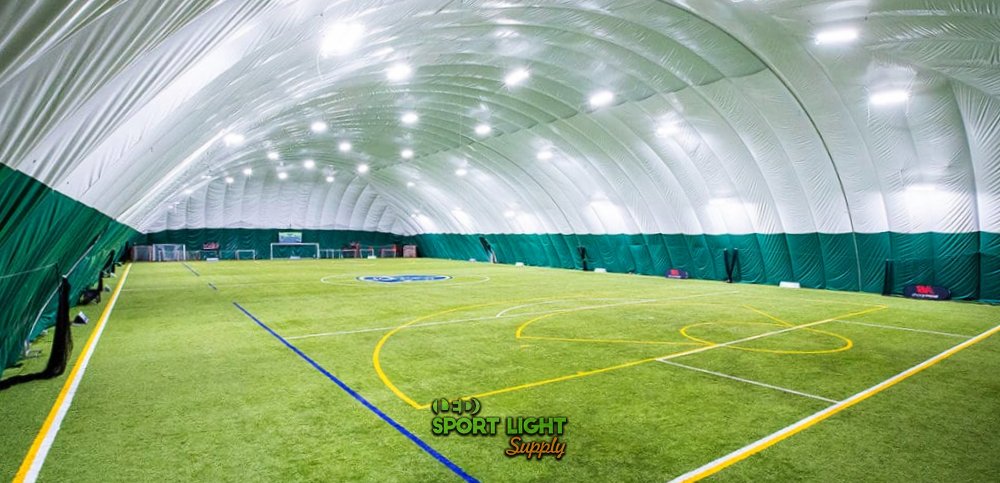
The strongest funding proposals rarely focus on energy savings alone. Instead, they explain how the lighting upgrade benefits both the facility’s finances and the people who use it every day.
From a financial perspective, replacing outdated sports dome lighting with LED fixtures can reduce electricity consumption by 50% to 75%, lower maintenance costs, and decrease unexpected equipment failures. These savings help improve the facility’s long-term operating budget while creating more predictable maintenance expenses.
From a community perspective, better lighting enhances player visibility, improves safety, creates a more enjoyable experience for spectators, and allows the dome to host additional evening programs, youth leagues, training sessions, and regional competitions.
Showing both perspectives demonstrates that the investment delivers value beyond simply lowering utility bills.
Support Every Claim with Real Numbers
Funding reviewers tend to place much more confidence in proposals supported by measurable data.
Instead of saying that the project will “save money,” explain how much it is expected to save. For instance, a proposal estimating $18,000 in annual electricity savings from a $90,000 lighting upgrade immediately gives reviewers a clearer understanding of the financial return. If maintenance savings add another $5,000 per year, the overall payback becomes even more attractive.
Including estimates for annual electricity reductions, maintenance savings, operating hours, and projected carbon emission reductions helps paint a complete picture of the project’s value.
Whenever possible, these figures should come from engineering reports or professional energy assessments rather than rough estimates.
Make Technical Information Easy to Understand
Even though funding reviewers often have technical knowledge, visual information can make a proposal much easier to follow.
Lighting simulations, before-and-after lux maps, fixture layouts, energy consumption charts, and rendering images allow reviewers to quickly understand how the upgrade will improve the sports dome.
For facilities hosting sports such as soccer, baseball, tennis, pickleball, or volleyball, demonstrating more even light distribution across the entire playing surface also helps explain why the project benefits athletes as well as spectators.
Adding a few well-designed graphics often communicates the project’s impact more effectively than several pages of technical descriptions.
Match the Proposal to the Funding Organization
Every funding provider has slightly different objectives, so it makes sense to tailor the proposal accordingly.
Government sustainability programs typically place greater emphasis on energy efficiency, carbon reduction, and environmental performance. Community recreation grants may focus more on increasing public access to sports facilities, supporting youth participation, or improving accessibility.
Utility rebate programs generally want to see measurable reductions in electricity demand, while private sponsors may be more interested in community visibility, brand exposure, and local engagement.
By adjusting the proposal to reflect what each organization values most, applicants can create a stronger connection between the project and the funding program’s goals.
Case Examples
Combining Multiple Funding Sources for a Community Sports Dome
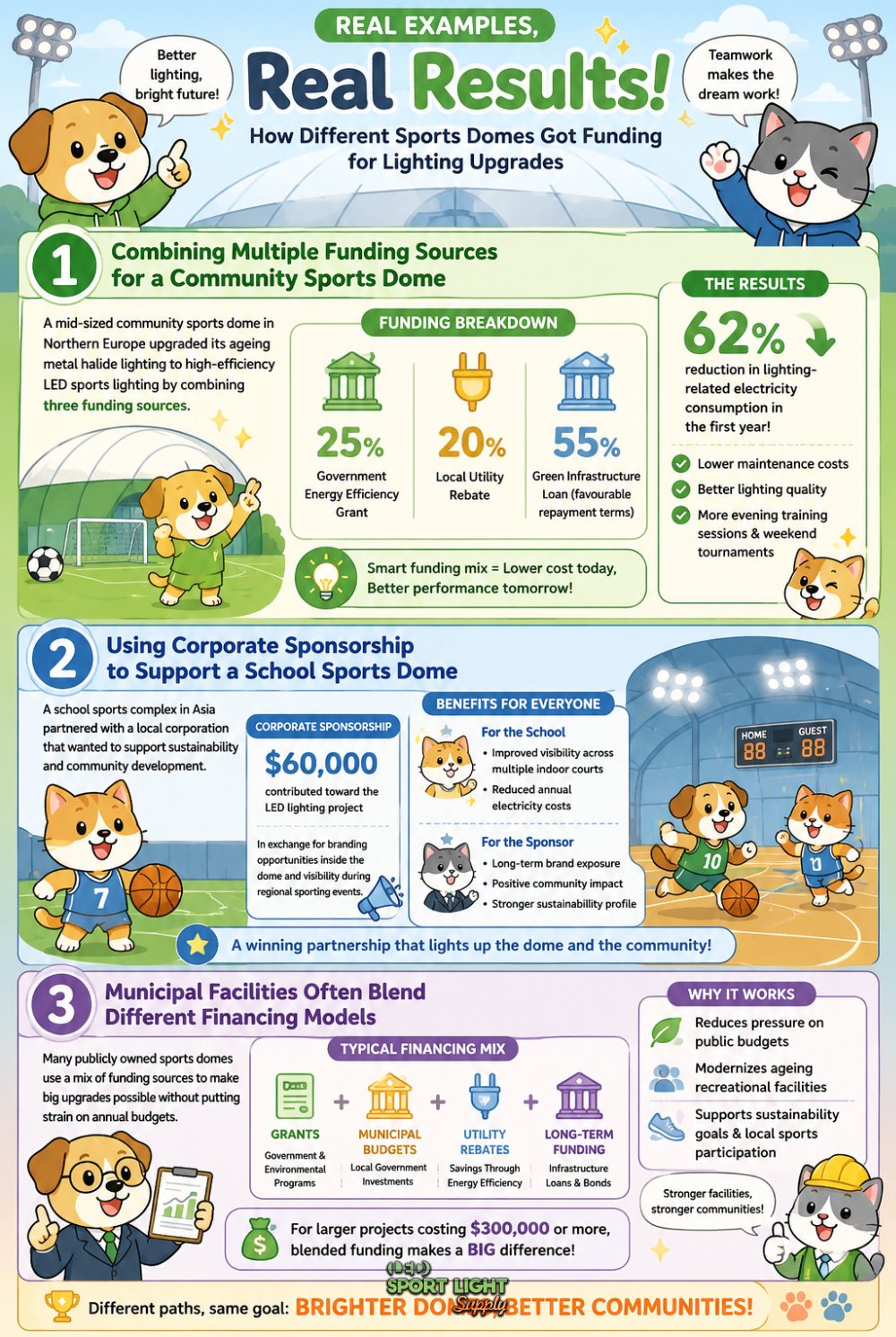
A mid-sized community sports dome in Northern Europe provides a good example of how combining different funding options can reduce the financial burden.
The facility upgraded its ageing metal halide lighting system to high-efficiency LED sports lighting by combining three funding sources. A government energy efficiency grant covered 25% of the project cost, while a local utility rebate contributed another 20%. The remaining balance was financed through a green infrastructure loan with favourable repayment terms.
Within the first year of operation, the facility reported a 62% reduction in lighting-related electricity consumption, along with noticeably lower maintenance costs. Staff also found that the improved lighting quality allowed the dome to host more evening training sessions and weekend tournaments without increasing operating expenses.
Using Corporate Sponsorship to Support a School Sports Dome
A school sports complex in Asia took a different approach by partnering with a local corporation looking to strengthen its sustainability initiatives.
The company provided approximately $60,000 toward the LED lighting project in exchange for branding opportunities inside the sports dome and sponsorship visibility during regional sporting events.
The upgraded lighting improved visibility across multiple indoor courts while reducing annual electricity costs. At the same time, the sponsoring company gained long-term exposure within the local community, creating a partnership that benefited both parties.
Municipal Facilities Often Blend Different Financing Models
Many publicly owned sports domes don’t rely on just one source of funding. Instead, they build financing packages using grants, municipal budgets, utility rebates, and long-term infrastructure funding.
For larger projects costing $300,000 or more, this blended approach can significantly reduce the amount that needs to come directly from public budgets. It also allows municipalities to modernize ageing recreational facilities while supporting broader sustainability goals and improving sports infrastructure for local communities.
As more cities invest in energy-efficient public facilities, combining multiple funding sources continues to be one of the most practical strategies for completing sports dome lighting upgrades without placing unnecessary pressure on annual operating budgets.
Closing Perspective
Sports dome lighting upgrades sit at the intersection of energy efficiency, community development, and long-term cost control. Once the funding landscape becomes clear, the barrier often shifts from “can we afford it” to “which combination makes the most sense.”
For facility operators exploring lighting improvements or trying to map out funding pathways, getting the technical and financial side aligned early can make a noticeable difference in outcomes. For tailored advice, funding strategy planning, or feasibility checks on sports dome lighting projects, reaching out for professional consultation can help turn early ideas into workable, fundable plans.