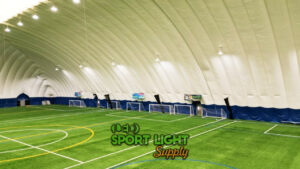

When people walk into a sports dome, they usually notice the size, the acoustics, and maybe the temperature. What they don’t always realize is how much of their experience is shaped by the lighting. From recreational basketball games to international tournaments broadcast in 4K, the quality of dome lighting directly influences how athletes perform, how fans enjoy the game, and how professional the venue feels. That’s where lighting standards come in.
So, what exactly are the standards for sports dome lighting, and why do they matter so much? Let’s dig into that.
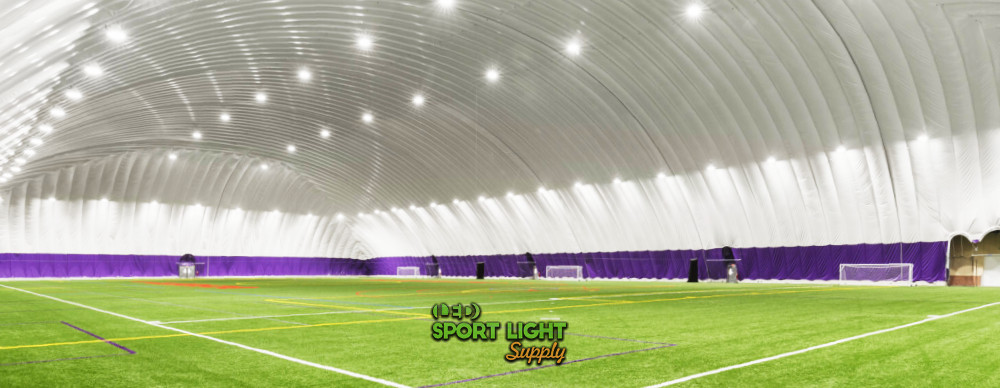
The short answer: because lighting sets the stage for everything that happens inside the dome. If the lighting isn’t up to standard, the playing experience and the audience experience both take a hit.
For athletes, proper lighting helps with reaction times, depth perception, and overall performance. Imagine a badminton player trying to follow a shuttlecock moving at 300 km/h in uneven lighting—it becomes nearly impossible. For referees, standardized lighting ensures calls are fair, since shadows and dim spots can obscure plays. And for fans, whether they’re in the stands or watching a broadcast, good lighting makes the game immersive instead of frustrating.
Another layer is safety. Poorly lit areas can increase the risk of injuries because players may misjudge distances or fail to see obstacles. In fact, studies in indoor arenas have shown that a drop below 300 lux can noticeably increase accident risks in high-speed sports like futsal and volleyball.
Then there’s broadcasting. High-definition and ultra-high-definition cameras demand very specific lighting conditions. Without uniform brightness and proper color rendering, the footage looks flat, grainy, or distorted. That’s why international competitions push for lux levels well beyond what local recreational domes require.
When people talk about lighting in a sports dome, they usually think it’s all about brightness. But the reality is, dome lighting standards go far beyond just how bright the court looks. They cover everything from lux levels and foot-candles to color temperature, uniformity, beam angles, CRI, glare control, heat generation, and energy savings. Every one of these factors plays a part in creating a dome environment that feels professional, safe, and comfortable for both players and spectators.
| Parameter | Standard / Range |
|---|---|
| Lux / Foot-Candles (fc) | Recreational: 200–300 lux (20–30 fc) Local/School Tournaments: 300–500 lux (30–50 fc) Professional Non-TV: 500–750 lux (50–70 fc) National Broadcast: 1,200–1,500 lux (110–140 fc) International 4K Broadcast: 1,500–2,000 lux (140–185 fc) |
| Color Temperature (K) | 4000K–5700K |
| Uniformity Ratio (U1) | Minimum 0.7 International / TV: 0.8+ |
| Beam Angle | Narrow beams 30–60° Wide beams 90–120° |
| CRI (Color Rendering Index) | General Play: 80+ Broadcast: 90+ |
| Anti-Glare | Asymmetrical reflectors, optics, diffusers |
| Heat Management | LEDs with heat sinks Lifespan: 50,000–100,000 hours |
| Energy-Saving Design | LEDs save 60–70% energy Dimmable 300–2000 lux |
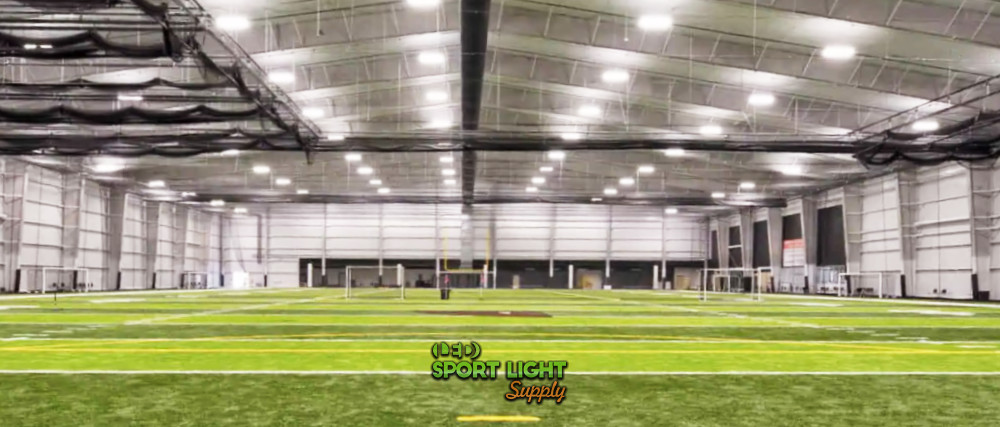
The first question is always: how many lux does a sports dome need? Lux measures light intensity on the playing surface, while in the U.S., you’ll also hear about foot-candles (fc). To keep it simple, 1 foot-candle equals about 10.76 lux.
A recreational dome used for casual basketball or community volleyball might only need 200 to 300 lux (20–30 fc). That’s enough for players to see clearly without straining, and it keeps energy use manageable. But once you step into competitive sports, the numbers rise quickly. Local leagues and school tournaments usually require 300–500 lux (30–50 fc) to ensure referees, coaches, and players can all see action without missing details.
Things change dramatically when you look at professional domes. For non-televised matches, 500–750 lux (50–70 fc) is the minimum standard. Once broadcasting enters the picture, especially for national-level events, lighting intensity needs to reach 1,200–1,500 lux (110–140 fc). And for international tournaments filmed in HD or 4K, many federations recommend 1,500–2,000 lux (140–185 fc) to satisfy camera requirements.
To put this into perspective, a full-sized futsal dome with a 40m x 20m pitch at 1,500 lux needs close to 1 million lumens evenly distributed. That’s several times brighter than a school gym running at 300 lux. Without these higher levels, cameras can’t capture crisp action, and broadcasts end up looking flat and grainy.
Another piece of the puzzle is color temperature, measured in Kelvin (K). In sports domes, the sweet spot is usually 4000K to 5700K. That’s about the same as natural daylight on a clear morning.
Why not go warmer or cooler? If lighting dips below 4000K, the dome can take on a yellowish tint, which makes the court look dull and can even affect how athletes judge depth and speed. On the other end, lighting above 6000K feels icy and sterile, which might be fine in a warehouse but not in a space where people are running at full speed. Keeping color temperature in that 4000–5700K range helps the dome feel bright, clear, and natural—just like playing outdoors on a sunny day.
Many modern domes stick closer to 5000K, since it balances clarity for athletes with visual comfort for spectators who might sit for two or three hours watching a game.
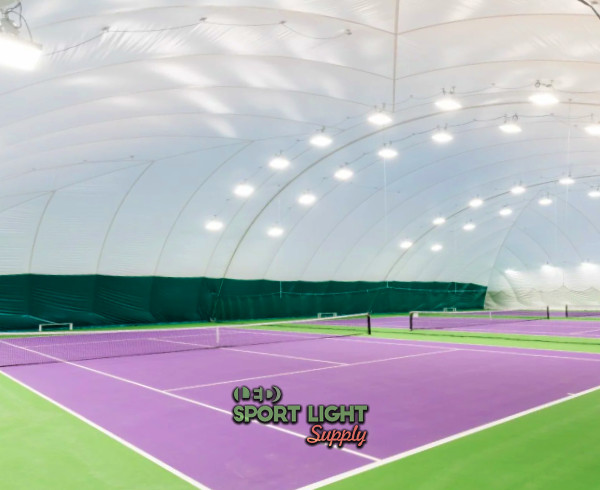
It’s not just about how bright the dome is, but whether the brightness is consistent. Standards usually call for a uniformity ratio of at least 0.7, meaning the darkest part of the field should be at least 70% as bright as the brightest part. For international domes with TV coverage, that ratio often goes up to 0.8 or higher.
Imagine a basketball dome where the center court shines brightly but the corners fade into shadows. Athletes constantly adjust their eyes, referees miss fouls, and cameras produce inconsistent footage. With good uniformity, every square meter of the court or pitch feels equally well lit, which makes the experience smoother for everyone.
Uniformity is especially challenging in large domes with 20–30 meter ceiling heights. Without proper fixture spacing and beam control, hotspots and dark zones show up. That’s why dome lighting layouts are designed with simulation software that maps lux levels across the entire surface before a single light is even installed.
The beam angle of a fixture determines how light spreads across the playing field. In sports domes, the goal is wide, even coverage without creating glare or wasting light on walls or seating areas.
A mix of angles usually works best. Narrower beams around 30–60 degrees can punch light down onto key playing zones, while wider beams at 90–120 degrees help blanket larger areas. In a dome, where fixtures are often mounted high above the floor, choosing the wrong beam angle can either leave patches of darkness or spill light where it’s not needed.
The right mix ensures the court or pitch stays evenly bright, while spectators enjoy clear views without distracting light flooding into the stands.
Brightness alone doesn’t guarantee clarity. The Color Rendering Index (CRI) measures how accurately colors show up under artificial light, with 100 being the natural daylight benchmark.
For most sports domes, a CRI of 80 or above is the minimum. That’s enough to make uniforms, skin tones, and the ball look natural to the naked eye. But once TV cameras come into play, especially for HD or 4K broadcasting, standards usually push for CRI 90+.
This makes a real difference. A dome running at 1,200 lux but with a CRI of 70 might technically meet brightness standards, but players’ jerseys look flat, the court surface loses contrast, and broadcast footage looks lifeless. Raising CRI to 90 or more makes everything pop—the blue and red team jerseys are vibrant, the court markings are crisp, and the broadcast looks professional.
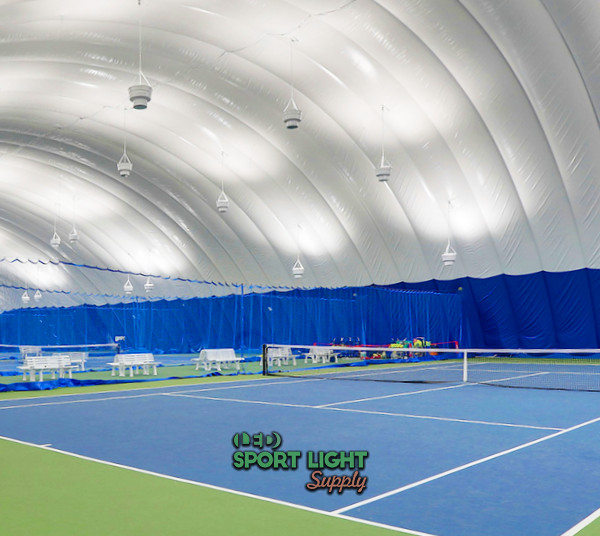
Anyone who has ever played volleyball or badminton in a dome with outdated lights knows the pain of glare. When players look up to track the ball, they can be blinded by direct beams from overhead fixtures. That’s not just annoying—it can directly affect performance.
Modern dome lighting combats this with anti-glare optics and reflectors. For example, asymmetrical reflectors can direct light down onto the playing surface while shielding players’ eyes. Some systems even use diffusers that soften the light without reducing brightness on the court.
This doesn’t just help athletes. Fans in the stands also benefit, since harsh glare can make it tiring to follow the game. A dome with anti-glare fixtures feels more professional and more comfortable to spend time in.
Sports domes are large enclosed spaces, and traditional metal halide lamps were notorious for pumping out heat along with light. A dome running a few hundred of these fixtures could see indoor temperatures rise by 3–5°C, forcing air-conditioning systems to work overtime.
Modern LED fixtures fix this problem with low heat generation. They come with built-in heat sinks that pull heat away from the LEDs, keeping both the lights and the dome cooler. That not only makes the space more comfortable but also extends fixture lifespan. LEDs can last 50,000–100,000 hours, compared to 5,000–10,000 hours for old metal halide bulbs. Less heat means less stress on the components, fewer replacements, and lower maintenance costs.
Running a dome isn’t cheap. Between HVAC, lighting, and operations, energy bills add up fast. Lighting alone can account for 40–60% of a sports dome’s energy use. That’s why modern standards emphasize energy-saving design.
LED fixtures typically use 60–70% less power than traditional lamps for the same brightness. Add in smart systems—like dimming controls, motion sensors, and scheduling software—and the savings climb even higher. For example, a dome that lowers its lux levels from 1,500 (broadcast) down to 300 (training) during off-peak hours can cut power costs by tens of thousands of dollars each year.
Some newer domes also integrate renewable energy solutions. With rooftop solar panels feeding into the system, operators can offset part of the lighting load, making the facility not just cheaper to run but more sustainable.
And it’s not only about saving money. Energy-efficient domes can host more types of events—sports tournaments, concerts, exhibitions—without operators worrying about skyrocketing utility bills. That flexibility makes the dome more attractive as a multipurpose venue.
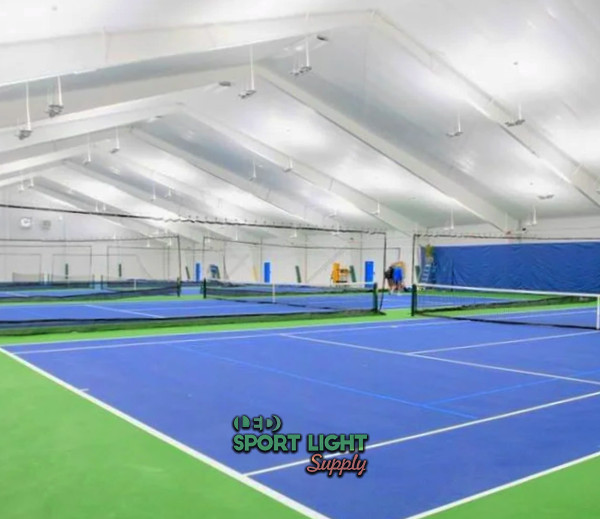
When people hear the term “indirect lighting,” the first thought is often that it’s weaker or less practical than direct light. But in a sports dome, indirect design actually does a lot of heavy lifting when it comes to meeting lighting standards. Instead of blasting light straight down onto the playing surface, indirect systems bounce light off reflective ceilings, panels, or even specially coated dome walls. The result is a softer, more uniform glow that solves several problems direct fixtures alone can’t handle.
One of the biggest complaints in older domes with only direct fixtures is glare. Athletes—whether they’re tracking a volleyball 15 meters in the air or looking up for a soccer ball—often get blinded by a fixture’s beam. Indirect lighting helps fix this issue because the light source itself isn’t in the athlete’s line of sight. Instead, the glow comes from the reflection, which naturally reduces glare by 30–40% compared to direct-only setups.
Spectators benefit too. Nobody wants to spend two hours squinting against bright spots above the stands. A dome that mixes indirect lighting feels more comfortable to watch a game in, especially for longer events like futsal tournaments that might run back-to-back for several hours.
Uniformity is one of the trickiest standards to hit in a large dome. When fixtures are 18–25 meters above the ground, direct beams often create hotspots under the lights and darker patches in between. By bouncing light off reflective surfaces, indirect systems spread brightness more evenly, which helps achieve that 0.7–0.8 uniformity ratio required for professional play.
Take a futsal dome as an example. A 40×20 meter pitch under direct-only lights might measure 1,500 lux at midcourt but only 1,000 lux near the corners. With indirect fixtures angled at reflective ceiling panels, that variation shrinks, keeping the ratio closer to 0.85. That consistency means players never feel like they’re stepping into a shadow mid-play, and referees can see fouls or ball lines clearly from any angle.
Indirect lighting also makes a difference for cameras. High-definition broadcasts pick up every shadow, and uneven light distribution can ruin footage quality. When light bounces before reaching the playing surface, it softens edges and reduces harsh shadows by nearly half. This makes players look clearer on screen, uniforms pop with accurate colors, and the ball stays visible against the backdrop, even in fast-paced sports.
It’s no surprise that many domes hosting televised events—like basketball or volleyball championships—integrate indirect lighting specifically to satisfy broadcast guidelines. Broadcasters often request lux levels above 1,500 combined with high CRI and low shadow interference, something indirect setups help deliver.
Of course, there’s a trade-off. Indirect systems usually need higher fixture output, since some light is lost during reflection. That can make them look less efficient on paper. But modern LED technology makes up for it. A well-designed indirect system can still save 40–50% more energy than older metal halide setups, while maintaining the brightness and uniformity needed.
Plus, many domes now use hybrid systems, combining direct and indirect lighting. The direct fixtures deliver the raw lux output needed for competition, while indirect fixtures fine-tune the atmosphere, reduce glare, and lift uniformity. Operators can even dim one system while leaving the other on, depending on whether the event is training, a local game, or a broadcasted match.
Let’s put this into perspective. A dome with a 20-meter ceiling and a 40×20 meter futsal pitch might use 60 high-output LED fixtures at 1,200 watts each in a direct-only setup. That design achieves brightness but struggles with uniformity, dipping as low as 0.65 at the far corners.
Switching to a mixed system with 40 direct fixtures and 20 indirect fixtures angled toward ceiling panels spreads the light more evenly. Uniformity jumps to 0.83, glare readings drop by nearly 35%, and the dome actually uses 15% less energy overall thanks to smarter distribution.
Meeting sports dome lighting standards isn’t exactly a low-budget project, but it’s one of those upgrades that pays itself back over time. Think of it less as an expense and more as a long-term investment in both performance and versatility.
The upfront cost of switching from older metal halide systems to modern LED setups can feel intimidating. For a full-sized dome, depending on ceiling height, surface area, and whether it’s designed for recreational use or international-level competition, the price tag can range anywhere from $200,000 to $500,000. Larger domes built for multi-sport events or TV broadcasts may even push higher, especially when advanced control systems are included.
But here’s the thing—LEDs slash energy use by up to 60–70% compared to metal halides. When you’re running dozens or even hundreds of high-output fixtures for hours every day, that energy drop translates into tens of thousands of dollars saved per year. On average, many domes recover their initial investment in three to five years, and after that, the reduced operating costs become pure savings.
Maintenance is where LED systems really pull ahead. Traditional metal halide lamps usually need to be replaced every 2–3 years, not to mention the ballasts and reflectors that also degrade over time. Factor in the labor of swapping fixtures mounted 20 meters up in the air, and the bills stack up fast.
LEDs, on the other hand, often last 50,000–100,000 hours, which translates to 10 years or more in typical dome usage. That kind of lifespan doesn’t just reduce maintenance costs—it keeps lighting consistent. A dome running at 1,200 lux today isn’t going to dip down to 800 lux in two years because of half-dead lamps. That reliability also matters for compliance with league or federation requirements.
Lighting doesn’t just affect energy bills—it directly impacts revenue opportunities. A dome capable of consistently delivering 1,500–2,000 lux with high CRI can qualify to host higher-tier competitions. That opens doors to national tournaments, international friendlies, or even televised events, all of which bring in higher rental fees, sponsorships, and ticket sales.
Flexibility is another big plus. A dome equipped with dimmable LED systems can shift from 300 lux for community training to 2,000 lux for a broadcasted futsal championship at the touch of a button. That adaptability means one venue can host local leagues during the week, concerts on weekends, and professional-level matches when needed—all without having to rent extra equipment. Over a few years, that kind of multi-use flexibility can add hundreds of thousands in additional revenue streams.
Of course, not every dome needs to max out at 2,000 lux or install the most high-end broadcast-ready system. A smaller recreational dome serving mostly local players might spend closer to $150,000–$250,000, focusing on uniformity, safe play, and decent efficiency rather than ultra-high lux levels. Meanwhile, a flagship dome aiming for international standards will need to invest more heavily, but the payoff comes in prestige and hosting opportunities.
The bottom line is that while the initial expense feels steep, modern lighting standards for sports domes nearly always justify themselves. Between the energy efficiency, reduced maintenance, and expanded revenue potential, the financial argument stacks up pretty quickly.
Sports dome lighting standards aren’t just technical rules—they shape how players perform, how spectators enjoy the game, and how venues attract professional events. From lux levels and CRI to glare control and energy efficiency, every detail matters in creating an arena that feels world-class.
The shift toward modern LED systems, indirect lighting strategies, and smart controls shows how much thought goes into making a dome shine—literally and figuratively. With the right design, a sports dome can feel just as good for a weekend training session at 300 lux as it does for a globally televised final at 2,000 lux.