
Lighting a natatorium, an indoor swimming facility, involves a combination of unique challenges and opportunities that affect the overall expense profile. From the choice of lighting technology to the design considerations aligned with the facility’s level of competition, every factor plays a role in shaping the costs. This discussion explores how lighting expenses vary depending on the natatorium’s purpose—whether it serves recreational, community, competitive, or Olympic level activities—and examines the influence of energy consumption, maintenance, technology trends, and available grants on the overall financial picture.
Natatoriums differ widely in their lighting needs depending on their use. Facilities designed for casual swimming and community programs usually have more modest illumination demands, whereas competitive and Olympic venues must meet rigorous standards to support athlete performance, broadcast quality, and spectator visibility.
| Natatorium Type | Lux Level | Installation Cost | Annual O&M Cost | Lighting Features |
|---|---|---|---|---|
| Recreational / Community Pools | 100–200 lux | $25,000 – $75,000 | $3,000 – $7,000 | Basic LEDs or fluorescents, simple controls, low glare priority |
| Competitive Pools | 300–500 lux | $80,000 – $200,000 | $8,000 – $15,000 | Advanced LEDs, high CRI, zoned controls, camera-friendly design |
| Olympic / International Venues | 750+ lux | $500,000 – $1,200,000 | $20,000 – $40,000 | Broadcast-grade uniformity, advanced optics, redundancy, dynamic color temp control |
| Diving / Warm-Up Zones (Add-on) | Varies by use | +$50,000 – $150,000 | Included in above figures | Independent lighting zones, glare-free high elevation lighting |
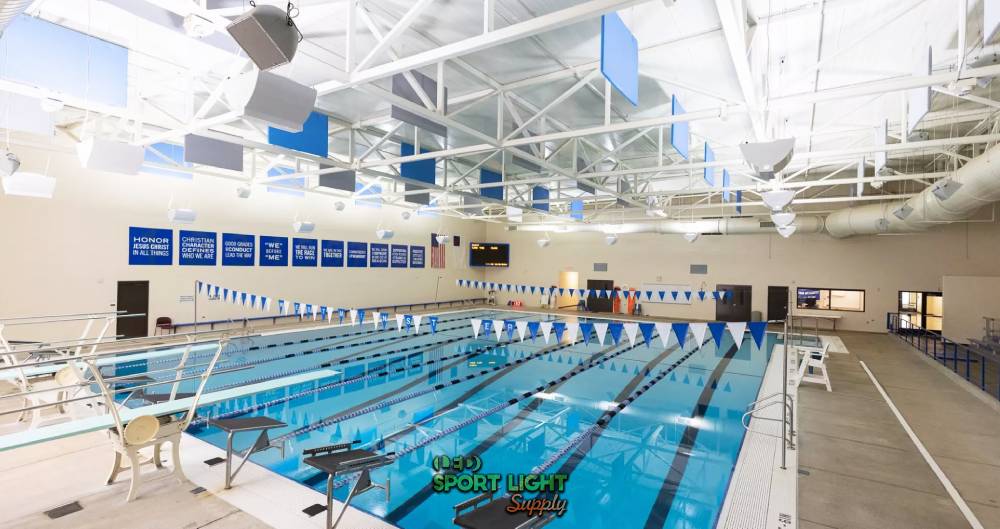
Natatorium lighting requirements vary greatly depending on the level of competition and the intended use of the facility. The demands for illumination, uniformity, color rendering, and control systems increase as the competition level rises, reflecting the diverse needs of recreational swimmers, competitive athletes, and international events. Lighting expenses can range from as low as $25,000 to over $1 million, depending on facility type and scope.
Recreational and community pools serve a broad audience including families, casual swimmers, and local programs. These facilities prioritize creating a welcoming and relaxed atmosphere where users feel safe and comfortable. Lighting levels typically range from 100 to 200 lux, which provides enough brightness for visibility without overwhelming glare on the water surface.
Because these pools often operate within tight budget constraints, energy efficiency and cost control heavily influence lighting decisions. Fixtures are selected for durability and ease of maintenance, with less emphasis on specialized features such as precise color temperature or broadcast-grade uniformity. The lighting design aims to balance functionality and affordability, often using energy-efficient LEDs or fluorescent fixtures that deliver adequate performance at reasonable cost.
Installation costs typically range from $25,000 to $75,000, depending on the size of the pool, ceiling height, and number of fixtures. Ongoing energy and maintenance costs may add $3,000 to $7,000 per year.
Additionally, lighting controls in recreational pools tend to be simpler, focusing on basic on/off scheduling or occupancy sensors to conserve energy during low-use periods. The layout typically avoids complex fixture arrangements, keeping both installation and maintenance expenses moderate.
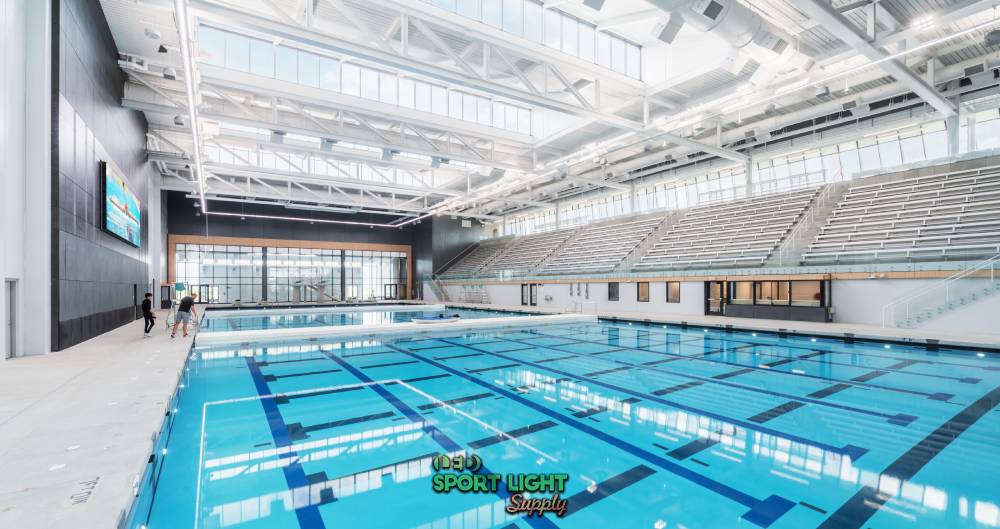
Competitive pools, hosting swim meets, league events, and training sessions, require more sophisticated lighting systems. The illumination levels rise to between 300 and 500 lux to support the heightened visibility needs of swimmers, coaches, referees, and spectators. Uniformity of light across all lanes and pool surfaces becomes a top priority to eliminate shadows and ensure fair competition.
These pools often incorporate fixtures with higher color rendering indexes (typically above 80) to maintain natural and vibrant colors, aiding athlete focus and accurate judging. Fixtures must also minimize glare and reflections, which can interfere with swimmer concentration and performance.
Broadcast considerations emerge prominently at this level, especially for venues hosting regional or national competitions. Lighting designs factor in camera placement and angles, requiring consistent, flicker-free illumination with controlled color temperatures to produce high-quality video footage. This leads to the use of advanced LED systems with tunable outputs and sophisticated beam control.
Lighting system costs for competitive natatoriums typically range from $80,000 to $200,000, depending on lighting zones, ceiling infrastructure, and control features. Annual operation and maintenance may add $8,000 to $15,000 to the total budget.
Lighting controls become more advanced in competitive pools. Operators may use dimming, zoned controls, and event scheduling to adapt illumination for training, competition, and spectator needs. These systems contribute to energy savings, but add complexity and upfront investment.
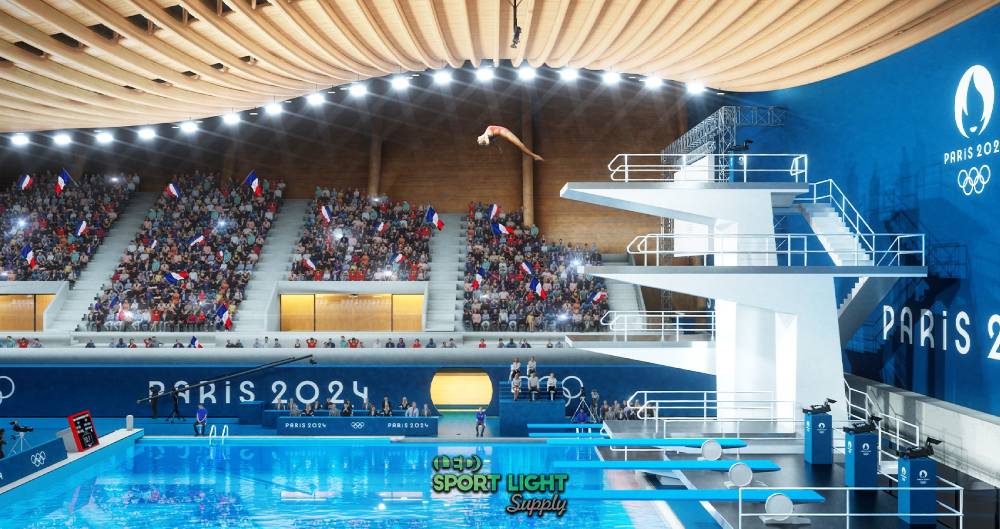
At the highest level of competition, natatoriums hosting Olympic or international events face stringent lighting standards defined by organizations like FINA. Illumination levels typically exceed 750 lux, with rigorous requirements for uniformity, glare control, flicker-free performance, and specific color temperature ranges (5000K–6500K) to mimic daylight conditions.
Lighting designs for these venues involve comprehensive photometric modeling to ensure even coverage with no shadows or hotspots, which is essential for athlete safety, accurate timing systems, and broadcast quality. Fixtures are carefully selected for their optical precision, color stability, and reliability under intense operational demands.
Lighting installation costs at this level range from $500,000 to $1.2 million, depending on venue size, infrastructure complexity, and broadcast integration. Annual operational costs can reach $20,000 to $40,000, including energy, labor, and maintenance of advanced systems.
Redundancy is a hallmark of Olympic lighting installations. Multiple fixture circuits and backup power systems prevent outages during events. Control systems allow real-time adjustments to lighting levels and color temperature to accommodate different phases of competition, media requirements, and special presentations.
Because these systems incorporate the latest in LED technology, advanced optics, and sophisticated automation, the initial investment and installation complexity are substantially higher than lower-tier natatoriums. Maintenance protocols are equally demanding to preserve performance standards throughout the facility’s lifecycle.
In many competitive natatoriums, separate lighting considerations apply to diving pools and warm-up zones. These areas may require different illumination levels and fixture placements to meet safety regulations and athlete requirements. For example, diving platforms often need brighter, shadow-free lighting at various elevations, while warm-up pools prioritize uniform visibility without distracting glare.
In Olympic venues, these zones may have dedicated lighting controls to adjust intensity or color temperature independently, further increasing design complexity and cost. Lighting systems for diving and warm-up areas can add $50,000 to $150,000 to the total project budget, depending on ceiling height, lighting angles, and control configurations.
Lower-level competition facilities might use more generalized lighting solutions for these areas, reflecting their reduced usage intensity and budget constraints.
The overall expense of natatorium lighting breaks down into several factors, including fixture type, control systems, installation complexity, and ongoing operational costs.
The selection of lighting fixtures greatly influences both the initial capital expenditure and ongoing operational costs in a natatorium lighting system. The choice of technology affects energy consumption, maintenance frequency, light quality, and flexibility in design. Over the past few decades, lighting technology has evolved considerably, and fixture choices now align closely with the natatorium’s specific usage and competition level.
High-Intensity Discharge lamps, particularly metal halide, were the industry standard for many years in indoor pool lighting. Metal halide lamps typically consume between 400 and 1000 watts per fixture, providing bright, intense light with color rendering indexes (CRI) around 65 to 75. These fixtures were favored because they delivered powerful, focused illumination suitable for large natatorium spaces, including competitive venues.
However, metal halide lamps come with several drawbacks that impact expenses. Their operational efficiency is relatively low, converting only 20% to 25% of electrical energy into visible light, while the rest dissipates as heat. This excess heat can increase HVAC cooling costs by 15% to 20%, especially in sealed, climate-controlled pool environments.
The lifespan of metal halide lamps ranges from 6,000 to 15,000 hours, which equates to lamp replacement every 6 to 18 months in facilities operating lighting 12 to 16 hours per day. A facility with 40 metal halide fixtures may face annual relamping costs of $4,000 to $10,000, factoring in both bulb costs (typically $40–$80 each) and elevated labor access expenses.
Additional challenges include warm-up periods of 5 to 10 minutes, reduced output over time, and inconsistent color rendering, all of which degrade swimmer visibility and hinder televised or high-profile events that demand consistent and uniform lighting.
LED technology has rapidly become the preferred solution for natatorium lighting due to its energy efficiency, long lifespan, and superior optical performance. LED fixtures generally consume between 100 and 300 watts, yet produce light outputs equivalent to or exceeding those of 400W to 1000W HID lamps. This results in energy savings of 40% to 60%, or roughly $12,000 to $30,000 annually for mid-sized competitive pools operating around 300 lighting days per year.
Modern LED systems have lifespans of 50,000 to 100,000 hours, enabling 10 to 20 years of operation without significant lumen depreciation. A facility previously changing lamps every 12 months may extend service intervals to 5 years or more, reducing maintenance labor by up to 75% and saving an estimated $3,000 to $8,000 per year in service and replacement costs.
LEDs convert 40% to 50% of electrical energy into visible light, cutting internal heat load substantially. This thermal efficiency can lower natatorium cooling costs by up to 20%, especially in regions with higher ambient temperatures or limited ventilation.
LED fixtures also feature instant-on functionality, which eliminates warm-up delays and ensures full brightness immediately. This benefits facilities with rotating event schedules, multi-session competitions, or intermittent recreational programming.
Advanced optics built into LED designs allow for beam angles tailored to specific ceiling heights (15°, 30°, 60°, etc.), reducing glare and optimizing uniformity ratios. Adjustable color temperatures (3000K to 6500K) support both relaxed community use and intense televised competition settings.
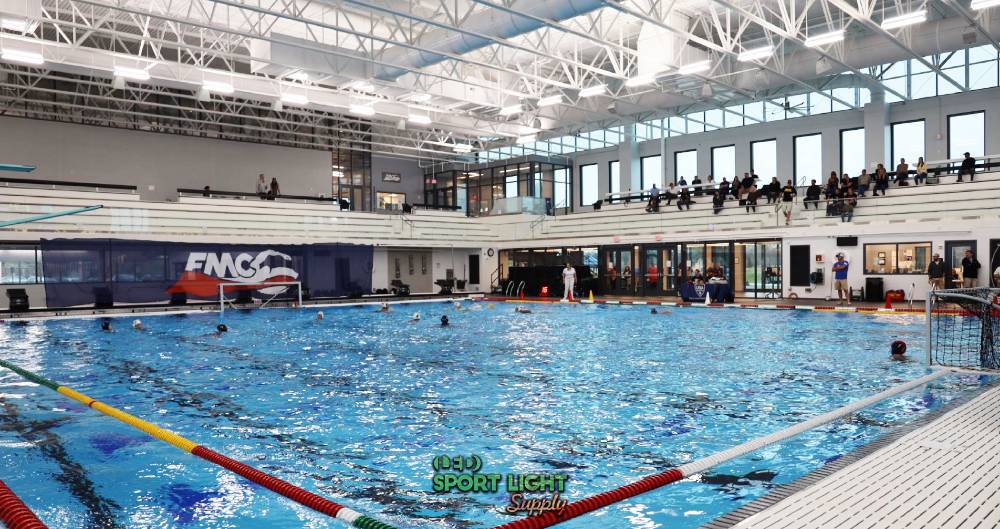
LED fixtures do carry a higher upfront cost, typically $450 to $900 per unit compared to $150 to $300 for metal halide fixtures. However, the total cost of ownership generally favors LEDs due to longer lifespan and lower energy use. For a 25,000-square-foot natatorium, total LED fixture costs may range from $40,000 to $120,000, depending on fixture count and features, with energy payback periods often under 4 years.
In facilities that previously spent $50,000 annually on lighting energy, converting to LEDs may reduce that figure to $20,000–$30,000, providing substantial long-term ROI. In addition, avoiding lamp replacements over a 10-year period can save another $30,000 to $60,000 in combined parts and labor.
Recent advances have increased LED efficacy to 150–180 lumens per watt, a significant leap from the 60–90 lumens per watt common in older HID fixtures. CRI ratings for natatorium-grade LEDs now regularly exceed 80, satisfying FINA and broadcast standards for color fidelity and visual clarity during international competitions.
Smart lighting controls are increasingly common in modern systems. These include dimming capabilities, automated scheduling, occupancy sensors, and remote control via building management systems (BMS). Adding these control features typically raises system costs by 10% to 20%, or $5,000 to $25,000, depending on the level of integration. Yet these controls can deliver an additional 10% to 15% in energy savings, especially in venues with varying occupancy or event-driven schedules.
For Olympic or FINA-certified natatoriums, LED systems are often customized with multi-zone dimming, broadcast-ready flicker control, and redundant power feeds, which can increase costs to $1,200 per fixture or more, and push total lighting investment beyond $750,000, especially when combined with control infrastructure and high-mount truss systems.
Lighting control and automation systems play a transformative role in managing natatorium lighting expenses. Although these systems may increase the initial project cost by approximately 10% to 25%, their ability to optimize energy usage, extend fixture lifespan, and improve the user experience often leads to substantial savings over the long term. Automation enables facility managers to tailor lighting conditions to real-time needs, avoiding unnecessary consumption and reducing overall operational costs by as much as 30% to 50%.
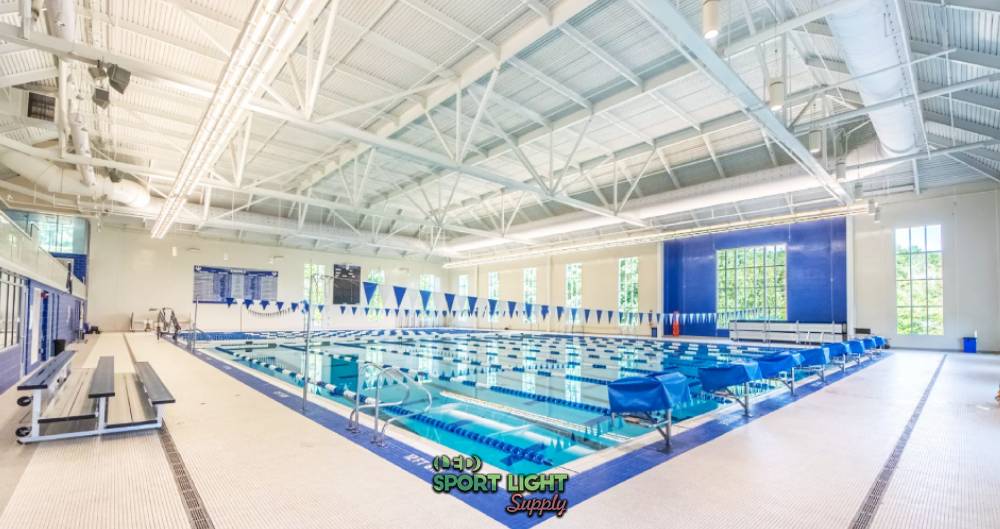
Dimming controls are among the most effective tools for energy management in natatoriums. By adjusting light output to appropriate levels for different activities or times of day, facilities can reduce energy use without compromising safety or visibility. For example, dimming lighting from 100% to 50% power can cut energy consumption by nearly half, directly lowering utility bills.
During low-occupancy hours or maintenance periods, lighting can be dimmed to minimal levels—sometimes down to 10% to 20% of full output—while still providing adequate illumination for safety. This approach reduces wear on fixtures and drivers, potentially extending LED fixture life by up to 20%.
Scheduling functions complement dimming by automating lighting patterns based on expected pool usage. Facilities with consistent daily schedules, such as schools or community centers, benefit from systems that automatically turn lights on approximately 30 minutes before opening and off 15 minutes after closing. This precision eliminates human error where lights might otherwise be left on for hours unnecessarily, conserving energy and reducing annual lighting costs by up to 15%.
Integration of dimming and scheduling allows natatoriums to create customized lighting scenes for different events or training sessions, balancing atmosphere and cost. For example, competitive swim meets might require illumination levels of 500 to 750 lux, while casual swim sessions can operate comfortably at 150 to 250 lux, leading to significant energy savings during off-peak activities.
Occupancy sensors further enhance lighting automation by dynamically activating or deactivating lights based on the presence or absence of users in specific zones such as pool decks, locker rooms, or spectator areas. These sensors typically reduce lighting energy use by an additional 10% to 25% in areas with intermittent occupancy.
Modern lighting control systems also support integration with building management systems (BMS), enabling coordinated control with HVAC, security, and other facility systems. For example, lighting activation can trigger increased air circulation to maintain indoor air quality, or coordinate with security systems to simulate occupancy during off-hours, enhancing safety.
Remote monitoring and control capabilities allow facility managers to oversee lighting systems from centralized consoles or mobile devices. This capability expedites responses to changing conditions, enables fault detection that can reduce maintenance response times by up to 40%, and streamlines maintenance scheduling, lowering labor costs.
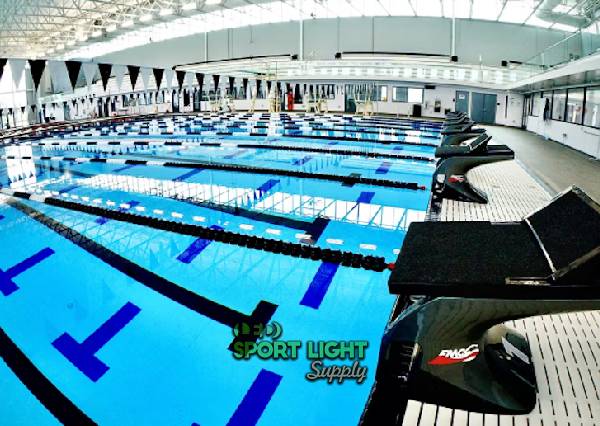 Installing lighting fixtures in a natatorium presents unique challenges that influence both project complexity and total costs. The demanding aquatic environment, structural constraints, and strict safety requirements require specialized planning, materials, and workmanship to ensure lighting durability and reliable performance over time. These factors, combined with the size and design of the facility, can drive lighting installation expenses to vary by 30% to 50%—in dollar terms, that’s an increase of $15,000 to $60,000 for a mid-sized facility.
Natatorium lighting must endure consistently high humidity levels, often exceeding 60% to 80%, along with constant exposure to water vapor and airborne chlorine. The presence of chemical disinfectants creates a corrosive environment that can rapidly degrade standard fixtures. To combat this, lighting equipment must be rated for wet or damp locations, with ingress protection (IP) ratings of IP65 or higher, and constructed with marine-grade stainless steel or powder-coated aluminum. UV-resistant lenses and chemically inert gaskets further ensure longevity.
Fixtures not designed for such conditions can fail in as little as 2 to 3 years, particularly in venues with poor ventilation. By contrast, specialized aquatic-rated fixtures typically last 7 to 10 years, depending on usage. These ruggedized options come at a premium, increasing unit costs by 20% to 40%. For instance, a standard high-bay LED fixture priced at $400 to $600 may rise to $550 to $850 when upgraded for natatorium conditions. While this increases the upfront investment, it can reduce cumulative maintenance costs by 30% to 50% over the life of the system.
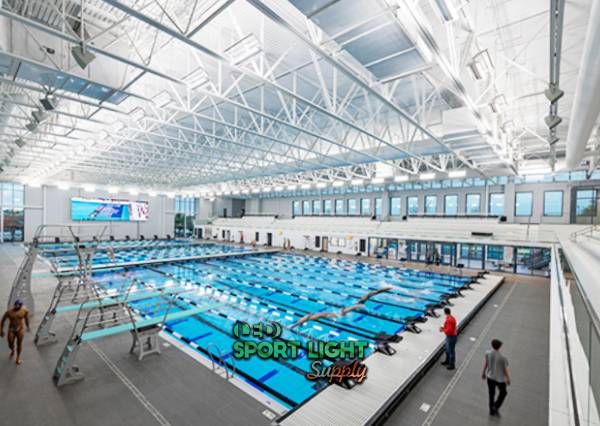
The overall dimensions of a natatorium—especially ceiling height—directly influence lighting intensity requirements and the complexity of fixture mounting. Competitive and Olympic pools often have ceilings between 30 and 45 feet, requiring high-lumen fixtures in the 1000W to 2000W equivalent range, outputting 80,000 to 120,000 lumens. These fixtures cost between $900 and $1,800 each, with installations typically requiring 30 to 80 units, depending on layout and lux targets.
Because of the inverse square law of light falloff, ceiling heights above 30 feet necessitate either 20% to 30% more fixtures or higher-powered models compared to facilities with ceilings below 20 feet. This scaling effect can double total lighting costs, especially when combined with elevated mounting hardware and specialized electrical routing.
Trusses, poles, or ceiling mounts suitable for aquatic settings can increase installation costs by 15% to 25%, adding between $5,000 and $40,000 in material and labor depending on scale. Electrical conduit and wiring at high elevations also raise labor expenses, with elevated work commanding 30% to 50% higher hourly rates. For example, a standard electrical labor rate of $75/hour may climb to $110–$125/hour when lifts or scaffolding are involved. The need for OSHA-compliant safety procedures and certified lift operators further increases labor costs.
Smaller recreational pools, by comparison, often have ceiling heights of 12 to 20 feet. These spaces can use lower-output fixtures between 150W and 400W, priced at $250 to $500 each. Fewer fixtures are required—typically 15 to 30 units—and installation is simpler. However, even in these environments, careful optical design is essential. Glare control and beam angle optimization may require photometric simulations and professional lighting layouts, increasing engineering and design costs by 10% to 20%, or $2,000 to $8,000 depending on complexity.
Architectural constraints—such as ductwork, beams, windows, scoreboards, or HVAC systems—often prevent standardized fixture placement. Custom brackets, swing arms, or vibration-dampening mounts may be necessary. These specialty mounting components can increase fixture installation costs by 10% to 30%, translating into $100 to $300 more per fixture, or $3,000 to $12,000 in additional project cost for a mid-size natatorium.
Maintenance access is another major cost driver. Fixtures installed at heights above 25 feet or over water require lifts, scaffolds, or telescoping tools, which can raise labor costs by up to 50% per maintenance visit. For example, a standard light replacement that might cost $200 at ground level could reach $350 to $500 when performed above pool decks or bleacher areas.
To reduce long-term access costs, some facilities invest in motorized lowering systems, allowing fixtures to be lowered to the deck for servicing. These systems add 5% to 15% to initial installation costs, or about $500 to $1,500 per fixture, but can reduce annual maintenance expenses by 40% or more.
Electrical systems must be robust and compliant with aquatic-specific codes. In the United States, installations must meet the standards outlined in NEC Article 680, which governs wiring and equipment near water. This includes corrosion-resistant conduit, GFCI protection, dedicated breakers, and proper grounding. Electrical materials designed for wet locations can increase costs by 10% to 20%, and labor for compliant installations typically adds $5,000 to $20,000, depending on pool size and fixture count.
Additional costs include permitting, inspection, and commissioning, often totaling $3,000 to $10,000, particularly in regulated jurisdictions or high-profile venues. Skipping these steps risks fines, failed inspections, or system performance issues.
| Category | Metric / Cost Range |
|---|---|
| Metal Halide Fixtures | 400W–1000W / $150–$300 per unit |
| Lifespan: 6,000–15,000 hrs | |
| Annual relamping: $4,000–$10,000 for 40 fixtures | |
| Cooling increase: +15% to +20% HVAC costs | |
| LED Fixtures | 100W–300W / $450–$900 per standard unit |
| Aquatic-rated LED: $550–$850 per unit | |
| Lifespan: 50,000–100,000 hrs | |
| Energy savings: 40%–60% (~$12,000–$30,000/year) | |
| Maintenance savings: $3,000–$8,000/year | |
| Total LED investment (typical pool): $40,000–$120,000 | |
| ROI period: <4 years | |
| Olympic-grade LED: $1,200+/fixture, total $750,000+ | |
| Smart Controls | Adds 10%–25% to lighting system cost ($5,000–$25,000) |
| Energy savings: +10%–15%, O&M cost reduction: 30%–50% | |
| Lighting automation ROI: 3–5 years | |
| Ceiling Height Impact | High-mount fixtures (1000W–2000W eq.): $900–$1,800/unit |
| Number of fixtures: 30–80 (competitive/Olympic pools) | |
| Extra mounting/electrical: +$15,000–$60,000 | |
| Elevated labor rate: $110–$125/hour | |
| Small Pool Fixtures (12–20 ft ceiling) | 150W–400W / $250–$500 per unit |
| Fixture count: 15–30 | |
| Design/engineering: $2,000–$8,000 | |
| Custom Mounting & Access Systems | Adds $100–$300 per fixture / $3,000–$12,000 total |
| Motorized lowering: +$500–$1,500/fixture | |
| Long-term maintenance savings: up to 40% | |
| Electrical Infrastructure | Wet-location materials: +10%–20% cost |
| Labor: +$5,000–$20,000 depending on pool size | |
| Permits & inspections: $3,000–$10,000 |
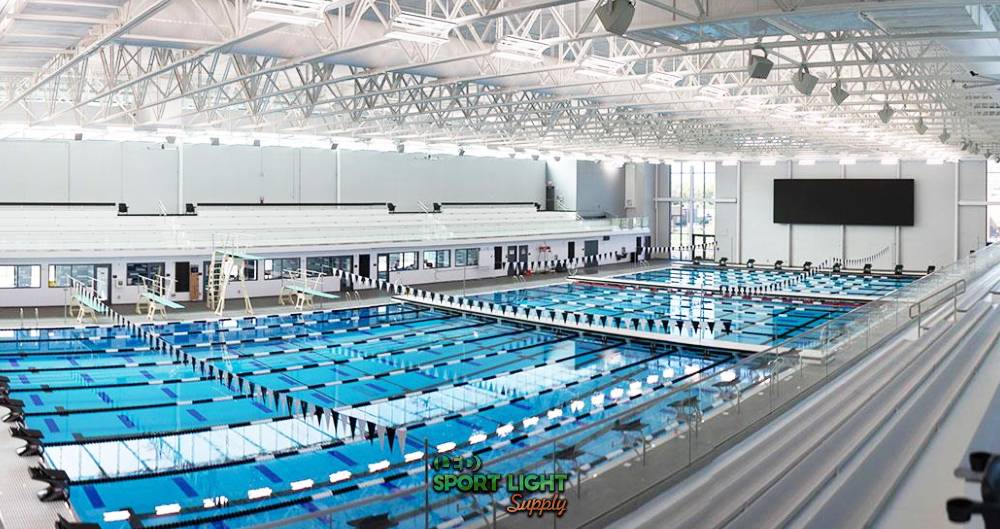
Energy consumption forms a substantial portion of natatorium lighting expenses, especially since many indoor pools operate for extended periods daily to accommodate diverse activities such as training sessions, swim lessons, recreational swimming, and competitions. These long operating hours magnify the impact of fixture efficiency on monthly electricity bills and overall facility operating costs.
Traditional lighting technologies such as metal halide or fluorescent lamps typically consume between 400 and 1000 watts per fixture depending on size and output requirements. In a medium-sized competitive pool facility with 50 to 70 fixtures, this can result in total lighting power demands ranging from 20 kilowatts to over 50 kilowatts during operation. Running these systems for 12 to 16 hours daily can translate into tens of thousands of kilowatt-hours annually, leading to significant utility expenses.
Modern LED lighting systems typically achieve energy savings of 40% to 60% when compared to traditional lighting technologies like metal halide or high-intensity discharge (HID) lamps. For example, a standard 400-watt metal halide fixture can often be replaced by an LED fixture consuming only 150 to 250 watts, while still delivering equal or superior illumination levels and improved light quality. This represents a substantial decrease in electrical power consumption, which can translate into thousands of dollars saved annually on electricity bills, particularly in facilities with long operating hours such as natatoriums.
Annual savings depend on factors such as the number of fixtures installed, hours of operation, and local utility rates. For instance, a medium-sized natatorium with 50 fixtures operating 12 hours daily could reduce lighting energy consumption by roughly 150,000 to 200,000 kWh per year by switching to LEDs. At an average commercial electricity rate of $0.10 to $0.15 per kWh, this equates to $15,000 to $30,000 in yearly savings on lighting energy alone.
When LED lighting is combined with advanced automated control systems—such as dimming, occupancy sensors, and scheduling software—additional energy reductions become possible. Dimming allows lights to operate at reduced output during periods of lower activity, such as early morning swim sessions or late evening recreational hours, without compromising safety or visual comfort. Reducing output by 50% during these times can cut energy consumption nearly in half for those intervals, adding another layer of savings.
Occupancy sensors ensure that lighting is active only when areas are occupied, further reducing unnecessary power usage. Scheduling systems can precisely turn lights on before opening and off shortly after closing, eliminating energy waste from lights left on accidentally. These combined control strategies can improve overall lighting energy efficiency by an additional 10% to 20%, potentially pushing total savings beyond 60% to 70% compared to legacy systems.
An often underappreciated advantage of LED lighting lies in its reduced heat generation. Traditional HID fixtures convert a significant portion of electrical energy into heat—often up to 75% to 80%—which contributes to increased indoor temperatures in natatorium environments. This added heat load forces HVAC systems to work harder to maintain comfortable ambient conditions, increasing cooling energy consumption.
Switching from metal halide or similar HID lamps to LEDs can reduce the heat output from lighting fixtures by up to 50% to 70%. This reduction can lower the cooling load of the entire facility by as much as 15% to 20%, depending on pool size, ceiling height, and climate conditions. In warm or humid climates where dehumidification and air conditioning are major operational costs, this secondary energy savings can be quite significant.
For example, in a large natatorium with a cooling load of 500,000 BTU/hr, lighting heat load reductions could decrease this by 75,000 to 100,000 BTU/hr, leading to measurable reductions in HVAC electricity consumption. This can result in additional annual utility savings that sometimes match or exceed the energy savings achieved by lighting alone, effectively doubling the return on investment from upgrading to LED technology.
Furthermore, less heat generation contributes to improved occupant comfort by reducing hotspots and preventing excess humidity buildup, which benefits air quality and minimizes corrosion risks within the pool environment.
Maintenance expenses represent a substantial portion of the total lifetime cost for natatorium lighting systems. The demanding aquatic environment, marked by consistently high humidity levels often exceeding 60% to 80% and the presence of chlorine vapors, significantly accelerates the degradation of lighting components. Exposure to moisture and corrosive chemicals can damage lenses, ballasts, wiring insulation, and fixture housings, leading to frequent repairs or replacements.
Traditional lighting technologies, particularly metal halide lamps, have relatively short lifespans, typically ranging between 6,000 and 15,000 hours. In busy natatoriums where lights operate for 12 to 16 hours daily, this translates to lamp replacements approximately every 6 to 18 months. Some high-use competition facilities may even require more frequent replacements due to extended operational schedules or higher intensity demands. Each replacement cycle incurs multiple costs, including the price of the replacement lamp itself, labor for fixture access and installation, and potential downtime that could affect facility operations and user experience.
The labor involved in maintenance is often complex and costly, especially when fixtures are mounted at heights exceeding 20 to 30 feet. Accessing these fixtures requires specialized equipment such as scaffolding, aerial lifts, or motorized lowering systems. Labor rates for elevated work can be 30% to 50% higher than standard installation tasks due to safety protocols and the skill level required. For large natatoriums with dozens or even hundreds of fixtures, maintenance labor can quickly become a major budgetary line item.
In addition to lamp replacement, other components such as ballasts in traditional HID fixtures are prone to failure under high-humidity, chemically aggressive conditions. Ballast replacements add further expense and may require rewiring or troubleshooting to restore optimal fixture performance. The cumulative effect of these repeated interventions contributes to higher maintenance frequency and operational disruption.
In contrast, LED lighting systems provide a much longer operational lifespan, typically between 50,000 and 100,000 hours, which can equate to over a decade of continuous use in many natatorium settings. This dramatically reduces the frequency of lamp replacements, decreasing labor costs and minimizing facility downtime. LEDs also generate less heat and are generally housed in sealed, corrosion-resistant fixtures that better withstand harsh pool environments, lowering the rate of component failures.
However, when LED fixtures do require maintenance or repairs, they may involve more specialized electronic components, such as integrated drivers or circuit boards. These components can be more expensive to replace and may require technicians with specific training or certifications. Despite this, the overall maintenance profile of LED systems tends to be lower and more predictable, with fewer unexpected outages or service interruptions.
Furthermore, the durability of LED fixtures means fewer ancillary costs related to cleaning and upkeep. Traditional fixtures often accumulate dirt, calcium buildup, or corrosion that degrade light output over time and necessitate frequent cleaning cycles. LEDs, with sealed lenses and fewer fragile parts, maintain higher lumen output and visual clarity for longer periods, reducing the need for routine maintenance visits.
LED fixtures are widely recognized for their exceptional longevity and reliability compared to traditional lighting technologies such as metal halide or high-intensity discharge lamps. Typically, LED fixtures boast lifespans that are five to ten times longer, with operational durations ranging from 50,000 to 100,000 hours before lumen output diminishes to a level that noticeably impacts lighting quality. This extended lifespan has profound implications for natatorium lighting management, particularly in reducing maintenance frequency and minimizing associated labor costs.
To put this into perspective, consider a natatorium that operates its lighting system for an average of 12 hours per day. Under these conditions, an LED fixture with a 50,000-hour lifespan would remain functional for approximately 11 to 12 years before requiring replacement due to lumen depreciation. Higher-end LED fixtures with lifespans approaching 100,000 hours could last up to 22 to 23 years under similar usage patterns, effectively covering the entire lifecycle of many facilities without the need for fixture replacement.
In contrast, metal halide lamps, which have been a longstanding standard in natatorium lighting, typically offer lifespans between 6,000 and 15,000 hours. This means that under the same 12-hour daily operation, metal halide fixtures require lamp replacements roughly every 1 to 2 years. Frequent replacements not only incur direct costs for new lamps but also involve labor expenses, facility downtime, and potential disruption to aquatic programs, competitions, and spectator events.
The durability of LED fixtures also extends beyond just the light source itself. LED luminaires are generally constructed with robust, sealed housings that protect internal components from moisture, corrosion, and chemical exposure typical of pool environments. This protective design significantly reduces the risk of premature failures caused by environmental stressors, enhancing fixture reliability and contributing to consistent lighting performance over time.
Another aspect contributing to LED reliability is the absence of fragile components common in traditional lighting, such as filaments or gas-filled tubes, which are prone to damage and degradation. LEDs use semiconductor technology that is inherently more resistant to shock, vibration, and frequent on-off cycling. This makes LEDs particularly well-suited for natatoriums, where lighting may be switched on and off multiple times a day to accommodate different activities or events.
The extended lifespan of LEDs also translates into fewer maintenance visits and less frequent fixture access. This reduces the operational disruptions associated with maintenance activities, including the need for scaffolding or lifts to reach high-mounted fixtures, thereby lowering labor and safety costs.
In addition, longer-lasting fixtures contribute to environmental sustainability by reducing waste generated from discarded lamps and components. This aligns with many natatoriums’ goals to improve energy efficiency and adopt greener facility management practices.
Overall, the combination of extended operational life, increased resistance to harsh environments, and reduced maintenance requirements makes LED lighting a highly reliable and cost-effective choice for natatorium lighting systems, delivering sustained performance and value over many years.
| Funding Source | Typical Figures | Notes |
|---|---|---|
| Government & Utility Incentives | $0.20–$0.50 per watt saved $600–$1,500 (3,000-watt example) 10%–30% of project cost (performance) | Rebates on energy saved; ESCO financing possible |
| Nonprofit & Sports Grants | $5K–$50K (small projects) $1M–$5M+ (Olympic level) >$2M common for major venues | For compliance, legacy impact required |
| Private Sponsorship & Partnerships | $20K–$500K depending on scale Discounts and in-kind common | Naming rights, branding at high-profile venues |
Financing natatorium lighting upgrades typically involves multiple sources tailored to the facility’s ownership type, size, and competition level. Publicly owned community and municipal pools frequently rely on government grants and utility incentives designed to promote energy-efficient technologies. Meanwhile, competitive and Olympic-level venues often secure funding from specialized grants, sports federations, and corporate sponsorships aimed at supporting high-performance infrastructure. Understanding these diverse funding streams can help facility managers reduce upfront costs and improve project feasibility.
Across the United States and many other countries, local governments and utility companies offer financial incentives to encourage the adoption of energy-saving lighting technologies in public facilities. Programs such as the Department of Energy’s Better Buildings Initiative, state energy offices, and regional utility rebates provide measurable economic benefits.
Typical rebates for LED upgrades range from $0.20 to $0.50 per watt of power reduction. For example, a medium-sized natatorium replacing a bank of twelve 400-watt metal halide fixtures (total 4,800 watts) with twelve 150-watt LED fixtures (total 1,800 watts) achieves a wattage savings of 3,000 watts. At rebate rates of $0.20 to $0.50 per watt saved, this could result in incentives of $600 to $1,500.
Some programs offer additional performance-based incentives tied to verified reductions in annual energy consumption or peak demand. These can contribute between 10% and 30% of the overall project cost. For instance, a $200,000 lighting upgrade project may qualify for $20,000 to $60,000 in performance incentives.
Energy Service Companies (ESCOs) often facilitate financing through performance contracts guaranteeing cost savings. This arrangement allows facilities to implement lighting upgrades with little to no upfront capital, repaying costs via energy savings over a contract period typically spanning 5 to 15 years.
Competitive and Olympic-level natatoriums may access grant funding from sports federations, foundations, and nonprofit organizations dedicated to athletic excellence, safety, and broadcast quality. National swimming federations, Olympic committees, and international sports bodies often allocate millions of dollars toward venue upgrades to meet stringent competition standards.
Grant amounts vary widely. Small-scale projects may receive awards from $5,000 to $50,000 for targeted improvements. In contrast, large-scale venue refurbishments or new installations at international event sites have attracted grants exceeding $2 million. For example, lighting retrofit projects for Olympic venues have been funded with grants ranging between $1 million and $5 million, covering LED fixtures, smart control systems, and broadcast-specific lighting enhancements.
Successful applications usually require detailed documentation such as photometric analyses, projected energy savings, and compliance with governing body requirements like FINA standards. Emphasizing community engagement and post-event legacy benefits often strengthens grant proposals.
Private corporations and community organizations sometimes provide direct funding or in-kind support in exchange for sponsorship opportunities or naming rights, especially in high-profile competitive venues. These partnerships can substantially offset the costs of advanced lighting systems, controls, and ongoing maintenance.
Financial contributions from sponsors typically range from $20,000 to $500,000, depending on the scale and prominence of the facility. For example, a regional competition pool might secure $25,000 to $75,000 in sponsorships, while a national-level venue could attract multi-hundred-thousand-dollar deals.
Collaborations with lighting manufacturers and energy providers often yield discounts on equipment pricing, bundled maintenance packages, or extended warranties. These deals not only reduce initial capital expenses but also ensure access to cutting-edge technologies.
Public recognition through event signage, exclusive advertising rights, or branded installations often forms part of sponsorship agreements, providing mutual marketing benefits and enhancing community visibility.
Combining government rebates, nonprofit grants, and private sponsorships creates a multifaceted funding environment that helps natatorium operators overcome financial barriers. Actively pursuing and blending these funding streams enables faster adoption of energy-efficient, modern lighting systems that support athlete performance and operational sustainability.
When planning natatorium lighting projects, it is important to look beyond just the initial purchase and installation costs. Long-term financial factors shape the overall value and sustainability of the investment. Proper consideration of these elements can significantly affect total ownership costs and operational efficiency over the lifespan of the lighting system.
Energy consumption is a major ongoing expense for natatorium lighting due to long daily operating hours. Facilities that operate 12 to 16 hours per day can see their lighting systems running thousands of hours annually, making efficiency a key cost driver.
Modern LED lighting systems typically reduce energy use by 40% to 60% compared to traditional metal halide fixtures. For example, a medium-sized natatorium consuming approximately 150,000 kWh annually for lighting could save between 60,000 and 90,000 kWh per year after upgrading to LEDs. Assuming an average electricity rate of $0.12 per kWh, this equates to annual savings of $7,200 to $10,800.
Maintenance expenses comprise a significant portion of lifetime lighting costs. Reducing fixture replacement frequency and labor through durable technology lessens disruptions and lowers total expenses, contributing to a more predictable operational budget over time.
LED fixtures often come with warranties ranging from 5 to 10 years, providing financial protection against early failures. Their expected operational life spans from 50,000 to 100,000 hours, compared to just 6,000 to 15,000 hours for metal halide lamps. This results in a reduction in replacement cycles from every 1 to 2 years down to a decade or more, depending on usage patterns. Longer lifespans reduce capital expenditures on replacement fixtures and minimize the risk of performance degradation during competitive events.
Fewer replacements translate to decreased labor costs, especially for fixtures mounted at heights requiring lifts or scaffolding. Facilities can save up to 75% in maintenance labor costs when switching from traditional lamps to LED technology. Additionally, less frequent fixture downtime improves facility availability for swimmers and events, preserving revenue potential. Reduced maintenance also lowers the need for disruptive closures or restricted pool access during replacements.
Natatorium environments expose lighting fixtures to high humidity, chlorine vapor, and chemical corrosion, which can accelerate wear and damage. High-quality LED fixtures typically feature sealed enclosures with ingress protection ratings of IP65 or higher and corrosion-resistant materials such as stainless steel or coated aluminum. These protective measures extend the lifespan of critical components like lenses, drivers, and wiring, further reducing the frequency and cost of repairs. Enhanced durability contributes to reliable, consistent lighting performance, particularly important in high-usage and competition-level pools.
Modern lighting control systems provide more than immediate cost reductions; they offer adaptability that accommodates future needs and evolving facility uses. As natatorium programs expand or shift focus—such as adding new event types, increasing operational hours, or incorporating multimedia broadcasts—the lighting infrastructure must be capable of scaling without requiring expensive rewiring or wholesale fixture replacement. This flexibility extends the usable life of the lighting system and safeguards the initial investment against obsolescence.
Smart lighting controls integrate features like dimming, scheduling, occupancy sensing, and remote monitoring to optimize energy consumption and operational convenience. By fine-tuning light levels according to actual usage and environmental conditions, these systems can further reduce energy consumption by an additional 10% to 30% beyond baseline LED efficiency. Customizable lighting scenes tailored for different activities—such as low-light settings for swim lessons and high-intensity modes for competitions—enhance the facility’s versatility and appeal. Remote control capabilities also enable facility managers to monitor and adjust lighting in real time, improving responsiveness to changing conditions and event demands.
Designing lighting systems with modular fixtures and adaptable wiring infrastructure ensures seamless integration of emerging technologies. Features such as tunable white LEDs, which allow dynamic adjustment of color temperature from warm to cool, can be added without major overhauls. Wireless control protocols facilitate easy retrofitting of additional sensors or smart devices. Moreover, enhanced broadcast lighting capabilities, which may include specialized fixtures or rapid dimming sequences, can be incorporated as event requirements evolve. This future-proofing strategy minimizes capital expenditures and operational disruptions associated with periodic lighting upgrades, making the facility more resilient to technological advancements.
As natatoriums grow in size or expand programming, scalable lighting infrastructure enables incremental additions without redesigning the entire system. For example, lighting zones can be added or subdivided with minimal rewiring, supporting new pool areas, spectator zones, or auxiliary spaces. Scalable systems also simplify phased installation approaches, allowing budget-friendly expansion aligned with financial and operational planning. This approach reduces upfront costs while maintaining the ability to meet higher performance standards as the facility’s competitive or community role develops.
Reliable warranties and comprehensive manufacturer support play a vital role in mitigating financial risk for natatorium lighting projects. Given the substantial initial investment and the specialized nature of aquatic lighting systems, extended warranty coverage provides peace of mind by protecting against unexpected component failures, defects, or premature degradation. Many LED fixture manufacturers now offer extended warranty periods, often lasting up to 10 years, which may include both labor and parts coverage. This level of protection allows facility managers to budget more confidently and reduces the likelihood of unplanned capital expenditures over the lifespan of the lighting system.
Premium warranty packages often go beyond basic coverage by including performance guarantees that ensure fixtures maintain specified lumen output and color quality throughout the warranty term. Such guarantees help maintain consistent lighting conditions critical for competitive swimming events and broadcast quality. Some warranties also offer replacement guarantees where defective units are swapped promptly at no additional cost, minimizing operational disruptions. Facilities may also find value in warranties that cover electronic components like drivers and control modules, which can be more prone to failure in humid and chemically aggressive natatorium environments.
Long-term vendor partnerships through service agreements enhance risk management by providing proactive system monitoring, scheduled preventive maintenance, and rapid fault detection. These agreements often include priority response times for repairs and technical support, which are crucial in venues hosting frequent competitions or televised events where lighting consistency is paramount. Some contracts offer remote diagnostics and software updates for integrated lighting controls, further reducing downtime and operational headaches. By outsourcing maintenance responsibilities to specialized providers, natatorium operators can maintain high lighting performance standards while controlling labor costs and avoiding costly emergency repairs.
Incorporating warranty and service considerations into financial planning helps spread out expenses predictably over the system’s lifespan. Facilities can leverage extended warranties and service agreements as part of their total cost of ownership models, enabling more accurate budgeting and capital allocation. These risk management strategies reduce the chance of large, unexpected repair costs that could strain operating budgets or delay important facility improvements. Ultimately, robust warranty and support frameworks contribute to the sustainable operation of natatorium lighting systems, ensuring long-term value and performance.
Overall, incorporating these long-term financial considerations into natatorium lighting planning supports sustainable investment, optimized operational budgets, and enhanced facility performance over the system’s lifespan.
Lighting a natatorium requires balancing technical requirements, user expectations, and budget realities. The level of competition served by the facility heavily influences the complexity and cost of lighting systems. Recreational and community pools benefit from straightforward, energy-efficient designs, while competitive and Olympic venues demand sophisticated solutions that support athlete performance and media needs.
Energy consumption and maintenance play ongoing roles in the financial profile of natatorium lighting. Advances in LED technology and control systems continue to lower operating costs, offering long-term value despite sometimes higher upfront investment. Grants and incentive programs can ease the burden of upgrading or installing lighting systems, especially for publicly funded or nonprofit facilities.
Ultimately, investing in thoughtful lighting design and technology pays dividends in operational savings, user satisfaction, and the ability to meet evolving standards of competition and safety. Approaching natatorium lighting expenses with a comprehensive perspective enables facility managers and stakeholders to make informed decisions that support the goals and sustainability of their aquatic environments.