


Lighting a race track involves numerous factors that affect both the safety of participants and the viewing experience of spectators. The design and implementation of lighting systems for race tracks must address the unique demands of high-speed sports, visibility challenges, and environmental considerations. Whether the race track is designed for automobiles, motorcycles, or horse racing, the lighting system needs to create an environment where details can be seen clearly without causing glare or shadows that could impair performance or safety.
Race tracks operate under a variety of lighting conditions, including daylight, dusk, and nighttime. Artificial lighting extends the usability of tracks beyond daylight hours and supports events held in the evening. Effective lighting enhances visibility for drivers, officials, and spectators, ensuring the track is well-illuminated to reveal track boundaries, turns, pit lanes, and signage. Additionally, the lighting contributes to broadcast quality when events are televised, providing consistent and vibrant illumination.
The illumination of race tracks must balance brightness and uniformity. Areas that are too bright may cause glare, while insufficient lighting can create dark spots that reduce visibility. Maintaining an even spread of light across the racing surface helps racers react quickly to changes in track conditions and avoid hazards.
Race track lighting requires specialized systems that can deliver high-intensity, wide-coverage illumination while adapting to the demands of speed, visibility, and broadcast clarity. Several types of lighting fixtures have been used across different racing formats, evolving with technological advancements and shifting priorities like energy efficiency and controllability. The choice of lighting technology influences everything from operational cost to the experience of racers and spectators.
Before the rise of LED technology, many race tracks relied on high-intensity discharge lamps, particularly metal halide fixtures. These lamps offered a high lumen output and satisfactory color rendering, making them effective for large open areas. Metal halide lamps produced a bright, white light that improved visibility for drivers at night while allowing cameras to capture more accurate color representations.
However, HID systems have their drawbacks. They require a warm-up period, lack dimming capabilities, and tend to degrade faster in terms of light quality. Their bulky design and heat output can also lead to maintenance challenges in exposed or high-mounted installations.
LED systems have become the standard for modern race track lighting. Their advantages go beyond energy efficiency; they offer instant-on capability, minimal heat output, and high durability in harsh weather environments. LEDs also allow for directional control, which helps in reducing stray light and focusing illumination on desired areas such as corners, braking zones, or pit lanes.
One of the major advantages of LEDs is their ability to maintain consistent lighting performance over time. Their long lifespan reduces the frequency of fixture replacement, lowering both labor costs and downtime. In addition, LEDs are compatible with smart lighting controls, enabling programmable sequences, remote monitoring, and dynamic brightness adjustment depending on event schedules or emergency situations.
Halogen and fluorescent lighting systems have seen limited use in motorsports. Halogen lights are often too inefficient for the large-scale illumination needed on a race track, while fluorescent fixtures suffer from poor durability under vibration and exposure to weather. These types are more common in auxiliary areas like garages or administrative offices adjacent to tracks, rather than on the race surface itself.
Different forms of motorsports require lighting strategies tailored to their specific needs. The layout of the track, type of vehicles, average speeds, and even event format all contribute to the selection of lighting fixtures.

Formula 1 circuits often span several kilometers, with a mix of high-speed straights and technical corners. Lighting systems for F1 races, especially night events like those in Singapore or Abu Dhabi, must provide uniform and high-lux output across expansive areas. LEDs are heavily favored due to their precision and compatibility with advanced control systems. F1 organizers also require lighting that minimizes glare while maintaining full-color rendering for broadcast and onboard camera footage. Elevated pole-mounted fixtures are commonly used to spread illumination evenly over large radii.
NASCAR tracks are usually oval-shaped and feature longer sightlines compared to more complex road courses. Lighting systems for NASCAR prioritize wide coverage and consistent brightness along the full length of the outer track and inner pit areas. The high-speed nature of NASCAR racing, often in close packs, demands high lumen output to eliminate shadow zones and prevent misjudgment by drivers. Metal halide lamps were widely used in earlier years, but many tracks have shifted to high-powered LED arrays with floodlight distribution to handle the broad track geometry.

MotoGP circuits share similarities with F1 tracks but introduce additional requirements due to the two-wheeled nature of the vehicles. Riders rely heavily on surface texture and grip perception, making it necessary for lighting to reduce harsh reflections, especially in wet conditions. Fixtures must be arranged to provide low-glare, high-contrast lighting from multiple angles, especially in leaning zones where riders are nearly parallel to the ground. LEDs dominate MotoGP lighting schemes because of their tunability, precise targeting, and reduced light spillage, all of which help protect rider focus and safety.
Go-kart facilities range from small indoor tracks to mid-size outdoor courses. Lighting systems here must adapt to lower ceiling heights or shorter mounting distances. For indoor karting, ceiling-mounted LED panels with high color rendering indexes (CRI) are preferred to deliver bright and shadow-free environments. Outdoor tracks, on the other hand, may use pole-mounted LED floodlights scaled for smaller coverage zones, allowing focus on tight corners and braking zones. Due to the recreational and competitive mix, go-kart lighting often includes adjustable brightness and softer transitions to support both professional training and casual group races.
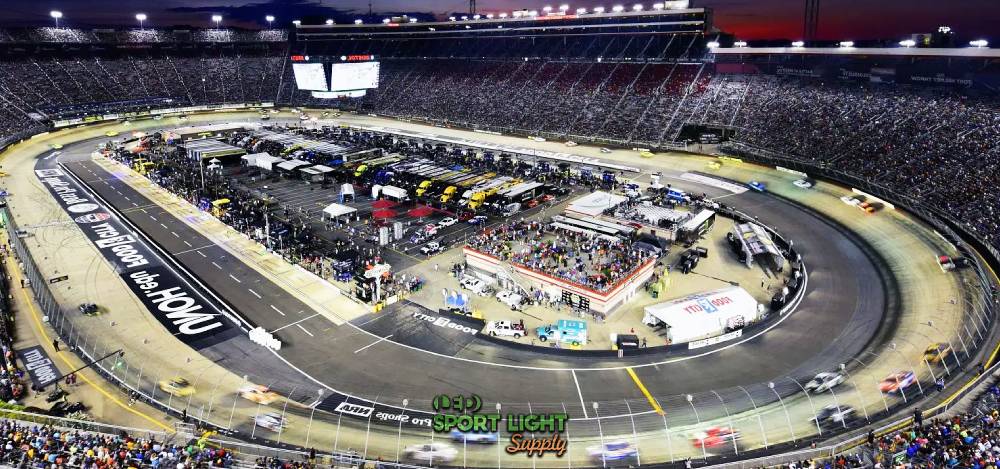
The strategic placement of lighting fixtures on a race track plays a vital role in achieving optimal illumination, driver safety, and overall visual quality. The choice of where and how to position fixtures depends heavily on the specific type of racing, track layout, and environmental considerations. Each motorsport discipline has unique demands that influence fixture placement approaches, making it necessary to tailor the lighting design accordingly.
For Formula 1 circuits, the focus is on delivering uniform, high-intensity lighting over large and often complex track layouts. These tracks typically feature tall lighting masts positioned at regular intervals around the circuit. The height of these masts allows light fixtures to cover wide areas with broad beam spreads, reducing the number of shadows and providing consistent brightness on straights, corners, and pit lanes. The elevated placement also helps minimize glare directed at drivers while offering good coverage for broadcast cameras.
NASCAR tracks, which are often oval-shaped with expansive grandstands, employ different fixture placement strategies. Instead of relying solely on tall masts, many NASCAR venues incorporate fixtures embedded into existing trackside structures, such as grandstand roofs, fencing, and support towers. This method takes advantage of available infrastructure to provide localized, directional lighting that can be aimed precisely where needed. It also allows for more controlled lighting zones to reduce light pollution and glare for both drivers and spectators.
MotoGP circuits, which involve high-speed motorcycle racing on technical road courses, often use a hybrid fixture placement strategy. Elevated lighting towers provide broad illumination for faster sections of the track, while lower-angled fixtures mounted closer to the ground or on trackside barriers help reduce harsh shadows and improve depth perception in tighter corners. This combination addresses the particular needs of motorcycle racers, who rely heavily on visual cues for balance and positioning, especially in low-light or night racing conditions.
Go-kart racing facilities present a different set of challenges due to their smaller, more confined layouts. These tracks frequently use wall-mounted or perimeter-mounted lighting fixtures to deliver compact yet uniform coverage. Because space is limited and the tracks are shorter, the lighting system focuses on minimizing shadows and glare within close proximity to the racing surface. Lower mounting heights and closely spaced fixtures allow for precise illumination of tight turns and pit areas, ensuring safety and visibility in an environment where quick reactions are essential.
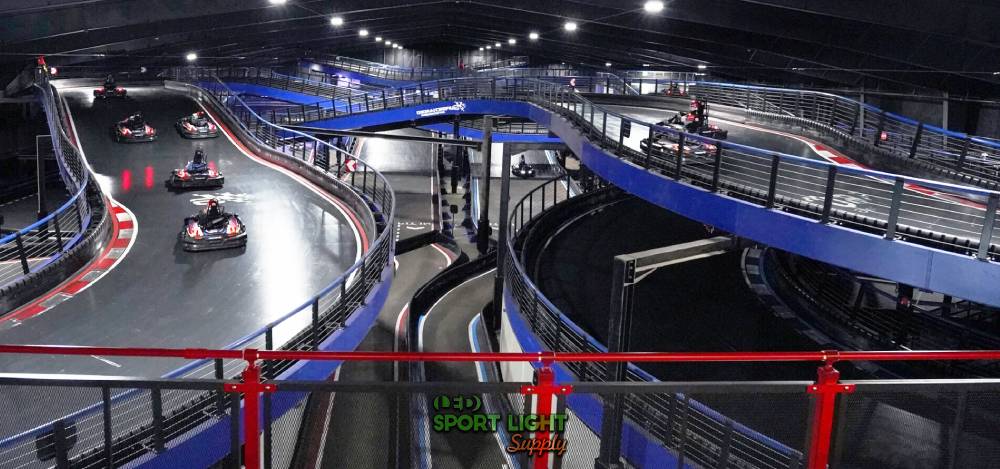
Across all race track types, fixture height and angle are carefully calibrated to balance illumination uniformity with glare reduction. Higher fixtures can cover more area but may require greater power and careful aiming to avoid creating bright hotspots or shining directly into drivers’ eyes. Lower fixtures improve localized lighting but can increase the risk of shadows or inconsistent light distribution. Photometric modeling during the design phase helps identify the best combination for each section of the track.
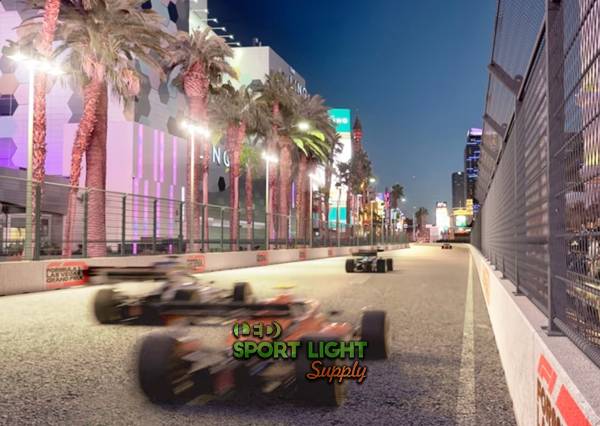 Fixture placement must also account for the physical geometry of the track and surrounding environment. Elevation changes, barriers, grandstands, and nearby structures can block or reflect light in ways that affect driver visibility and spectator comfort. Custom fixture placements may be necessary around chicanes, elevation dips, or corners where visual clarity is paramount. Additionally, positioning fixtures to minimize light spill beyond the track perimeter reduces environmental impact and complies with local lighting ordinances.
In summary, fixture placement strategies are as much an art as a science, requiring detailed understanding of the racing discipline, track characteristics, and lighting technologies. Thoughtful fixture positioning ensures that the illumination supports both the performance of drivers and the experience of spectators while maintaining operational efficiency and sustainability.
Race track lighting systems face demanding environmental challenges that require robust and resilient fixture designs. Exposure to harsh weather conditions such as high-speed winds, heavy rainfall, temperature fluctuations, and airborne particulates like dust or sand can significantly impact the longevity and performance of lighting equipment. Ensuring durability and environmental resistance is a fundamental aspect of race track lighting design to maintain consistent illumination and minimize maintenance disruptions.
Modern LED fixtures designed for race track applications often feature corrosion-resistant housings made from materials like die-cast aluminum or stainless steel. These materials provide excellent protection against rust and degradation caused by moisture, salt spray (particularly near coastal tracks), and other corrosive elements. The sturdy construction not only safeguards internal components but also helps fixtures withstand mechanical stress from wind gusts or accidental impacts.
The ingress protection (IP) rating is another important factor that indicates a fixture’s ability to resist dust and water penetration. For outdoor race tracks, fixtures typically require an IP65 rating or higher, meaning they are dust-tight and protected against water jets from any direction. Some fixtures even offer IP66 or IP67 ratings, which provide additional assurance against powerful water exposure and temporary submersion, respectively. These ratings ensure that the lighting system can operate reliably through rainstorms or track washing procedures without risk of failure.
Race tracks are often located in regions with wide temperature variations between day and night or across seasons. Lighting fixtures must maintain stable performance whether exposed to intense heat, freezing cold, or rapid thermal cycling. High-quality LEDs and driver components are selected for their thermal management capabilities, including heat sinks and advanced cooling mechanisms that prevent overheating and prolong lifespan.
Materials used in fixture seals and gaskets are also chosen to resist hardening, cracking, or shrinking under temperature stress, which could otherwise compromise the enclosure’s environmental protection. This resilience helps ensure consistent light output and reduces the frequency of repairs or replacements.
Beyond weather-related factors, lighting fixtures at race tracks must endure mechanical forces such as vibrations from nearby engines, impacts from flying debris, and occasional contact with maintenance equipment. To address these challenges, fixtures are mounted using vibration-dampening hardware and designed with shock-resistant internal components.
Chemical resistance is also important in environments where cleaning agents, fuels, or other substances may come into contact with the fixtures. Protective coatings and seals help prevent chemical corrosion, preserving the integrity of the housing and electrical connections.
Ultimately, prioritizing durability and environmental resistance in fixture selection and installation minimizes downtime, reduces maintenance costs, and guarantees a reliable lighting experience that supports both racer safety and event quality regardless of external conditions.
| Race Type | Typical Lux Level | Uniformity Ratio (Min / Max or Avg) |
|---|---|---|
| Formula 1 (F1) | 800 – 1500 lux | ≥ 0.7 |
| NASCAR | 500 – 800 lux | ≥ 0.7 |
| MotoGP | 1000 – 1400 lux | ≥ 0.7 |
| Go-Kart (Recreational) | 300 – 500 lux | ≥ 0.6 |
| Go-Kart (Competitive) | 500 – 700 lux | ≥ 0.65 |
Achieving optimal lux levels and lighting uniformity is a core consideration when designing lighting systems for race tracks. Light intensity, expressed in lux (lumens per square meter), directly affects visibility, driver safety, and camera performance. Uniformity refers to the consistency of light distribution across the entire track surface, which ensures that no area is excessively bright or dim in comparison to others. Together, lux and uniformity determine how effectively drivers can maintain focus, spot hazards, and navigate turns at high speeds.
International lighting standards recommend different lux levels based on racing type and whether the event is televised. For non-broadcast training or practice sessions, lux requirements are lower, while world-class competitions demand significantly higher levels to support both performance and HD broadcasting.
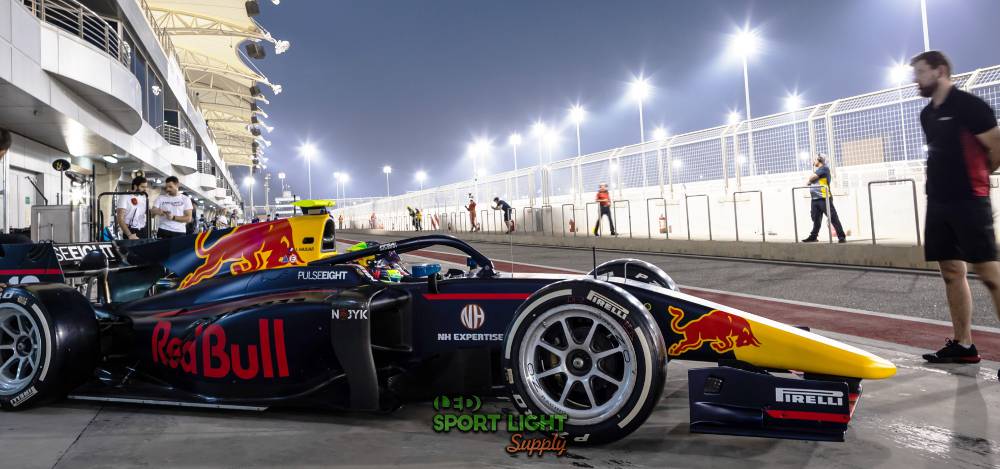
F1 circuits often operate at night or during twilight hours, making lighting a vital element. These tracks typically require lux levels in the range of 800 to 1500 lux on the main racing surface to accommodate the extreme speeds and technical demands. Uniformity must also be high, with uniformity ratios of at least 0.7, meaning the lowest-lit area should still receive at least 70% of the illumination of the brightest point.
The high level of precision in F1 racing makes uniform lighting critical in braking zones, apexes, and chicanes. Sudden brightness fluctuations or shadows could lead to misjudgments, especially in complex corner sequences. Spectator areas, paddocks, and pit lanes also require dedicated lighting zones with consistent lux levels for operational and safety purposes.
NASCAR races are often held in large oval stadiums where drivers travel at sustained high speeds with less frequent braking and cornering than F1. As such, lux levels of around 500 to 800 lux are typical on the racing surface, with focus placed on ensuring visibility through continuous banked curves. Uniformity is essential in the corners where pack racing occurs, minimizing visual strain and enhancing situational awareness.
Unlike F1, NASCAR tracks benefit from their consistent geometry, which makes uniformity easier to achieve. However, high lighting poles must be precisely angled to avoid casting shadows onto infield areas or causing glare in the drivers’ line of sight. Uniform lighting across the entire oval ensures that spotters, pit crews, and drivers can track movements clearly even during fast-paced changes in race position.

MotoGP requires some of the most specialized lighting conditions due to the dynamics of motorcycle racing. Riders lean at extreme angles, making track surface visibility even more vital. Lux levels are usually maintained between 1000 and 1400 lux, especially in zones where acceleration and braking are intense. Uniformity is crucial to minimize harsh transitions in lighting, which could disorient riders at full lean or during overtaking maneuvers.
The open nature of motorcycles means that rider vision is more exposed than in cars, making consistent and diffuse lighting important. Multiple low-glare fixtures placed at varying angles help prevent unwanted reflections on wet surfaces or shiny components. Lighting around kerbs, rumble strips, and runoff areas must also be uniform to help riders judge grip and distance effectively.
Go-kart circuits are typically smaller and operate at lower speeds, but lighting still plays a vital role in safety and driver orientation. Outdoor circuits may require 300 to 500 lux for recreational use and up to 700 lux for competitive karting. Indoor tracks, due to lower ceilings and enclosed settings, can achieve sufficient brightness with lower lux levels if fixtures are properly placed to eliminate shadows.
Uniformity in go-kart tracks is especially relevant in tight hairpins and crossover zones where multiple track lines intersect. Spectator safety and clear marking visibility are also supported by well-distributed light, especially in rental venues where inexperienced drivers are common.
A uniformity ratio is calculated as the minimum lux divided by the average or maximum lux across the lit area. A ratio of 0.7 or higher is typically desired for professional motorsports. Low uniformity leads to uneven visual experiences, increasing the risk of driver miscalculations and mechanical stress due to sudden visibility shifts.
Uniform lighting helps maintain a consistent track rhythm for drivers, aiding in the recognition of braking points, curbing patterns, and surface changes. Tracks with strong uniformity ratios offer smoother visual transitions through sectors, which is especially important during long night races or in endurance racing formats where drivers must adapt quickly to lighting cues.
Uniformity isn’t just about helping the racers—it plays a large role in supporting high-definition broadcasting. Inconsistent lighting creates exposure problems for cameras, resulting in dark patches, overexposure, or color shifts on screen. F1 and MotoGP, which have global audiences, require extremely high uniformity standards to meet broadcasting quality benchmarks.
Tracks used for international events often undergo lighting simulations and photometric analysis before installation. Fixture layout, beam angles, and wattage are fine-tuned to deliver clean and balanced visuals that can be captured effectively by tracking and onboard cameras at speeds exceeding 300 km/h.
One of the main challenges in delivering high uniformity is the variability of track topography. Elevation changes, surface camber, and trackside structures can create shadow zones if lighting is not planned thoroughly. Another obstacle lies in maintaining performance over time. Dust, dirt, or weather-induced wear can degrade fixture output, causing uneven brightness. Modern systems often include automated calibration tools to alert facility managers of output degradation and recommend adjustments or replacements.
Uniform lux levels extend beyond the racing surface. Pit lanes, garages, paddocks, medical centers, and podium areas require lighting consistency to support smooth operations. Pit crews rely on bright, shadow-free environments to execute tire changes and repairs. Uniformity in these areas supports faster response times and reduces human error under pressure. For spectators, consistent lighting ensures better navigation through seating zones, concessions, and emergency exits.
Color temperature plays a guiding role in how drivers, teams, and spectators perceive their surroundings on a race track. It directly influences visibility, concentration, and reaction timing. Measured in Kelvin (K), color temperature refers to the appearance of light—from warmer tones around 2700K that emit a yellowish glow, to cooler tones above 5000K that produce a crisp bluish-white effect. Selecting the right color temperature helps support driver alertness and clarity during high-speed conditions, especially during night races or in partially lit scenarios.
Cooler color temperatures between 5000K and 6000K are often chosen for race tracks because they provide a daylight-like appearance that enhances object recognition and contrast. These temperatures help reveal surface textures, curbing edges, tire debris, and reflective safety markings more clearly, giving racers a faster and more accurate understanding of track conditions. Different ranges of color temperature can change how people experience an event. Warmer temperatures, while sometimes considered more comfortable in relaxed environments, can create a duller appearance on asphalt and reduce contrast between painted lines and rubber buildup. In contrast, cooler temperatures heighten contrast and are easier to balance for video broadcasting. Cooler color temperatures, generally between 5000K and 6500K, are widely used in race track environments because they simulate daylight. This spectrum enhances visual acuity, helping drivers quickly interpret the track layout, detect surface changes, and monitor other vehicles. The higher contrast and crisp shadows created by cooler lighting aid in reducing fatigue during extended events or night races.
F1 circuits often use lighting systems calibrated to 5700K to 6000K. This range provides a clean white light that replicates daylight, improving driver awareness at high speeds and sharp corners. The precision required in Formula 1 calls for lighting that maintains color consistency throughout the event. Any color temperature variations between sectors could lead to differences in surface visibility and negatively impact performance or safety. F1 tracks are complex, featuring elevation changes, chicanes, and high-speed corners. Ensuring a consistent color temperature across these varying conditions helps drivers interpret visual markers without recalibrating their perception at every segment of the track. It also supports better synchronization with broadcast equipment that captures onboard and aerial shots in ultra-high definition.
NASCAR tracks, typically oval in shape, are designed for high-speed, high-traffic conditions. These venues tend to favor lighting systems around 5000K to 5500K. This slightly warmer cool white is bright enough to promote sharp contrast but also avoids excessive harshness on spectator eyes. Since drivers frequently race in close packs, clear visibility across all lanes is vital for avoiding contact and maintaining race strategy.
In large open stadiums where NASCAR events are held, cooler white lighting helps maintain clarity over long distances. Spotters, team members, and safety officials benefit from this range of color temperature as they track car movements from various elevations and angles without visual fatigue.
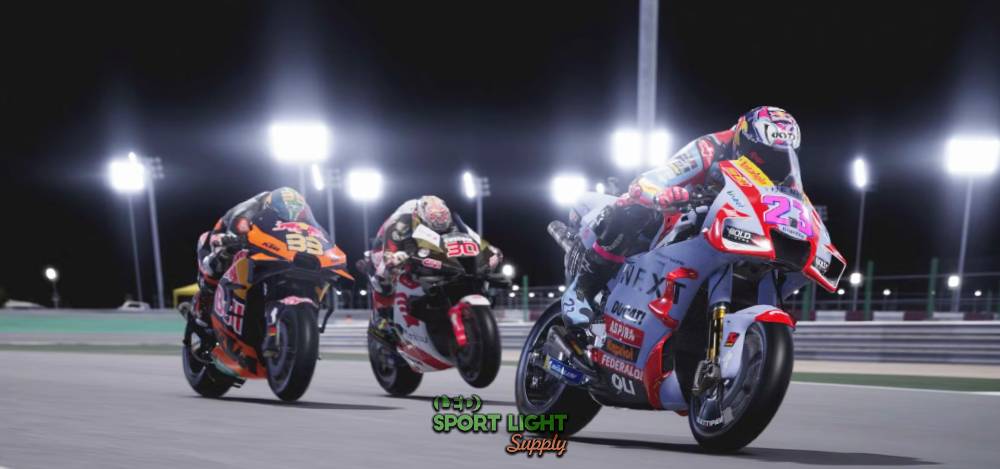
MotoGP riders, who lean heavily into corners and rely on road textures for grip judgment, are especially sensitive to light quality. Tracks generally use lighting with a color temperature between 5500K and 6000K. This helps emphasize texture and provides visual consistency as riders move between straights, tight bends, and elevation shifts. Unlike cars, motorcycles expose the rider completely, making helmet visors, lean angles, and body positioning highly sensitive to the visual environment. Color temperature that is too warm may soften the sharpness of visual cues, while extremely cold light could cause overexposure or harsh shadows. The chosen temperature must strike a balance that promotes rapid depth perception and clean peripheral vision.
Go-kart circuits, particularly those used for indoor racing or recreation, often have more flexibility in choosing color temperature. While professional karting tracks may opt for 5000K to 5500K lighting for performance consistency, indoor facilities might use 4000K to 5000K lighting for a more inviting and less stark atmosphere.
Indoor tracks often double as entertainment centers, where mood and atmosphere contribute to the experience. In these cases, a slightly warmer white can make the space more visually welcoming without compromising visibility. On the other hand, competitive outdoor karting facilities use higher color temperature ranges similar to professional circuits to enhance track surface definition and simulate the feel of higher-tier motorsports.
The viewing experience is also shaped by color temperature. Cooler white light makes colors pop, improves visual clarity, and provides more cinematic contrast for in-person spectators and television audiences. Grandstands, pathways, and hospitality areas are often lit with a balance of neutral white (4000K–5000K) to ensure comfort without compromising visual quality. Color temperature plays a direct role in how well lighting performs with video and broadcast equipment. Most modern broadcast cameras are calibrated for color temperatures around 5600K, which matches daylight conditions. Using lighting within this range reduces the need for post-production adjustments, color grading, or filtering, and allows natural colors to appear true on screen. This is particularly important in F1 and MotoGP, where millions watch in HD and 4K formats.
Advanced LED systems offer more than just fixed output—they provide color temperature tunability and fine-tuning. Facility managers can maintain a consistent color temperature across different zones of the track, or shift the tone of lighting depending on time of day, weather, or event type. This adaptability improves overall light management and allows venues to tailor lighting for specific racing formats, practice sessions, or audience types.
Color shift is a common issue in traditional fixtures such as metal halide lamps, which may degrade toward warmer tones as they age. LED fixtures reduce this issue, offering stable color rendering and longer performance lifespans. This consistency benefits long-term track operations by reducing the frequency of recalibrations and fixture replacements, ensuring drivers experience the same lighting from season to season.
Many race tracks today are designed to serve multiple purposes beyond just hosting motor racing events. These venues often accommodate community gatherings, concerts, corporate functions, and other social or sporting activities. In such versatile environments, lighting systems must be adaptable to a variety of needs and atmospheres. This is where adjustable LED lighting technology becomes especially valuable, offering the ability to fine-tune the color spectrum to suit different scenarios.
Adjustable LED systems enable operators to shift seamlessly between cooler and warmer color temperatures depending on the event taking place. During high-speed racing events, cooler white light with a color temperature of 5500K to 6000K can be selected to maximize visibility, contrast, and driver focus. This spectrum helps to replicate daylight conditions, providing optimal visual clarity and enhancing the perception of detail on the track surface.
On the other hand, for non-racing events such as community festivals, concerts, or corporate gatherings, a warmer spectrum with color temperatures around 3000K to 4000K can create a more inviting and comfortable ambiance. Warmer lighting tones tend to evoke a sense of warmth and relaxation, which can help make the environment more appealing and suitable for social interaction. This flexibility is especially beneficial for venues aiming to maximize their usage and revenue streams by hosting a variety of activities throughout the year.
Moreover, the ability to customize the spectrum means that lighting can be tailored not only for functional purposes but also to enhance aesthetics. For example, warmer lighting may be used to highlight architectural features, landscaping, or hospitality areas around the track, while cooler lighting can dominate the racing surface itself. This targeted approach improves the overall atmosphere and creates a more engaging experience for visitors.
From a technical standpoint, modern LED fixtures with tunable white capabilities offer precise control over color temperature without compromising on light intensity or uniformity. Operators can program lighting scenes to change dynamically throughout an event or between different events with minimal manual intervention. This adaptability also supports energy efficiency, as lighting can be optimized based on occupancy and activity levels rather than running at a constant high output.
Finally, adjustable spectrum lighting contributes to better broadcast quality during race coverage. Different color temperatures can be chosen to complement natural lighting conditions or camera requirements, ensuring that televised events maintain vibrant colors and sharp contrasts. This adaptability also helps reduce post-production workload and enhances the visual appeal for viewers watching remotely.
Glare is a common challenge in outdoor lighting environments, especially in dynamic settings such as race tracks where visibility is paramount. It occurs when excessive brightness or poorly directed light causes visual discomfort or temporary impairment, making it harder for drivers to see clearly or for spectators to enjoy the event comfortably. Understanding and managing glare involves a combination of lighting design strategies, fixture technology, and careful installation practices.
At race tracks, glare typically arises from two main sources: direct glare and reflected glare. Direct glare happens when light fixtures are improperly aimed or have insufficient shielding, causing bright light to shine directly into the eyes of drivers or spectators. Reflected glare occurs when light bounces off shiny surfaces such as wet asphalt, car windshields, or helmets, creating intense patches of brightness that disrupt vision.
Both types of glare can have detrimental effects on safety and performance. For drivers traveling at high speeds, sudden exposure to glare can momentarily reduce contrast sensitivity and delay reaction times, increasing the risk of accidents. For spectators, glare can cause discomfort, headaches, or reduce the overall enjoyment of the event.
One of the primary techniques for controlling glare is the use of well-designed fixture optics combined with precise aiming. Modern LED fixtures often incorporate lenses and reflectors engineered to focus light tightly on target areas, reducing spill light and preventing beams from shining beyond the track boundaries. This targeted illumination ensures that light is directed where it is needed most—on the racing surface and key operational zones—while minimizing stray light that contributes to glare.
Fixture shields or visors also play a crucial role. These physical barriers surround the light source to block rays that would otherwise extend outside the intended lighting zone. Proper shielding can significantly reduce direct glare for both drivers and surrounding spectators without compromising illumination levels on the track.
The height and angle at which lighting fixtures are mounted have a significant influence on glare control and overall lighting performance at race tracks. Proper mounting ensures that the light is distributed evenly across the racing surface while minimizing the risk of direct or reflected glare that can impair the vision of drivers and spectators.
Mounting fixtures at higher elevations typically allows the light to cover a wider area more uniformly. Elevated fixtures create a larger light pool, which helps reduce sharp contrasts and prevents the formation of bright spots or shadows. This broader coverage is especially beneficial on wide race tracks where illumination must extend over long straights and sweeping corners. Additionally, higher mounting positions tend to reduce direct glare because the light beams approach the eyes of drivers and spectators at a less obtrusive angle, lessening visual discomfort.
However, there is a practical upper limit to how high fixtures can be mounted. Beyond a certain height, the intensity of the light reaching the track surface diminishes due to increased distance, which may require fixtures with higher output or a greater number of lights to compensate. This trade-off between mounting height and fixture output must be carefully balanced to maintain adequate lux levels without causing unnecessary glare.
In addition to height, the precise aiming and tilt angle of each fixture are crucial factors in glare mitigation and uniform illumination. Fixtures must be angled to focus light exactly where it is needed—on the racing surface and critical operational zones such as pit areas and spectator stands—while avoiding light spill into surrounding areas or directly into the line of sight.
Photometric modeling during the design phase uses specialized software to simulate how light will behave once installed. This analysis helps engineers determine the ideal tilt angles and aiming directions to achieve consistent light distribution, minimize overlap that causes hotspots, and reduce stray light responsible for glare. Adjustments in tilt also account for the curvature and elevation changes of the track, ensuring that corners and banking are properly lit.
Proper aiming also plays a role in meeting regulatory requirements and environmental standards by reducing light pollution and preventing light trespass into nearby residential areas. Regular maintenance is necessary to preserve aiming accuracy over time, as vibrations, weather, or accidental impacts can shift fixture positions, increasing glare risks and degrading lighting quality.
Overall, the combination of appropriate mounting height and careful aiming forms the foundation of effective glare control in race track lighting systems. This approach supports driver safety, enhances spectator comfort, and contributes to the quality of televised broadcasts by maintaining clear, consistent illumination.
Color temperature affects not only visibility but also how glare is perceived. Cooler white light, often in the range of 5000K to 6000K, enhances contrast and sharpness, which helps drivers distinguish details on the track such as painted lines, curbs, and debris. However, cooler light can sometimes increase the sensation of glare due to its higher blue light content, which scatters more in the eye’s lens and retina.
Conversely, warmer color temperatures (around 3000K to 4000K) produce softer light that tends to reduce the intensity of glare and create a more relaxed visual environment. While this warmer light may be less effective at highlighting fine details, it can be beneficial in spectator areas or hospitality zones where comfort is a priority.
Modern race tracks are increasingly adopting intelligent lighting control systems designed to optimize performance while minimizing glare. These advanced systems provide dynamic adjustment of lighting output, allowing for responsive changes based on varying conditions such as time of day, weather patterns, and the specific needs of different events. Through such technology, lighting becomes more adaptable and efficient, improving both safety and visual comfort for drivers and spectators alike.
Dimming technology is a fundamental feature of advanced lighting control systems. It enables gradual or instant reduction of light intensity during periods when full brightness is not necessary, such as practice sessions, breaks, or nighttime conditions with sufficient ambient light. By lowering light levels during these times, glare exposure is minimized, helping to reduce eye strain and discomfort for everyone present. Additionally, dimming reduces energy consumption and prolongs fixture lifespan, offering environmental and economic benefits.
Adaptive lighting systems also respond in real time to changing weather conditions. For example, during fog, rain, or overcast skies, the system can increase light output to maintain visibility, then scale back when conditions improve. This dynamic response ensures that glare does not become excessive while preserving the necessary illumination for safe racing.
Zoned lighting control divides the race track and surrounding areas into independently controlled sections or zones. Operators can adjust the brightness of each zone based on localized needs, preventing over-illumination in some areas that may cause glare while ensuring other zones receive adequate light. This granular control is particularly useful in complex tracks with varying layouts, elevation changes, and differing lighting requirements for straights, curves, and pit lanes.
Integration with environmental and activity sensors further enhances system responsiveness. Sensors that monitor ambient light levels allow the system to automatically adjust fixture output in response to natural daylight or artificial lighting from nearby sources. Motion or occupancy sensors can detect the presence of vehicles or personnel in specific zones, triggering increased illumination only where and when it is needed. These smart adjustments help avoid unnecessary glare caused by constant high lighting and contribute to overall energy efficiency.
Together, these control features make glare management more precise and effective, supporting better visibility for drivers and a more comfortable viewing experience for spectators. The flexibility offered by advanced control systems allows race tracks to meet a wide range of operational and environmental demands without compromising safety or visual quality.
Beyond lighting fixtures themselves, the materials and finishes used on track surfaces influence reflected glare. Smooth, wet, or glossy surfaces tend to reflect light intensely, exacerbating glare issues. Track designers often apply textured coatings or anti-reflective treatments to asphalt and concrete to scatter reflected light and reduce its impact on drivers’ vision.
Windshields and helmets may use anti-glare coatings or tints that cut down on reflected light, protecting drivers’ eyes during nighttime or low-light conditions. These combined approaches work hand-in-hand with lighting design to maintain optimal visibility without causing discomfort.
| Cost Aspect | Formula 1 (F1) | NASCAR | MotoGP | Go-Kart |
|---|---|---|---|---|
| Initial Fixture Cost | $500,000 – $1,000,000 | $400,000 – $800,000 | $300,000 – $700,000 | $20,000 – $60,000 |
| Infrastructure & Installation | $500,000 – $1,000,000 | $400,000 – $1,000,000 | $250,000 – $600,000 | $30,000 – $90,000 |
| Control Systems & Automation | $100,000 – $300,000 | $80,000 – $250,000 | $70,000 – $200,000 | $10,000 – $25,000 |
| Total Initial Installation Cost | $1,100,000 – $2,300,000 | $880,000 – $2,050,000 | $620,000 – $1,500,000 | $60,000 – $175,000 |
| Energy Consumption (Approximate) | Up to 200 kW (metal halide), 80-120 kW (LED) | 150 – 180 kW | 100 – 140 kW | 10 – 25 kW |
| Energy Savings with LEDs | 40% – 60% | 40% – 60% | 40% – 60% | 40% – 60% |
| Maintenance Frequency (Hours) | 10,000 – 15,000 (metal halide), 50,000+ (LED) | 10,000 – 15,000 (metal halide), 50,000+ (LED) | 10,000 – 15,000 (metal halide), 50,000+ (LED) | 10,000 – 15,000 (metal halide), 50,000+ (LED) |
| Typical Annual Energy Cost Savings | $20,000 – $50,000 | $15,000 – $40,000 | $10,000 – $30,000 | $1,000 – $5,000 |
Race track lighting systems represent a major financial commitment due to the scale, performance requirements, and technological complexity involved. Accurately estimating both initial and ongoing costs is crucial for operators aiming to balance optimal lighting quality with budget constraints. The overall cost depends on multiple factors such as track size, lighting technology, installation challenges, and maintenance demands.
The initial investment for lighting a professional race track typically ranges from several hundred thousand to several million dollars. For example, a standard Formula 1 track, which can extend 5 to 7 kilometers with complex turns and elevation changes, often requires hundreds of high-powered LED fixtures. These fixtures may each cost between $1,000 to $3,000 depending on lumen output and features. The total fixture cost alone can exceed $500,000 to $1,000,000 for a large venue.
Beyond fixtures, the cost of mounting infrastructure plays a significant role. Lighting masts for F1 tracks often reach heights of 30 to 50 meters, requiring engineered foundations and structural support that can add several hundred thousand dollars to the project. Installation labor, including electrical wiring, trenching, and integration with existing power grids, typically accounts for an additional 15% to 25% of the total capital expenditure.
Control systems and automation technology, which are increasingly standard for race tracks, add to upfront costs. Advanced lighting controllers, zoning equipment, and sensor integration may add another $100,000 to $300,000 depending on system complexity. However, these investments facilitate energy savings and operational flexibility that offset their initial cost over time.
Different racing disciplines impose varied lighting requirements and cost profiles:
Formula 1 (F1) tracks demand extremely high illumination levels, precise uniformity, and minimal glare to meet global broadcast standards and driver safety. Lighting a full F1 circuit can cost upwards of $2 million, reflecting the number of fixtures (often 800+), tall mounting structures, and comprehensive control systems required.
NASCAR tracks, typically oval circuits of 1 to 2.5 miles, require broad coverage with less emphasis on sharp shadows, often utilizing slightly fewer fixtures but still requiring robust infrastructure. Costs for NASCAR lighting installations may range from $1 million to $2 million, influenced by track length and spectator areas.
MotoGP circuits, designed for motorcycle racing, demand tailored lighting to reduce glare off helmets and surfaces while maintaining visual clarity at high speeds. Fixture counts and positioning reflect these unique needs, with costs generally falling between $700,000 to $1.5 million depending on track size.
Go-Kart tracks are smaller, often under 1 kilometer, with more confined layouts. Lighting can be achieved with wall-mounted or lower-height fixtures, leading to lower installation costs typically between $50,000 and $150,000. Energy efficiency and ease of maintenance are key considerations here due to tighter budgets.
Energy consumption is a major ongoing expense. Traditional metal halide lighting systems can consume upwards of 300 to 500 watts per fixture, with total installed power easily exceeding 200 kW for large circuits. This results in substantial electricity bills, especially during night races or prolonged events.
Switching to LED technology can reduce energy usage by 40% to 60%, translating to savings of tens of thousands of dollars annually. For example, an F1 circuit with a 200 kW metal halide setup might reduce consumption to around 80 to 120 kW with LEDs, lowering energy costs by approximately $20,000 to $50,000 per year depending on local electricity rates.
Maintenance costs also differ greatly. LED fixtures commonly have lifespans exceeding 50,000 hours, requiring less frequent replacement and reducing labor expenses. Metal halide lamps, by contrast, often need replacement every 10,000 to 15,000 hours, increasing maintenance frequency and associated costs.
Advanced control systems enable dynamic dimming, zoning, and automated scheduling, optimizing energy use by adjusting lighting based on track activity and ambient conditions. While adding to capital expenses, these systems can reduce energy consumption by an additional 15% to 30%. Furthermore, remote diagnostics reduce downtime and service costs by allowing rapid response to faults.
Considering the lifespan of lighting infrastructure, it is advisable for track operators to evaluate total cost of ownership rather than focusing solely on initial outlay. Investments in LED technology and smart controls typically pay off within 5 to 7 years through reduced energy and maintenance expenses, while also improving illumination quality.
Proper budgeting that accounts for installation, operational, and potential upgrade costs ensures sustainable lighting performance that meets safety and broadcast demands without excessive financial strain.
Modern race track lighting increasingly relies on sophisticated control systems and automation technologies that enhance operational efficiency, safety, and adaptability. These systems allow for precise management of lighting intensity, timing, and zones based on a variety of real-time factors, creating a highly responsive environment tailored to the needs of racers, spectators, and broadcast production.
One of the primary benefits of automated control systems is the ability to adjust brightness levels dynamically throughout the day or event. Lighting intensity can be programmed to follow a schedule that corresponds to specific race phases—such as warm-ups, qualifying rounds, the main race, and post-race activities. For example, during pre-race warm-ups, lighting levels may be reduced to conserve energy and minimize glare, then gradually increased as the race commences to ensure maximum visibility.
These adjustments are not limited to fixed schedules. The system can also respond to live input, such as race delays, changing weather conditions, or specific operational requirements, allowing lighting to adapt seamlessly without manual intervention. This flexibility enhances both the safety of participants and the visual quality for audiences.
Automation is complemented by remote control and monitoring capabilities, empowering facility managers to oversee the entire lighting network from centralized locations or mobile devices. Real-time data on system performance, power consumption, and fixture status helps identify issues before they impact races or events.
Fault detection algorithms can quickly alert maintenance teams to outages, malfunctioning fixtures, or alignment problems. This proactive approach minimizes downtime and reduces the risk of uneven lighting or increased glare caused by faulty equipment. Maintenance schedules can be optimized using data analytics, focusing resources where they are needed most.
Advanced race track lighting systems frequently incorporate data from a variety of environmental sensors to create a more adaptive and responsive lighting environment. These sensors continuously monitor factors such as ambient light levels, weather conditions, temperature, and humidity to provide real-time inputs that help the control system adjust lighting settings automatically.
For example, during foggy or heavy rain conditions, visibility on the track can drop significantly, posing safety challenges for drivers and officials. In response, the lighting system can increase brightness or alter beam angles to improve illumination and reduce shadows or dark spots. This adaptive lighting helps maintain consistent visibility standards without manual intervention, reducing risk during adverse weather.
Conversely, on clear nights or when the natural light from the moon or nearby urban areas is sufficient, the system can lower artificial light output. This reduction in lighting intensity minimizes energy consumption and prevents unnecessary glare that could distract drivers or spectators. By balancing illumination levels with actual environmental conditions, the system optimizes both safety and sustainability.
Environmental sensor inputs also support intelligent zoning strategies within the race track lighting design. For instance, if certain areas such as spectator stands, pit lanes, or access roads are unoccupied or experiencing lower activity, the system can dim or switch off the lighting in those zones to conserve energy. When movement or occupancy is detected in these zones, lights can be promptly reactivated to provide necessary illumination.
This targeted zone management reduces the overall power load, decreases wear on lighting fixtures, and contributes to a more environmentally friendly operation. Additionally, it allows race organizers to maintain high illumination standards only where and when they are needed, enhancing visual comfort and operational efficiency simultaneously.
Incorporating environmental sensors into the lighting control architecture is increasingly seen as a best practice for modern race tracks. It provides a foundation for smart, responsive lighting that adapts to changing conditions in real time, improving safety for racers and staff while supporting cost-effective and sustainable facility management.
Zoning is a critical feature of control systems that divides the race track lighting into independently controlled segments. Each zone can be adjusted separately to meet the specific illumination requirements of straights, corners, pit lanes, grandstands, and access roads. Zoned control prevents over-illumination in areas where it is not needed, reducing glare and light pollution.
Scene control capabilities allow operators to quickly switch between pre-configured lighting settings tailored for different event types or phases. For example, different lighting scenes might be prepared for night races, qualifying sessions, or non-race events like concerts or exhibitions. The ability to instantly recall these scenes enhances operational efficiency and consistency.
Automation and control systems contribute significantly to the energy efficiency of race track lighting installations. By optimizing light levels based on real-time needs and reducing unnecessary illumination, these technologies help lower electricity consumption and associated costs. This aligns with broader sustainability goals and can reduce the carbon footprint of racing events.
Furthermore, integrating lighting controls with energy management platforms provides detailed consumption reports and enables smarter decision-making for future upgrades or modifications. The ability to dim or switch off lighting in unoccupied areas not only conserves power but also extends the lifespan of fixtures, reducing maintenance frequency and environmental impact.
Modern race track lighting control systems are designed with user experience as a priority, offering intuitive and accessible interfaces that simplify management for operators and facility managers. These interfaces enable straightforward programming of schedules, fine-tuning of lighting levels, and real-time monitoring of system health, even for those who may not have specialized technical expertise.
Many advanced control systems provide multiple options for user interaction, including touchscreen dashboards located at control rooms, mobile applications for smartphones and tablets, and web-based portals accessible from any internet-connected device. This flexibility allows lighting personnel to adjust settings on the fly, respond quickly to changing conditions, or troubleshoot issues remotely without needing to be physically present at the track.
Touchscreen dashboards offer clear visualizations of lighting zones, power consumption, and fixture status, making complex control operations manageable. Mobile apps often feature push notifications for alerts such as fixture malfunctions or environmental changes, ensuring that managers are immediately informed of any situation requiring attention.
Seamless integration between lighting controls and other facility management systems amplifies operational efficiency and event coordination. Lighting systems can be synchronized with security cameras, allowing operators to monitor visual conditions while controlling illumination in real time. Integration with access control systems ensures that lighting levels can be automatically adjusted based on the presence of personnel or vehicles in restricted areas.
Broadcast equipment synchronization is another critical aspect of integration. Coordinated control between lighting and broadcast systems enhances the quality of televised races by ensuring lighting cues align perfectly with camera angles and broadcast transitions. For example, lighting scenes can be programmed to shift in response to race stages or special effects during opening ceremonies and victory celebrations.
In emergency situations, integrated control systems enable rapid activation of safety lighting protocols and evacuation signals, enhancing safety for drivers, staff, and spectators. This unified ecosystem reduces the need for multiple standalone control panels and promotes streamlined communication between various operational departments.
Overall, the combination of user-friendly interfaces and comprehensive integration capabilities ensures that race track lighting can be managed efficiently, responsively, and cohesively, supporting both daily operations and high-profile events with ease.
Lighting plays a multifaceted role in race tracks, influencing safety, performance, energy use, and the spectator experience. The balance between brightness, uniformity, and glare management shapes how well drivers can navigate the track and how well audiences can enjoy the event. Advances in LED technology and intelligent control systems provide tools to meet the complex demands of modern racing environments.
Environmental considerations are increasingly shaping lighting design, with a focus on energy efficiency and minimizing impact on surrounding areas. Maintenance practices and adherence to safety standards contribute to the long-term reliability and effectiveness of lighting installations.
Overall, a thoughtfully designed race track lighting system creates an atmosphere that supports high-speed competition while providing clear, comfortable visibility for all involved. The continuous evolution of technology and best practices encourages facilities to adopt flexible solutions that keep pace with the changing landscape of racing sports.