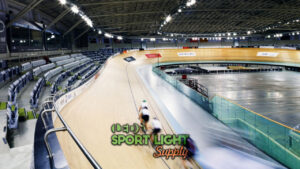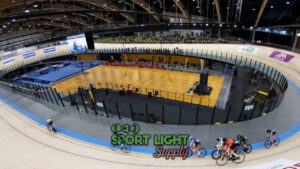

Velodromes are specialized sports venues designed for track cycling, where speed, control, and visibility are central to performance and safety. Due to the nature of cycling events held at both national and international levels, lighting standards for velodromes require precise specification. Unlike general sports fields, velodrome lighting must accommodate high-speed motion, inclined tracks, and consistent broadcast conditions. It must also be suitable for indoor and outdoor configurations depending on the facility design. The goal of velodrome illumination is to provide a visual environment where athletes, officials, and spectators experience optimal visibility, minimal glare, and uniform brightness throughout the entire cycling track.
| Area / Use Case | Recommended Lux Level | Notes |
|---|---|---|
| Recreational / Training | 300–500 lux | Basic visibility for non-competitive use |
| Amateur / National Competitions | 750–1000 lux | Improved clarity for racing and judging |
| International / Olympic Events | 1500–2000 lux | Required for broadcast quality and elite performance |
| Vertical Illuminance (Elite Events) | ≥1000 lux | Ensures visibility of riders and apparel from all angles |
| Infield / Team Areas | 300–500 lux | For coaches, officials, and athlete support zones |
| Spectator Seating | 200–300 lux | Ambient lighting without distracting from the track |
| Perimeter / Emergency Access | 100–150 lux | For safe movement and incident response |
Lux is the international unit used to quantify illuminance, measuring how much light falls on a surface area. Specifically, one lux equals one lumen per square meter. In the context of velodrome lighting, this measurement becomes central to both functional safety and visual performance. A cyclist navigating a steep banked curve at speeds exceeding 60 km/h requires an environment where even the smallest shadow, reflection, or surface texture is visible with clarity. The dynamic nature of indoor track cycling, with rapid turns and tight spacing between riders, increases the reliance on well-calibrated illuminance levels.
Velodrome lighting must also meet visual demands across multiple viewing perspectives. Unlike traditional sports arenas, the oval configuration of a velodrome means light must evenly cover continuous curves without intensity drop-offs. Vertical illuminance—how well a vertical surface, such as a rider or signage, is lit—is just as vital as horizontal coverage. Measurement protocols often consider both planes to ensure uniform visibility from all angles.
To achieve accurate lighting conditions, designers typically rely on a grid-based lux mapping approach. Photometric testing across multiple points—often a grid of 5×5 meters or finer—helps evaluate whether lighting falls within the required range. This approach ensures the lighting design meets competitive standards not only at the centerline but across the entire track width, including the inclined banks that can reach gradients of 42 degrees in Olympic-standard velodromes.
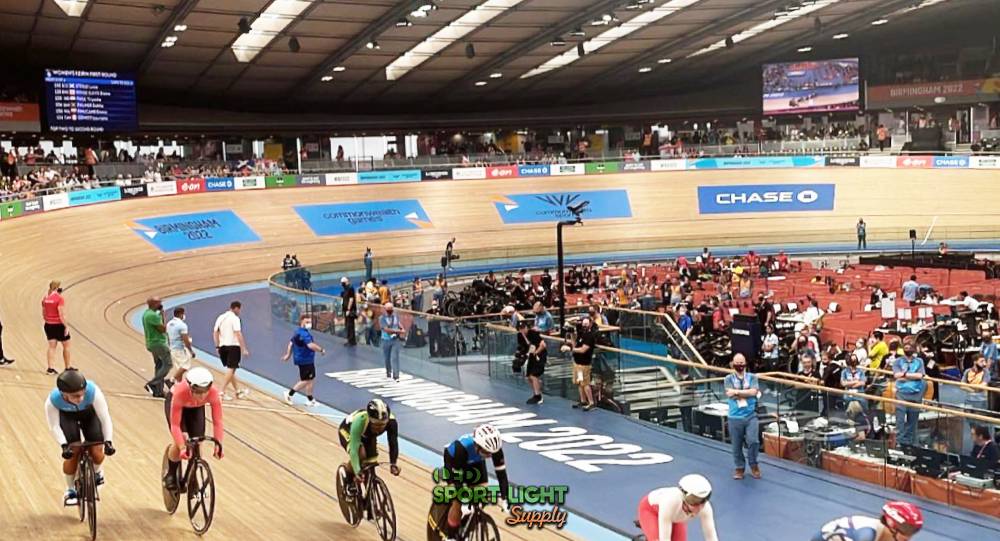
The lux level required for velodrome lighting is determined by the intended purpose and level of competition hosted in the facility. As the expectations for visibility, safety, and media coverage increase with the competition tier, so does the demand for higher and more uniform lighting intensity. Lighting designers must balance brightness, distribution, and visual comfort to create an environment where athletes can perform at their highest level and where spectators and broadcasters receive clear, uninterrupted visual content.
Facilities used primarily for non-competitive training, youth programs, or community cycling require a lower range of lux levels. In such contexts, a lighting range of 300 to 500 lux is typically sufficient. This level provides clear visibility of the track surface, cyclist movements, lane markings, and turns, allowing riders to train safely and coaches to observe performance without visual obstruction.
While the lighting may not be tailored for high-speed racing or televised conditions, uniformity remains important even at this tier. Sudden drops in brightness or poorly lit banking areas can still cause distractions or misjudgments. Therefore, lighting systems must ensure a balanced spread of illumination with acceptable uniformity ratios across all points of the track.
For venues hosting regional or national races, lux requirements rise to between 750 and 1000 lux. These higher levels ensure a clearer view of fast-moving cyclists, support accurate officiating, and allow enhanced audience engagement, particularly in indoor settings where daylight is unavailable. As the speeds and number of riders increase, the precision of lighting becomes more demanding to avoid visual fatigue, misjudged distances, or unlit blind spots on curves and transitions.
At this level, the design must also begin to account for additional optical features such as glare mitigation, beam control, and improved color rendering. While not always intended for broadcast, these competitions often involve photography or local video capture, which requires a more consistent light field and better color uniformity. Spectator comfort also becomes a greater consideration, prompting the use of asymmetric lighting angles and shielding accessories to reduce spill light into the stands.
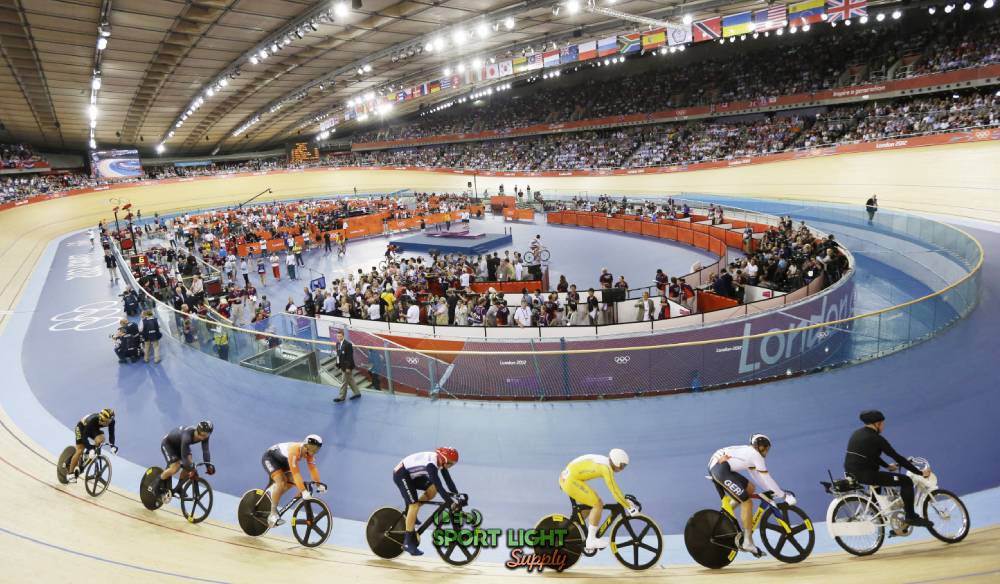
Velodromes that serve as venues for Olympic Games, UCI-sanctioned world championships, and international events require a far more advanced lighting system. The lux levels for these events typically begin at 1500 lux and often extend up to 2000 lux on the horizontal plane. These figures are necessary to meet the demands of ultra-high-definition broadcast, slow-motion video replay, and facial recognition for athlete monitoring and identification.
In addition to the horizontal lighting requirement, vertical illuminance must also meet strict thresholds. The UCI recommends at least 1000 to 1400 lux on vertical planes, particularly in the direction of cameras. This ensures that team kits, facial features, national flags, and sponsor logos remain vividly visible under the artificial lighting, regardless of viewing angle or rider orientation.
To illustrate the scale of lighting needed: a 250-meter velodrome with a total track surface area of approximately 2,500 square meters requires a total luminous flux of around 3.75 million lumens to achieve an average of 1500 lux. However, when accounting for losses due to fixture efficiency, reflectivity of surfaces, and ambient absorption, a more realistic output requirement is closer to 4.5 to 5 million lumens.
Delivering this level of output typically involves the use of high-performance LED floodlights, each ranging from 600 to 1200 watts, equipped with precision optics and narrow beam angles. Fixtures are mounted at calculated positions around the venue, often on catwalks, perimeter rails, or ceiling trusses, to deliver focused lighting across banked curves, straightaways, and transition zones. The entire system is typically modeled in 3D simulation software prior to installation to confirm compliance with lux and uniformity specifications.
Any inconsistency in lighting distribution—particularly during high-speed competitive races—can compromise safety and performance. For instance, if one section of the inner curve of a track measures just 1000 lux while the opposing section on the outer lane records 1800 lux, a rider switching lanes during a sprint may encounter a sudden shift in brightness. This can result in a temporary loss of depth perception, causing hesitation or misjudged maneuvering that may influence race outcomes or even cause collisions.
Such disparities are addressed by adhering to strict uniformity standards. For high-level events, lighting designers aim to maintain horizontal and vertical illuminance across the entire track within a ±10% variance. This minimizes visual discrepancies as riders circulate and supports consistent video capture from multiple camera positions. The lighting uniformity target is often expressed as a U1 ratio of 0.7 or higher (minimum to average illuminance) to avoid deep shadows or hotspots that disrupt the visual field.
At elite venues, even post-installation fine-tuning is common. Lighting technicians use handheld or mounted photometric tools to scan the track at multiple grid intervals—often every 2.5 meters—and adjust fixture tilt or output as needed. This meticulous process ensures that all lighting conditions remain within the thresholds set by the UCI and broadcast networks, maintaining the integrity of both competition and viewer experience.
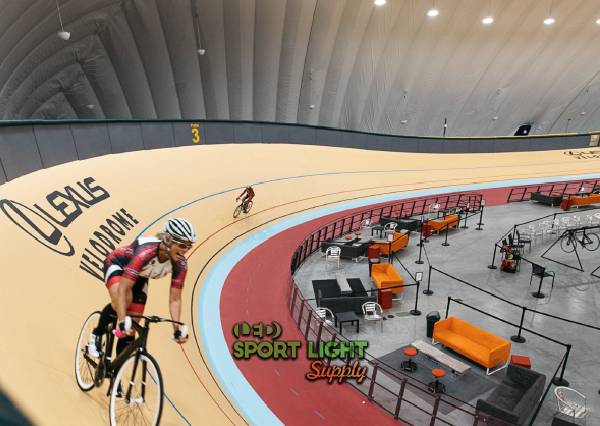 While the cycling track is the focal point, surrounding areas also demand thoughtful illumination. The infield, typically used for warm-up zones, timing booths, and team support activities, requires consistent lighting in the range of 300 to 500 lux. This ensures that coaches, medical staff, and athletes not currently racing can perform their duties effectively. It also reduces contrast fatigue between entering and exiting the track.
Audience seating areas, depending on their proximity to the track and whether the venue is enclosed, may also be lit to between 200 and 300 lux. This is sufficient for safe navigation without overpowering the visual attention directed toward the racing action. However, care must be taken to shield track lighting from spillage into spectator sightlines. Backlighting and cove-mounted solutions are often applied to avoid visual discomfort while providing general wayfinding.
The mixed-use nature of some velodrome venues—where the infield doubles as a multifunctional space for concerts or exhibitions—demands lighting systems that can be reconfigured or dimmed according to event requirements. In such cases, programmable lighting systems capable of shifting between competition, training, and event modes are preferred. These allow the same set of luminaires to deliver multiple lux profiles depending on real-time usage.
Another overlooked area is the track perimeter and emergency access corridors, which typically require 100 to 150 lux for staff movement and incident response. Though not part of the primary athletic surface, inadequate illumination in these areas can delay response time during crashes or equipment failures. Ensuring that these secondary zones are consistently illuminated, but independently controlled, adds to the operational flexibility of the venue.
The successful implementation of these lux level requirements relies not just on fixture power but also on optical control, positioning, and aiming precision. Light loss due to incorrect beam angle can result in hotspots and under-illuminated patches. Advanced lighting designs often employ 3D photometric simulation software to validate lux levels under realistic occupancy and environmental conditions. Final installations may then be fine-tuned using handheld lux meters or high-resolution lux mapping systems to verify compliance and fine-tune angles.
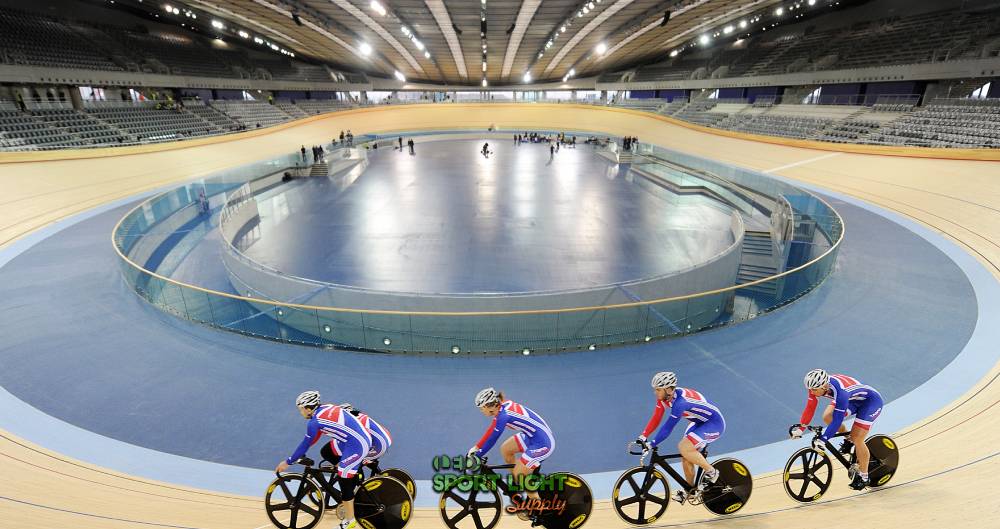
Lighting uniformity is a foundational benchmark in the design and evaluation of velodrome lighting systems. It measures how evenly light is distributed over the cycling surface, ensuring that every segment of the track receives consistent illumination. Even when overall lux levels are within recommended ranges, the presence of stark contrasts—whether as glare spots or shadowed areas—can compromise visibility and affect both performance and safety. This is why uniformity ratios are just as relevant as absolute brightness in lighting specifications.
Uniformity in lighting is quantified using two widely recognized metrics: U1 (minimum to average illuminance) and U2 (minimum to maximum illuminance). These ratios help lighting designers and engineers assess the real-world performance of a system under varied viewing conditions.
The U1 ratio expresses how much light the darkest portion of the track receives in relation to the overall average. For example, if the average illuminance on the track is 1000 lux and the minimum measured point is 500 lux, the U1 ratio would be 0.5. In recreational and training velodromes, a U1 of 0.5 is generally deemed acceptable. This allows enough visual balance to support safe riding without requiring the higher precision needed for competition.
However, venues that host professional or televised races must aim for tighter lighting consistency. In these cases, a U1 ratio of 0.7 or above is typically mandated by governing standards, such as those from the Union Cycliste Internationale (UCI) or broadcast partners. With a U1 of 0.7, the lowest point on the track would still receive at least 70% of the average brightness, minimizing the risk of visual distortion in fast-moving footage or when switching between camera views.
The U2 ratio, by contrast, measures the gap between the brightest and darkest spots. It is defined as the ratio of minimum to maximum illuminance. A U2 of 0.4 means that the darkest area has at least 40% of the brightness of the most illuminated zone. A U2 below 0.4 indicates that large visual shifts exist across the track, which can cause momentary disorientation for cyclists and affect how consistent the action appears to the viewing audience.
An ideal lighting system targets a U2 of 0.5 or higher, ensuring that transitions between bright and dim areas are subtle and virtually imperceptible. For example, if the maximum illuminance on a curve is 1800 lux, maintaining a minimum of at least 900 lux elsewhere is recommended to avoid harsh visual drop-offs. Achieving this ratio becomes especially critical on banked curves and transition zones where shadows are more likely to form due to geometry and fixture positioning.
Maintaining acceptable U1 and U2 ratios is not just about design intent; it also involves precise on-site verification. During commissioning, lighting technicians use calibrated lux meters to measure illuminance across a detailed grid, often with spacing no more than 2.5 meters apart. This fine-grained approach reveals micro-variations in lighting intensity that might not be obvious through visual inspection alone.
Readings are taken at multiple angles and positions: on the centerline of the track, at the inside and outside lanes, and on both the horizontal and vertical planes. For televised events, vertical measurements are especially valuable because they simulate the line of sight captured by cameras and referees.
Data collected from these measurements is then used to calculate U1 and U2, ensuring the ratios fall within required thresholds. If deviations are found, lighting engineers may adjust the fixture tilt angle, beam spread, or lumen output to rebalance distribution. Some advanced systems even allow for dynamic recalibration via remote software interfaces, adjusting output in real time based on sensor feedback.
In velodromes that undergo frequent configuration changes—such as multipurpose facilities used for exhibitions, concerts, or basketball—programmable lighting presets can store optimized scenes for each activity type. This ensures that uniformity ratios are preserved not just for competition cycling but across all usage scenarios, avoiding the need for manual re-aiming or reconfiguration.
Ultimately, uniformity ratios serve as a quality control benchmark for the entire lighting system. Whether a velodrome is used for Olympic qualifying events or local club training, achieving and maintaining proper U1 and U2 levels protects athletes, satisfies spectators, and upholds the venue’s long-term lighting performance.
Velodromes present unique challenges in light distribution due to their elliptical shape, steep banking, and the need for multi-directional visibility. The track surface is not flat but angled—sometimes up to 42 degrees in Olympic-standard velodromes—requiring fixtures to be positioned and aimed with great precision. Achieving a consistent lux level across straight sections, tight corners, and inclined curves demands detailed spatial planning and advanced optics.
To address these challenges, modern lighting systems rely on LED floodlights with customizable beam angles. Fixtures are available with symmetric or asymmetric optics, allowing designers to shape and direct light based on the specific geometry of each section of the track. Asymmetric optics are particularly useful along banking transitions, where conventional fixtures may create pooling or shadow zones. The adjustable angle of light projection ensures that fixtures can be mounted higher or at offset positions while still achieving targeted coverage.
Another vital element in achieving even distribution is the use of photometric simulation software during the design phase. Tools like DIALux, AGi32, and Relux enable lighting engineers to model the velodrome environment in three dimensions and simulate light behavior across the entire surface. These platforms account for fixture height, aiming angle, beam width, reflectivity of surfaces, and obstruction points such as ceiling trusses or scoreboard structures. The goal is to produce a detailed lux map with a minimum grid of 5×5 meter cells, which helps identify any discrepancies in light uniformity.
A typical lighting configuration may involve 40 to 60 high-output LED luminaires arranged around the perimeter or mounted from overhead catwalks in indoor velodromes. Each luminaire is precisely aimed to overlap adjacent beams, creating an interlocking light pattern that smooths out brightness variations. Adjustments in tilt angle, beam cutoff, and diffuser application further refine the beam distribution to enhance both horizontal and vertical uniformity.
Moreover, secondary optics such as reflectors and anti-glare louvres play a supportive role in balancing light intensity. These components reduce hotspots by redirecting excess light into adjacent zones while limiting unwanted spill into spectator areas. In large velodromes, designers may also integrate zoned lighting control systems to allow differential brightness adjustments for different track segments based on real-time activity, such as training versus racing.
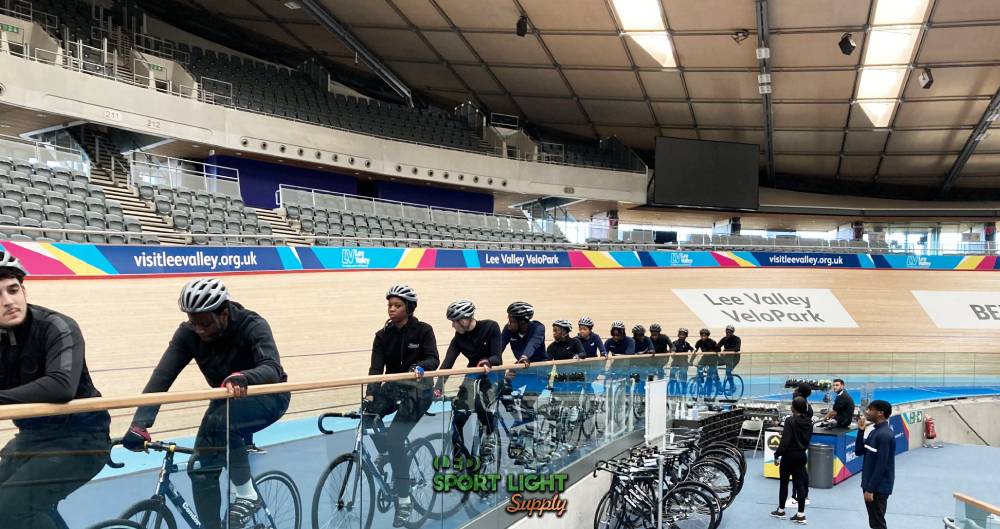
The visual environment of a velodrome has a direct effect on cyclist performance and safety. Uneven lighting can impair depth perception, particularly when transitioning from a brighter zone into a dimmer one. This is particularly dangerous during high-speed sprints, overtakes, or mass-start races, where even split-second hesitation can result in collisions. A rider entering a curve where the inner lane is under-illuminated may misjudge their position relative to the track edge or other competitors.
Uniform lighting reduces eye strain, enabling athletes to remain focused over extended periods. In events such as keirin, points races, and Madison relays, riders may complete dozens of laps under intense physical and visual demands. Fluctuating light conditions can cause visual fatigue, forcing riders to squint or adjust their gaze repetitively, which may degrade performance or even increase the risk of error.
Lighting uniformity also enhances the ability of referees, judges, and cameras to track movements across the track. With evenly lit conditions, it becomes easier to monitor overlaps, lane violations, and changes in lead position during fast-paced events. For televised events, consistent illumination allows for smoother camera transitions and reduces flickering or white balancing challenges when moving between different track zones.
Spectator experience is likewise affected. Uneven lighting creates visual distractions that can make it harder to follow the race flow, especially for viewers seated at an angle or at a distance. When the entire track appears uniformly bright, spectators can keep their attention on the cyclists without adjusting their eyes between different light zones. This also improves the quality of high-definition replays and slow-motion footage, where lighting differences become magnified.
To preserve these advantages over time, lighting uniformity must be verified not only at installation but also during regular maintenance. Dust accumulation, fixture misalignment, or LED lumen depreciation can cause gradual shifts in lighting consistency. As a result, velodromes with high-performance lighting often conduct bi-annual lux audits using calibrated light meters across a fixed grid. Adjustments are then made to fixture output or alignment to restore optimal uniformity and compliance with UCI or broadcast regulations.
The color temperature of velodrome lighting profoundly affects how riders, spectators, referees, and broadcasters experience the visual environment. Measured in Kelvins (K), color temperature refers to the hue of white light produced by a fixture, ranging from warm yellowish tones at lower values to cool bluish tones at higher values. Selecting the right Kelvin level is not merely a stylistic choice; it directly impacts contrast sensitivity, depth perception, and long-term visual comfort.
For velodrome applications, the ideal color temperature falls within the range of 4000K to 5700K. This range is classified as neutral to cool white, providing sufficient brightness and clarity without introducing visual strain. A color temperature of 4000K offers a neutral white tone, useful for training environments or smaller indoor venues where eye comfort over extended periods is a concern. Meanwhile, 5000K to 5700K is commonly used for professional events, offering enhanced visual sharpness and improved contrast of track lines, cyclists’ uniforms, and signage.
Color temperatures below 4000K often introduce warm, amber or yellow hues that can make the track appear visually subdued. While this may create a relaxed or ambient environment in retail or hospitality settings, it is counterproductive in competitive sports lighting. In velodromes, this warmer spectrum can flatten the perception of depth, blur the distinction between track elements, and reduce the vividness of lane demarcations or sponsor markings. Athletes riding at speeds exceeding 60 km/h rely on precise contrast to anticipate turns, maintain balance, and time overtakes. A yellowish tone under low Kelvin lighting dulls these contrasts and may delay visual reaction times, especially under high physical exertion.
Additionally, lower Kelvin levels can negatively affect color rendering. Under such lighting, the sharp differentiation between national team kits, colored helmets, and position markers may be lost, affecting both the clarity of competition and the enjoyment of viewers. In events where millisecond decisions are made based on positioning or jersey color, even minor visual distortions caused by incorrect color temperature can have a noticeable effect.
Conversely, while higher color temperatures—those above 6000K—create a crisp and bright environment, they can be counterproductive in enclosed velodromes. This end of the Kelvin spectrum produces a bluish-white light that, although visually striking, can cause ocular discomfort during prolonged exposure. In indoor settings with polished flooring, reflective barriers, and large areas of light-colored surfaces, high Kelvin lighting often leads to excessive glare and scattered reflections. These artifacts interfere with a rider’s ability to maintain focus, especially under floodlighting directed from overhead catwalks or angled platforms.
Spectators are similarly affected. Prolonged exposure to cool white light can result in eye strain, temporary fatigue, and loss of visual clarity. Children, elderly spectators, and individuals with light sensitivity are particularly susceptible to discomfort when exposed to harsh lighting for the duration of multi-hour competitions or qualifying heats. This discomfort can diminish the overall viewing experience and reduce fan engagement in high-capacity indoor arenas.
From a broadcast perspective, excessively cool light introduces complications in digital processing and white balancing. Cameras adjusted to colder color temperatures can exaggerate skin tones, make the track appear overly sterile, and reduce the richness of recorded video. This becomes a larger issue when footage is intended for television networks or streaming platforms, where audience expectations for vibrant, lifelike images are high.
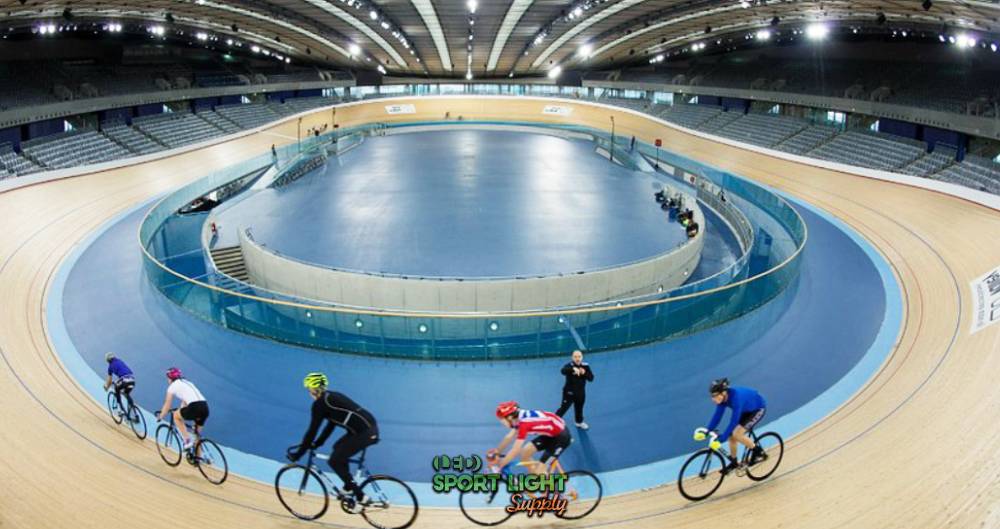
Striking a balance between brightness, visual clarity, and comfort requires selecting a Kelvin range that supports both high-performance racing and extended human presence in the arena. A carefully chosen color temperature in the 5000K to 5700K range achieves this by offering daylight-like visibility without inducing visual harshness. These levels reproduce the clean look of natural light, maintaining a bright atmosphere that enhances both spatial awareness and broadcast aesthetics.
Lighting designers often test various color temperatures during the early stages of velodrome development. In large international venues, trial installations using adjustable Kelvin fixtures allow visual performance to be compared across test scenarios, helping engineers, event organizers, and camera crews arrive at the most effective configuration. In some installations, lighting controls include tunable white technology that enables the adjustment of Kelvin levels in real-time depending on the use case—training, race day, media day, or entertainment events hosted within the velodrome.
Another factor is the distribution consistency of color temperature across multiple luminaires. Even when each fixture falls within an acceptable Kelvin range, minor variances between them—called CCT (Correlated Color Temperature) deviation—can result in visual inconsistency. This creates patches of light with slightly warmer or cooler tones, which become apparent during panning camera movements or when viewers scan across the venue. Such inconsistency is distracting and undermines the perception of a professionally lit environment.
To prevent this, premium LED manufacturers offer fixtures with tight CCT binning, ensuring that every unit falls within a narrow tolerance window—often ±100K or better. Combined with high-frequency drivers and dynamic lighting controls, this approach helps maintain uniform color temperature, accurate contrast, and optimal visibility across the entire velodrome, even during the most demanding competitive and broadcast scenarios.
While Kelvin rating defines the tone of light, the Color Rendering Index (CRI) measures how faithfully a light source reveals the true colors of objects under artificial illumination. CRI is expressed on a scale from 0 to 100, with higher numbers indicating greater accuracy. For velodrome lighting, a CRI of 80 or higher is generally recommended, particularly when accurate identification of jerseys, sponsor logos, flag colors, and signage is required.
A high CRI is particularly beneficial for referees and judges, who rely on color accuracy to make split-second decisions about lane violations, team designations, and sprint placements. It is also valuable for coaches monitoring athlete behavior and for fans in the arena or viewing from screens who expect vivid, lifelike representation. Under lighting with a low CRI, colors can appear washed out, dull, or indistinguishable, making it difficult to discern fine visual details, especially under fast motion.
Modern LED fixtures capable of both high CRI and controlled color temperature offer the dual advantage of energy efficiency and optical precision. However, when multiple fixtures are installed throughout a velodrome, maintaining consistency becomes a challenge. All luminaires must deliver a uniform color profile to avoid visually disjointed lighting zones where one side of the track appears bluish while another leans toward yellow. This inconsistency not only distracts from the aesthetics but can cause depth illusions or tracking errors for riders and camera systems.
To manage this, manufacturers often calibrate LED fixtures to fall within a tightly controlled correlated color temperature (CCT) bin, ensuring that all units emit a nearly identical spectral distribution. Advanced lighting control systems can also fine-tune color settings digitally, using DALI or DMX protocols to synchronize the output of hundreds of fixtures across the arena. This level of control preserves a cohesive visual field that enhances performance, comfort, and production quality.
Broadcasting professional velodrome events introduces a unique layer of technical requirements that go beyond standard illumination for sports venues. Lighting must be optimized not just for the benefit of the human eye but also for television cameras, slow-motion recording equipment, and high-resolution image sensors. With audiences consuming velodrome events across 4K and even 8K displays, the pressure on lighting systems to deliver flawless color, consistency, and motion clarity is greater than ever.
High-definition and ultra-high-definition cameras, especially those used for slow-motion replays or high frame rate capture, are sensitive to even subtle irregularities in lighting. Slight inconsistencies that may be imperceptible to the naked eye—such as flickering or color temperature variation—can create visible artifacts, color distortion, or banding effects when viewed on high-speed footage. These issues diminish the quality of the broadcast, interrupt the viewing experience, and may require post-production correction or filtering, which increases operational costs and reduces real-time value.
One of the most pressing issues in televised sports is the elimination of flicker. Unlike standard video, high-speed cameras capture hundreds or even thousands of frames per second. Any inconsistency in light output—such as the cyclical dimming found in traditional HID or fluorescent lamps—results in pronounced flickering that can ruin slow-motion footage. This is particularly problematic in velodromes, where replay clarity is crucial for understanding collisions, sprint finishes, and relay transitions.
To combat this, velodrome lighting must be flicker-free across a wide frequency range. Modern LED luminaires designed for broadcast applications are typically equipped with high-frequency drivers operating above 30kHz. These drivers ensure that the light output remains continuous and stable, even when recorded at frame rates as high as 1000 fps. This allows broadcasters to deliver ultra-smooth footage without horizontal banding, color pulsing, or exposure shifts, regardless of camera angle or speed.
Achieving flicker-free performance is not simply about hardware quality; it also requires system integration and verification. Lighting technicians must use high-speed cameras and oscilloscopes during commissioning to confirm that no flicker is present under actual field conditions. This testing is especially critical during pre-event lighting checks for major competitions such as the UCI Track Cycling World Championships or Olympic qualifiers, where international broadcasters demand certified flicker compliance as a prerequisite for venue approval.
Beyond flicker elimination, maintaining consistent color temperature and CRI across all camera zones is fundamental to achieving high-quality video. If one section of the track has a slightly warmer or cooler tone than another, cameras must constantly recalibrate their white balance as they pan across the field. This can create unnatural skin tones, shifting jersey colors, or visible transitions that distract viewers. In some cases, color inconsistencies between adjacent camera zones lead to visible seams in stitched panoramic footage, especially when multiple feeds are combined in real time.
To mitigate these issues, most broadcast-compliant velodromes standardize their lighting to a defined color temperature—typically between 5000K and 5700K—which approximates natural daylight and enhances visibility without glare. The Color Rendering Index (CRI) must also meet minimum thresholds, usually set at 85 or above, to ensure that clothing, equipment, and signage appear true-to-life. Higher CRI values are particularly beneficial for showcasing sponsor branding and national team colors with clarity and vibrancy.
Advanced lighting control systems are often employed to synchronize all fixtures to the same spectral output. This is made possible through DALI, DMX, or proprietary control protocols that allow for real-time monitoring and correction of color temperature, intensity, and uniformity. Calibration tools such as colorimeters and spectrometers are used during setup and routine maintenance to verify that all lighting zones conform to the specified visual profile. This prevents lighting mismatches between overhead catwalk fixtures, corner floodlights, and infield fill lights that could otherwise degrade the broadcast feed.
Some venues also incorporate supplementary or directional lighting to enhance image definition along key camera paths. For example, overhead tracking cameras or drones that follow cyclists around the curves benefit from controlled backlighting that adds depth and contrast to the moving subject. These supplemental systems are designed to integrate seamlessly with the main lighting array, preserving a visually cohesive environment across all points of view.
Lighting quality also affects how highlights and shadows are rendered in slow motion. Inconsistencies in beam shape or angle can cast uneven shadows, making it difficult to distinguish cyclists during overtakes or close finishes. Uniform illumination ensures that even the smallest positional changes are captured with precision, supporting both dramatic visual storytelling and accurate officiating.
Ultimately, lighting systems designed with optimal color temperature, CRI, and flicker control serve a wide spectrum of users. Athletes benefit from stable, visually balanced conditions that reduce eye strain and support peak performance. Referees and judges gain a clearer visual environment for monitoring compliance and reviewing incidents. Most importantly, broadcasters can deliver a polished, professional product to global audiences, reinforcing the credibility and spectacle of competitive cycling. In a sport where every frame counts, lighting excellence is as vital as the competition itself.
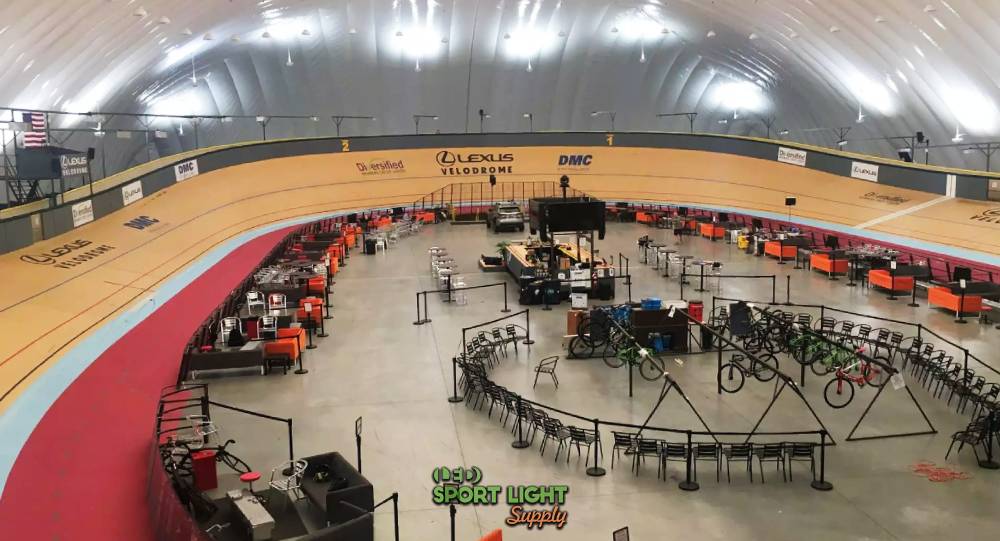
Glare is a phenomenon that occurs when intense, direct light sources interfere with the ability to see clearly, causing discomfort, distraction, or even temporary visual impairment. In the high-speed environment of a velodrome, where cyclists often exceed speeds of 60 km/h on steeply banked curves, the presence of glare can have safety implications far beyond mere inconvenience. Even a momentary flash of blinding light can disrupt an athlete’s focus or depth perception, increasing the risk of accidents during critical maneuvers such as sprints, overtaking, or negotiating corners.
The nature of velodrome architecture often exacerbates glare issues, especially in indoor arenas with relatively low ceiling heights and compact spectator seating. Unlike open-air stadiums, where natural light and greater vertical space allow for more flexible fixture placement, indoor velodromes must work within constrained environments. This limitation increases the likelihood that direct beams from floodlights or spotlights will shine into riders’ or spectators’ eyes, especially at certain angles or elevations. Judges and officials positioned at elevated stands or media platforms can also experience visual discomfort, which compromises their ability to make precise calls during events.
Furthermore, glare not only affects athletes and officials but also diminishes the viewing experience for spectators, both in the arena and via broadcast feeds. Excessive brightness or light scattering in the audience zone can cause eye strain, reducing enjoyment and attentiveness during lengthy competitions. Thus, effective anti-glare design is a multi-faceted challenge requiring a balance between sufficient illumination and visual comfort for all users.
To mitigate glare risks, modern velodrome lighting systems increasingly rely on indirect lighting techniques. Rather than directing light straight from fixtures onto the track, indirect lighting utilizes reflective surfaces, shielding elements, or carefully designed baffles to soften and diffuse light before it reaches the cycling surface. This approach diminishes the harshness of direct beams, creating a more uniform and comfortable light field that protects both athletes and spectators from visual discomfort.
In addition to glare reduction, these techniques contribute to improved lighting uniformity and help meet stringent visual standards required for competitive and broadcast environments. The following sections explore several key methods employed to achieve effective anti-glare control within velodromes.
One common method for reducing glare involves installing luminaires behind louvers, grills, or architectural overhangs that physically block direct sightlines to the light source. Louvers, which are slatted structures placed inside or outside the fixture, restrict the angle at which light escapes, allowing illumination to reach the track only through controlled apertures. This prevents cyclists and spectators from seeing the bare lamp elements, significantly lowering the risk of discomfort caused by bright, direct light.
Architectural overhangs or ceiling baffles serve a similar function by acting as physical shields that redirect or absorb light before it can shine directly into eyes. These elements also help prevent stray light from spilling into seating areas or camera lenses, maintaining focused illumination on the track itself. Many velodromes incorporate custom-designed grills and baffles tailored to the specific geometry of the arena, ensuring maximum glare reduction without sacrificing brightness.
Internal louvers fitted inside the fixture housing provide another layer of control by limiting upward or sideward light spill. These louvers are particularly effective in indoor velodromes with low ceilings, where avoiding direct upward glare is crucial. External visors or hoods mounted on floodlights further constrain the beam spread, enabling precise targeting of light onto cycling lanes while minimizing excess illumination that could interfere with athletes’ vision or broadcast quality.
Reflective surfaces are integral to indirect lighting strategies, playing a significant role in transforming harsh direct beams into softer, more diffuse illumination. White-painted ceilings, light-colored walls, or polished architectural features can act as large-scale reflectors, bouncing light across the venue and reducing concentrated hotspots.
By carefully positioning fixtures so that light initially contacts these reflective surfaces before reaching the cycling track, lighting designers create a bounce lighting effect that spreads illumination evenly. This diffusion reduces sharp contrasts between brightly lit areas and shadows, which helps improve riders’ depth perception and spatial orientation.
Bounce lighting also addresses common problem areas such as the under-banked curves or beneath spectator overhangs, where direct lighting is often difficult to install. The secondary reflection ensures these shadowed zones receive sufficient light without introducing direct glare. Moreover, reflective surfaces help lower energy consumption by maximizing the effective use of emitted light, reducing the number of fixtures or wattage required to achieve target lux levels.
Another effective glare-reduction strategy involves shielded or recessed fixture mounting. Rather than suspending luminaires openly on exposed poles or ceiling mounts, some velodromes embed them within structural elements such as beams, trusses, or ceiling recesses. This architectural integration limits the range of viewing angles from which the light source is visible, significantly reducing direct eye contact with bright lamps.
Recessed fixtures can be hidden behind ceiling panels or mounted flush with surrounding surfaces, allowing only the emitted light beam to be seen rather than the bulb or LED array itself. Shielding elements such as baffles or cowls are often added to further direct the light output and prevent spillover toward spectator seating or camera sightlines.
This approach is especially advantageous in velodromes with lower ceilings or compact seating arrangements, where overhead floodlights are necessarily close to the audience and athlete sightlines. Shielded and recessed installations create a cleaner visual environment by eliminating harsh light sources that would otherwise cause glare, reflections, or hotspots.
In addition, integrating fixtures into the architectural design improves venue aesthetics, reduces maintenance risks by protecting lighting units from accidental damage, and can enhance acoustics by adding mass and reducing sound reverberation. The combination of these benefits makes recessed and shielded mounting a popular choice in modern velodrome lighting systems.
The adoption of fixtures with asymmetric beam angles represents a highly targeted approach to anti-glare design in velodrome lighting. Unlike symmetrical beams that disperse light evenly in all directions, asymmetric optics shape the light output into a defined arc or lobe, directing illumination precisely onto the track’s cycling lanes while minimizing spill into non-critical zones.
This directional control is especially advantageous in indoor velodromes, where ceiling-mounted lighting arrays must balance adequate lux levels with strict glare control. Fixtures can be carefully aimed and tilted to illuminate steeply banked curves and straights with optimal brightness, avoiding casting light directly into the riders’ line of sight. Customizable beam angles enable designers to tailor the light pattern to the velodrome’s unique geometry, including variations in track width, banking angles, and ceiling height.
During installation, lighting engineers often employ lighting simulation software to model beam spreads and identify potential glare zones. These simulations guide the selection and positioning of asymmetric fixtures, ensuring that light intensity remains high where needed while sharply dropping off outside the target areas. This precision reduces wasted light and improves energy efficiency.
Integration with advanced lighting control systems further enhances the anti-glare strategy. Motion sensors and programmable dimmers allow the lighting to adapt dynamically, lowering output during warm-up sessions, training, or downtime, and ramping up only when races or events are underway. This adaptability reduces glare exposure during off-peak periods and contributes to overall sustainability goals by minimizing power consumption.
In summary, the combination of indirect lighting, shielding, asymmetric optics, and intelligent controls form a comprehensive framework to manage glare in velodromes. These measures protect athletes’ vision, enhance spectator comfort, and uphold the integrity of the competition environment while delivering the required illumination for high-speed cycling at the highest levels.
Modern velodrome lighting systems have increasingly embraced LED technology as the preferred solution for delivering high-quality, energy-efficient illumination. Unlike traditional lighting options such as metal halide, high-pressure sodium, or halogen lamps, LEDs provide numerous operational advantages. One of the most notable benefits is their instant on/off capability, which eliminates the warm-up period required by many conventional lamps. This responsiveness is particularly beneficial during event preparations, allowing lighting to be adjusted rapidly for various stages such as training, competition, and downtime.
LEDs also boast a significantly longer lifespan—often exceeding 50,000 operating hours—compared to 8,000 to 20,000 hours typical for metal halide lamps. This longevity translates directly into reduced maintenance efforts and costs, a major advantage for velodrome venues where fixture access can be challenging due to height and architectural constraints. Lower maintenance frequency means fewer disruptions to event scheduling and decreased risk of downtime.
From a technical standpoint, LEDs excel in beam control and optical customization. Their directional light output allows fixtures to target specific areas of the cycling track with minimal spill light. This precision supports the achievement of desired uniformity and brightness levels while simultaneously reducing light pollution and energy waste. Many LED floodlights are equipped with advanced optics such as asymmetric lenses, diffusers, and adjustable beam angles, enabling lighting designers to tailor the coverage precisely to the unique shape and banking angles of a velodrome.
In addition to energy savings, LEDs operate with lower heat output than many traditional lamps, reducing the thermal load within indoor arenas. This improves the comfort of athletes and spectators and alleviates cooling system demands, further enhancing the overall sustainability of the venue.
The integration of intelligent lighting control systems is revolutionizing how velodrome lighting is managed. These advanced systems provide facility managers with the ability to remotely monitor and adjust lighting parameters, optimizing both performance and energy consumption. Real-time data on power usage, fixture status, and ambient conditions enable predictive maintenance and proactive energy management.
Zoning functionality is a central feature of smart controls, allowing different sections of the velodrome—such as the main track, infield, spectator areas, and warm-up zones—to be lit independently according to immediate needs. For example, during training sessions, the system may dim or deactivate seating area lights while maintaining sufficient illumination on the track surface. This adaptability reduces unnecessary energy use while preserving safety and visibility.
Dimming capabilities extend the operational flexibility by enabling incremental adjustments to light intensity. Instead of a binary on/off system, lighting can be scaled smoothly from low-intensity practice modes to full competition brightness. This results in substantial energy savings over time, especially in venues that host frequent non-competitive activities. Furthermore, dimming reduces wear on fixtures, extending their functional lifespan.
Many smart systems also incorporate automated scheduling, integrating with event calendars and environmental sensors. Lights can be programmed to activate or dim according to time of day, occupancy, or ambient daylight levels. Such automation ensures the velodrome is illuminated only when necessary, contributing to sustainability goals and reducing operational costs.
Beyond operational efficiency, environmental impact is a growing concern shaping velodrome lighting design. LED fixtures typically emit low ultraviolet (UV) radiation and contain no mercury or other hazardous substances, making them a safer and more sustainable choice compared to legacy lighting technologies. This reduces risks related to disposal and accidental breakage, supporting venues’ compliance with environmental regulations and waste management policies.
Effective heat management in LED fixtures also plays a vital role in sustainability. Proper thermal design—including heat sinks, cooling fins, and active cooling mechanisms—helps maintain optimal operating temperatures, preventing premature lumen depreciation and color shift. This extends fixture longevity and minimizes replacement frequency, reducing waste generation.
Indoor velodromes benefit particularly from reduced heat generation since excessive heat loads can increase demands on HVAC systems. By minimizing thermal output, LEDs help maintain stable indoor climates, improving comfort for athletes and spectators while lowering energy consumption associated with air conditioning and ventilation.
Facilities aiming for green building certifications such as LEED or BREEAM often incorporate energy-efficient lighting as a key strategy to achieve compliance benchmarks. The use of LEDs paired with smart controls and sustainable materials can earn points for energy savings, indoor environmental quality, and responsible resource use. These certifications not only demonstrate environmental stewardship but also enhance the venue’s reputation among athletes, organizers, and the broader community.
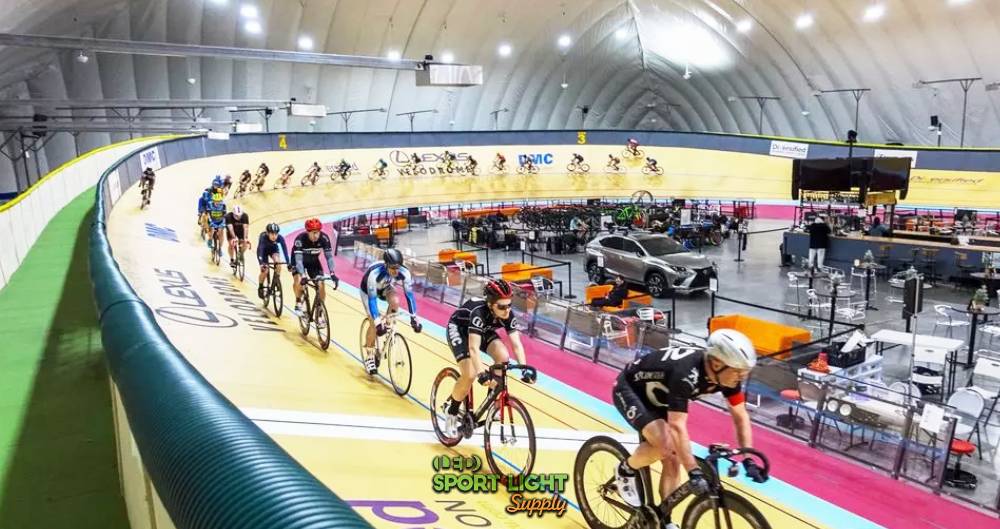
The foundation of an effective velodrome lighting system lies in a meticulous fixture placement strategy. Proper positioning of light fixtures is paramount to achieving the uniform, glare-free illumination demanded by high-speed cycling competitions. Early in the design process, engineers conduct detailed site assessments to map out the optimal locations for mounting luminaires, taking into account architectural features, ceiling height, track geometry, and spectator sightlines.
Typically, fixtures are mounted on structural elements such as ceiling trusses, side rails, or mast poles, each offering distinct advantages. Ceiling trusses allow for high-mounted, wide-area coverage while minimizing physical obstructions around the track. Side rails and mast poles enable directional lighting from lateral angles, which can be beneficial for filling shadows along steeply banked curves. In some modern venues, a hybrid approach is used, combining overhead and side-mounted fixtures to achieve seamless coverage.
The proximity of the ceiling to the track surface in many indoor velodromes imposes additional constraints. With limited vertical space, lighting designers often select compact yet powerful fixtures that can deliver high lumen output with narrow beam spreads. This helps focus illumination on the track without wasting light or creating excessive glare in the audience or athlete sightlines. The use of custom optics and adjustable mounts enables precise aiming to accommodate banking transitions, varying track widths, and changes in elevation.
Lighting simulation software plays an integral role during this phase. By modeling beam patterns, fixture angles, and mounting heights, designers can predict light distribution and identify potential problem areas such as hotspots, shadows, or glare zones. Iterative simulations ensure that fixture placement aligns with the required uniformity ratios and lux levels across the entire cycling surface.
Ensuring the long-term reliability and performance of velodrome lighting depends heavily on planned maintenance and ease of access. Lighting systems in these venues often operate for thousands of hours annually, necessitating regular cleaning to remove dust and dirt buildup, recalibration to maintain photometric accuracy, and timely replacement of worn components.
Fixtures with modular designs and tool-free access features simplify maintenance by allowing technicians to service internal components such as LEDs, drivers, and optics without fully dismantling the unit. This reduces downtime and minimizes disruption to scheduled training and events. Many manufacturers now incorporate quick-release mechanisms, hinged covers, and plug-and-play wiring harnesses into their products to enhance serviceability.
Physical access to luminaires is a critical consideration in velodrome design. Since many fixtures are mounted high above the track or integrated into structural elements, venues often include dedicated maintenance catwalks, retractable platforms, or scissor lifts as part of their architectural layout. These features ensure safe, ergonomic working conditions for maintenance personnel, facilitating routine inspections and repairs.
The integration of intelligent monitoring and diagnostic systems represents a growing trend in velodrome lighting management. Sensors embedded within fixtures can continuously track performance parameters such as power consumption, light output, temperature, and electrical stability. Automated alerts notify maintenance teams of any anomalies or declines in efficiency before failures occur, allowing for proactive interventions that extend system lifespan and uphold lighting quality.
Velodrome lighting design must conform to a rigorous set of guidelines and standards established by governing bodies such as the Union Cycliste Internationale (UCI) and regional building codes. These standards define minimum performance criteria for illuminance levels, uniformity ratios, glare control, and color rendering to ensure consistent, safe, and fair competition conditions worldwide.
The UCI mandates specific lux level requirements depending on the competition tier, ranging from 300 lux for recreational tracks to upwards of 2000 lux for elite international events. Uniformity is emphasized, with minimum to average illuminance ratios (U1) generally required to be above 0.7 for televised competitions. Glare mitigation and color temperature standards—typically between 4000K and 5700K—are also specified to protect athlete vision and support broadcast quality.
For velodromes hosting UCI-sanctioned events, lighting plans often require prior approval before construction or renovation. This process involves submitting detailed photometric reports, fixture specifications, and simulation data demonstrating compliance with all relevant criteria. Additionally, venues undergo pre-event testing using calibrated light meters and lux meters to verify that installed systems meet or exceed prescribed standards.
Regional and national building codes may impose additional requirements related to electrical safety, emergency lighting, and energy efficiency. Adherence to these codes not only ensures legal compliance but also enhances operational safety and sustainability.
Incorporating these design, maintenance, and regulatory considerations into the planning and installation phases helps create velodrome lighting systems that deliver optimal performance, support athlete and spectator safety, and provide a visually stunning experience for live and broadcast audiences.
Velodrome lighting is a specialized discipline that balances technical precision, athlete comfort, and audience experience. From achieving high lux levels for competition to maintaining consistent color temperature and managing glare through indirect methods, the lighting strategy must address multiple dimensions of performance. Uniformity across the banked curves, clear visibility for referees, and broadcast-compatible conditions all depend on how well the lighting design is executed. The integration of energy-efficient LEDs, smart control systems, and sustainable practices further enhances the longevity and adaptability of the lighting infrastructure. By focusing on the visual demands of track cycling, facility designers and operators can create venues that support both peak athletic performance and world-class spectator engagement.