
Walk onto a football field at night and you’ll notice it right away. Some fields feel crisp and clear, where every pass is easy to track. Others feel a bit dim or patchy, where the ball seems to disappear mid-air. That difference usually comes down to one thing: lighting level.
Lighting isn’t just about making the field visible. It shapes how players react, how referees make decisions, and how spectators experience the game. Whether it’s a local training ground or a stadium hosting televised matches, getting the lighting level right makes everything run smoother and look better.
What Are Lighting Levels?
Lighting levels are typically measured in lux or foot-candles, which describe how much light actually reaches the playing surface. One lux equals one lumen per square meter, while one foot-candle equals one lumen per square foot. In the U.S., both units are used, but lux has become more common in international standards.
When people talk about lighting levels for football fields, they’re usually referring to the average horizontal illuminance across the pitch. That means how evenly light spreads across the grass, not just how bright the floodlights look from the stands.
But brightness alone doesn’t tell the whole story. A field can technically hit 500 lux and still feel uncomfortable if the lighting isn’t balanced. That’s where uniformity comes in. Uniformity measures how consistent the lighting is across the field. If one area is bright and another is noticeably darker, players may struggle to judge distance or speed.
Another factor is glare. Poorly aimed fixtures can create intense brightness in a player’s line of sight, especially when looking up for a high ball. Even if the lux level is technically correct, glare can make the game feel harder than it should.
Color rendering also plays a role, especially for televised matches. Lights with better color rendering help players, officials, and cameras distinguish colors clearly, which becomes more noticeable at higher levels of competition.
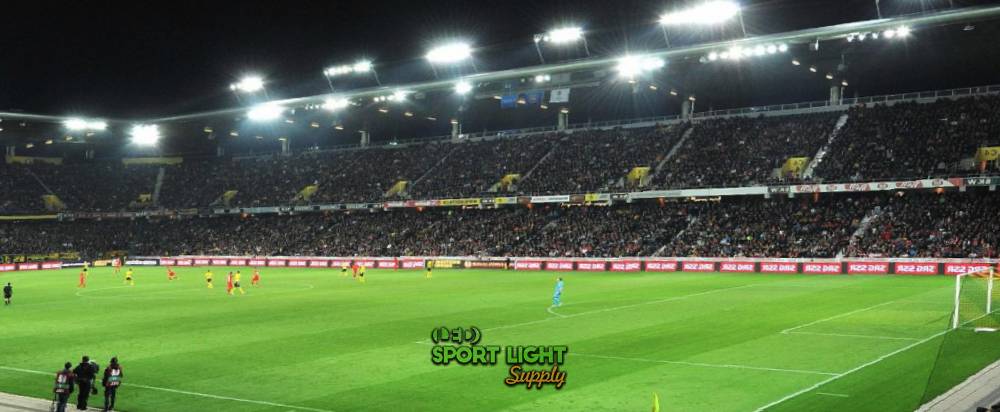
Standard Lighting Levels by Use Case
Lighting levels for a football field aren’t one-size-fits-all. The setup that works for a weekend training session would feel completely out of place in a professional stadium. As the level of play goes up, the illuminance (lux level), uniformity ratio, and even vertical lighting requirements all step up with it.
Think of it like upgrading from a basic streetlight vibe to something closer to daylight simulation. The difference isn’t just brightness, it’s how evenly the light spreads, how it interacts with player movement, and how well it supports fast decision-making on the pitch.
| Field Type | Lux Range | Foot-Candles | Uniformity Ratio | Pole Height (m) | Color Temp (K) |
|---|---|---|---|---|---|
| Recreational / Training | 75 – 200 | 7 – 20 | 0.5 – 0.6 | 12 – 18 | 4000 – 5000 |
| Amateur / School Competition | 200 – 500 | 20 – 50 | 0.5 – 0.6 | 15 – 25 | 4000 – 5000 |
| Professional (No Broadcast) | 500 – 1000 | 50 – 100 | 0.6 – 0.7 | 25 – 30 | 4500 – 5700 |
| Professional Broadcast / Stadium | 1000 – 2500+ | 100 – 230+ | 0.7+ | 30 – 50 | 5000 – 5700 |
Recreational and Training Fields
For recreational use, lighting levels usually sit between 75 and 200 lux, which is roughly 7 to 20 foot-candles. This range is enough for players to see the ball clearly within short to mid-range distances, especially during drills or casual matches.
At around 100 lux, visibility is decent for jogging, passing, and basic ball control. Once you move closer to 150–200 lux, things start to feel more comfortable, especially for evening sessions where players are on the field for longer periods. You’ll notice fewer missteps and better coordination overall.
Most of these setups focus on horizontal illuminance, meaning how well the ground surface is lit. Vertical lighting isn’t really a concern here, since there’s no need to capture the action on camera or track high-speed aerial plays in detail.
From a design perspective, these fields often prioritize energy efficiency and lower installation costs. Fewer poles, lower mounting heights around 12 to 18 meters, and simpler beam angles are common. LED systems in this category might run at lower wattages, helping facilities save up to 40–60% in energy compared to older lighting technologies.
The goal here is simple: make the field usable, safe, and comfortable without overcomplicating the system.
Amateur and School-Level Competition
Once you step into organized matches, lighting levels typically increase to around 200 to 500 lux (about 20 to 50 foot-candles). This is where lighting starts to feel more “game-ready” rather than just functional.
At 300 lux, players can track the ball more confidently across longer distances, and referees can make calls with better visual clarity. By the time you reach 500 lux, the field feels noticeably brighter and more consistent, especially during faster plays.
One thing that becomes more noticeable at this level is uniformity ratio, often targeted around 0.5 to 0.6. That means the darkest area of the field still has at least half the brightness of the brightest area. Without this balance, players might experience that awkward moment where they run from a bright zone into a dim patch and briefly lose visual clarity.
Another factor that comes into play is glare control. As lighting intensity increases, poorly aimed fixtures can start to cause discomfort, especially when players look up for headers or long passes. That’s why better optics and more precise aiming angles are usually introduced at this stage.
School and amateur facilities also tend to invest a bit more in pole height and layout, often using 4 to 6 poles at heights of 15 to 25 meters. This helps spread light more evenly across the pitch and reduces harsh shadows.
Overall, this level is about creating a smoother, more consistent playing experience without going into full stadium-level complexity.
Professional Matches Without Broadcasting
When you reach professional-level play without broadcasting requirements, lighting typically ranges from 500 to 1,000 lux (around 50 to 100 foot-candles). At this point, the field starts to feel almost like it’s under a controlled daylight environment.
At 750 lux and above, players can react faster because the ball remains clearly visible even during high-speed passes or long aerial plays. The lighting also helps with depth perception, which becomes more noticeable in fast-paced matches where timing is everything.
Uniformity expectations are higher here, often around 0.6 to 0.7, meaning the lighting is very evenly distributed across the entire field. Shadows are softer and less distracting, which helps players maintain focus.
Another detail that becomes more relevant is color rendering index (CRI). Higher CRI values, often above 70 or 80, allow players to distinguish team colors more easily, which can actually influence split-second decisions during gameplay.
Lighting design at this level also pays more attention to beam angles and fixture positioning. Instead of just lighting the ground, designers aim to reduce shadow overlap and improve visibility from multiple directions. Pole heights may reach 25 to 30 meters, allowing for wider and more controlled light distribution.
Even without broadcasting, the experience at this level feels noticeably sharper and more refined compared to lower-tier fields.
Professional Broadcast and Stadium Lighting
For televised matches, lighting levels jump to 1,000 to 2,000 lux or higher, with some international stadiums pushing beyond 2,500 lux. This isn’t just about making the field brighter, it’s about meeting the technical demands of modern broadcasting.
At this level, vertical illuminance becomes just as relevant as horizontal lighting. Cameras need to capture players clearly from multiple angles, which means lighting must reach players’ faces and bodies, not just the ground. This often involves carefully angled fixtures that provide balanced illumination from all sides.
Uniformity is also pushed further, sometimes reaching ratios of 0.7 or higher, ensuring there are no noticeable dark spots on camera. Even minor inconsistencies can show up during broadcasts, especially in slow-motion replays.
Color temperature tends to sit between 5000K and 5700K, giving the field a crisp, daylight-like appearance. This helps cameras capture more accurate colors and reduces the need for heavy post-processing.
Another layer of complexity is flicker control. High-speed cameras used in professional broadcasting can pick up flicker that the human eye doesn’t notice. Modern LED systems are designed to minimize this, often operating with flicker rates suitable for ultra-slow-motion replay.
The infrastructure itself is also more advanced. Stadiums may use 6 to 8 high-mast poles or integrated roof lighting systems, with mounting heights reaching 30 to 50 meters. These setups allow for precise control over light distribution, glare reduction, and spill light management.
The end result is a field that feels almost cinematic. Players perform under consistent, high-quality lighting, while viewers at home get a clear, vibrant picture of every moment.
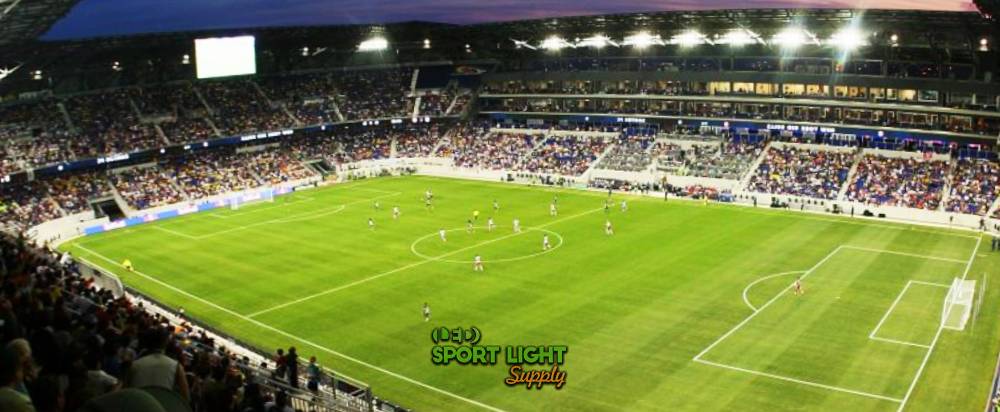
Key Lighting Design Factors
Lighting a football field isn’t just about cranking up the brightness. It’s more like orchestrating a symphony—multiple elements need to work together to make the game playable, safe, and visually appealing. Each factor, from how evenly light spreads to the color temperature, plays a role in how players perform and how spectators experience the match.
Uniformity Matters
One of the main things designers focus on is uniformity—basically, how even the light is across the field. A well-designed pitch usually targets a uniformity ratio around 0.5 to 0.7, depending on the level of play. That means the dimmest spot on the field should still have at least half the brightness of the brightest area.
When uniformity is off, it can really mess with a player’s perception. Imagine sprinting from a bright patch into a noticeably darker area mid-play. The ball may momentarily disappear or appear to move differently, and players might hesitate or make mistakes. In fast-paced games, even a fraction of a second lost in reaction time can change the outcome of a play. Properly distributed light reduces that risk and helps maintain consistent visual conditions across the entire pitch.
Glare Control
Glare can be a sneaky problem. Even if the overall lux level is technically correct, poorly aimed lights can shine directly into a player’s eyes, especially when looking up for headers or tracking long passes. Modern LED systems use optics to direct light more precisely, minimizing blinding spots and helping goalkeepers track high balls without squinting.
Mounting height and aiming angles also play a big role. Poles positioned too low or lights angled incorrectly can create bright streaks or hot spots. Professional setups usually adjust these factors carefully to avoid glare while keeping every part of the field visible.
Color Temperature
Another factor that affects visibility and comfort is color temperature, measured in Kelvins (K). Most football fields fall somewhere between 4000K and 5700K. Lower temperatures have a warmer, softer glow, while higher temperatures appear cooler and more daylight-like.
Professional fields often lean toward the higher end because it improves contrast, making it easier to distinguish the ball, players, and markings on the field. It also works better for cameras, ensuring broadcasts look crisp and natural without heavy post-processing.
Energy Efficiency
Finally, energy efficiency is becoming harder to ignore. Traditional metal halide or halogen lamps consume a lot of power, while modern LEDs can cut energy use by 50 percent or more. That’s a huge deal for fields that operate multiple nights a week.
Beyond saving on electricity bills, LEDs tend to last longer and maintain their brightness more consistently over time. That reduces maintenance costs and ensures the field stays properly lit without frequent replacements or adjustments. Combining energy efficiency with uniform lighting and proper color rendering creates a system that’s reliable, safe, and visually effective for players and spectators alike.
Lighting design is really a balance between technical precision and practical application. Get one element wrong, and it can affect performance, safety, or the overall experience of the game. When everything is dialed in, though, the field feels like it’s alive under a perfect, even glow.
Standards and Regulations
When it comes to football field lighting, there’s more than just guesswork—official standards help make sure fields are safe, playable, and visually consistent across different venues. Following these guidelines also helps avoid costly mistakes, especially when building or upgrading a field.
FIFA Guidelines
FIFA sets benchmarks for football lighting based on the type of competition. Training fields, amateur matches, professional games, and international broadcast matches each have different recommended lux levels. For instance, a local training pitch might only need around 200 lux, while a stadium hosting televised international matches could require upwards of 2,000 lux, including vertical illumination so players and the ball are clearly visible from all camera angles.
These recommendations also cover uniformity, glare control, and color rendering. For televised games, the standards get even more detailed, ensuring the lighting works for high-definition cameras and ultra-slow-motion replays. Meeting these requirements isn’t just for compliance—it actually improves player performance and enhances the spectator experience.
United States and IES Guidance
In the U.S., organizations like the Illuminating Engineering Society (IES) provide comprehensive sports lighting guidelines. These recommendations consider lux levels, uniformity ratios, glare limits, and fixture placement for different levels of play. Local codes and building regulations can add extra rules, such as maximum light spill or restrictions on fixture heights.
This is especially important for facilities located near neighborhoods or environmentally sensitive areas. Poorly designed lighting can create unwanted light pollution, disturbing nearby residents or wildlife. Many modern systems use fixtures with precise optics and shielding to focus light on the field, keeping spill light under control while still maintaining the required brightness and uniformity.
Environmental and Safety Considerations
Beyond the numbers, standards often emphasize player safety and visual comfort. For example, glare reduction helps prevent temporary blindness when looking up for high balls, while uniformity ensures that no area of the field is too dim or too bright. Color rendering and proper beam distribution also play a role in minimizing eye strain during long evening sessions.
Following these standards makes sure that players, referees, and spectators all have a smooth experience. Plus, it protects facilities from complaints or legal issues tied to light pollution or unsafe lighting setups. By sticking to official guidance, designers can balance performance, energy efficiency, and community impact effectively.
Correctly applying these standards transforms a football field from just a patch of grass with lights into a high-performing, safe, and visually comfortable environment that works for both casual and professional use.
Common Mistakes and What Happens When Lighting Levels Are Wrong
Even small mistakes in football field lighting can have a big impact. Players, referees, and spectators notice it immediately, and the problems can range from slightly annoying to downright dangerous. Lighting isn’t just about making the field bright—it’s about how the light interacts with players, the ball, and the environment.
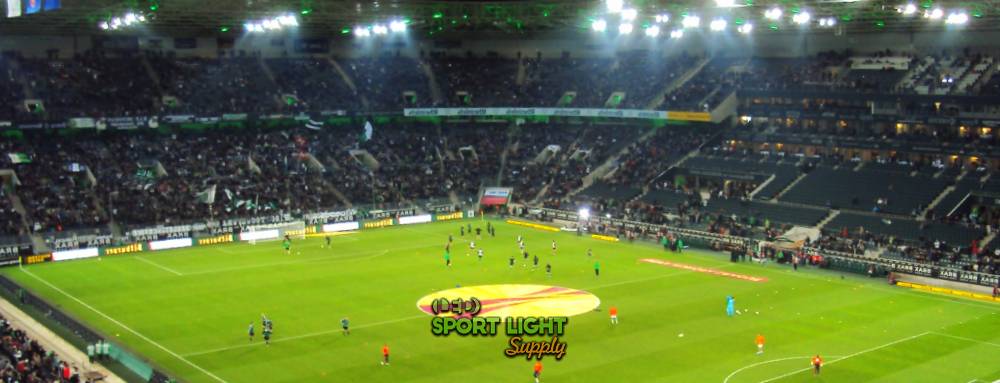
Too Low Lighting Levels
One of the most common problems is simply not having enough light. When lighting levels are too low, players struggle to follow the ball, especially during long passes or high crosses. Their reaction times slow down, and even small misjudgments can turn into missed goals or collisions. At amateur or competitive levels, a delay of even a fraction of a second can make a noticeable difference in performance.
Low lighting also increases eye strain. Players squint, blink more often, and fatigue sets in faster. Over time, this can affect focus during training sessions or matches, reducing the overall quality of play.
Uneven Lighting
Another frequent issue is uneven lighting. If one side of the field is noticeably brighter than another, players experience sudden changes in visibility as they move around. Imagine sprinting from a brightly lit zone into a darker corner and suddenly misjudging the ball’s speed or trajectory.
Uneven illumination doesn’t just impact gameplay—it can also increase the risk of injuries. Poorly lit areas may hide obstacles or make it harder for players to judge the distance to other players, leading to awkward tackles or slips. Proper uniformity ratio ensures the light is balanced and consistent across the whole pitch, avoiding these hazards.
Glare Problems
Glare is a sneaky but serious issue. A misaligned fixture or poorly shielded light can shine directly into players’ eyes, particularly when looking upward for headers or goal kicks. Goalkeepers are often most affected because they need to track the ball across the sky.
Glare doesn’t just make the game uncomfortable—it can impair vision in critical moments, increasing the likelihood of errors or accidents. Even for spectators, excessive glare can make watching the match unpleasant, especially in evening games.
Television and Broadcast Issues
For fields used in televised matches, incorrect lighting can ruin the viewing experience. Insufficient or poorly distributed lighting can make colors look dull, shadows more noticeable, and fast-moving action harder to follow. Cameras may struggle to capture clear footage, making the game look lower quality than it actually is.
Broadcast standards often require high lux levels, precise uniformity, and proper vertical illumination to capture every moment of the game accurately. Ignoring these details can affect the venue’s reputation and reduce the perceived professionalism of the match.
Energy and Maintenance Costs
Lighting mistakes can also hit your wallet. If the field is over-lit without proper planning, energy consumption can skyrocket, driving up electricity bills. On the flip side, under-lighting may require frequent upgrades or adding extra fixtures over time, which increases maintenance costs.
Getting lighting levels wrong may seem like a small detail, but it can impact player safety, game quality, viewer experience, and long-term operating costs. A well-planned, professionally designed lighting system avoids all of these problems, creating a field that’s consistent, safe, and enjoyable for everyone.
Closing Thoughts
Getting football field lighting right is a balance between performance, comfort, and efficiency. The right lighting level supports better gameplay, clearer visibility, and a more enjoyable experience for everyone on and off the field.
Every field has its own needs, whether it’s a local training ground or a stadium preparing for broadcast matches. Matching the lighting setup to those needs helps avoid common issues and ensures the field performs the way it should.
If you’re planning a new installation or looking to upgrade an existing system, it can really help to get guidance tailored to your specific situation. Feel free to reach out to us for consultation on football field lighting levels and design. We’re happy to help you find a setup that fits your goals and budget.