
Golf courses have traditionally relied on conventional electrical lighting to extend playing hours, improve aesthetics, and enhance safety during evening hours. However, the rise of solar-powered lighting offers a compelling alternative that reshapes the way golf courses approach illumination. Solar golf course lighting harnesses renewable energy from the sun, converting it into electrical power to illuminate the course without the need for conventional grid connections.
The adoption of solar lighting comes with numerous advantages that go beyond just energy savings. It eliminates the need for extensive underground wiring, reducing installation time and complexity. Additionally, solar lights operate independently from the electrical grid, increasing resilience and reducing vulnerability to power outages. Golf course operators also benefit from a decrease in maintenance requirements since solar lighting systems often feature self-contained units with fewer failure points.

Understanding Installation Costs: How Solar Lighting Saves Money Upfront
When golf courses consider upgrading or installing new lighting systems, the installation cost often represents one of the most substantial financial factors influencing the decision-making process. Traditional lighting systems require a complex network of infrastructure to supply and distribute electrical power. This infrastructure includes trenching extensive underground pathways for electrical conduits, laying heavy cables, installing transformers, and connecting to the local utility grid. Each step involves specialized labor, costly materials, and compliance with strict electrical codes and permits. The result is a lengthy, labor-intensive, and often disruptive process.
The trenching alone can be expensive because it requires heavy machinery and careful coordination to avoid damaging existing utilities such as water lines, irrigation systems, or fiber-optic cables. On golf courses, where landscaping is carefully maintained and turf health is paramount, trenching and underground cable installation pose risks to the environment and aesthetics of the property. Repairing damaged turf, restoring landscaping, and minimizing disruption to play schedules add further indirect costs.
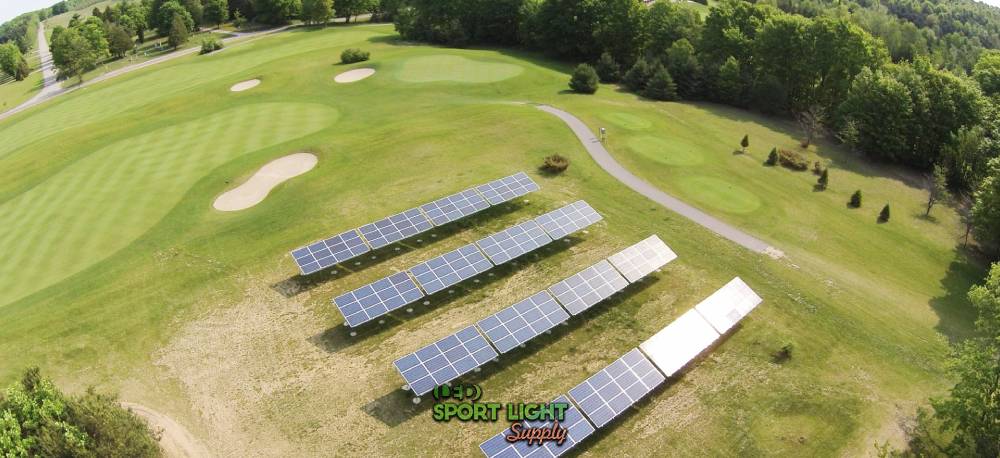
In contrast, solar lighting systems fundamentally change the installation landscape. Each solar lighting unit functions as a self-contained system with an integrated solar panel, battery, LED fixture, and control electronics. Because these systems do not rely on external electrical wiring or grid connections, the need for trenching, conduit installation, and complex electrical connections is largely eliminated. This independence from underground wiring delivers a significant reduction in upfront installation expenses.
The elimination of trenching and cable work also reduces the risk of damage to existing golf course infrastructure. Irrigation lines, drainage systems, and delicate turf are preserved, helping maintain the course’s condition during and after installation. The environmental impact is minimized since the solar lighting installation is non-invasive and requires less heavy machinery and earth disturbance.
Reduced Labor and Material Costs
Labor expenses frequently represent the largest portion of any lighting installation budget, often surpassing the costs of the equipment itself. In traditional lighting projects, a wide range of skilled workers is required to complete the installation. Electricians must carefully plan and execute the wiring, trenching crews handle the excavation for underground conduits, and additional specialists coordinate the installation of transformers, junction boxes, and electrical panels. This multi-stage process can span several days or even weeks, depending on the size of the golf course and complexity of the layout. The coordination of different crews, scheduling challenges, and the need for highly specialized skills all contribute to elevated labor costs.
Solar lighting changes this dynamic profoundly by offering a system that is both standalone and wireless. Each light fixture comes equipped with its own solar panel, battery, and LED lighting unit, meaning there is no need to connect to a centralized power source or run extensive wiring. Installation crews are freed from the time-consuming tasks of digging trenches, laying conduit, and pulling cables through complex underground pathways. Instead, the focus shifts primarily to physically mounting the fixtures, securing poles, or placing bases on the terrain, which requires less technical expertise and fewer labor hours.
This streamlined approach leads to the deployment of smaller installation teams that can work more efficiently. Since there are fewer steps and less specialized work involved, the likelihood of delays due to electrical inspections or unforeseen underground obstacles is greatly reduced. Fewer workers on site also means less disruption to the golf course’s normal operations and a safer, less cluttered installation environment.
On the materials side, the savings are equally compelling. Traditional lighting installations require a broad range of electrical components that come with their own costs and supply chain complexities. Materials such as conduits to protect wiring, heavy-gauge electrical cables, junction boxes to manage connections, transformers to regulate voltage, and comprehensive electrical panels for control all add up quickly. Procuring and installing these components involves additional expenses, not only for the parts themselves but also for storage, transport, and coordination of deliveries.
Solar lighting eliminates most of these material needs because each unit is a self-contained power and lighting system. The absence of conduit and wiring reduces the volume of materials required, which translates into fewer purchases, less handling, and simplified logistics. The decreased reliance on multiple suppliers and complex inventories minimizes risks related to supply chain delays or price fluctuations in electrical materials.
By reducing labor hours, requiring fewer skilled specialists, and cutting down on the volume and variety of materials needed, solar lighting systems provide golf course operators with substantial upfront savings. These savings not only make solar an attractive option from a cost perspective but also enable faster, less disruptive installations that help maintain the natural beauty and playability of the course throughout the upgrade process.
Faster Project Timelines
The time required to install a lighting system is a crucial consideration for golf courses, where minimizing disruption to daily operations is desirable. Traditional lighting installations may involve weeks of preparatory work, including obtaining electrical permits, conducting site surveys, scheduling trenching and electrical crews, and waiting for inspections. These phases can delay the overall project and push back the date when the lighting becomes operational.
Solar lighting installations typically move faster because of their modular and wireless design. Many solar fixtures can be installed on existing poles or mounted on prefabricated bases that require minimal site preparation. This approach reduces the need for heavy equipment or extended excavation, shortening installation times from weeks to days.
Faster installation timelines allow golf courses to benefit from enhanced lighting more quickly, whether for extended playing hours, improved safety, or aesthetic purposes. Moreover, the accelerated schedule reduces the risk of inclement weather or unexpected delays interfering with the project, making solar lighting a reliable choice for timely upgrades.
Energy Savings and Operational Cost Benefits
Solar lighting harnesses the sun’s energy, a free and inexhaustible resource, which leads to virtually zero electricity costs during operation. For golf courses that operate lighting systems for extended periods—whether for evening play, special tournaments, or maintenance activities—the resulting energy savings are substantial. Traditional electric lighting can consume thousands of kilowatt-hours annually, depending on the number of fixtures and hours of use. For example, a typical golf course using conventional 400-watt metal halide fixtures might spend between $10,000 to $30,000 per year on electricity alone, depending on local utility rates and lighting schedules.
Switching to solar lighting eliminates these recurring energy expenses entirely. Since solar-powered systems rely on photovoltaic panels and battery storage, golf courses no longer incur monthly utility bills for lighting. This translates to consistent, predictable operating costs, which remain stable regardless of fluctuating energy prices or changes in consumption. The ability to forecast lighting expenses accurately helps golf course managers make more reliable financial plans and reduce overall overhead.
Over the lifespan of a solar lighting system—typically 15 to 20 years—cumulative savings on electricity can range from tens of thousands to over a hundred thousand dollars, depending on the scale of the installation. These long-term savings often offset the initial investment in solar equipment and installation, creating a strong case for positive return on investment. Additionally, the low maintenance requirements of solar lighting further enhance overall cost-effectiveness by reducing the need for frequent repairs and replacements.
Reduced Demand Charges and Peak Load Considerations
Grid-powered lighting systems, especially those with high-wattage fixtures, may be subject to demand charges imposed by utilities. These charges are based not just on total energy consumption but also on the peak power drawn during any given billing period. For golf courses running multiple lights simultaneously, demand charges can significantly increase monthly electricity costs, sometimes by 20% to 40% of the bill.
Solar lighting systems, being completely self-sufficient and independent from the grid, avoid demand charges altogether. This benefit is particularly valuable for golf courses located in regions with high utility rates or tiered pricing models where demand fees make up a large part of the overall energy cost. By removing this unpredictable cost element, solar lighting helps facilities better manage their budgets and avoid spikes in electricity expenses caused by peak usage.
Environmental Impact and Brand Reputation
Financial advantages aside, solar golf course lighting supports broader sustainability objectives by reducing carbon footprints and dependence on fossil fuels. Conventional lighting powered by grid electricity often relies on energy generated from coal, natural gas, or other non-renewable sources, contributing to greenhouse gas emissions. Solar lighting, however, produces no direct emissions during operation and helps golf courses align with environmental stewardship goals.
Adopting solar lighting can enhance a golf course’s public image by demonstrating commitment to green practices, which resonates with eco-conscious players and local communities. This commitment may open doors to new marketing opportunities, sponsorships, or partnerships with environmental organizations. Some golf courses report increased memberships and event bookings after adopting sustainable technologies, as players increasingly seek venues that reflect their values.
Furthermore, implementing solar lighting can position a golf course as a leader in innovation and sustainability within the competitive leisure and sports industry. This can create long-term brand value and community goodwill that extends beyond the immediate financial benefits of energy savings.
Maintenance Advantages That Lower Long-Term Costs
One of the often-overlooked aspects of lighting systems on golf courses is the ongoing cost of maintenance. Traditional grid-connected lighting systems involve an intricate network of wiring, electrical panels, transformers, and high-intensity fixtures that all require regular attention. Over time, exposure to moisture, shifting soil, pests, and accidental damage from maintenance equipment can degrade underground wiring or junction boxes. These issues can lead to shorts, corrosion, or full-scale electrical failures. Fixing such problems often means bringing in electricians to troubleshoot circuits, dig up sections of turf to access damaged wiring, or replace aging components. These interventions not only incur direct costs in terms of labor and materials but also disrupt the appearance and playability of the course.
Fixture failures are another common issue with traditional lighting. Conventional metal halide or high-pressure sodium lamps may need replacement every few years due to lumen depreciation or outright burnout. Additionally, these older fixtures are more susceptible to vibration damage from wind or nearby maintenance vehicles, leading to loose connections and inconsistent lighting quality. Each replacement cycle involves labor costs and creates temporary dark spots on the course, which could compromise evening safety and aesthetics.
In contrast, solar lighting systems are specifically designed to minimize these long-term maintenance burdens. Because each solar lighting fixture operates as a completely independent unit, there are no sprawling networks of cables linking lights together. This means that if one light develops a fault, it does not cascade into a larger section failure—an issue common with interconnected systems. The standalone nature of solar units reduces single points of vulnerability and ensures greater reliability across the course.
Many modern solar lighting units incorporate robust construction materials, such as corrosion-resistant aluminum housings and sealed LED modules, which stand up well to harsh outdoor conditions. They are engineered to handle temperature extremes, moisture, and physical impacts much better than traditional fixtures. The reduction in wiring alone cuts down on one of the most frequent sources of lighting failures: damage caused by ground shifts or rodents chewing through cables.
Long-life LEDs are a standard feature in solar lighting systems, delivering operational lifespans of up to 50,000 hours or more. This means that under typical usage—say, six hours per night—LEDs can last over twenty years before their brightness significantly diminishes. This dramatically reduces the cycle of bulb replacements common to older lamp technologies. LEDs also draw far less power, which means less stress on batteries and other electronic components, further enhancing longevity.
Batteries have advanced as well, with many solar lighting systems now using lithium-based technologies that offer superior charge cycles and longer service lives. These batteries are often designed for straightforward replacement after many years of use, allowing for quick maintenance without disrupting nearby fixtures. Compared to the recurring need to replace bulbs, ballasts, or transformers in conventional systems, the maintenance process for solar lighting is both simpler and more predictable.
Remote Monitoring and Smart Controls
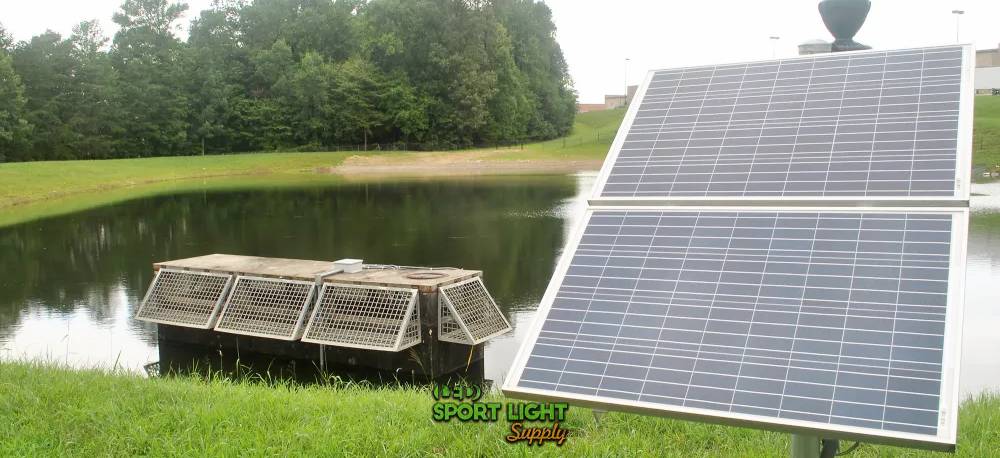
Another major advantage of modern solar lighting is the incorporation of remote monitoring and smart control features. Many systems include integrated sensors and communication modules that allow facility managers to keep track of each light’s status in real time. Using a centralized dashboard or mobile application, they can instantly see which lights are operating correctly and which may require attention, all without the need for labor-intensive, on-foot inspections across sprawling fairways and pathways.
This proactive monitoring reduces the time spent diagnosing issues and allows maintenance teams to be dispatched only when necessary, targeting specific fixtures rather than performing blanket inspections. Some systems can even send automatic alerts if battery performance drops below expected levels or if a fixture experiences repeated faults.
Smart controls can further reduce maintenance demands and operational costs by adjusting lighting output in response to environmental conditions or usage patterns. For instance, lights may dim automatically during periods of low activity or increase brightness when motion is detected, optimizing energy use and extending battery life. These intelligent adjustments not only conserve stored solar energy but also decrease wear on LEDs and batteries, prolonging the lifespan of the entire system and reducing the frequency of maintenance calls.
Together, these maintenance benefits make solar lighting a compelling choice for golf courses looking to lower long-term operational costs while ensuring consistent, high-quality illumination. Fewer failures, less routine intervention, and advanced technology all contribute to a smoother, more efficient maintenance strategy that preserves both budgets and course aesthetics over time.
Cost Breakdown of Solar Golf Course Lighting
| Component | Description | Typical Cost Range | Notes |
|---|---|---|---|
| Solar Panels | Primary energy source; rated 80–150 watts | $150 – $400 per panel | Higher-efficiency panels add 20–30% cost; sized for sunlight conditions |
| LED Fixtures | High lumen output, low power consumption | $200 – $500 each | For 100–200 lights (18-hole course): $20,000 – $80,000 total |
| Batteries | Lithium batteries for energy storage and longevity | $250 – $600 per unit | Total battery cost: $30,000 – $100,000; lifespan 8–12 years |
| Mounting Structures | Poles, anchors, or brackets; adapted to site conditions | $500 – $1,200 per location | Reusing existing poles can reduce costs by up to 50% |
| Control Systems | Remote monitoring, dimming, motion sensors | $50 – $150 per light | $10,000 – $30,000 total for mid-sized projects |
| Traditional Lighting Hidden Costs | Trenching, underground conduits, permits, transformer upgrades | $15 – $30 per foot of trenching | Can add $50,000 – $200,000+ in infrastructure costs |
| Annual Utility Costs (Traditional) | Electricity bills for lighting | $10,000 – $30,000 annually | Varies by course size and usage hours |
| Solar Lighting Installation Cost | Complete system per light, installed | $2,000 – $3,500 per light location | Slightly higher than basic grid setups but includes savings |
| Financing Incentives | Federal tax credits, grants, rebates | ~26% federal ITC (e.g. $65,000 tax credit on $250,000 project) | Additional state/local incentives may further reduce costs |
| Power Purchase Agreements (PPAs) | Third-party ownership with monthly fees | Energy rates 10–20% below local utility pricing | Minimal upfront capital required |
The overall investment for solar golf course lighting varies widely depending on several factors, including the size of the course, the number of lights required, and the desired brightness or uniformity standards. Each of these shapes the total scope and scale of the project. Unlike traditional systems that primarily revolve around the cost of fixtures and extensive electrical infrastructure, a solar lighting project has distinct primary components that shape its budget: solar panels, LED fixtures, batteries, mounting structures, and control systems.
Solar panels serve as the primary energy source, and their capacity must be carefully matched to the lighting demand and local sunlight conditions. A typical golf course solar light might use a panel rated between 80 and 150 watts, with costs ranging from $150 to $400 per panel. Higher-efficiency panels or systems designed for regions with fewer sunny days may add 20% to 30% to the panel cost but help ensure reliable illumination throughout the year.
LED fixtures are chosen for their combination of high lumen output and low power consumption. Quality LED golf course fixtures generally fall in the range of $200 to $500 each. For an 18-hole course needing around 100 to 200 lights, this represents a fixture budget of roughly $20,000 to $80,000. These LEDs drastically reduce long-term energy demands compared to older technologies, supporting smaller battery sizes and longer performance.
Batteries form another crucial part of the investment. Lithium batteries, now common in golf course applications for their extended charge cycles and temperature resilience, can cost between $250 and $600 per unit depending on storage capacity. A full course installation might require a battery investment of $30,000 to $100,000, balancing capacity for multiple cloudy days against total lifespan. These batteries generally last 8 to 12 years before straightforward replacements keep systems running efficiently.
Mounting structures such as poles, ground anchors, or custom brackets must be adapted to the landscape’s soil conditions and wind loads. New poles and engineered footings might add $500 to $1,200 per location. Reusing existing poles in some projects can reduce these costs by up to 50%. Control systems typically add another $50 to $150 per light for remote monitoring, dimming, and motion-sensing features. For a mid-sized project, this can add $10,000 to $30,000 to the upfront budget but delivers substantial long-term savings through energy optimization and lower maintenance needs.
When compared to conventional lighting, the initial cost of a complete solar setup can be competitive or slightly higher. While a traditional grid-tied system might show a hardware price 10% to 20% lower, it often hides significant additional costs: trenching and underground conduit work commonly range from $15 to $30 per foot, meaning even modest wiring runs can add $50,000 to $200,000 in hidden infrastructure expenses. Added to this are electrical permits, transformer upgrades, and future liabilities tied to buried cables, which make solar’s long-term cost picture far more attractive. Many golf courses find their break-even point arrives within 4 to 7 years just from avoided utility bills and reduced maintenance.
Financing and Incentives
Another dimension that makes solar golf course lighting financially attractive is the wide availability of financing options and incentives. Many governments promote renewable energy through tax credits, grants, and rebates that can cut upfront costs dramatically. In the United States, for instance, the federal Investment Tax Credit (ITC) currently offsets about 26% of qualified project expenses. This means a $250,000 solar lighting installation might see a tax credit around $65,000.
State-level rebates and local grants can drive costs down even further. Some golf courses opt for power purchase agreements (PPAs) or solar leases, where a third-party owns and maintains the system while the facility pays a predictable monthly fee or buys power typically 10% to 20% below standard utility rates. This model often reduces upfront capital requirements to near zero, letting the course start saving immediately on operations.
Long-Term Value vs. Upfront Price
 One hesitation is the perceived higher initial cost of solar lighting. Even as technology costs continue to drop, a robust solar system with efficient panels, lithium storage, and smart controls may run $2,000 to $3,500 per light installed. This is slightly above basic grid systems when viewed narrowly on hardware.
However, traditional lighting often hides long-term expenses: trenching and conduit work can account for 20% to 40% of the total project budget. Any future damage to underground wiring risks disruptive, costly repairs. Meanwhile, traditional systems generate utility bills that can range from $10,000 to $30,000 annually for a medium or large course. Solar entirely eliminates this ongoing expense while slashing maintenance by reducing fixture failures and removing cable-related problems.
Over 15 to 20 years, these differences often mean the solar system pays for itself multiple times over, giving golf courses a stronger financial foundation and consistent, high-quality lighting that enhances player satisfaction.
Operational Predictability and Budget Control
An often overlooked benefit of solar lighting is the ability to plan budgets with greater certainty. Traditional lighting costs can spike due to seasonal load, demand charges, or utility rate hikes—a few extra cents per kilowatt-hour might translate into thousands in surprise expenses. Solar sidesteps these fluctuations by generating power on-site, shielding courses from market swings.
Maintenance costs also become more predictable, typically limited to battery swaps every 8 to 12 years and occasional panel cleaning. For courses where margins depend heavily on seasonal play and tournament bookings, this financial stability can be as impactful as the direct cost savings, ensuring strong operational health well into the future.
Challenges and Considerations

While solar golf course lighting delivers compelling operational and financial benefits, there are still practical challenges that decision-makers need to address for a successful implementation. Unlike simple indoor lighting upgrades, outdoor solar projects on golf courses must take into account the landscape’s natural variables, the patterns of use throughout different times of the year, and the overall design aesthetic that supports the course’s reputation and player satisfaction.
One of the first considerations is ensuring that solar lighting performance aligns with the site’s actual conditions. Because solar lights depend on harvesting sunlight, a thorough site assessment is critical. Trees, terrain variations, and structures like clubhouses or nearby buildings can cast shade, reducing the efficiency of the solar panels. Strategically placing fixtures in open areas or adjusting panel angles can help mitigate these issues. A professional lighting design that includes sun-path studies will identify the most effective locations to optimize solar collection throughout the year.
Battery capacity is another element that must be carefully sized. Golf courses operating in climates with long stretches of cloudy days or extended evening events may need larger battery banks to ensure consistent illumination. Undersized systems could result in lights dimming or shutting off early, negatively affecting both aesthetics and safety. Conversely, overbuilding the system unnecessarily raises upfront costs. A balanced design based on typical and worst-case weather scenarios ensures reliability without waste.
It’s also crucial to tailor the system to the golf course’s specific needs. Lighting that is too intense can wash out landscaping details and disrupt the ambiance, while under-lighting may compromise playability or create safety risks on paths and greens. Working with lighting engineers familiar with golf course projects ensures that the installation complements the facility’s natural beauty while meeting functional requirements for evening rounds, tournaments, or special events.
Weather and Seasonal Variations
Geographical location plays a significant role in determining how a solar lighting system should be designed. Courses located in northern latitudes or regions known for prolonged overcast weather will face different challenges than those in sunnier climates. For example, areas with heavy snowfall or frequent rain may need lights with enhanced waterproofing and corrosion-resistant finishes to maintain longevity. Snow accumulation on panels can temporarily reduce energy generation, so slightly angled or self-cleaning panel designs can help mitigate seasonal build-up.
Battery sizing becomes even more critical under these conditions. In regions with extended periods of minimal sunlight, it may be advisable to invest in higher-capacity battery banks capable of sustaining operations for multiple nights without full recharges. Additionally, routine maintenance protocols should include seasonal inspections to clear debris, remove snow, and check seals for moisture ingress to prolong system life and maintain dependable performance through varying weather patterns.
Integration with Existing Systems
For many golf courses, the question isn’t whether to use solar exclusively but how to incorporate it alongside existing infrastructure. Many facilities already have established electrical lighting systems that represent a significant past investment. A hybrid approach allows solar to be phased in gradually—perhaps beginning with cart paths, parking areas, or practice greens—while maintaining the main grid-connected lights on primary fairways and tees.
This integration provides an opportunity to test solar reliability and gather real operational data before committing to a broader conversion. Courses can prioritize the replacement of older, more maintenance-intensive fixtures with solar units, helping to extend the life of existing systems while gradually modernizing. In some cases, intelligent controllers can synchronize solar and traditional lights to balance loads and ensure uniform illumination, even during unexpected high-usage periods or events.
Operational Adjustments and Staff Training
Switching to solar also brings operational changes. Grounds crews may need basic training on maintaining solar components, such as periodically cleaning panels and checking battery health indicators. Unlike traditional systems where issues often appear at centralized breakers or transformers, solar systems are distributed, requiring staff to understand how to monitor and diagnose at individual fixtures. Fortunately, many modern systems include remote dashboards that simplify oversight, sending automatic alerts if a light underperforms or requires servicing.
These adjustments are generally minor but represent a shift in how facility teams manage lighting systems. Proper planning and a brief investment in staff orientation ensure the transition to solar is seamless and that the course continues to deliver the quality experiences golfers expect, even as it benefits from modern, sustainable technology.
Why Solar Golf Course Lighting Delivers Value Beyond Cost
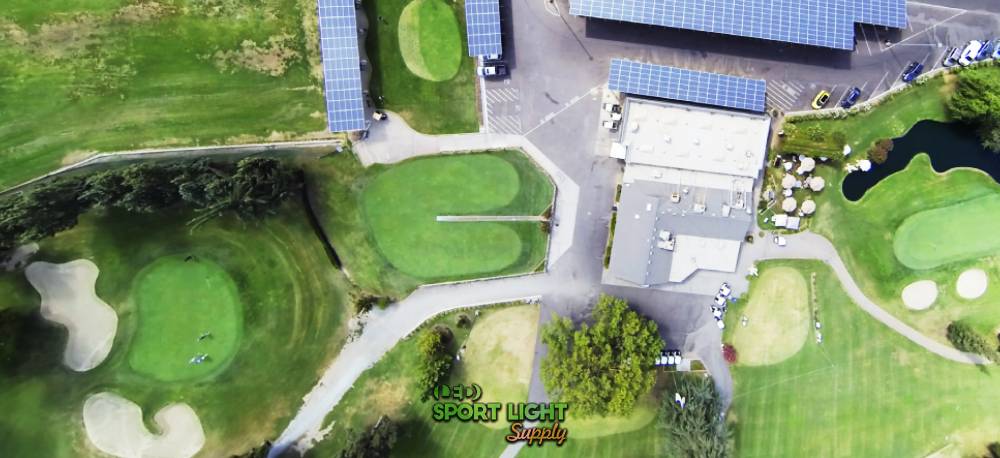
While the financial arguments for solar golf course lighting are already strong—offering substantial savings on energy, installation, and long-term maintenance—the benefits extend well past the realm of dollars and cents. Adopting solar lighting fundamentally enhances a golf course’s operational resilience and positions it as a forward-thinking steward of environmental responsibility. In a competitive recreational market, these qualities can be as valuable as direct financial returns.
Because solar lighting operates independently of the electrical grid, it provides a critical safeguard against power outages or grid disruptions. Whether caused by severe weather, local utility failures, or broader infrastructure problems, blackouts can leave traditional systems dark, creating safety concerns and disrupting scheduled play. Solar lighting, with its standalone power generation and storage, continues to illuminate paths, greens, and common areas even during extended grid failures. This resilience ensures that evening rounds, tournaments, and facility events proceed without interruption, preserving both revenue streams and customer satisfaction during unexpected incidents.
Additionally, the visible presence of solar panels and sustainable lighting fixtures across the course sends a clear message to members, visitors, and the surrounding community. It demonstrates a commitment to environmental responsibility and technological innovation. In an era when consumers and organizations increasingly value green initiatives, this can elevate the course’s brand, differentiate it from competitors, and attract partnerships with eco-conscious businesses and event planners. Hosting charity tournaments, local environmental festivals, or corporate outings with sustainability themes becomes easier and more compelling when your facility is visibly aligned with clean energy solutions.
Enhanced Player Experience and Safety
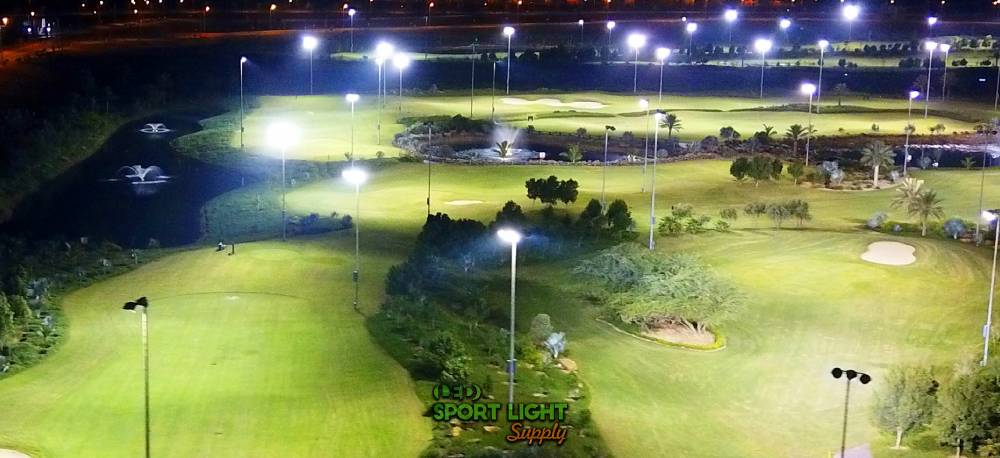
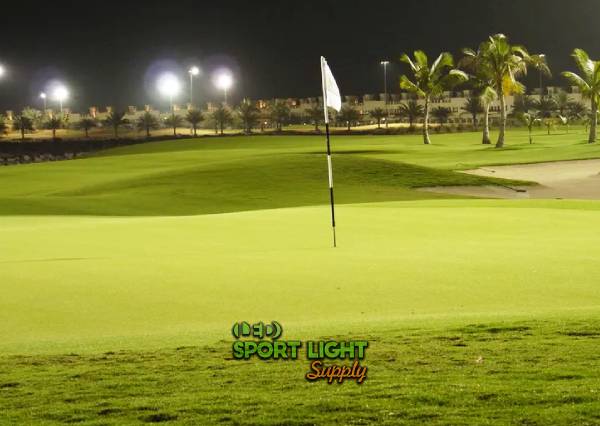
Beyond operational and reputational advantages, well-designed solar golf course lighting also transforms the playing experience itself. Modern solar LED systems deliver high-quality, uniform illumination that eliminates dark spots and reduces glare—two common complaints on poorly lit courses. Players benefit from clearer sight lines, better depth perception, and fewer surprises from hidden terrain features or uneven ground. This means safer play, fewer mishits, and an overall more enjoyable round, even as the sun dips below the horizon.
Reliable lighting extends usable hours on the course, opening up revenue opportunities that would otherwise be missed. Dusk tournaments, evening leagues, and special night events become attractive scheduling options, helping courses maximize tee time availability and food and beverage sales. As more players look for flexible, after-work recreation, having a well-lit, aesthetically pleasing evening environment can significantly grow participation and strengthen customer loyalty.
Long-Term Financial Planning Benefits
While solar golf course lighting systems involve thoughtful upfront investment, their impact on long-term financial stability is profound. Moving away from traditional grid-dependent lighting transforms unpredictable operational expenses into more controlled, strategic opportunities. This section explores how these benefits unfold over time.
Eliminating Utility Bills and Reallocating Cash Flow
For a medium-to-large golf course, outdoor lighting often contributes $10,000 to $30,000 annually in electricity costs. By installing a solar system, this recurring expense disappears. Instead of watching utility bills fluctuate based on hours of operation, seasonal demands, or local rate hikes, courses reclaim that budget outright. These funds can be redirected toward course enhancements such as fairway renovations, clubhouse updates, or new amenities that strengthen the overall player experience. Some facilities even reinvest savings into youth programs, charity tournaments, or local partnerships that build goodwill and broaden their customer base.
Reducing Long-Term Maintenance Liabilities
Traditional lighting systems carry hidden costs beyond energy bills. They rely on an intricate network of underground wiring, transformers, and central panels—all susceptible to failures from moisture, soil movement, rodent activity, or accidental equipment strikes. Repairs often mean disruptive trenching, expensive labor, and damaged turf that needs restoration.
By contrast, each solar light is a self-contained unit with no underground electrical infrastructure. Routine maintenance becomes simpler and more predictable, usually focused on cleaning solar panels, inspecting fixtures, and planning battery replacements every 8 to 12 years. This shift from reactive emergency repairs to scheduled, manageable upkeep protects operating budgets and keeps maintenance teams focused on course quality rather than chasing electrical faults.
Predictable Budgets and Insulation from Market Shocks
One of the least visible but most valuable benefits of solar lighting is the financial predictability it brings. Energy markets are volatile; small spikes in electricity rates can translate to thousands in unexpected costs over a busy season. With solar, the course generates power on-site, shielding itself from market swings and creating a stable expense environment. This predictability is crucial for facilities that operate on tight margins and rely on stable cash flow to plan tournaments, staffing, and marketing initiatives.
Enabling Strategic Investments and Growth
Knowing that lighting will not introduce surprise costs allows management to confidently channel funds into future-focused improvements. Whether it’s expanding the practice range, adding short-game facilities, or introducing technology-driven amenities like GPS carts or advanced irrigation systems, the savings and stability from solar lighting create room for innovation. Over a typical 15- to 20-year lifecycle of the system, the compounded financial freedom often means the initial investment pays for itself multiple times, supporting not just operational health but also long-term community reputation and player satisfaction.
A Lasting Impression on Sustainability and Innovation
Perhaps most powerfully, investing in solar lighting leaves a lasting impression that transcends utility bills. Golf has deep ties to the natural landscape, and players often choose courses that demonstrate a respect for environmental stewardship. Solar lighting becomes an emblem of that ethos, reducing reliance on fossil fuels and lowering the facility’s overall carbon footprint. For many patrons, seeing clean energy technology at work on their favorite course reinforces their personal values, building a deeper sense of loyalty and pride in the venue.
Courses that lead in adopting sustainable practices are frequently featured in industry publications and local media, broadening awareness and potentially drawing in new audiences who prioritize eco-friendly recreation. Whether through increased bookings, sponsorships of green-themed tournaments, or simply higher member retention, these intangible benefits translate into meaningful, long-term value that strengthens the golf course’s place in the community and secures its success for years to come.
Conclusion
Solar golf course lighting presents a compelling blend of benefits that go beyond simple illumination. The ability to save on installation costs by eliminating underground wiring reduces disruption and upfront expenses, while the use of renewable solar energy drives operational savings over time. Golf courses gain resilience with systems that operate independently from the grid and enjoy reduced maintenance demands through robust LED and battery technologies.
Although the initial investment may vary based on system size and features, incentives and financing options help make solar lighting accessible and attractive. Thoughtful design and professional consultation ensure lighting meets the unique demands of each golf course, optimizing player experience and safety.
By embracing solar lighting, golf courses align themselves with sustainable practices that appeal to environmentally conscious communities and players. The combination of economic advantages, environmental responsibility, and operational reliability makes solar golf course lighting a valuable consideration for facilities aiming to innovate and lead in their markets.