
Pickleball has exploded in popularity over the last decade. In the United States alone, participation has grown into the millions, and local parks, schools, and community clubs are rushing to keep up with demand. Many courts are busy from morning through evening, which naturally leads to one question from facility managers and community organizers: how can courts stay open later?
Lighting is often the answer. Properly installed pickleball court lighting allows players to enjoy games after sunset, increases court usage, and helps communities get more value from their recreational spaces. But installing lighting systems can be expensive, and many organizations begin exploring whether grant funding could help cover the costs.
Below is a closer look at how pickleball court lighting projects are funded, whether grants are available, and how communities can improve their chances of getting financial support.
Typical Costs of Pickleball Court Lighting
Adding lights to a pickleball court sounds simple at first. Just install a few lamps and you’re done, right? In reality, a proper pickleball court lighting system is a lot more involved. The goal is to make sure players can clearly see a fast-moving ball, avoid harsh glare, and keep the entire playing surface evenly illuminated.
A well-designed setup usually includes LED sports lighting fixtures, lighting poles, mounting hardware, electrical wiring, control systems, and professional installation. On top of that, the layout needs to meet recommended lighting levels for recreational sports so that visibility stays consistent from baseline to baseline. Without proper planning, courts can end up with dark corners or bright hotspots that make gameplay frustrating.
For many communities, understanding the real costs early on helps them plan budgets and explore funding options more confidently.
| Item | Typical Numbers |
|---|---|
| Single court lighting cost | $8,000 – $20,000 |
| Multi-court facility lighting | $40,000 – $100,000+ |
| LED fixtures per court | 4 – 6 |
| Lighting pole height | 20 – 30 ft |
| Recommended lighting level | 30 – 50 foot-candles |
| LED fixture lifespan | 50,000 – 100,000 hrs |
| Additional play time with lighting | 3 – 4 hrs/day |
Average Cost for Lighting a Pickleball Court
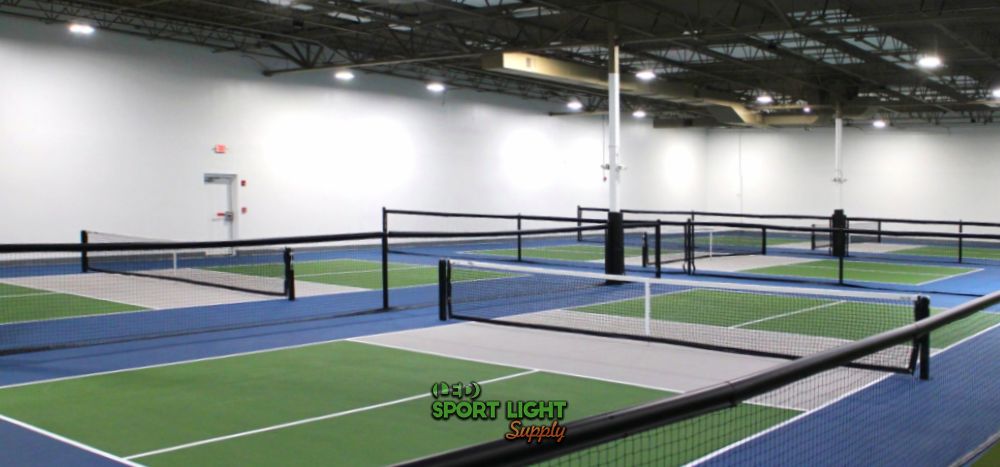
The price of installing pickleball court lights can vary quite a bit depending on the size of the project and the site conditions. For a single outdoor court, a basic lighting installation usually falls somewhere between $8,000 and $20,000. That range typically covers several LED fixtures, poles, wiring, and installation.
Once you start talking about multi-court facilities, the numbers go up quickly. A facility with four to six courts might spend $40,000 to $100,000, and larger pickleball complexes with eight or more courts can sometimes reach $150,000 or higher, especially if new electrical infrastructure is required.
A typical recreational pickleball court lighting setup might include 4 to 6 LED fixtures per court, depending on the pole layout and illumination target. Many parks aim for around 30 to 50 foot-candles of lighting, which provides good visibility for evening recreational play without excessive brightness.
One reason costs vary so much is that every site is a little different. Some courts already have electrical access nearby, while others require trenching hundreds of feet to connect power lines.
Lighting Poles and Fixture Placement
One of the biggest pieces of the budget is the lighting pole system. Most outdoor pickleball courts use poles between 20 and 30 feet tall. This height allows light to spread across the court evenly while minimizing glare for players.
A common layout uses four poles placed around the perimeter of the court, with LED fixtures mounted at the top. Larger complexes sometimes use shared poles between adjacent courts to reduce installation costs.
Pole installation itself can range from $1,500 to $5,000 per pole, depending on materials and foundation work. Steel poles with concrete footings are the most common choice because they hold up well in outdoor environments.
Proper placement is also part of the equation. Lights positioned too low can create glare when players look up for a lob shot. Lights positioned too high may reduce brightness on the playing surface. That’s why sports lighting designers often run lighting simulations before installation.
Electrical Infrastructure and Installation Costs
Another major part of the project is the electrical work. Even if the lighting fixtures themselves are reasonably priced, running power to the courts can add several thousand dollars.
If the courts are located close to an existing electrical panel, installation might be relatively straightforward. But when courts are farther away, contractors may need to dig trenches for underground wiring.
In some park projects, trenching alone can cost $15 to $40 per foot, which means a 200-foot run could add $3,000 to $8,000 to the project. Electrical panels, timers, and lighting controls can add another $1,500 to $5,000 depending on the system.
Many facilities now install automated lighting controls or timer systems, which allow lights to shut off automatically at certain hours. That helps reduce electricity usage and prevents lights from being left on overnight.
Why LED Pickleball Court Lighting Is Becoming the Standard
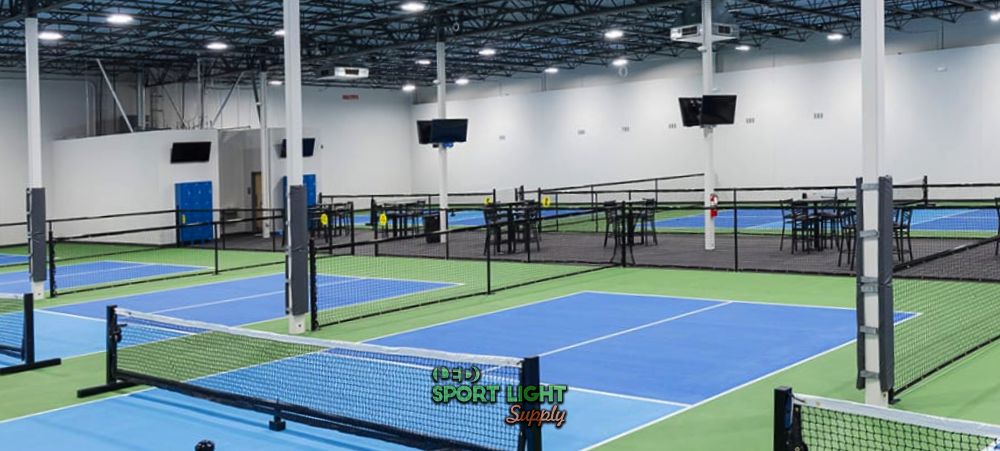
Over the last decade, LED sports lighting has become the preferred choice for most pickleball facilities. Compared to older metal halide systems, LEDs offer several practical advantages.
First, they use far less electricity. A typical LED fixture designed for pickleball courts might consume 150 to 300 watts, while older sports lighting fixtures could draw 1,000 watts or more. That difference can significantly reduce operating costs over time.
Second, LEDs last much longer. Many modern fixtures are rated for 50,000 to 100,000 hours of use. If a court operates its lights for four hours each evening, that could translate to more than 20 years of service life before replacement.
Another benefit is instant startup. Older lighting systems sometimes took 10 to 15 minutes to warm up, while LEDs reach full brightness almost immediately. That’s a small detail, but players and facility managers definitely appreciate it.
Because of these advantages, many grant programs and park departments actually prefer projects that use energy-efficient LED lighting systems.
Long-Term Value for Communities
While the upfront cost of installing pickleball court lighting can feel substantial, many communities find that the return is well worth it. Lighting effectively doubles the usable hours of the courts.
For example, a park that currently hosts players from 8 AM to 6 PM may add another 3 to 4 hours of evening play once lighting is installed. Over the course of a year, that can translate to over 1,000 additional hours of court availability.
That increase in access helps accommodate growing demand without building entirely new courts. Considering that constructing a brand-new pickleball facility can cost $60,000 to $120,000 per court, upgrading existing courts with lighting often becomes a much more budget-friendly option.
Communities also tend to see higher participation once courts are lit. Working adults who can’t play during the day suddenly have evening options, and recreational leagues often prefer nighttime schedules during warmer months.
Because the initial investment can still reach tens of thousands of dollars, many parks departments and pickleball clubs start looking into grants or funding programs to help offset the costs. Lighting upgrades that expand recreational opportunities, improve safety, and reduce energy consumption often align well with the goals of many grant providers.
Can You Apply for Grants for Pickleball Court Lighting?
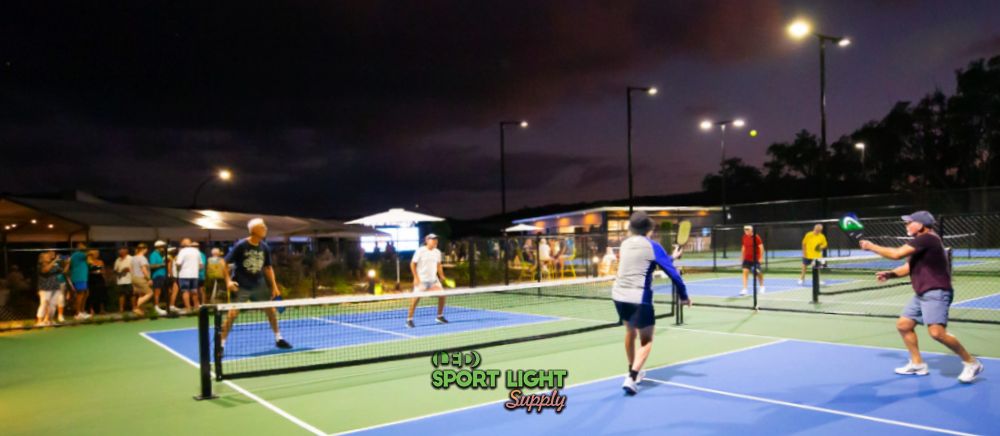
The short answer is yes. Quite a few parks departments, schools, and nonprofit sports groups have successfully secured grants to upgrade recreational facilities, including pickleball court lighting systems. As pickleball keeps growing across the United States, more funding programs are starting to recognize that courts need better infrastructure to keep up with demand.
Over the past several years, pickleball participation has climbed dramatically. According to industry reports, more than 13 million Americans played pickleball in 2023, and many cities are still struggling to provide enough courts. Lighting upgrades are often one of the fastest ways to expand court availability without building new facilities. When courts stay open into the evening, usage can easily increase by 30% to 50%.
That’s one reason grant committees tend to view these projects favorably. A lighting installation doesn’t just improve a facility. It allows more people to access the courts, supports community recreation programs, and encourages outdoor physical activity.
Why Grant Providers Support Recreational Lighting Projects
Many grant programs focus on improving community health, increasing access to public recreation, and encouraging outdoor activity. Pickleball court lighting fits naturally into these goals because it expands opportunities for people to stay active.
For example, parks often see heavy court usage during late afternoons and weekends. Once lights are installed, those same courts can host evening leagues, beginner clinics, or casual community play. In some locations, evening hours become the busiest part of the day because many players work during daylight hours.
Lighting can also make facilities safer and more welcoming. Well-lit courts help players see the ball clearly, reduce shadowy areas around the playing surface, and create a more comfortable environment for evening recreation.
Grant reviewers often like projects that benefit a wide group of people. Pickleball courts tend to attract players ranging from teenagers to retirees, which makes them appealing from a community engagement standpoint.
Types of Organizations That Can Apply
Several types of organizations are commonly eligible to apply for recreation grants. Local parks and recreation departments are among the most frequent applicants, since they manage public sports facilities and community parks.
Schools and universities can also qualify when courts are used for student recreation or community programs. Many schools open their pickleball courts to the public after class hours, which strengthens the case for funding.
Nonprofit organizations may also apply in many situations. Community pickleball clubs, sports associations, and recreation foundations sometimes operate facilities that are open to the public. If the organization is registered as a nonprofit and offers community access, it may be eligible for certain grants.
Municipal partnerships are also fairly common. A local pickleball club might work together with a parks department to submit a grant application that benefits a shared facility.
Where Grant Funding Usually Comes From
Funding sources for pickleball court lighting projects can vary depending on the region, but they generally fall into a few categories.
Local governments sometimes offer park improvement grants that support upgrades to public facilities. These grants may cover lighting installations, resurfacing projects, or new sports equipment.
State recreation departments often run programs designed to improve outdoor spaces such as parks, trails, and sports complexes. Some of these programs distribute tens of millions of dollars each year to support community recreation infrastructure.
Federal programs may also provide funding in certain cases. Grants connected to community development, outdoor recreation, or public health initiatives occasionally support projects that expand access to sports facilities.
Private foundations and corporate community programs can also be part of the picture. Some companies sponsor recreational projects in the communities where they operate, especially when the project encourages physical activity or improves public spaces.
Because there are multiple funding sources available, organizations often apply to several programs at the same time to increase their chances of success.
Can We Get 100% Funding?
One of the first questions communities usually ask is whether a grant can cover the entire cost of installing pickleball court lighting. The honest answer is that full funding does happen sometimes, but it’s not the most common outcome.
Many grant programs use what’s called a matching fund structure. This means the grant provider contributes part of the project cost, while the applicant supplies the rest through local funding or fundraising.
A typical recreation grant might cover 50% to 80% of the total project budget. For example, if a lighting installation costs $60,000, the grant might provide $30,000 to $45,000 while the remaining portion comes from other sources.
Grant providers often prefer this approach because it shows that the community is invested in the project. When local organizations contribute resources of their own, it signals that the facility will likely be maintained and used for many years.
When Full Funding Is Possible
Even though partial funding is more common, there are situations where 100% grant funding can occur.
Smaller community grants sometimes fully support projects with modest budgets. For example, a local foundation might provide $10,000 to upgrade lighting at a neighborhood court. Corporate community programs occasionally fund entire projects as well, especially when the project aligns with their outreach goals.
Energy efficiency programs may also contribute substantial funding if the project installs high-efficiency LED sports lighting. Some utilities offer incentives that offset part of the equipment cost because LED systems reduce electricity consumption.
While it’s not wise to rely entirely on the hope of full funding, combining several smaller grants can sometimes cover a large portion of the project budget.
Why Partial Grants Still Make a Big Difference
Even when a grant only covers part of the cost, it can dramatically improve the financial feasibility of a lighting project.
Imagine a community planning a $50,000 pickleball court lighting installation. If a grant provides $30,000, the remaining $20,000 becomes far easier to manage through local budgets, sponsorships, or fundraising.
Once a project receives initial grant support, it often becomes easier to secure additional contributions as well. Sponsors and community donors tend to feel more confident supporting a project that already has outside funding.
For many communities, that first grant becomes the spark that helps the entire project move forward. Instead of postponing the lighting upgrade for several years, the courts can be illuminated much sooner and begin serving players during evening hours.
Types of Grants Available
Once communities start looking into funding for pickleball court lighting projects, they usually discover that there isn’t just one single grant source. In reality, several different types of funding programs may apply depending on the location, the organization applying, and the goals of the project.
Lighting upgrades are often considered part of recreational facility improvements, which means they can qualify under programs that support parks, public health initiatives, or community development. Some grants focus on outdoor recreation, others prioritize community wellness, and some are tied to sustainability or energy efficiency.
Because of this, organizations planning a pickleball lighting installation often explore multiple funding paths at the same time. The more closely a project aligns with the goals of a grant provider, the better the chances of receiving support.
| Grant Type | What It Supports | Typical Funding Range |
|---|---|---|
| Government Recreation Grants | Public parks, sports courts, recreation upgrades | $10,000 – $200,000+ |
| Sports & Community Health Grants | Physical activity programs, community wellness | Varies |
| Corporate Sponsorship / Grants | Community projects, park improvements | Varies |
| Private Foundation Grants | Youth sports, healthy lifestyle initiatives | $5,000 – $50,000+ |
| Energy & Sustainability Grants | LED lighting upgrades, energy efficiency | Varies |
Government Recreation Grants
One of the most common funding sources for pickleball court lighting comes from government recreation grants. Many state and local governments run programs specifically designed to improve public parks and sports facilities.
These grants typically support projects such as playground upgrades, trail construction, basketball courts, tennis courts, and other community recreation spaces. Pickleball courts fall naturally into this category, especially when they are located in public parks or municipal sports complexes.
Lighting upgrades are often viewed favorably because they increase the total number of hours a facility can be used. A court that normally closes at sunset can stay active well into the evening once lighting is installed. In many parks, that means an additional 3 to 4 hours of playable time each day, which significantly increases community access.
For cities that have limited land available for new parks, upgrading existing facilities becomes a practical solution. Installing lighting is far less expensive than building new courts from scratch, yet it allows far more players to use the same space.
State recreation departments frequently manage these programs and distribute funding to local governments and nonprofits. Depending on the program, grant amounts may range from around $10,000 for smaller improvements to $200,000 or more for larger park development projects.
Some states also require a matching contribution from the applicant, while others provide higher funding percentages for projects located in underserved communities.
Sports and Community Health Grants
Another category worth exploring is sports and community health grants. These programs are usually offered by nonprofit organizations, sports foundations, or public health initiatives that want to encourage people to stay active.
Pickleball fits very naturally within this type of funding program. One of the unique things about the sport is how many different age groups participate. It’s not unusual to see teenagers, working professionals, and retirees sharing the same court during a casual evening session.
Because pickleball is relatively easy to learn and doesn’t require intense physical conditioning, it has become especially popular among adults looking for a fun way to stay active. Health organizations often highlight the sport as a way to encourage movement, social interaction, and outdoor recreation.
Grant committees reviewing these applications often like projects that serve a broad range of community members rather than a narrow user group. A pickleball facility that supports youth programs, beginner lessons, and senior leagues can demonstrate strong community impact.
Lighting installations help support these activities by making courts available after school hours or after work, which are the times when many people are free to play.
Some health-related grant programs focus specifically on increasing access to recreational spaces in neighborhoods that have fewer sports facilities. In those cases, pickleball lighting projects that open courts to the public may align well with the program’s objectives.
Corporate and Foundation Grants
Private foundations and corporate community programs can also be a valuable funding source for pickleball court lighting upgrades.
Many companies run community outreach or philanthropic programs that support local initiatives. Recreational facilities often qualify because they benefit large numbers of residents and contribute to neighborhood quality of life.
Businesses sometimes sponsor park improvements as part of their community engagement efforts. In some cases, companies provide funding for facility upgrades in exchange for simple recognition, such as signage acknowledging their contribution.
Corporate support may also come from companies connected to energy, construction, or outdoor recreation industries. These businesses often like to fund projects that improve public spaces while also demonstrating sustainable practices.
For example, energy companies frequently support projects that install energy-efficient LED lighting systems. Modern LED sports lights can reduce electricity consumption by 50% or more compared to older lighting technologies. Because of that, upgrading to LED fixtures aligns well with sustainability goals.
Private foundations may also provide grants for community recreation. Some foundations focus specifically on youth sports, while others support projects that encourage healthy lifestyles or community gathering spaces.
The amount of funding available through corporate or foundation grants can vary widely. Some programs offer smaller grants in the $5,000 to $25,000 range, while larger foundations may fund projects worth $50,000 or more.
Matching Your Project With the Right Grant
One thing experienced grant applicants learn fairly quickly is that not every funding opportunity will fit every project. Each grant program usually has its own goals, eligibility requirements, and preferred types of projects.
Because of that, a little research goes a long way. Organizations planning a pickleball lighting project often review grant guidelines carefully to understand what the funding provider is looking for.
For example, a recreation department grant might focus on improving public park infrastructure, while a health foundation may prioritize programs that increase physical activity. An energy-focused grant might place more weight on efficient LED lighting systems and reduced power consumption.
When the project description clearly connects with the mission of the funding organization, the proposal tends to resonate more strongly with grant reviewers.
Communities that successfully secure funding often apply to several grant programs simultaneously, increasing their chances of covering a large portion of the project cost. With the right combination of funding sources, installing pickleball court lighting becomes a much more achievable goal.
Tips for Writing a Strong Grant Application
Getting a grant for pickleball court lighting is not only about finding the right funding program. A big part of the process comes down to how clearly the proposal explains the benefits of the project. Grant reviewers often read dozens, sometimes hundreds, of applications. The proposals that stand out are usually the ones that present a clear story, supported by numbers and real community needs.
When a grant committee reviews a lighting project, they are typically asking a simple question in the back of their minds: How will this project make a positive difference for the community? The more clearly that question is answered, the stronger the application becomes.
A good starting point is showing the current demand for pickleball courts in your area. Many communities are seeing courts filled from morning through late afternoon, especially on weekends. In some parks, players even rotate every 15 or 20 minutes because there are so many people waiting to play.
Adding sports lighting to pickleball courts can instantly expand the usable hours of those facilities. Instead of closing at sunset, courts can remain open for evening play. In practical terms, that often means 3 to 4 extra hours of court time every day.
If a park currently hosts players from 8 AM to 6 PM, installing lighting could extend play until 9 PM or even 10 PM depending on local regulations. Over the course of a year, that could translate into more than 1,000 additional hours of court usage without building a single new court.
Grant reviewers tend to appreciate projects that maximize existing infrastructure. When lighting allows a facility to serve twice as many players using the same courts, the benefits become easy to understand.

Use Data to Show Real Community Impact
Numbers can make a grant proposal far more convincing. Instead of simply saying that courts are busy, showing actual usage data paints a clearer picture.
For example, a facility that currently serves 250 to 300 players per week may realistically double that number once lighting becomes available. Evening play tends to attract people who work during the day, including young professionals and families.
Leagues and organized play programs also tend to prefer evening schedules. With lighting installed, courts can host weeknight leagues, beginner clinics, youth programs, and community tournaments.
Providing these kinds of details helps the grant committee visualize how the courts will be used after the upgrade. It also demonstrates that the organization has thought carefully about the long-term value of the project.
Some applicants even include simple statistics such as current court reservations, weekly player counts, or community surveys showing demand for more playing hours. Small pieces of data like these help transform a general idea into a concrete community project.
Having Comprehensive Lighting Design and Showing It to the Committee
One thing that often separates stronger applications from weaker ones is the level of planning behind the project. Instead of submitting a proposal that simply states “we plan to install lights,” many successful applicants include a professional pickleball court lighting design plan.
Providing a detailed design signals that the organization has already taken time to plan the project carefully. It shows grant reviewers that the lighting installation is realistic, technically sound, and ready to move forward once funding becomes available.
A comprehensive lighting design usually includes several key elements. One of them is the lighting pole layout, which shows exactly where poles will be installed around the court. Many pickleball facilities use four poles placed around the playing area, typically between 20 and 30 feet tall.
Another component is the fixture specification. This explains what type of LED sports lighting will be used, including wattage, beam angles, and mounting configurations. These details help ensure the courts will receive consistent illumination across the entire playing surface.
Lighting designers also calculate illumination levels, usually measured in foot-candles or lux. Recreational pickleball courts often aim for lighting levels around 30 to 50 foot-candles, which provides comfortable visibility for evening play.
Glare control is another part of a professional lighting plan. If lights are positioned poorly, players may experience glare when looking up for high shots. A well-designed system directs light onto the court while minimizing spill light into surrounding areas.
Some lighting designers even produce visual simulations that show how the courts will look once the lighting system is installed. These simulations can illustrate how evenly the court will be illuminated and how nearby walkways or seating areas may also benefit from improved lighting.
Grant committees often appreciate these visual plans because they make the project much easier to understand. Instead of imagining what the finished facility might look like, reviewers can see a clear layout of the proposed lighting system.
Showing That the Project Is Ready to Move Forward
Another benefit of including a lighting design is that it demonstrates preparation. When an application includes technical drawings, fixture specifications, and estimated illumination levels, it signals that the organization has already consulted professionals and taken the planning process seriously.
From the perspective of a grant committee, that preparation reduces uncertainty. It suggests that the project can move ahead quickly once funding is approved, rather than getting stuck in early planning stages.
A detailed design can also help clarify the project budget. When the lighting system is clearly defined, cost estimates for equipment, poles, and installation become much more accurate. That transparency tends to build confidence among reviewers.
In many successful applications, the combination of community demand data and a well-prepared lighting design creates a strong case for funding. The proposal shows both the need for the project and the readiness to carry it out.
For organizations hoping to secure grants for pickleball court lighting, taking the time to prepare these materials can make a noticeable difference in how the proposal is received. A thoughtful, well-documented plan tells reviewers that the project is not just an idea, but a carefully planned upgrade that will benefit the community for years to come.
Alternative Funding Options
Even when organizations successfully secure grants for pickleball court lighting, those grants do not always cover the entire project cost. Many lighting installations still require additional funding to complete the budget. That’s why a lot of communities take a mixed approach and combine several funding sources together.
The good news is that pickleball communities are usually very supportive when it comes to improving their courts. Once players hear that lighting could allow games to continue after sunset, people tend to get excited about the idea. Evening play is especially appealing for those who work during the day and rarely get a chance to use the courts before they close.
Because of that enthusiasm, local fundraising efforts often turn out to be more effective than people expect.
Community Fundraising Can Go a Long Way
Many pickleball clubs and park groups have raised meaningful amounts of money through community-driven fundraising activities. These efforts don’t always have to be complicated. Sometimes a simple tournament, charity event, or community pickleball day can generate thousands of dollars toward a lighting project.
For example, a local pickleball tournament with a $30 to $50 entry fee per player can easily raise several thousand dollars if participation is strong. If 80 players sign up for a weekend event, that alone could bring in $2,400 to $4,000 before sponsorships or donations are even added.
Some communities also organize fundraising leagues, social play nights, or paddle raffles to support facility upgrades. Players often feel a sense of ownership over their courts, so contributing to improvements like lighting feels worthwhile to them.
Even smaller contributions can add up surprisingly fast. If a club has 150 regular players and each contributes $100, that already creates a $15,000 funding pool that can go directly toward the lighting project.
Corporate Sponsorship Opportunities
Local businesses can also become valuable partners when communities are planning sports lighting upgrades. Many companies enjoy supporting recreational projects because they bring people together and improve neighborhood spaces.
Corporate sponsorships sometimes come in the form of direct financial support. Other times, businesses may contribute materials, equipment, or services that help reduce the project cost.
In return, sponsors are often acknowledged with recognition signage near the courts or small plaques that highlight their contribution. Some larger sponsors may even receive naming recognition for a court or facility area.
For example, a local company might sponsor the lighting installation for one court in exchange for signage that reads something like “Court Lighting Sponsored by [Company Name].”
For businesses, this type of partnership can be a nice way to connect with the community while supporting a healthy outdoor activity. For the pickleball facility, it helps close the gap between grant funding and the final project budget.
Partnerships With Local Governments
Working together with local governments can also help move lighting projects forward. In many cases, pickleball courts are located within public parks or recreation facilities, which means parks departments already have an interest in improving them.
A partnership approach sometimes works well. The parks department may contribute a portion of the project funding while a pickleball club or community organization handles fundraising and grant applications.
This type of collaboration spreads the financial responsibility across multiple groups. It also shows grant providers that the project has broad community support, which can strengthen future funding applications.
Cities often appreciate projects like this because lighting upgrades increase the usefulness of existing recreational spaces without requiring major new construction.
Player Contributions and Membership Support
Another approach some clubs take is introducing voluntary membership contributions or facility improvement funds. These are not always mandatory fees. Instead, they are optional donations specifically dedicated to court upgrades.
When players understand how the money will be used, many are happy to support the project. Lighting improvements directly benefit the players themselves, since they will be able to enjoy the courts for longer hours.
Even small recurring contributions can make a difference. If a club collects $10 per month from 100 members, that generates $12,000 per year that can go toward facility improvements such as lighting.
Some facilities also run short-term donation drives where players contribute toward a specific goal, such as installing LED lighting on a particular court. These campaigns often work well because people like seeing a clear target and timeline.
Combining Multiple Funding Sources
Most successful pickleball lighting projects are funded through a combination of grants, community support, sponsorships, and partnerships. Instead of relying on a single source of funding, communities build a financial plan that pulls from several different places.
For example, a lighting project costing $70,000 might receive $40,000 from a recreation grant, $15,000 from community fundraising, and $15,000 from local sponsors or park department support.
When these pieces come together, projects that initially seemed difficult to afford suddenly become much more realistic.
With strong community interest and a little creativity in fundraising, even larger pickleball court lighting installations can move from idea to reality much faster than many organizations expect.
Looking Ahead
As pickleball continues to grow, more communities are exploring ways to expand court access. Lighting installations are often one of the most practical upgrades because they allow existing courts to serve more players each day.
Grant funding can play a major role in making these projects possible. While full funding may not always be available, many organizations successfully reduce their project costs through recreation grants, community programs, and corporate partnerships.
Preparation goes a long way when applying for funding. Projects that present clear benefits, realistic budgets, and well-developed lighting plans often stand out during the review process.
If your organization is considering installing pickleball court lighting and would like guidance on planning, design, or grant preparation, feel free to reach out to our team. We’re happy to share our experience, discuss lighting solutions, and help you explore the best options for bringing your courts to life after sunset.