
Good basketball lighting does more than simply make the court visible after sunset. It affects how players see the ball, how safely they move around the court, and how enjoyable the game feels for everyone watching and playing. Whether you are planning a backyard basketball court, upgrading a school gym, or improving a community sports facility, lighting is one of the areas where smart planning can save a lot of money over time.
So, how much does basketball court lighting cost? The answer depends on several things, including whether the court is indoors or outdoors, the type of lighting system you choose, installation requirements, and whether you are replacing old fixtures or starting from scratch.
A small residential court may only need a few thousand dollars in lighting equipment, while a professional-level facility can require a much larger investment. The good news is that modern LED technology, solar options, and available funding programs have made high-quality court lighting more affordable than before.
How Much Does Basketball Court Lighting Cost?
The cost of basketball court lighting can range from around $2,000 to over $100,000, depending on the size and purpose of the court. A simple backyard setup and a professional competition court have very different lighting needs.
For a residential basketball court, homeowners often spend between $2,000 and $15,000 for a complete lighting setup. This usually includes LED floodlights, mounting poles, wiring, and installation. The final price depends on whether electrical connections already exist near the court and how many lights are required.
Schools, recreation centers, and community courts usually have higher costs because they require brighter lighting, better coverage, stronger equipment, and more complicated installation work. These projects commonly range from $10,000 to $50,000 or more.
Professional basketball facilities can cost significantly more. High-level venues often require advanced lighting systems designed for television broadcasting, precise brightness control, and extremely consistent illumination across the entire playing surface.
The biggest mistake many buyers make is only looking at the upfront price. A cheaper lighting system may cost less initially but create higher electricity bills and maintenance expenses later. Looking at the total cost over the lifespan of the system usually gives a clearer picture.
| Basketball Court Lighting Type | Estimated Cost Range | Typical Applications | Main Cost Factors | Notes |
|---|---|---|---|---|
| Residential Outdoor Basketball Court | $2,000 – $15,000 | Backyard courts, private homes, small recreational areas | LED fixtures, number of lights, wiring distance, pole requirements | Lower-cost option when electrical connections are already available nearby |
| Indoor Basketball Court Lighting Upgrade | $10,000 – $30,000 | Schools, gyms, training centers, recreation facilities | LED fixtures, ceiling height, mounting equipment, electrical upgrades | Costs increase for older gyms that need wiring or ceiling modifications |
| Large Indoor Gym LED Conversion | $30,000 – $75,000+ | Universities, large sports facilities, competition gyms | High-output LED fixtures, professional installation, control systems | Higher upfront cost but can reduce energy and maintenance expenses over time |
| Outdoor Public Basketball Court | $15,000 – $50,000+ | Parks, schools, community courts | Light poles, foundations, underground wiring, weather-resistant fixtures | Outdoor installation often costs more due to construction and electrical work |
| Professional Basketball Facility | $50,000 – $100,000+ | Stadiums, professional training venues, broadcast facilities | Advanced LED systems, precise lighting control, high uniformity requirements | Designed for high-performance games, cameras, and spectator experience |
Indoor Basketball Court Lighting Costs
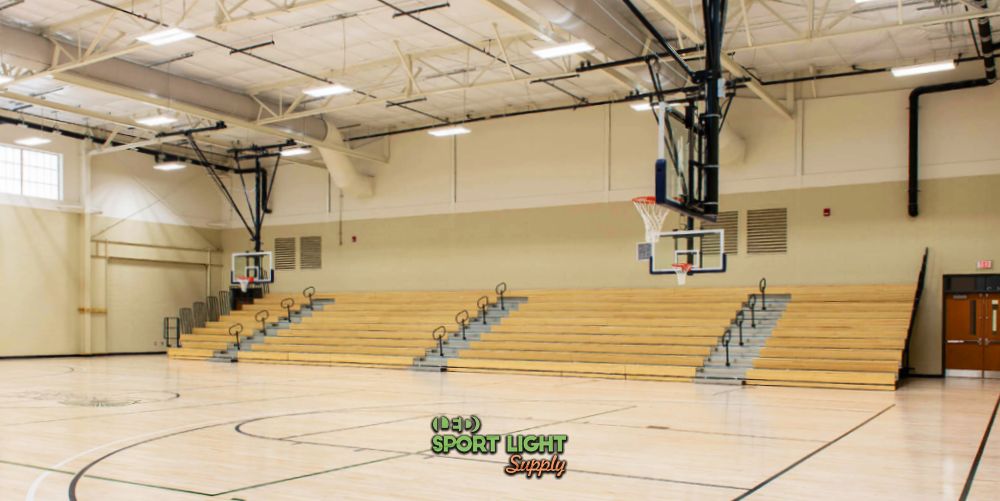
Indoor basketball courts are commonly found in schools, universities, gyms, training centers, and recreation facilities. Since these lighting systems are installed in a controlled indoor environment, they are protected from rain, wind, and temperature changes. This can help reduce some weather-related maintenance issues compared with outdoor lighting systems.
However, indoor basketball court lighting projects can still involve significant costs, especially when upgrading older facilities. A basic indoor lighting upgrade may cost around $10,000 to $30,000, while a complete LED conversion for a larger gymnasium can range from $30,000 to $75,000 or more, depending on the size of the facility, ceiling structure, lighting requirements, and equipment quality.
Many older gyms still use metal halide or fluorescent lighting systems that consume more energy and require more maintenance. Replacing these older fixtures with modern LED lighting has become a common upgrade because LEDs provide brighter and more consistent illumination while reducing electricity usage.
LED systems also solve several common problems found in older indoor lighting setups. They turn on instantly without warm-up time, provide better control over brightness, reduce dark spots across the court, and usually require fewer replacements throughout their lifespan. For facilities that operate their courts for many hours every week, the long-term savings can make a noticeable difference.
Lighting Fixtures
The type and quality of lighting fixtures have a major impact on the total cost of an indoor basketball court lighting project. Basic LED fixtures designed for recreational use may have a lower upfront price, while professional sports lighting systems with advanced glare control, better beam control, and improved light distribution will generally cost more.
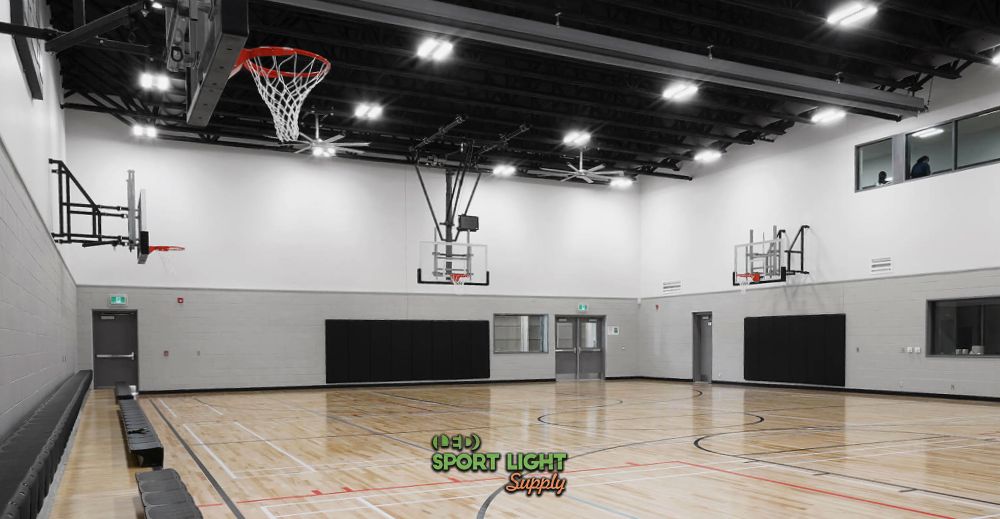
A typical indoor basketball court requires multiple high-output LED fixtures installed across the ceiling to create balanced coverage. The exact number of fixtures depends on several factors, including court size, ceiling height, brightness requirements, and whether the facility is used for casual recreation, school competitions, or professional training.
Higher-quality fixtures usually come with a higher initial price, but they often provide better efficiency and longer service life. Many commercial LED sports fixtures are designed to operate for 50,000 hours or more, which can significantly reduce replacement costs over time.
When choosing fixtures, facility owners should consider more than just brightness. The quality of the light distribution, glare control, color consistency, and energy efficiency all affect the overall playing experience.
Ceiling Height and Mounting Requirements
One of the biggest differences between indoor and outdoor basketball court lighting is the mounting method. Outdoor courts typically rely on poles, while indoor courts usually require ceiling-mounted lighting systems.
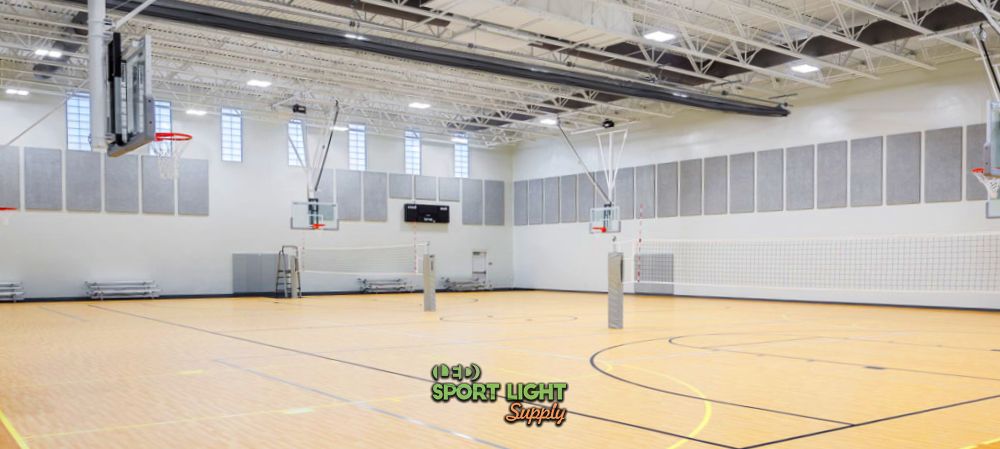
Indoor gyms often have ceilings ranging from 20 feet to more than 40 feet high. A higher ceiling means the lighting system needs stronger fixtures with carefully designed beam angles to ensure the light reaches the court evenly.
Installation costs may increase when contractors need specialized equipment such as scissor lifts, aerial work platforms, or other access tools. Facilities with complicated ceiling structures may also require customized mounting brackets, additional support systems, or adjustments to existing equipment.
The position of the fixtures is also important. If lights are installed incorrectly, the court may have uneven brightness, excessive glare, or areas that are difficult for players to see clearly. Professional lighting design helps determine the best fixture placement to create a comfortable playing environment.
Ceiling Modification and Electrical Work
Some older buildings were not designed with modern LED sports lighting systems in mind. As a result, upgrading the lighting may require additional electrical work or ceiling modifications before new fixtures can be installed.
Older gyms may need electrical circuit upgrades, new wiring, reinforced mounting points, removal of outdated lighting equipment, or adjustments to other ceiling-mounted systems such as ventilation equipment.
Buildings with newer electrical infrastructure usually have a smoother and more affordable upgrade process. However, older facilities may need additional preparation work, which can increase both project time and overall cost.
Before starting an indoor lighting upgrade, it is helpful to evaluate the condition of the existing electrical system. A professional inspection can identify potential issues early and help prevent unexpected expenses during installation.
Installation and Labor Costs
Professional installation is recommended for indoor basketball court lighting because fixture placement has a direct impact on lighting quality. A lighting system that is not properly designed or positioned may create uneven brightness, shadows, or glare that affects how players see the ball.
Experienced installers understand how to position fixtures, adjust aiming angles, and create proper coverage across the entire playing surface. Labor costs depend on several factors, including gym size, ceiling height, installation difficulty, removal of old fixtures, and the amount of electrical work required.
Although professional installation may add to the initial budget, proper installation helps ensure that the lighting system performs efficiently and delivers better long-term value.
Outdoor Basketball Court Lighting Costs
Outdoor basketball court lighting usually requires a larger amount of installation work because the system must withstand changing weather conditions and provide reliable performance throughout the year.
A residential outdoor basketball court may cost around $2,000 to $15,000, depending on the court size, number of fixtures, and whether electrical connections are already available nearby. Larger public courts, school courts, and multi-court facilities may cost $15,000 to $50,000 or more because they often require stronger poles, more powerful fixtures, underground wiring, and more complex installation.
Unlike indoor courts, outdoor lighting projects usually involve additional construction work beyond installing the lights. Contractors may need to prepare concrete foundations, install poles, run underground cables, complete electrical connections, and ensure the system meets local safety requirements.
The final cost depends heavily on the site conditions. A court located near an existing electrical source may have a simpler installation, while a remote court may require much more preparation.
Outdoor Lighting Fixtures
Outdoor basketball court lights need to be more durable because they are exposed to rain, dust, humidity, sunlight, and temperature changes throughout the year.
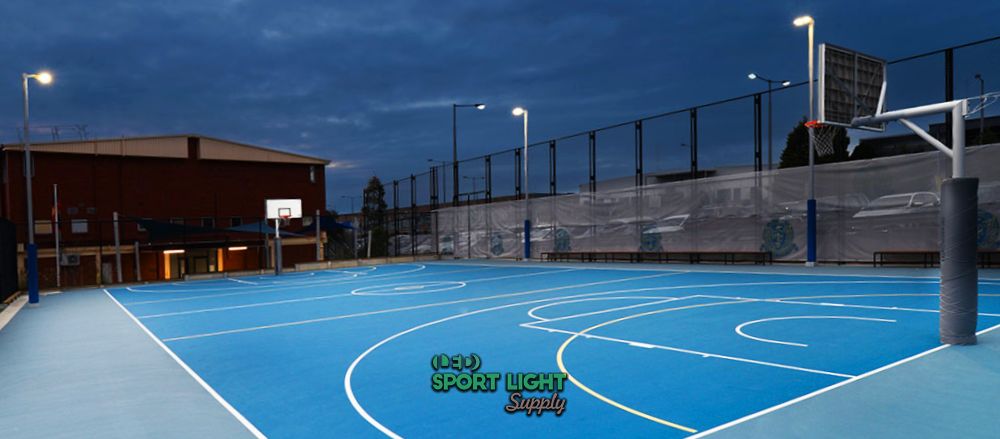
Most outdoor basketball courts use high-powered LED floodlights designed specifically for outdoor sports applications. These fixtures usually include weather-resistant housings, improved heat management, and protective designs that help maintain performance in different conditions.
The price of outdoor fixtures depends on factors such as light output, fixture quality, weather protection rating, energy efficiency, and warranty coverage.
Choosing lower-cost outdoor lights may reduce the initial investment, but cheaper products may not provide the same brightness consistency, durability, or lifespan as higher-quality sports lighting fixtures. Over time, frequent replacements and repairs can increase the overall cost.
A good outdoor lighting system should provide reliable performance while minimizing glare and directing light efficiently onto the playing area.
Light Poles and Mounting Structures
Unlike indoor courts where fixtures can usually be attached to ceilings, outdoor basketball courts require dedicated poles or mounting structures to position the lights correctly.
Pole installation can represent a significant portion of the total project budget because it involves materials, foundation work, installation equipment, and safety considerations. The cost usually includes the poles themselves, concrete foundations, lifting equipment, and professional installation.
The number of poles required depends on the court layout and lighting design. A full basketball court typically needs multiple poles positioned around the playing area to achieve balanced coverage.
Pole height also affects the cost. Taller poles can spread light over a wider area and help reduce glare, but they require stronger foundations and more complex installation procedures.
Underground Wiring and Electrical Installation
Outdoor courts often require additional electrical work, especially when the power source is located far away from the playing area.
Installation costs may increase due to underground cable trenching, electrical panels, weatherproof connections, control systems, permits, and inspections.
For some locations, electrical construction can become one of the largest expenses in the project. This is one reason solar-powered basketball court lighting has become more attractive for remote courts or areas where connecting to the electrical grid would require expensive construction.
A detailed site evaluation can help determine whether traditional electrical installation or a solar solution provides better long-term value.
Weather Protection and Maintenance
Outdoor lighting systems need to be designed for long-term exposure to changing weather conditions. Unlike indoor systems, outdoor fixtures must handle moisture, dust, strong sunlight, and seasonal temperature changes.
Quality outdoor LED fixtures usually include protective features that help prevent damage from environmental conditions. However, regular maintenance is still needed to keep the system operating properly.
Maintenance usually involves checking electrical connections, inspecting poles and mounting hardware, cleaning fixtures, and replacing damaged components when necessary.
A properly designed outdoor lighting system with regular maintenance can provide many years of reliable service while helping avoid unexpected repair costs.
Which Costs More – Indoor or Outdoor Basketball Court Lighting?
There is no single answer because every basketball court project has different requirements. A small outdoor backyard court may cost less than upgrading a large indoor gym, while a professional outdoor sports facility may require a much larger investment.
In many cases, outdoor lighting projects have higher installation costs because they require poles, foundations, underground wiring, and weather-resistant equipment. Indoor projects may involve fewer construction requirements, but costs can increase when high ceilings, electrical upgrades, or advanced sports lighting systems are needed.
The best way to compare costs is to look beyond the initial installation price. Energy consumption, maintenance needs, replacement costs, and expected lifespan all affect the true value of a lighting system.
A system with a slightly higher upfront cost can often provide better long-term savings through lower electricity usage, fewer repairs, and improved performance throughout its service life.
Factors That Affect Basketball Court Lighting Cost
Many people assume that the number of lights is the biggest factor affecting basketball court lighting costs, but the actual budget depends on many different elements. The size of the court, lighting performance requirements, fixture quality, electrical conditions, and installation complexity can all influence the final price.
A small backyard basketball court may only need a simple lighting setup, while a school gym, community sports facility, or professional training center requires a much more advanced system. For example, a residential court lighting project may cost around $2,000 to $15,000, while a large commercial sports lighting installation can easily exceed $50,000 when additional electrical work and construction are involved.
Understanding these cost factors helps buyers choose a system that matches their needs instead of paying for unnecessary features or choosing equipment that may not perform well over time.
Court Size and Layout
The size of the basketball court has a direct impact on the number of fixtures required and the overall installation cost. A half basketball court may only need 2 to 4 LED fixtures depending on the lighting design, while a full-size basketball court may require 4 to 12 or more fixtures to achieve proper coverage.
A larger court requires more lighting because the entire playing surface needs to be evenly illuminated. Areas such as the corners, sidelines, free throw line, and spaces behind the baskets all need sufficient visibility for players.
The layout and surrounding environment also affect the lighting design. An outdoor court surrounded by trees, buildings, fences, or nearby homes may require different pole locations or fixture angles to avoid shadows and glare.
For example, a court installed in an open park area may have more flexibility with pole placement, while a backyard court surrounded by buildings may require careful planning to make sure light reaches the court without disturbing neighbors.
Indoor courts also have layout considerations. A gym with a 20-foot ceiling may require a different lighting approach compared with a facility with a 40-foot ceiling because the light needs to travel a greater distance before reaching the playing surface.
Lighting Brightness and Performance Requirements
Not every basketball court needs the same level of brightness. The lighting requirements for a private backyard court are very different from those of a tournament venue or professional training facility.
A recreational court used for evening games may only require basic illumination, while competitive basketball courts usually need higher brightness levels, better uniformity, and improved glare control.
For example, a casual outdoor court may use a lower-output LED system costing around $2,000 to $8,000, while a competition-level court may require a much more advanced system costing $20,000 to $100,000 or more.
Professional lighting designs consider several performance factors, including brightness, light distribution, color quality, and how evenly the light spreads across the court. Simply installing brighter lights does not always create a better playing environment. Poorly positioned fixtures can create harsh glare, dark areas, and uneven visibility.
A properly designed system focuses on putting the right amount of light where players need it most, rather than simply increasing the number of fixtures.
Type and Quality of Lighting Fixtures
Lighting fixtures are another major factor that affects basketball court lighting costs. There is a wide range of options available, from basic LED floodlights for residential courts to professional sports lighting systems designed for high-performance venues.
Lower-cost fixtures may seem attractive because they reduce the initial investment, but cheaper products may have shorter lifespans, weaker light distribution, and higher maintenance requirements.
High-quality LED fixtures are often selected because they provide better performance and long-term value. Many commercial-grade LED sports lights are designed to operate for 50,000 to 100,000 hours, which can translate into many years of use depending on daily operating time.
For example, a court used for 4 to 6 hours per day may operate for more than 1,500 to 2,000 hours per year. A longer-lasting LED system can significantly reduce the number of replacements needed compared with older lighting technologies.
A good lighting system is not just about producing more brightness. It is about controlling where the light goes, reducing wasted energy, and creating a comfortable environment for players and spectators.
Electrical and Installation Requirements
Electrical conditions at the site can have a major impact on the final project cost. Two basketball courts with identical sizes may have very different installation prices depending on the existing electrical infrastructure.
A project becomes more expensive when it requires major upgrades, such as installing a new electrical panel, extending power lines, adding underground wiring, building new pole foundations, or creating customized mounting systems.
For outdoor basketball courts, electrical work can sometimes account for 30% to 50% of the total installation cost, especially when the power source is far away from the court.
For example, installing lights on a court next to an existing building may be relatively simple, while a park court located hundreds of feet away from available power may require significant trenching and cable installation.
Indoor projects may also involve additional expenses if older buildings need electrical upgrades or ceiling modifications before new LED fixtures can be installed.
Because installation costs vary so much, a site evaluation before purchasing equipment can help prevent unexpected expenses.
LED vs. Traditional Basketball Court Lighting
LED lighting has become one of the most popular choices for basketball courts because it offers a strong combination of performance, efficiency, and durability.
Older lighting systems, such as metal halide fixtures, were commonly used in sports facilities for many years. While they can produce strong illumination, they often consume more electricity, require more maintenance, and take several minutes to reach full brightness.
LED systems provide instant lighting and allow better control over brightness levels. They also use less energy compared with many traditional lighting options.
For example, replacing older metal halide fixtures with LEDs may reduce energy consumption by a significant amount, depending on the original system and operating schedule. A facility running lights for 2,000 hours per year may see noticeable savings after upgrading to a more efficient LED system.
Although LED lighting usually has a higher upfront cost, the long-term savings can make it a more economical choice. Lower electricity bills, fewer replacements, and reduced maintenance requirements all contribute to better overall value.
Choosing LED lighting is often a long-term investment that improves both court performance and operating efficiency.
Is Solar Basketball Court Lighting Worth It?
Solar basketball court lighting has become increasingly popular, especially for outdoor courts where connecting to traditional electrical power is expensive or difficult.
Solar systems use photovoltaic panels to collect energy during the day, store it in batteries, and power LED lights at night. Because they can operate independently from the electrical grid, they can reduce some installation expenses.
For certain outdoor projects, solar lighting can eliminate the need for expensive underground wiring and electrical construction. This makes it attractive for locations such as parks, rural courts, community recreation areas, and remote sports facilities.
A traditional outdoor lighting installation may require thousands of dollars in trenching and electrical work, while a solar system can sometimes reduce those construction costs by using independent power generation.
However, solar lighting also requires careful planning. The location needs enough sunlight exposure to charge the batteries effectively. A court receiving strong sunlight throughout the year may perform very well, while a shaded location surrounded by tall buildings or trees may not be ideal.
Battery life is another factor to consider. Depending on the system quality and usage, solar batteries may need replacement after approximately 5 to 8 years.
Solar lighting can be a smart choice for the right location, but it is not always the best solution for every court. A busy school gym or high-use sports facility may still benefit more from a grid-connected LED system because of its consistent power supply and higher performance capabilities.
The best lighting option depends on the court location, expected usage hours, budget, and long-term maintenance plans. By comparing installation costs, energy savings, and future expenses, owners can choose a basketball court lighting system that delivers reliable performance without unnecessary spending.
Practical Ways to Cut Basketball Court Lighting Costs
A quality basketball court lighting system does not always require the largest budget. With the right planning, facility owners can reduce installation expenses while still achieving reliable brightness, energy efficiency, and long-term performance.
Many lighting projects become expensive because decisions are made based only on the initial purchase price. A cheaper lighting system may cost less at the beginning but could lead to higher electricity bills, frequent repairs, and earlier replacements. Looking at the full cost over 5, 10, or even 15 years can help identify better value options.
Several strategies can help reduce basketball court lighting costs without sacrificing the quality of the playing environment.
Upgrade to LED Instead of Replacing Old Fixtures With Similar Models
If an existing basketball court still uses outdated lighting technologies such as metal halide or fluorescent fixtures, replacing them with another traditional system usually does not provide the best long-term value.
LED replacement projects may require a higher upfront investment, but the savings over time can make a significant difference. A complete LED upgrade may cost anywhere from $10,000 to $75,000 or more depending on the size of the facility, but the reduction in energy use and maintenance costs can help recover the investment over time.
Traditional metal halide lights often require more frequent maintenance and may need replacement after a few thousand operating hours. In comparison, many commercial LED fixtures are designed to last 50,000 hours or longer.
For example, a sports facility operating its court lighting for 2,000 hours per year could potentially use the same LED fixtures for more than 20 years before reaching their rated lifespan. During that period, the facility may avoid multiple bulb replacements and reduce labor costs associated with maintenance.
Many schools, businesses, and public facilities may also qualify for energy-efficiency rebates or utility incentive programs when upgrading to LED technology. Depending on the location and program, these incentives may reduce the initial project cost by hundreds or even thousands of dollars.
Upgrading to LED is often one of the easiest ways to reduce long-term basketball court lighting expenses while improving light quality.
Explore Sports Funding and Energy Grants
For schools, nonprofit organizations, and community sports facilities, funding programs can help make basketball court lighting upgrades more affordable.
Many organizations overlook available financial support because they assume lighting improvements must be paid entirely from existing budgets. However, local governments, utility companies, and community development programs sometimes provide assistance for projects that improve public facilities or reduce energy consumption.
Funding opportunities may include recreation improvement grants, school facility improvement programs, community development funding, and energy-efficiency incentives.
The amount of support varies widely depending on location. Some programs may cover a portion of equipment costs, while others may provide rebates based on the amount of energy saved after an LED upgrade.
For example, if a facility replaces an older lighting system that consumes 20,000 kWh per year with an energy-efficient LED system using significantly less electricity, utility providers may offer rebates because the upgrade helps reduce overall energy demand.
When planning a lighting project, it is worth checking with local government offices, utility providers, and sports development organizations before finalizing the budget. A few hours of research could potentially reduce the total project cost.
Consider Solar Where Electrical Installation Costs Are High
Solar basketball court lighting can be a practical way to reduce expenses, especially for outdoor courts located far away from existing electrical infrastructure.
Traditional outdoor lighting installations may require underground trenching, electrical cables, transformers, and connection fees. In some locations, these additional construction costs can add thousands of dollars to the project.
Solar systems avoid many of these expenses because they generate and store their own power. Instead of installing long underground cable routes, a solar lighting system uses photovoltaic panels, batteries, and LED fixtures to provide lighting independently.
For example, if an outdoor court is located 200 to 500 feet away from the nearest electrical connection, traditional wiring costs may become a major part of the project budget. In situations like this, solar lighting may offer better financial value.
However, solar is not suitable for every location. The system needs enough sunlight exposure to charge effectively, and battery replacement should be included in long-term planning. Many solar batteries have an expected service life of around 5 to 8 years, depending on product quality, weather conditions, and usage patterns.
A sunny outdoor court in an open area may benefit greatly from solar technology, while a heavily shaded location or a facility requiring extremely high lighting performance may be better suited to a grid-connected LED system.
Upgrade the System in Stages
Not every organization needs to complete a basketball court lighting upgrade in a single project. A phased approach can help spread costs over time while still improving the quality of the lighting system.
For example, a school or community center with budget limitations may first replace outdated fixtures with LED units, then add smart controls or additional lighting improvements in future phases.
A staged upgrade might involve replacing the oldest fixtures during the first year, improving control systems during the second year, and expanding lighting coverage when additional funding becomes available.
This approach can make large projects easier to manage financially. Instead of spending $50,000 or more at once, an organization may divide improvements into smaller investments based on available funding.
A phased plan also allows facility managers to evaluate energy savings and performance improvements after each upgrade stage.
Use Smart Controls to Reduce Energy Costs
Adding smart controls is another way to improve efficiency and reduce operating expenses.
Modern basketball court lighting systems can include features such as timers, motion sensors, scheduling controls, and remote management systems. These technologies help ensure lights are only operating when needed.
For example, a community court that is accidentally left fully illuminated for several hours after use can waste a significant amount of electricity. Automated scheduling can prevent unnecessary operation and reduce energy waste.
Depending on the size of the facility, smart controls may add a few hundred to several thousand dollars to the initial project cost, but the savings can accumulate over many years.
For courts with changing usage schedules, such as schools or recreation centers, smart controls can be especially useful because lighting levels can be adjusted based on actual needs.
Maintenance Costs for Basketball Court Lighting
Maintenance is another cost factor that should be considered before selecting a basketball court lighting system. The cheapest installation option is not always the most affordable choice over the long term.
Traditional lighting systems often require more frequent bulb replacements, while LED systems generally need less routine maintenance. However, even LED systems require occasional attention. Components such as drivers, control systems, electrical connections, and solar batteries may eventually need inspection or replacement.
A regular maintenance schedule can help identify small problems before they become expensive repairs. Simple actions such as cleaning fixtures, checking electrical connections, inspecting mounting hardware, and reviewing system performance can extend the life of the equipment.
For example, a basketball court used 5 to 7 days per week will usually require more frequent inspections compared with a private backyard court used only a few evenings per month.
Schools, parks, and public recreation facilities can especially benefit from preventive maintenance because their courts often experience heavy daily use.
A reliable maintenance plan protects the original investment and helps ensure that the lighting system continues delivering consistent performance for many years.
By combining LED upgrades, available funding opportunities, smart controls, solar options, and proper maintenance, basketball court owners can significantly reduce both installation and operating costs while creating a better playing environment.
Final Thoughts on Basketball Court Lighting Costs
Basketball court lighting is a project where choosing the cheapest option is not always the most cost-effective decision. The right system should balance upfront investment, energy savings, maintenance needs, and the quality of the playing experience.
LED technology has changed the market by making efficient, high-quality lighting more accessible, while solar options and funding programs have created new ways for organizations to control expenses. Whether you are upgrading a small backyard court or planning a large sports facility, careful planning can help you create a lighting system that performs well for years.