
For many golf courses, lighting is no longer just a nice extra. Extended operating hours, improved player experience, enhanced safety, and lower energy costs have made lighting upgrades a practical investment for both public and private facilities. Whether you’re planning to install lighting for a driving range, replace aging metal halide fixtures, or upgrade an entire property with LED technology, the upfront cost can be substantial.
The good news is that many golf course lighting projects may qualify for grants, rebates, tax incentives, and other funding opportunities. In some cases, facility owners can recover a significant portion of their project costs through a combination of energy-efficiency programs and sustainability initiatives. Understanding how these funding programs work can make the difference between delaying a project for years and moving forward sooner than expected.
What Are Golf Course Lighting Grants?
Golf course lighting grants are financial assistance programs designed to encourage facilities to adopt energy-efficient and environmentally responsible lighting systems. Depending on the program, funding may come from government agencies, utility companies, environmental organizations, tourism authorities, or community development initiatives.
Unlike loans, grants generally do not need to be repaid as long as the project meets the program requirements. Some programs provide direct funding, while others offer rebates after installation or tax incentives that reduce overall project costs.
Many funding providers are focused on reducing energy consumption and carbon emissions. Since lighting often accounts for a noticeable share of a golf facility’s electricity usage, upgrading to modern systems can align well with these goals.
Facilities that replace older lighting technologies with LEDs can often reduce lighting-related energy consumption by 50% to 75%, making these projects attractive candidates for financial support.
What Percentage of Project Costs Can Be Claimed?
One of the first questions golf course owners ask is how much funding they can realistically expect to receive.
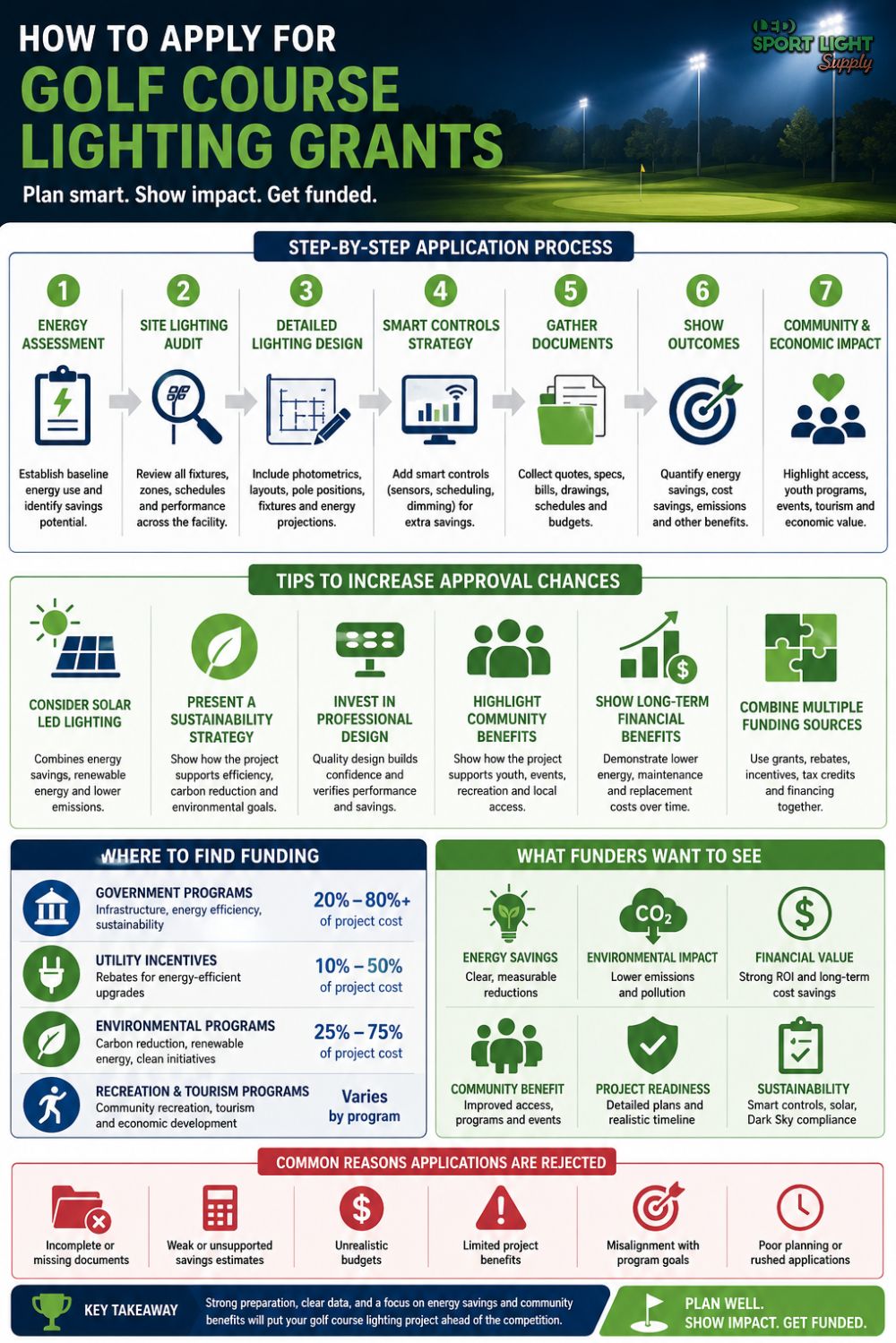
The answer depends on the type of program, project scope, and location. Utility rebates often cover between 10% and 50% of eligible lighting costs. Energy-efficiency grants may provide funding ranging from 20% to 70% of project expenses. Sustainability and renewable energy programs sometimes contribute even more when solar technology is included.
In certain public-sector projects, funding can approach 80% to 100% of eligible costs, particularly when community benefits and environmental outcomes are clearly demonstrated.
Many successful projects rely on a combination of funding sources. For example, a golf course undertaking a $250,000 lighting upgrade might secure a utility rebate worth $50,000, receive a sustainability grant of $75,000, and benefit from additional tax incentives. The owner’s final contribution could end up being substantially lower than the original project cost.
Why Golf Course Lighting Projects Often Qualify for Funding
Golf course lighting upgrades can deliver benefits that extend beyond the golf facility itself. Energy-efficient systems reduce electricity demand, lower greenhouse gas emissions, and decrease long-term operating costs. For publicly accessible facilities, improved lighting can also support community recreation, tourism, and local economic activity.
Funding organizations often look for projects that generate measurable results. When a golf course can demonstrate projected energy savings, reduced maintenance expenses, and environmental improvements, the application becomes much more compelling.
For example, replacing 100 outdated metal halide fixtures with modern LED equivalents can reduce annual energy consumption by tens of thousands of kilowatt-hours. Depending on local electricity rates, that may translate into annual savings of several thousand dollars while also reducing maintenance requirements due to the longer lifespan of LED fixtures.
Types of Golf Course Lighting Projects That May Qualify
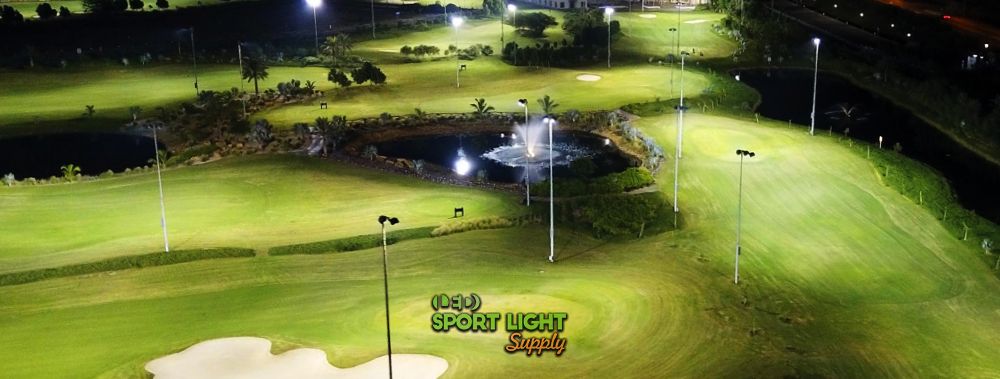
Not all golf course lighting projects are viewed the same way by grant providers. In general, funding organizations are more likely to support projects that can demonstrate measurable energy savings, reduced environmental impact, improved operational efficiency, or enhanced community benefits. The stronger the connection between the proposed upgrade and these outcomes, the better the chances of securing financial assistance.
Many golf course owners are surprised to learn that funding opportunities are not limited to large-scale renovations. Even relatively focused upgrades, such as replacing outdated driving range floodlights or installing smart lighting controls, may qualify under certain programs.
LED Lighting Retrofits
One of the most commonly funded golf course lighting projects involves replacing older lighting technologies with modern LED systems. Many golf courses still rely on metal halide, high-pressure sodium, or other legacy lighting fixtures that were installed 10, 15, or even 20 years ago. While these systems may continue to operate, they are often far less energy-efficient than today’s LED alternatives. In some cases, older fixtures consume nearly twice as much electricity while producing lower-quality illumination.
A well-designed LED retrofit can reduce lighting-related energy consumption by 50% to 75%, depending on the age and condition of the existing system. For golf facilities operating driving range lights several hours each evening, these savings can quickly add up. A facility spending $30,000 annually on lighting-related electricity costs could potentially reduce that figure by $15,000 or more after upgrading to LED technology.
Beyond energy savings, LED lighting offers better light uniformity, improved visibility for golfers, and reduced maintenance requirements. Since many commercial-grade LED fixtures are rated for 50,000 to 100,000 operating hours, facilities can often go years before needing significant maintenance or replacements.
Funding providers generally favor LED retrofit projects because the projected energy savings are relatively easy to calculate and verify. When grant reviewers can clearly see the expected reduction in electricity consumption, the project often becomes more attractive from a funding perspective.
Driving Range Lighting Upgrades
Driving ranges are among the most common areas targeted for lighting improvements. For many facilities, the driving range generates revenue well beyond normal daylight operating hours. Installing high-performance LED floodlights can allow golfers to practice during evenings, particularly during winter months when daylight hours are shorter.
A golf course that extends driving range operations by just three additional hours per day may potentially generate thousands of dollars in extra monthly revenue, depending on customer demand and local pricing.
Funding organizations often view these projects positively when they include energy-efficient lighting designs. Modern driving range lighting systems can provide excellent visibility while consuming significantly less power than older floodlighting technologies.
Projects involving driving range pole replacements, LED floodlight upgrades, directional optics, and glare reduction measures may all be eligible under various energy-efficiency and sustainability programs.
New Lighting Installations
Some golf facilities are pursuing expansion rather than replacement. New lighting installations may qualify for funding when they incorporate energy-efficient technologies and support broader community, recreational, or sustainability objectives. These projects often involve areas that previously had limited or no lighting infrastructure.
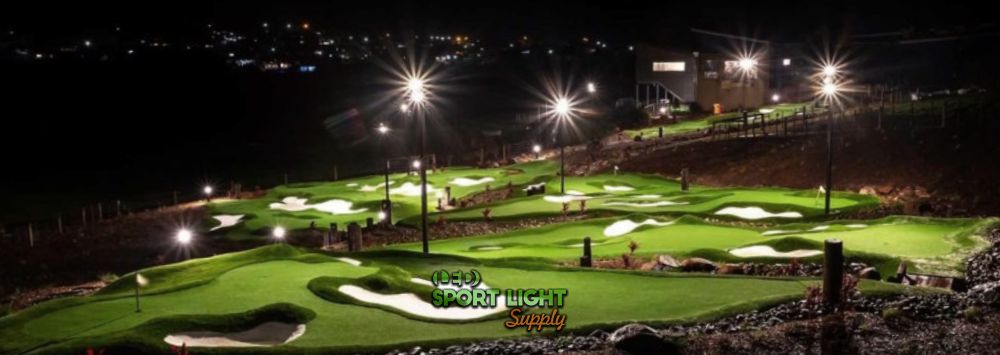
Common examples include illuminated practice greens, putting greens, short-game training areas, golf academies, cart paths, parking lots, clubhouse entrances, and outdoor gathering spaces.
Funding providers are particularly interested when new lighting installations can increase public access to recreational facilities. For example, a municipal golf course that introduces evening access for junior golf programs or community sports initiatives may be able to demonstrate benefits that extend beyond the golf course itself.
Facilities that combine new installations with renewable energy systems, smart controls, or environmentally responsible golf course lighting designs may have access to an even broader range of grant opportunities.
Smart Lighting Systems
Smart lighting technology has become increasingly popular among golf course owners looking to maximize efficiency. Unlike traditional lighting systems that operate on fixed schedules, smart lighting solutions use sensors, automation, and remote controls to adjust lighting levels based on actual usage patterns. This helps reduce wasted energy while maintaining suitable lighting conditions for golfers and staff.
For example, a practice area may automatically dim during periods of low activity or switch off entirely when not in use. Lighting schedules can also be programmed to align with seasonal operating hours, tournament schedules, or weather conditions.
Studies have shown that combining smart controls with LED fixtures can reduce overall lighting-related energy consumption by an additional 20% to 40% beyond the savings already achieved through LED conversion alone.
From a grant reviewer’s perspective, smart lighting systems demonstrate a proactive approach to energy management. Projects that include occupancy sensors, motion detection technology, daylight harvesting controls, centralized management software, or remote monitoring capabilities often align well with sustainability-focused funding programs.
Solar-Powered Lighting Projects
As sustainability initiatives continue to expand, solar-powered golf course lighting projects are attracting growing interest from funding organizations. Unlike conventional lighting systems that rely entirely on grid electricity, solar-powered installations generate renewable energy on-site through photovoltaic panels. When paired with high-efficiency LED fixtures and battery storage systems, these solutions can significantly reduce electricity consumption while lowering long-term operating expenses.
Many environmental grant programs place particular emphasis on projects that support renewable energy adoption. A golf course that combines solar panels with LED driving range lighting, pathway illumination, or parking lot lighting may be eligible for funding opportunities that are unavailable to conventional projects.
In some cases, solar-powered lighting systems can offset 50% to 100% of the electricity required for specific areas of the facility, depending on local climate conditions and system design.
Another advantage is the growing focus on carbon reduction. Many grant providers now evaluate applications based on projected greenhouse gas reductions, making solar-powered lighting projects particularly appealing during the funding selection process.
Dark Sky and Light Pollution Reduction Projects
Light pollution has become an increasingly important consideration for both local authorities and environmental organizations. Golf courses located near residential neighborhoods, wildlife habitats, nature reserves, or environmentally sensitive areas may face greater scrutiny regarding lighting design. As a result, some grant programs specifically encourage projects that reduce unnecessary light spill and improve nighttime environmental conditions.
Dark Sky-compliant lighting designs focus on directing light precisely where it is needed while minimizing upward light output and glare. Modern LED fixtures equipped with advanced optics can often achieve excellent visibility without creating excessive brightness beyond the intended playing area.
These projects may include shielded luminaires, precision beam control, adaptive dimming systems, and lower-glare lighting configurations.
Funding organizations frequently view these improvements favorably because they support both energy conservation and environmental stewardship. Golf courses that incorporate Dark Sky principles into their lighting plans may gain an advantage when competing for sustainability-focused funding programs.
Who Is Eligible for Golf Course Lighting Grants?
Eligibility requirements vary significantly between funding programs, but many golf facility operators are pleasantly surprised to discover that a wide range of organizations may qualify.
The key is understanding which funding opportunities align with your ownership structure, facility type, and project objectives.
| Applicant Type | Typical Eligibility | Common Funding Sources | Examples of Eligible Lighting Projects |
|---|---|---|---|
| Public Golf Courses | High | Government grants, recreation funding, sustainability programs | Driving range LED upgrades, pathway lighting, parking lot lighting |
| Private Golf Clubs | Medium to High | Utility rebates, energy-efficiency incentives, renewable energy programs | LED retrofits, smart lighting controls, sports lighting upgrades |
| Commercial Golf Facilities | Medium to High | Utility incentives, business energy grants, green infrastructure programs | Driving range lighting, clubhouse exterior lighting, solar lighting |
| Nonprofit Golf Organizations | High | Community grants, youth sports funding, accessibility programs | Practice facility lighting, community-use areas, adaptive golf facilities |
| Educational Institutions | High | Campus sustainability funds, educational grants, energy programs | Training range lighting, practice greens, recreational facilities |
Public Golf Courses
Municipal and publicly owned golf courses often have access to some of the largest funding opportunities available. Since these facilities serve local communities and are frequently managed by city, county, or regional authorities, they may qualify for infrastructure improvement grants, recreation development funding, energy-efficiency programs, and sustainability initiatives.
Grant providers often view public golf facilities as valuable community assets. Projects that improve accessibility, increase recreational opportunities, reduce operating expenses, or support environmental goals can be particularly attractive.
For example, a municipal golf course replacing outdated driving range lighting with LED systems could potentially demonstrate lower taxpayer-funded operating costs while providing expanded evening access for residents.
Private Golf Clubs and Commercial Golf Facilities
Private golf clubs and commercial golf operations are also eligible for many funding opportunities, particularly those related to energy efficiency and utility conservation.
Although some government programs prioritize public-sector applicants, utility rebates and commercial energy-efficiency incentives are often available regardless of ownership structure.
Private facilities that invest in LED sports lighting, smart controls, solar-powered systems, or carbon-reduction initiatives may qualify for funding designed to encourage businesses to reduce energy consumption.
Facilities with documented electricity savings projections frequently have stronger applications because they can clearly demonstrate measurable outcomes.
Nonprofit and Community Organizations
Golf facilities operated by nonprofit organizations may have access to additional funding opportunities that are unavailable to commercial businesses. Youth golf development programs, community recreation organizations, adaptive golf initiatives, and charitable foundations may qualify for grants focused on community engagement, education, accessibility, and public recreation.
Funding providers often place significant value on projects that support youth participation, health initiatives, and community development.
Educational Institutions and Training Facilities
Universities, colleges, sports academies, and golf training centers may also be eligible for specialized funding programs.
Projects involving golf practice facilities, training ranges, instructional areas, and campus recreation infrastructure can sometimes qualify under educational, recreational, or sustainability-focused grant categories.
Institutions that incorporate energy-efficient lighting technologies into broader campus sustainability strategies may have access to multiple funding sources simultaneously.
Understanding Program Requirements
Before investing significant time into an application, it is worth carefully reviewing the eligibility criteria for each funding opportunity.
Some grants are restricted by geographic location, project size, facility ownership, annual revenue, or environmental objectives. Others may require applicants to meet minimum energy-saving thresholds before funding can be awarded.
Taking the time to identify the most suitable programs early in the process can significantly improve the likelihood of success.
Where to Find Golf Course Lighting Grants
Finding the right funding opportunity often requires looking beyond golf-specific programs. Many of the most valuable grants available for golf course lighting installation and replacement projects actually come from broader energy-efficiency, sustainability, infrastructure, and economic development initiatives.
| Funding Source | Typical Funding Focus | Potential Cost Coverage* | Best-Suited Projects |
| Government Programs | Energy savings, infrastructure, sustainability | 20% to 80%+ | LED replacements, smart controls, solar lighting |
| Utility Company Incentives | Reduced electricity consumption | 10% to 50% | LED retrofits, parking lot lighting, sports lighting upgrades |
| Environmental & Sustainability Programs | Carbon reduction, renewable energy | 25% to 75% | Solar-powered lighting, battery storage, Dark Sky-compliant systems |
| Recreation Development Programs | Community recreation and facility improvements | Varies by program | Driving ranges, practice facilities, public-access areas |
| Tourism Development Funding | Visitor experience and economic growth | Varies by region | Tournament lighting, evening-use facilities, destination golf projects |
Government Funding Programs
Government agencies remain one of the largest sources of funding for energy-efficient lighting projects. National, state, provincial, and local authorities frequently offer programs designed to reduce energy consumption, support carbon reduction goals, and modernize recreational infrastructure.
One common mistake golf course operators make is searching exclusively for “golf course grants.” In reality, many funding opportunities are categorized under commercial energy efficiency, recreation facility improvements, green infrastructure, renewable energy adoption, or sustainability programs.
As a result, a golf course lighting project may qualify even when golf is never specifically mentioned in the program description.
Projects involving LED sports lighting, driving range lighting replacement, smart controls, solar-powered systems, and energy-saving infrastructure often align well with government funding objectives.
Utility Company Incentives
Utility providers are frequently one of the easiest funding sources to access. Electricity companies benefit when customers reduce overall energy demand, particularly during peak consumption periods. To encourage these reductions, many utilities offer rebate programs for energy-efficient lighting upgrades.
Commercial LED retrofit projects, sports lighting replacements, parking lot lighting upgrades, and smart control installations are commonly eligible for utility incentives.
Depending on the program, rebates may cover 10% to 50% of project costs, helping reduce upfront investment requirements.
Another advantage is speed. While some government grant programs can take several months to process, utility rebate applications are often reviewed much more quickly.
Environmental and Sustainability Programs
As governments and organizations continue pursuing carbon reduction targets, sustainability-focused funding opportunities have become increasingly common. Golf facilities that can demonstrate measurable reductions in electricity consumption, carbon emissions, and environmental impact may qualify for grants offered by environmental agencies, climate initiatives, and sustainability organizations.
Projects that incorporate LED lighting, solar energy systems, battery storage, smart controls, and Dark Sky-compliant designs often fit particularly well within these programs.
Applications supported by detailed energy modeling and projected emissions reductions tend to perform better because they provide reviewers with tangible evidence of environmental benefits.
Recreation and Tourism Development Programs
Golf courses contribute significantly to local economies through tourism, hospitality spending, tournament hosting, and recreational activities. Because of this economic impact, recreation and tourism development agencies occasionally provide funding for facility upgrades that enhance visitor experiences and support regional tourism growth.
Lighting improvements that extend operating hours, improve safety, accommodate evening events, or support tournament activities may align with the objectives of these programs.
For destinations that rely heavily on golf tourism, upgrading lighting infrastructure can help facilities remain competitive while creating additional opportunities for visitors to enjoy the property outside traditional daylight hours.
Many facility owners overlook this category entirely, yet it can sometimes provide access to substantial funding that complements energy-efficiency grants and utility rebates.
Which Golf Course Lighting Projects Are Most Commonly Funded?
| Project Type | Funding Availability |
| LED Driving Range Lighting | Very High |
| LED Sports Lighting Retrofits | Very High |
| Smart Lighting Controls | High |
| Solar-Powered Golf Course Lighting | High |
| Parking Lot LED Lighting | High |
| Pathway & Cart Path Lighting | Medium to High |
| Practice Green Lighting | Medium to High |
| Clubhouse Exterior Lighting | Medium |
| Dark Sky-Compliant Lighting | Medium to High |
| Battery Storage Integration | Medium to High |
How to Apply for Golf Course Lighting Grants
Securing funding for a golf course lighting installation or replacement project is often about much more than simply filling out an application form. Grant providers want to see that the project has been carefully planned, supported by data, and capable of delivering measurable results. Facilities that invest time in preparation generally have a much stronger chance of receiving funding than those that rush through the process.
While every grant program has its own requirements, most successful applications share a few common characteristics. They clearly demonstrate energy savings, include detailed technical information, provide realistic financial projections, and explain how the project will benefit both the facility and the wider community.
Start with an Energy Assessment
One of the best places to begin is with a professional energy assessment. Before a funding organization commits money to a project, it wants to understand the current situation and the improvements expected after installation. An energy assessment establishes a baseline by documenting how much electricity the existing lighting system consumes and where opportunities for improvement exist.
For example, if a golf course currently operates 80 metal halide floodlights across its driving range and practice facilities, the assessment may reveal that upgrading to LED sports lighting could reduce electricity consumption by 60% to 75% while maintaining or even improving illumination levels.
This type of information helps transform an application from a simple request for funding into a data-driven proposal backed by measurable outcomes.
Many utility rebate programs and sustainability grants actually require some form of energy audit or savings calculation before an application can be approved. Having this information available from the beginning can streamline the entire process and reduce delays later on.
Conduct a Site Lighting Audit
In addition to reviewing energy consumption, it is worthwhile to perform a comprehensive lighting audit across the property. This audit should identify all existing fixtures, pole heights, lighting zones, operating schedules, maintenance history, and current lighting performance levels. Areas such as driving ranges, practice greens, clubhouse surroundings, golf cart storage areas, parking lots, maintenance facilities, and pedestrian pathways should all be included.
A detailed lighting audit can uncover hidden inefficiencies that may not be obvious at first glance. In some cases, facilities discover that fixtures are operating longer than necessary or producing uneven illumination that negatively impacts both energy efficiency and player experience.
The more detailed the baseline assessment, the easier it becomes to demonstrate the value of the proposed upgrade.
Develop a Detailed Lighting Design
One factor that often separates successful grant applications from unsuccessful ones is the quality of the project design. A professional golf course lighting design demonstrates that the facility has thoroughly evaluated the project and understands how the proposed system will perform once installed. Grant reviewers tend to have greater confidence in projects supported by technical documentation than those based on broad assumptions.
A detailed lighting design typically includes fixture specifications, photometric calculations, lighting layouts, pole locations, aiming diagrams, electrical requirements, and projected energy consumption figures.
For driving range lighting projects, photometric plans are particularly useful because they show exactly how light will be distributed across the hitting bays, target greens, and outfield areas. These calculations help verify that the system will provide adequate visibility while minimizing wasted light and unnecessary energy consumption.
Include Smart Lighting and Control Strategies
Many modern grant programs place a growing emphasis on energy management rather than simply replacing equipment. Including smart lighting controls within the project design can strengthen an application significantly. Features such as occupancy sensors, programmable scheduling systems, daylight harvesting controls, remote monitoring platforms, and automated dimming functions demonstrate a long-term commitment to efficiency.
Some studies suggest that intelligent lighting controls can reduce lighting-related electricity consumption by an additional 20% to 40% beyond the savings achieved through LED conversion alone.
When these projected savings are included within the application, the overall business case becomes even more compelling.
Gather Supporting Documentation
Even the strongest project concept can struggle if it is not supported by sufficient documentation. Grant reviewers often evaluate dozens or even hundreds of applications during a funding cycle. Projects that provide clear, organized information are generally easier to assess and may receive more favorable consideration.
Supporting documentation should help paint a complete picture of the proposed golf course lighting upgrade. This typically includes contractor quotations, equipment specifications, utility bills, engineering drawings, site plans, project schedules, maintenance records, and budget projections.
Providing multiple contractor quotations can also help demonstrate that the project budget is realistic and competitively priced. Reviewers often appreciate evidence that the applicant has carefully evaluated different solutions before selecting a preferred option.
Include Maintenance and Operational Projections
Many applications focus heavily on installation costs but overlook long-term operational benefits. Providing maintenance forecasts can help strengthen the financial case for the project. Modern LED sports lighting systems often have operational lifespans exceeding 50,000 to 100,000 hours, significantly reducing replacement and maintenance costs compared with traditional lighting technologies.
For golf courses operating evening driving ranges or practice facilities, lower maintenance requirements can also reduce disruptions and improve operational efficiency throughout the year.
Demonstrating these ongoing benefits helps reviewers understand the broader value of the investment.
Demonstrate Measurable Outcomes
Grant providers rarely fund projects simply because new equipment would be nice to have. They want to see tangible results.
Applications that clearly quantify projected outcomes tend to perform much better during the review process. These outcomes may include reduced energy consumption, lower operating expenses, decreased maintenance costs, carbon emission reductions, increased facility usage, and enhanced community access.
For example, a proposal showing that a golf course lighting upgrade will reduce annual electricity consumption by 65,000 kilowatt-hours, lower operating expenses by $12,000 per year, and cut carbon emissions by 30 metric tons annually is far more persuasive than a proposal that simply states the new system will be more efficient.
Specific numbers help reviewers evaluate the return on investment and understand how the project aligns with program objectives.
Quantify Community and Economic Benefits
Many applicants overlook one area that can make a significant difference during the review process: community impact.
If the upgraded lighting system allows a driving range to remain open later in the evening, supports junior golf programs, accommodates community events, or enables additional tournaments, these benefits should be clearly documented.
Some funding programs place substantial value on projects that contribute to local recreation, tourism, and economic development. A facility that can demonstrate increased visitor numbers, expanded programming opportunities, or enhanced community access may have an advantage over projects that focus solely on energy savings.

Tips for Increasing Approval Chances
Competition for grants can be strong, especially when funding budgets are limited. Fortunately, there are several practical steps golf course operators can take to make their applications stand out.
Consider Solar LED Lighting
One of the most effective ways to strengthen a funding proposal is to incorporate renewable energy into the project design.
Solar-powered LED lighting systems align with several funding priorities simultaneously. They reduce electricity consumption, support renewable energy adoption, lower carbon emissions, and improve long-term sustainability.
Because of these benefits, many environmental and clean-energy grant programs actively encourage projects that combine solar technology with high-efficiency LED lighting.
Facilities that can demonstrate a meaningful reduction in grid electricity consumption often attract additional attention during the evaluation process.
Present a Comprehensive Sustainability Strategy
Rather than positioning the project as a simple fixture replacement, consider framing it as part of a broader sustainability initiative.
Applications that discuss energy efficiency, carbon reduction, renewable energy integration, light pollution control, and environmental stewardship often align more closely with grant program objectives.
Reviewers generally respond well to projects that demonstrate a long-term vision rather than a short-term equipment upgrade.
Invest in Professional Lighting Design Services
Professional lighting design services can significantly enhance the credibility of a funding application.
Experienced sports lighting designers can provide detailed photometric studies, illumination calculations, fixture recommendations, and energy-saving projections. These documents help verify that the proposed system will achieve its intended performance goals.
They also help reassure reviewers that the facility has carefully evaluated the technical aspects of the project and selected an appropriate solution.
Highlight Community Benefits
Energy savings alone may not always be enough to secure funding.
Golf courses that support junior golf programs, community recreation initiatives, school partnerships, charity events, or local tournaments should make these contributions visible within their applications.
For example, if upgraded driving range lighting allows youth coaching programs to operate during evening hours, that information should be included. If the project enables greater public access to recreational facilities, that benefit should also be emphasized.
Grant reviewers frequently look for projects that deliver value beyond the immediate needs of the applicant.
Show Long-Term Financial Benefits
Funding organizations want to know that the project will continue delivering benefits long after installation is complete.
Modern LED golf course lighting systems can often operate for more than a decade with minimal maintenance. Reduced electricity consumption, fewer lamp replacements, and lower servicing costs can create substantial savings over the lifespan of the system.
A project that generates annual savings of $15,000 may produce more than $150,000 in operational savings over ten years, depending on energy costs and maintenance requirements.
Including these long-term financial projections helps strengthen the overall business case.
Combine Multiple Funding Sources
Many of the most successful golf course lighting projects do not rely on a single funding source.
Instead, facility owners combine utility rebates, government grants, sustainability incentives, tax credits, and financing programs to create a comprehensive funding package.
This approach can significantly reduce out-of-pocket costs while demonstrating financial commitment from multiple stakeholders.
Funding providers often appreciate applicants who have explored various funding avenues rather than relying entirely on a single grant program.
Common Reasons Applications Are Rejected
Even well-intentioned projects can fall short if certain details are overlooked during the application process. Understanding the most common reasons for rejection can help applicants avoid costly mistakes and improve their chances of success.
Incomplete Documentation
One of the most frequent reasons applications are rejected is missing or incomplete documentation. Absent site plans, incomplete budgets, missing contractor quotations, or insufficient technical information can create uncertainty for reviewers. When reviewers cannot clearly understand the project, they may hesitate to approve funding.
Providing organized and comprehensive documentation helps build confidence in both the project and the applicant.
Weak Energy-Savings Calculations
Many applications claim substantial energy savings without providing supporting evidence. Funding organizations typically expect projected savings to be supported by engineering calculations, energy audits, utility data, or manufacturer performance information.
Applications based on rough estimates or unsupported assumptions often struggle during technical review.
Unrealistic Budgets
Budgets that appear unusually low or excessively high can raise concerns. Reviewers want to see that project costs are reasonable and supported by market-based pricing. Obtaining multiple contractor quotations can help demonstrate that the proposed budget reflects actual project conditions.
A realistic budget often signals that the applicant has conducted proper planning and understands the scope of work involved.
Limited Project Benefits
Applications that focus solely on replacing existing fixtures sometimes fail to demonstrate broader value. Funding organizations are increasingly looking for projects that deliver multiple benefits, such as energy savings, environmental improvements, community engagement, tourism support, and economic development.
Projects that address several objectives simultaneously often perform better than those with a narrow focus.
Failure to Align with Program Goals
Every funding program has its own priorities. Some focus on energy efficiency, while others emphasize sustainability, community development, renewable energy adoption, or public access. Applications that fail to address these priorities may receive lower scores even if the underlying project is technically sound.
Taking the time to tailor the proposal to the specific objectives of each grant program can make a noticeable difference in the final outcome.
With careful planning, detailed documentation, realistic savings projections, and a clear explanation of project benefits, golf course owners can significantly improve their chances of securing funding for lighting installation and replacement projects.
Looking Ahead
Golf course lighting projects have evolved far beyond simply replacing old fixtures. Today’s upgrades often involve energy-efficient LEDs, intelligent controls, solar integration, and environmentally responsible designs that can significantly reduce operating costs while improving player experiences.
With many funding programs actively supporting sustainability and energy-efficiency initiatives, golf facilities may be able to recover a meaningful portion of their investment through grants, rebates, and incentives. Facilities that present a clear business case, provide detailed technical documentation, and demonstrate measurable benefits are often in a stronger position when competing for funding.
If you’re considering a golf course lighting installation or replacement project and would like guidance on funding opportunities, lighting design, grant eligibility, or application preparation, our team would be happy to help. We work with golf facilities to identify suitable funding pathways, develop professional lighting plans, and maximize the potential return on investment for every project. Reach out to us for a consultation and let’s explore the most practical funding options for your facility.