
Good football lighting is about much more than simply making a pitch look bright at night. A well-designed lighting system helps players judge distance, follow the ball, react quickly, and enjoy a smoother playing experience. For spectators and broadcasters, it also creates a clearer and more engaging view of every movement on the field.
When discussing football field lighting, two terms often appear in professional lighting design – horizontal illuminance and vertical illuminance. Although they sound similar, they describe two different ways light interacts with the playing environment. Understanding the difference helps facility owners, architects, and sports lighting designers create better football fields for training sessions, local matches, and professional competitions.
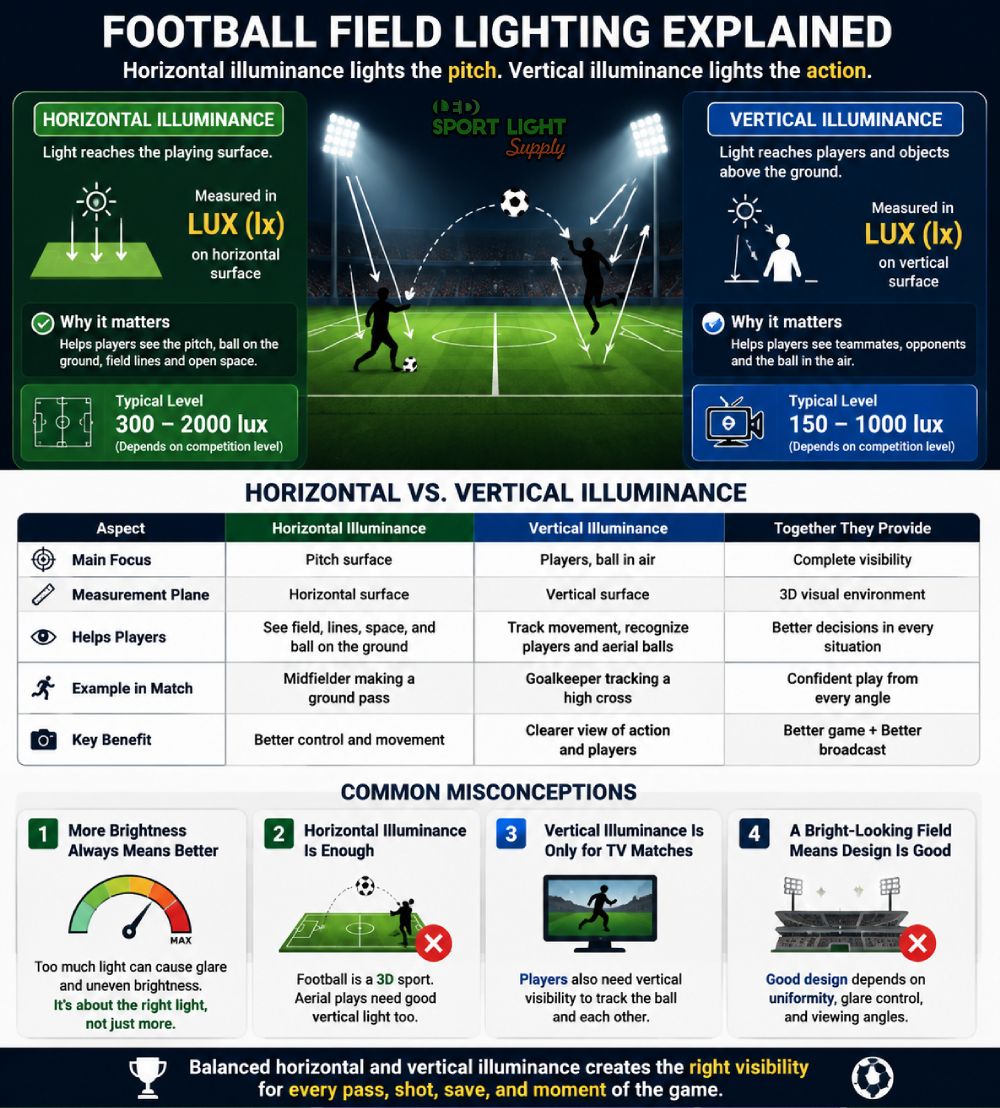
Horizontal vs. Vertical Illuminance
| Comparison | Horizontal Illuminance | Vertical Illuminance |
|---|---|---|
| Definition | Light reaching the pitch surface | Light reaching players and vertical objects |
| Main focus | Ground visibility | Player and ball visibility |
| Measurement plane | Horizontal surface | Vertical surface |
| Helps players | See field lines, space, and ball position | Track players, passes, and aerial balls |
| Common use | Pitch lighting and gameplay | Player recognition and broadcasting |
| Example | A midfielder judging a ground pass | A goalkeeper tracking a high cross |
| Main benefit | Better movement and field awareness | Clearer view of action from different angles |
What Is Horizontal Illuminance in Football Field Lighting?
Understanding the Meaning of Horizontal Illuminance
When talking about football field lighting, one of the first things lighting designers look at is horizontal illuminance. In simple terms, horizontal illuminance describes how much light reaches the playing surface, such as the grass, penalty area, and goal area. It is usually measured in lux (lx), which represents the amount of light received on a specific surface.
A simple way to understand it is this – if you stand on a football pitch and look down at the ground, horizontal illuminance tells you how clearly you can see the surface in front of you.
For a football field, the playing surface is not just a flat piece of grass. It includes different areas where fast decisions happen every second, including the center circle, penalty box, sidelines, and goal areas. Every part of the pitch needs suitable lighting so players can quickly understand their position and react naturally during the game.
A football match moves at a very high speed. Professional players can cover more than 10 kilometers during a 90-minute match, and many key actions happen within just a few seconds. A midfielder may receive a pass, turn, and make a decision almost instantly. A defender may need to track an attacker while judging the speed and direction of the ball at the same time.
With poor horizontal illuminance, these actions become more difficult. Dark areas or uneven lighting can affect how players judge distances, control the ball, and understand the position of other players on the field.
Why Horizontal Illuminance Matters on a Football Pitch
A football field may look bright from the spectator seats, but the actual lighting performance depends on how evenly the light is distributed across the pitch.
Imagine a midfielder receiving a long pass from 30 meters away. Before controlling the ball, the player needs to quickly estimate several things – how fast the ball is moving, where the ball will land, how much space is available, and whether an opponent is approaching.
Good horizontal illuminance provides a clearer view of the playing surface, allowing players to make faster and more accurate decisions.
For attackers, proper pitch lighting helps with passing, shooting, and dribbling because they can better judge the ball’s position relative to the field markings. For defenders, it helps them maintain positioning and react to attacking movements.
Goalkeepers also benefit from consistent horizontal lighting. Although goalkeepers often rely heavily on vertical visibility, they still need a clear view of the goal area, penalty spot, and nearby players when making quick movements.
A football field with poor horizontal illuminance may create several challenges. Instead of using bullet points, these issues can be understood as common visibility problems during gameplay. Players may notice that some areas of the pitch feel darker than others, field markings become harder to distinguish, and the ball may appear less predictable when moving across unevenly lit areas.
A high-quality football lighting design focuses on creating uniform illumination across the entire playing area, ensuring that players experience a consistent visual environment from one side of the pitch to the other.
The Role of Uniformity in Horizontal Illuminance
Horizontal illuminance is not only about reaching a certain lux level. Uniformity is another factor that greatly affects the actual playing experience.
For example, a football field may have an average illuminance of 500 lux, but if one area is much brighter while another area is significantly darker, players may still experience visual discomfort.
Lighting designers often evaluate the ratio between the brightest and darkest areas of the pitch to understand how evenly the light is distributed. Better uniformity reduces sudden changes in brightness and allows players’ eyes to adjust more naturally during movement.
This becomes even more important for professional football stadiums, where players move constantly across a large field. A typical football pitch can measure around 105 meters long and 68 meters wide, meaning the lighting system must provide consistent coverage across a large area.
Example – Horizontal Illuminance During a Football Match
Consider a night football match where a midfielder is preparing to make a long pass. The player looks across the pitch and needs to identify a teammate’s position, estimate the distance, and calculate the correct passing angle.
If the pitch has balanced horizontal illuminance, the player can clearly see the playing surface and make a confident decision.
However, if certain areas are poorly illuminated, the player may struggle to judge movement accurately. A teammate standing near a darker area may be harder to recognize, and the ball may appear to move differently when crossing between bright and dark zones.
This is why professional football lighting projects do not simply focus on making the stadium brighter. Designers carefully calculate lighting levels, distribution, and fixture positioning to create a field where every area supports smooth gameplay.
What Is Vertical Illuminance in Football Field Lighting?
Understanding Vertical Illuminance
While horizontal illuminance focuses mainly on the pitch surface, vertical illuminance measures the amount of light reaching vertical surfaces, such as players, goalkeepers, and the ball when it moves through the air.
Football is a three-dimensional sport. The action does not happen only along the ground. During a match, the ball constantly moves upward and downward through crosses, headers, corners, free kicks, and long passes.
Because of this, players need to see not only where the ball is on the grass but also where it is in the air.
Vertical illuminance helps create this additional layer of visibility. It allows players and spectators to better understand movement, distance, and direction.
Why Vertical Illuminance Improves Player Visibility
Football players spend a large part of the game looking around rather than simply looking down. They need to read the entire playing environment, including the movement of teammates, opponents, and the ball.
For example, when a defender prepares to clear a corner kick, the ball may be several meters above the ground and surrounded by moving players. The defender needs to judge the ball’s height, speed, and direction before making contact.
Strong vertical illuminance helps make moving objects easier to recognize and follow.
This is especially useful during situations such as:
- A striker tracking a high cross into the penalty area
- A goalkeeper preparing for a long shot
- A midfielder watching a diagonal pass
- A defender following an opponent’s movement
Without sufficient vertical lighting, a football pitch may appear bright, but players and the ball can still lose clarity when viewed from different angles.
Vertical Illuminance and Football Broadcasting
Modern football is not only experienced inside the stadium. Millions of fans watch matches through television, streaming platforms, and digital media.
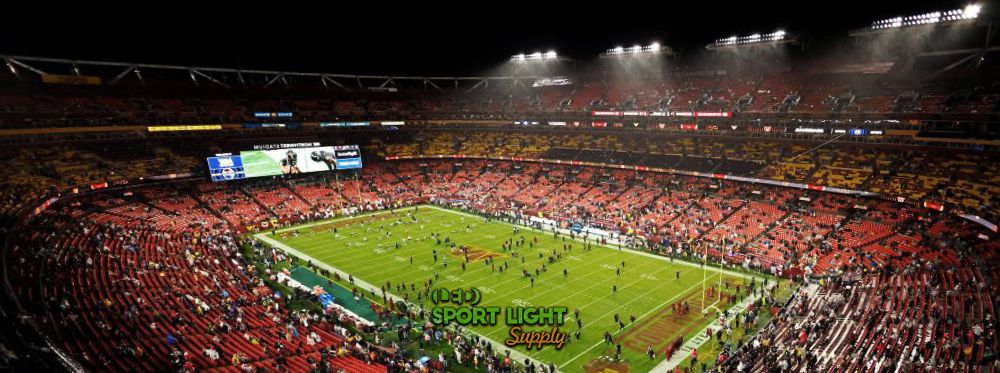
For broadcast-quality venues, lighting needs to support camera systems that capture fast movement clearly. Professional cameras do not only record the field surface. They capture players running, jumping, passing, and competing from many different angles.
Vertical illuminance plays a major role in producing clear images because cameras need enough light on vertical objects, especially players.
For example, when a camera follows a striker running toward the goal, the player’s body needs to remain clearly visible throughout the movement. If vertical lighting is insufficient, images may appear less detailed, especially during fast action or slow-motion replay.
Many professional football stadiums are designed with broadcast requirements in mind. Lighting systems are carefully positioned to provide balanced visibility for players and cameras at the same time.
Horizontal vs. Vertical Illuminance – What Is the Difference?
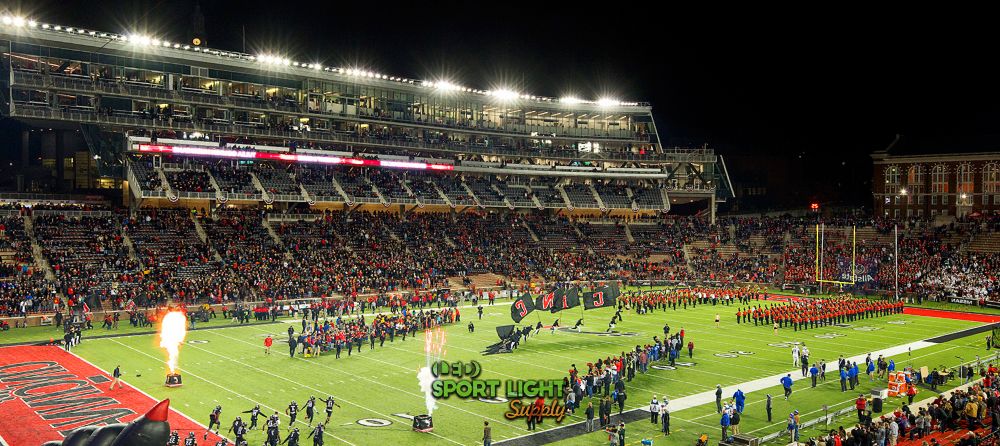
Although horizontal and vertical illuminance measure different aspects of football lighting, they work together to create a complete visual environment.
Horizontal illuminance focuses on the playing surface. It helps players understand where they are, where the ball is moving on the ground, and how much space is available around them.
Vertical illuminance focuses on people and objects above the surface. It helps players recognize teammates, opponents, and the movement of the ball through the air.
A simple way to remember the difference is:
Horizontal illuminance helps players see the pitch. Vertical illuminance helps players see the action happening on the pitch.
Both measurements are needed because football is a fast and dynamic sport involving movement in every direction.
Why Football Fields Need Both Types of Illuminance
A football match combines ground-based movement and aerial play. A player making a short pass needs good visibility of the grass and field markings. The same player may need to look up a few seconds later to track a high ball from a teammate.
This is where horizontal and vertical illuminance work together.
A lighting system with strong horizontal illuminance but weak vertical illuminance may create a bright-looking field but still make aerial movements harder to follow. On the other hand, focusing only on vertical lighting without enough surface illumination can affect basic gameplay.
The best football lighting solutions create balance between both measurements.
Creating a Better Football Experience Through Balanced Lighting
From local training grounds to international stadiums, football lighting has become increasingly advanced. LED technology now allows lighting designers to control brightness, beam angles, and energy usage more accurately than before.
A well-designed system considers the entire football experience – player performance, spectator comfort, camera quality, and long-term operating costs.
The goal of football field lighting is not simply to add more light, but to create the right visual conditions for every pass, shot, save, and movement on the pitch.
By understanding the difference between horizontal and vertical illuminance, stadium owners and project planners can make smarter decisions when selecting lighting systems and designing football venues that deliver better visibility and a more enjoyable match experience.
How Horizontal and Vertical Illuminance Work Together in Football Stadiums
Supporting Player Performance
Football requires quick reactions. A player may receive a pass, turn, avoid an opponent, and shoot within only a few seconds.
During these moments, players rely on different visual information at the same time.
They need horizontal illuminance to understand:
- Where they are standing
- Where open space exists
- Where the ball is moving on the ground
They need vertical illuminance to understand:
- Who is approaching
- Where teammates are positioned
- How the ball is moving through the air
A balanced lighting system supports smoother gameplay because players receive clearer visual information from every direction.
Improving Spectator Experience
Lighting also affects people watching the match.
Spectators expect to follow the action easily, whether they are sitting in the stadium or watching from home. Uneven lighting can make certain areas of the pitch appear unclear and reduce the overall viewing experience.
Good football lighting creates a more comfortable environment where the entire match can be followed naturally from kickoff to the final whistle.
Common Misconceptions About Horizontal and Vertical Illuminance
Misconception 1 – More Brightness Always Means Better Football Lighting
One of the most common misunderstandings about football field lighting is that adding more light will automatically create a better playing environment.
At first glance, this idea seems reasonable. A brighter pitch may appear clearer from the stands, but lighting quality is not simply about producing the highest possible lux level. A football field can have very high illuminance values and still deliver a poor visual experience if the light is unevenly distributed or creates excessive glare.
In reality, professional football lighting is about achieving the right amount of light in the right places.
A well-designed lighting system considers several factors together, including horizontal illuminance, vertical illuminance, uniformity, glare control, and viewing angles. For example, increasing the brightness of a few areas on the pitch may create strong contrast between bright and dark zones, making it harder for players to adjust their vision during fast movements.
A football match can involve dozens of rapid changes in direction every minute. Players need stable and comfortable visibility rather than simply more brightness. The purpose of a good lighting system is to help players, spectators, and cameras see the game clearly without creating unnecessary visual discomfort.
Misconception 2 – Horizontal Illuminance Is Enough for Football Fields
Another common misconception is that lighting the pitch surface is all that matters because football is mainly played on the ground.
Horizontal illuminance is certainly a key part of football field lighting, as it helps players see the grass, field markings, and ball movement along the surface. However, football is not a flat sport. The ball regularly moves through the air during crosses, corner kicks, free kicks, and long passes.
A professional football player may need to switch attention from the ground to the air within a fraction of a second. A midfielder controlling the ball may suddenly need to look upward to receive a high pass. A defender may need to track the movement of an attacker while watching an incoming cross.
In these situations, vertical illuminance becomes equally valuable.
A football field with excellent horizontal illuminance but insufficient vertical illuminance may appear bright, yet players could still experience difficulty following aerial movements or recognizing other players clearly from different angles.
The best football lighting designs create a balance between both measurements, supporting every type of action that happens during a match.
Misconception 3 – Vertical Illuminance Is Only Needed for TV Matches
Some people believe that vertical illuminance mainly exists to improve television broadcasts and has little connection to actual gameplay.
While vertical illuminance does play a major role in professional broadcasting, its benefits extend far beyond cameras.
Players also depend on vertical visibility throughout a match. A goalkeeper preparing for a high cross needs to judge the ball’s position in the air. A defender marking an attacker needs to recognize body movement and positioning. A midfielder searching for a passing option needs to identify teammates quickly across the pitch.
Good vertical illuminance helps make these movements easier to follow.
For stadiums hosting professional matches, broadcasting requirements have become more demanding. Modern cameras can capture extremely fast movements, including slow-motion replays and high-definition footage. However, the foundation of good broadcast quality still begins with proper lighting design.
By providing balanced vertical illumination, football venues can support both the players on the field and the viewers watching from home.
Misconception 4 – A Bright-Looking Field Means the Lighting Design Is Good
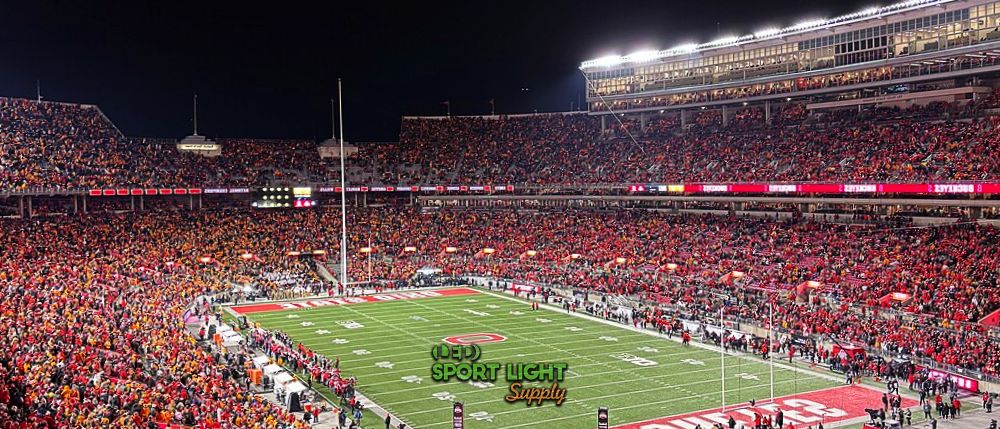
A football field may look bright when viewed from the spectator area, but appearance alone does not always reflect actual lighting performance.
A high-quality lighting system involves much more than making the pitch look bright. Designers evaluate how light behaves across the entire field and how players experience the environment during real gameplay.
Factors such as light distribution, uniformity, glare control, and viewing angles all affect the final result.
For example, a field with strong lighting near the center but weaker lighting near the corners may look impressive in some areas while creating visibility problems during actual matches. Similarly, poorly controlled light angles can create glare when players look toward the ball during high passes.
A successful football lighting system creates comfortable and consistent visibility, allowing players to focus on the game instead of adjusting to lighting conditions.
How Lighting Designers Optimize Illuminance for Football Fields
Choosing the Right Fixture Layout
The arrangement of LED floodlights plays a major role in determining the quality of football field illumination.
Lighting designers carefully study the pitch dimensions, pole positions, fixture mounting height, and beam angles before selecting the final layout. A standard football pitch is usually around 105 meters long and 68 meters wide, which means the lighting system must provide reliable coverage across a large area.
The goal is to make sure every part of the pitch receives suitable illumination while avoiding unnecessary light concentration in specific areas.
For example, placing floodlights too close to one side of the field may create brighter zones near the fixtures and darker areas further away. On the other hand, using the correct combination of beam angles and fixture positions helps distribute light more evenly.
Modern LED sports lighting systems provide much greater flexibility compared with older lighting technologies. With precise optical designs, LED fixtures can direct light more efficiently, reducing wasted energy while improving visibility on the field.
Improving Lighting Uniformity Across the Pitch
Uniformity is one of the factors that separates basic lighting solutions from professional football lighting systems.
Uniformity refers to how consistently light is distributed across the playing surface. A player running from one side of the pitch to another should not experience sudden changes between bright and dark areas.
Poor uniformity can affect concentration because the eyes need to constantly adjust to different lighting conditions. This becomes especially noticeable during fast gameplay when players are moving, passing, and reacting within seconds.
A well-designed lighting system maintains smoother transitions across the field, helping players follow the ball more naturally.
Professional lighting projects often use computer simulations before installation to predict lighting performance. These simulations allow designers to adjust fixture positions, aiming angles, and lighting levels before the equipment is installed.
After installation, on-site measurements are usually carried out to confirm that the lighting system achieves the expected performance.
Managing Glare for Better Player Comfort
Glare is another factor that can influence the football experience.
Players, especially goalkeepers, frequently need to look upward when tracking the ball. If floodlights are positioned incorrectly or aimed at unsuitable angles, they may create uncomfortable brightness in the player’s field of view.
This can be particularly challenging during moments such as:
- A goalkeeper preparing for a high ball
- A defender looking toward a long pass
- A player receiving an aerial cross under stadium lighting
Effective glare control helps maintain clear visibility while still providing enough illumination for the entire pitch.
Modern LED floodlights often include advanced optical systems that help control light direction and reduce unnecessary spill light. This allows designers to create a better balance between performance, comfort, and energy efficiency.
Considering the Needs of Players, Spectators, and Broadcasters
A football lighting system needs to serve multiple groups at the same time.
Players need clear visibility to perform at their best. Spectators need a comfortable viewing experience throughout the match. Broadcasters need consistent lighting conditions to produce high-quality images.
These requirements are closely connected.
For example, a lighting design that improves player visibility but creates strong glare for spectators would not be considered successful. Likewise, a system that works well for cameras but creates poor visibility for players would not meet the needs of a modern football venue.
Professional lighting designers consider the entire stadium environment to create a balanced solution that supports everyone involved in the game.
By combining proper horizontal illuminance, vertical illuminance, fixture placement, uniformity control, and glare management, football fields can achieve lighting performance that feels natural, comfortable, and reliable from the first whistle to the final minute.
Creating Better Football Experiences Through Smart Lighting Design
Football lighting is a combination of science, engineering, and practical experience. Horizontal illuminance creates a clear playing surface, while vertical illuminance improves visibility of players, the ball, and the overall action.
A well-designed lighting system allows players to focus on the game instead of adjusting to poor visibility conditions. It also creates a better experience for spectators and viewers around the world.
Whether you are planning a new football stadium, upgrading an existing pitch, or selecting LED floodlights for a training facility, understanding horizontal and vertical illuminance can help you make better lighting decisions. If you need professional guidance on football field lighting design, LED lighting selection, or illuminance planning, feel free to contact our team for a customized consultation and solution recommendation.